A ski trip can begin brilliantly at dawn in the mountains, or badly at an airline check-in desk while you argue over a bag allowance. Knowing how to travel with skis is less about elaborate kit hacks than planning for the journey your equipment will actually take: flight, transfer, hotel storage and the return leg when everything is wet, heavy and covered in road grit.
For plenty of UK skiers, taking familiar skis is worth the effort. You know how they turn, where they feel stable and whether they still have enough edge for a firm Alpine morning. But it is not automatically the right call. Airline charges, awkward transfers and a short break can make resort hire the smarter option, particularly when modern demo fleets are strong. The key is to make a deliberate choice before booking, rather than treating ski carriage as an afterthought.
How to travel with skis by air
Flying remains the most common route from the UK to the Alps, Pyrenees and North America, and it is also the part of the trip where detail matters most. Every airline sets its own sporting-equipment rules. Some include skis within a standard checked-baggage allowance if the total weight and dimensions fit; others require a separate ski booking or charge each way. Charter airlines, scheduled carriers and low-cost operators can all take a different approach, even on similar routes.
Check the policy for your exact fare, not simply the airline name. A basic ticket and a package holiday allocation may have different baggage conditions. Confirm whether skis and poles count as one item, whether boots may go in the ski bag, the maximum weight, and whether you need to reserve ski carriage in advance. Keep a screenshot or confirmation email accessible on your mobile phone. It can save a surprisingly unproductive conversation at the airport.
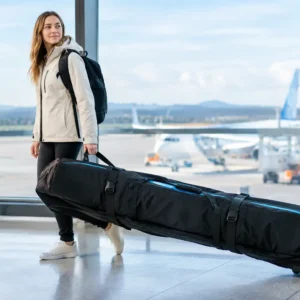
A padded wheeled ski bag is a sensible investment for regular travellers. It does not need to be the heaviest model on the market, but it should have durable zips, compression straps and enough protection around the bindings. Hard cases offer greater security but are cumbersome in a crowded terminal, taxi or chalet hallway. A lighter padded bag suits most recreational skiers, provided you pack it properly.
Detach or retract pole baskets if practical, secure the brakes with ski straps, and protect the bases with a simple ski sleeve or a layer of clothing. Do not leave tools, loose wax or metal-edged accessories rattling around near the skis. A ski bag is not a soft suitcase: baggage systems pull, drop and stack it. Mark it clearly with your name and mobile number, and add something distinctive so it is easy to identify at an oversized-baggage belt.
Boots deserve more care than skis. If there is one piece of equipment you should try to keep with you, it is your ski boots. Place them in hand luggage where airline rules and space allow, along with socks, goggles, base layers and a spare pair of gloves. If a ski bag is delayed, rental skis are easy to arrange. A properly fitted replacement boot is much less certain, especially for skiers with custom footbeds or difficult feet.
Do not pack to the theoretical limit
Airline weight limits are unforgiving, and wet kit weighs more on the journey home. Leave a margin rather than arriving with a 22.9kg bag for a 23kg limit. A boot bag plus ski bag can also be awkward to manoeuvre, particularly if a family is managing several sets of equipment. Consolidate where possible, but do not overload a ski bag until it becomes difficult to lift safely.
Before leaving home, weigh everything on bathroom scales and measure the bag. This small bit of preparation is far preferable to repacking on an airport floor, watched by travellers who are privately pleased it is not them.
Transfers, trains and the journey beyond the airport
Ski carriage does not end when the plane lands. Think through the full route to the resort. A private transfer usually has space for ski bags, but tell the operator what you are bringing when booking, especially if travelling in a larger group. Shared shuttles can be tighter, and some services impose bag limits or charge for oversize equipment. The same applies to taxis at destination airports.
Rail is increasingly attractive for UK skiers looking to reduce the flying element of a holiday, and it can be very workable with skis. Yet station changes, escalators and busy platforms quickly expose an impractical luggage setup. A wheeled ski bag helps, but it will not climb stairs for you. Choose connections with sensible transfer times, reserve seats where available, and consider whether your accommodation is walkable from the arrival station or needs a local bus or taxi.
On a self-drive holiday, a roof box is generally the cleanest answer. Skis inside the car can become dangerous projectiles in a sudden stop and make an already cramped vehicle unpleasant for passengers. A roof box also keeps melting snow, salt and sharp edges out of the cabin. Check the vehicle’s roof load limit, secure the box carefully and allow for extra height at car parks, toll booths and hotel garages.
If you are taking skis on a roof rack rather than in a box, use a proper lockable rack and cover the bindings from road spray where possible. This can work well for a day trip or a dry onward journey, but it is a less protective solution for a long motorway run through winter weather.
Pack for protection, not for cleverness
There is a temptation to use a ski bag as a general luggage holdall, filling every gap with ski clothing, helmets and après-ski layers. Some padding is useful, but excessive packing creates two problems: it increases the likelihood of excess-baggage fees and makes airport handling harder. Pack the skis, poles and a thin layer of protective clothing around vulnerable areas. Put bulky clothing in a normal checked suitcase where possible.
A helmet can travel in a ski bag if well protected, although it is better not to use it as padding for sharp edges or bindings. Goggles should be in a hard case or in your hand luggage. Their lenses scratch easily, and replacing them in resort is an expense nobody needs.
For a straightforward travelling setup, make sure you have these essentials before departure:
- A ski bag with visible contact details and strong straps
- Ski ties or brake retainers to keep pairs secure
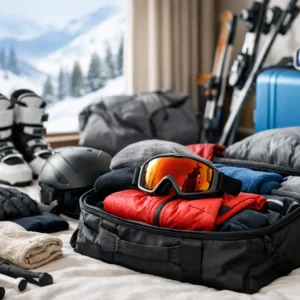
- Hand luggage containing boots, goggles and one day of ski clothing
- Copies of baggage bookings and travel-insurance details
- A small cloth or bag for separating wet gear on the return journey
That final item sounds minor, but it is useful when a last-day ski turns into a wet transfer. Keeping damp gloves and base layers away from electronics, books and spare clothes makes the flight home more civilised.
Insurance, damage and the case for hiring
Travel insurance should specifically cover winter sports and the value of your equipment. Standard policies may exclude skiing altogether or limit cover for individual items well below the cost of a modern ski setup. Read the wording around theft, unattended equipment and damage in transit. Airlines have limited liability for checked baggage, and a claim can be difficult if you cannot show what was damaged and when.
Photograph skis, bindings and bags before you leave, particularly if the equipment is relatively new. Keep purchase receipts or proof of ownership where available. If you find damage at the airport, report it before leaving the baggage hall. Waiting until you reach the resort makes it much harder to establish what happened.
There are good reasons to hire instead. For a three- or four-day break, the cost and inconvenience of ski carriage may outweigh the benefit of taking your own pair. Hiring also lets you choose a ski better suited to current conditions: a wider all-mountain model after fresh snow, for example, or a piste-focused ski during a dry, firm week. Families with growing children often find hiring more practical, while advanced skiers who have invested time in setup and boot fitting may reasonably prefer their own equipment.
A middle ground is to travel with boots and hire skis. It reduces the amount of luggage while preserving the most personal part of your setup. It is particularly useful for flights with expensive sports-baggage fees or for itineraries involving several transfers.
Make the return journey easy
The outward trip gets all the attention, but the journey home is where organisation pays off. Dry skis and boots as thoroughly as possible on the final afternoon. Most hotels and chalets have a boot room, but do not assume it is warm enough to dry wet liners overnight. Remove liners if they are soaked, and keep a plastic bag or dry sack ready for anything still damp.
Before handing skis over at the airport, check that the bag is zipped, straps are tightened and no loose lift-pass holder, glove or mobile phone charger has been left in a pocket. Then enjoy the rare pleasure of reaching home with your own equipment intact, ready for the next forecast worth chasing.