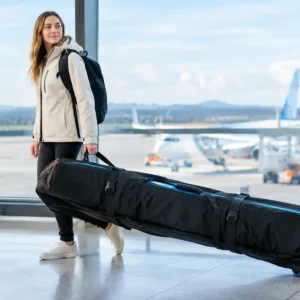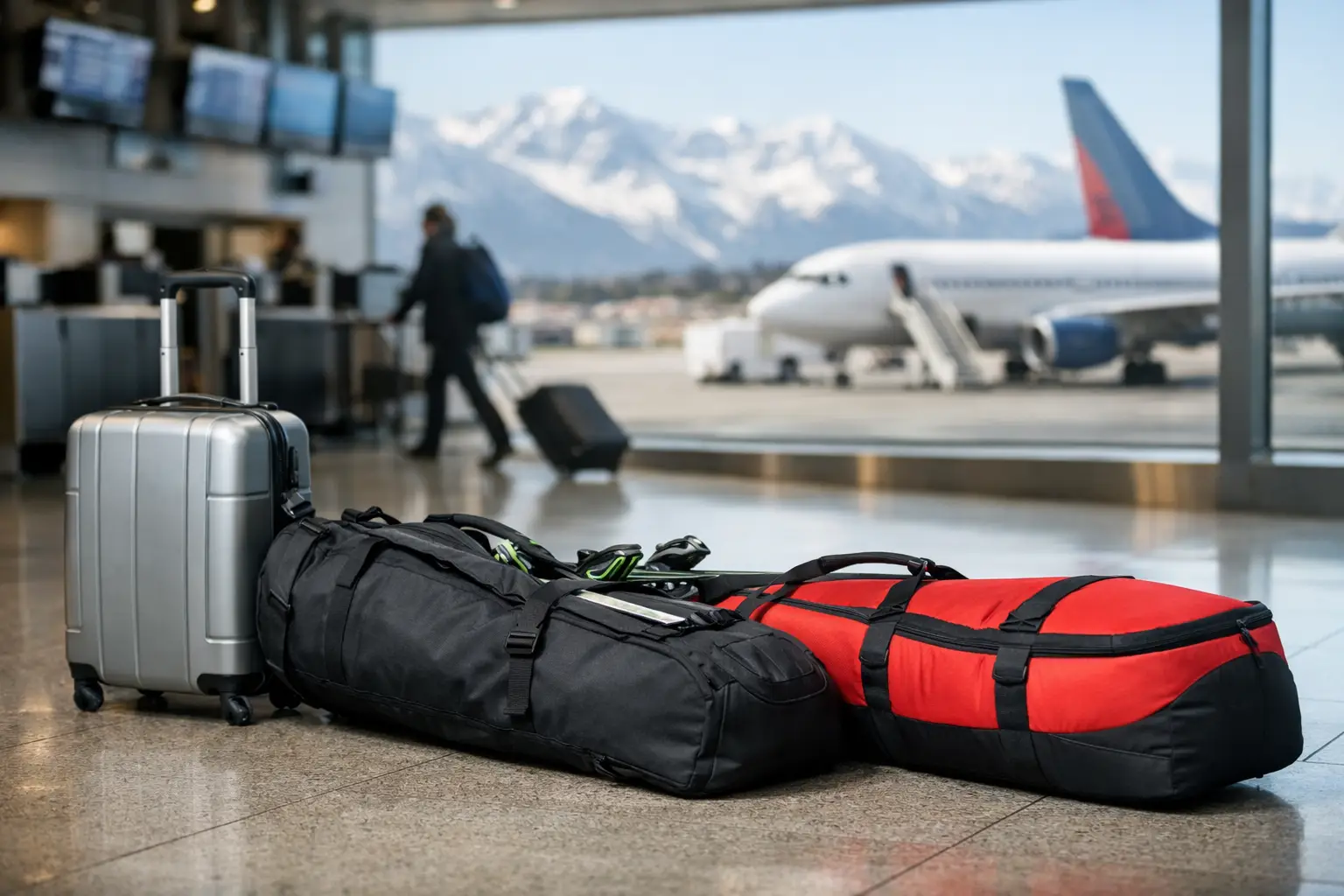
A ski bag earns its keep at the least glamorous point of a ski holiday: when it disappears onto an airport conveyor belt beside hard cases, pushchairs and a season’s worth of oversized luggage. The best ski bags for flights protect expensive kit without adding so much bulk and weight that check-in becomes a negotiation over excess baggage.
For UK skiers travelling to the Alps, North America or further afield, the right choice depends less on flashy features than on the way you travel. A single skier heading out for a week will have different needs from a family moving four pairs of skis through Gatwick, or a seasonnaire flying with two sets of planks and a transceiver. Padding, wheel quality, internal length and packed weight all matter – but airline policy matters just as much.
What makes a ski bag flight-worthy?
A basic ski sleeve is useful for protecting bases in the car or roof box, but it is rarely enough for a flight. Baggage holds are hard on equipment, and ski edges can cut through thin fabric from the inside. For air travel, look for a reinforced base, meaningful padding around the ski tips and bindings, durable zip pulls and compression straps that stop the load sliding about.
Wheels are the other major dividing line. A wheeled bag costs more and takes up more space at home, but it is a very worthwhile upgrade if you have a long walk through a terminal, a rail connection at the other end, or any amount of kit beyond one pair of skis. Good rolling bags should track straight when loaded, with large, replaceable wheels tucked into the chassis rather than left exposed at the corners.
Internal capacity needs a little thought. A bag advertised for two pairs of skis can be a sensible one-pair travel bag if you want to pack outerwear around the skis for added protection. Conversely, two pairs plus poles, boots and clothing can quickly tip a bag over a 23kg allowance. It is often more practical to put boots in a separate cabin-compatible boot bag, assuming your airline permits it, than turn the ski bag into an overweight all-in-one solution.
The best ski bags for flights by type
Best all-round roller: Dakine Fall Line Ski Roller
The Dakine Fall Line has long been a familiar sight in airport drop-off zones for good reason. It combines a generously padded ski compartment with sturdy wheels and an uncluttered shape that is easy to pack. Most versions are offered in several lengths, and the bag will normally carry two pairs of skis with poles, although that does not mean two pairs are the most efficient way to use it.
For a typical UK week in the Alps, it is an excellent middle ground. Pack one pair of skis centrally, secure them with ski straps, and use clothing around the bindings and tips. The trade-off is that it is a soft bag, not a hard-shell case. It protects well against routine baggage handling but is not designed to resist a severe crush or direct impact in the way a rigid tube can.
Best for organised packing: Thule RoundTrip Ski Roller
Thule’s RoundTrip Ski Roller is aimed at skiers who want their travel kit to feel properly contained rather than simply stuffed into a long holdall. Its structure, internal dividers and compression system make it easier to keep skis stable and separate clothing from sharp edges. The wide chassis and reliable rolling behaviour are particularly welcome when a ski bag is heavy but still below the airline limit.
This is a premium option, and its own weight is worth checking before purchase. It suits travellers who fly several times a season and value a bag that is pleasant to move through terminals and resort stations. If your routine is one annual family holiday by car, the price and storage footprint may be harder to justify.
Best value roller: Decathlon Wedze ski travel bags
Decathlon’s Wedze range is often worth a look for skiers who need proper protection without moving straight to premium-luggage prices. Availability and individual specifications change between seasons, but the useful models are the padded, wheeled versions rather than the most basic sleeves. They tend to offer straightforward practicality: enough room for skis and poles, straps to control the load and a construction suitable for occasional flying.
The compromise usually comes in refinement. Wheels, handles and zips may not feel as substantial as those on Dakine, Thule or Evoc bags after years of repeated airport use. For an occasional skier, however, a well-packed value roller can make far more sense than an expensive bag packed only once each winter.
Best for maximum protection: Sportube Series 2
A Sportube is a different proposition. Its rigid, telescopic shell protects skis far better than any soft bag against crushing and heavy impacts, which makes it a strong choice for expensive skis, frequent long-haul trips and complicated transfers. The Series 2 is designed to carry two pairs of skis, and its hard exterior means you need less improvised padding around the equipment itself.
There are practical downsides. It is awkward compared with a soft roller, cannot be compressed into a cupboard at home and may attract more attention at airline oversize baggage. It is also not the easiest format for filling with clothing. Still, for skiers who have seen how airport baggage systems can treat sporting equipment, the extra peace of mind can be persuasive.
Best for frequent travellers: Evoc Ski Roller
Evoc has built a strong reputation in bike and snow-sports luggage, and its ski rollers are designed for travellers who put their kit through regular use. Expect thoughtful compartments, solid fabrics and a stable wheel base. The appeal is not just protection but the detail: handles where they are useful, straps that genuinely hold the load together and a shape that behaves well on platforms and pavements.
It is a considered investment for the skier who takes several flying holidays a year, attends training camps or travels with different ski setups. As with every larger roller, check the bag’s external dimensions against your airline’s sports-equipment rules before committing. A bag can be perfectly suitable for skiing yet inconvenient for a particular carrier’s limits.
How to choose the right length and capacity
Buy a bag longer than your skis, but not dramatically longer. A little spare room allows padding at each end; too much leaves skis free to move, makes the bag unwieldy and can encourage overpacking. Measure your longest pair, including any pronounced twin tips, then compare that figure with the bag’s usable internal length rather than relying only on the number printed in its name.
Ski width also affects capacity. Two modern all-mountain or freeride skis take more room than two narrow piste skis, especially around bindings. If you regularly take one pair of skis and want outerwear in the bag, a two-pair roller gives useful flexibility. If you genuinely need two pairs, choose a bag built for that task and weigh it at home before departure.
Airline rules and the weight trap
Never assume a ski bag is included because skis have been accepted on a previous flight. Policies vary by airline, fare type and route. Some carriers count ski equipment as part of the normal checked-baggage allowance; others require it to be booked separately, and some impose a maximum length or a strict piece limit. A connecting flight booked with another airline can complicate matters further.
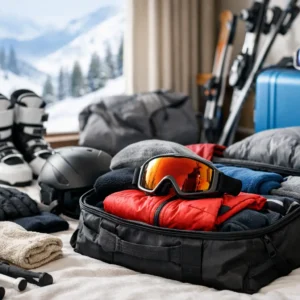
The common mistake is treating a ski bag as free extra luggage, then packing salopettes, jackets, helmets and apres-ski footwear around the skis. That can leave you with a 28kg bag that is both expensive and unpleasant to handle. Weigh the bag fully packed, including the bag itself, at least a day before you travel. Shift dense items such as toiletries and chargers into your main case, and carry delicate essentials – goggles, electronics and medication – in hand luggage.
If you are travelling as a group, do not rely on being able to redistribute weight at the desk. Oversize-sports counters are often separate from standard check-in, and the staff may apply the rules differently. Book equipment in advance, keep confirmation handy and allow more time than you would for a suitcase-only trip.
Pack skis so they arrive ready to use
Start by cleaning and drying skis. Use a ski strap above and below the bindings to stop bases rubbing together, then protect the edges with a purpose-made ski wrap, old towels or folded ski clothing. Place poles alongside rather than across the skis, with baskets positioned away from vulnerable fabric panels.
Padding is most useful around bindings, tips and tails. A jacket wrapped around the binding area helps, but avoid creating a bulky, lopsided bundle that strains the zip. Tighten external compression straps once the bag is closed. If the skis can slide from end to end, add padding and tighten again.
Finally, photograph the packed skis and the outside of the bag before handing it over. It is not a substitute for travel insurance, but it gives you a clear record of the equipment and its condition if a bag is delayed or damaged.
A good ski bag should fade into the background of a trip: easy to wheel, easy to check in and reassuringly intact when it arrives at the other end. Spend according to how often you fly and how much protection your skis need, then pack with enough discipline to leave the airport thinking about snow rather than baggage charges.