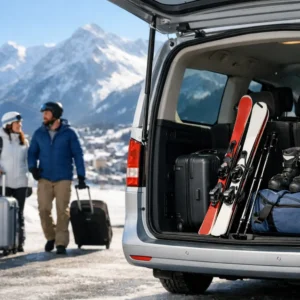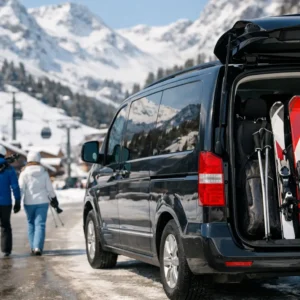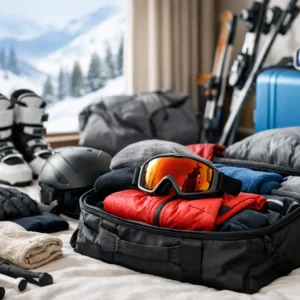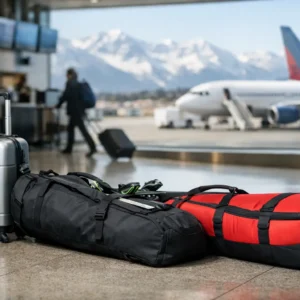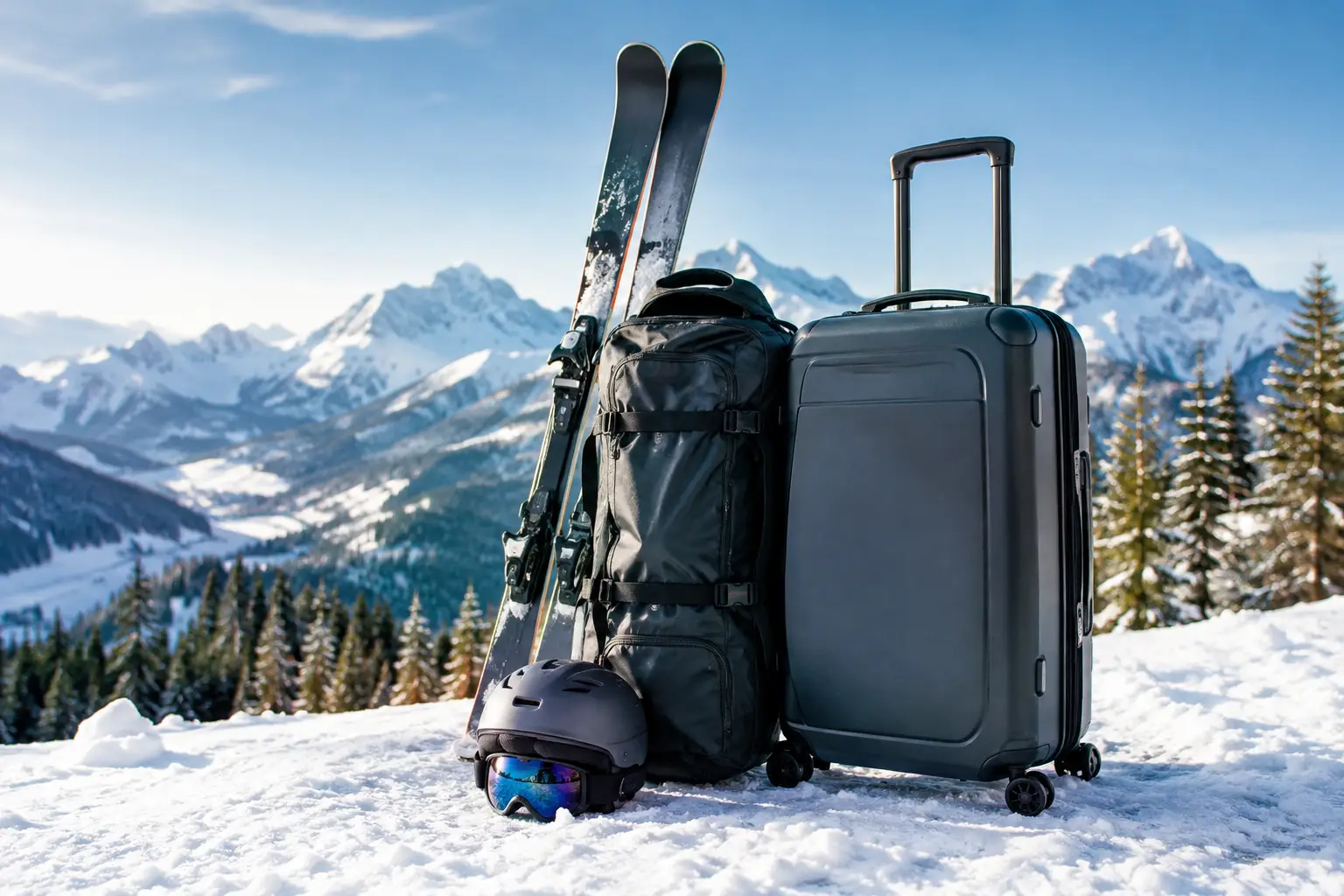
A ski holiday can begin badly before you have even left the airport. One awkwardly packed ski bag, a boot bag that will not fit under the seat, or an unexpected excess-baggage charge can turn the transfer day into a test of patience. Good ski luggage is not glamorous kit, but it is one of the most useful purchases a regular skier or snowboarder can make.
The right setup depends less on how much gear you own than on how you travel. A self-drive week in the Alps calls for something different from a short flight to Geneva, a rail journey to Austria or a family holiday where every hand is already occupied with children, helmets and snacks. The aim is simple: protect the expensive bits, keep the journey manageable and avoid paying to transport empty space.
Start with the journey, not the bag
Before buying ski luggage, look at the full route from home to accommodation. UK skiers often focus on the flight allowance, then forget the stairs at the station, the crowded airport bus and the walk from resort drop-off to a chalet door. A cavernous wheeled bag is a joy across a car park but can be a nuisance in a small hotel room or on a packed transfer.
Airline policy matters, but it is not universal. Some carriers include ski equipment in a standard checked-bag allowance, while others treat it as a separate sporting item and impose size or weight restrictions. Charter arrangements and package holidays can have their own rules too. Check the current allowance before packing, particularly if you are taking skis and boots rather than hiring either at the resort.
There is also a useful question of frequency. If you fly once a season and hire skis, a quality boot bag and a practical holdall may be all you need. If you travel regularly with your own skis, a durable ski bag quickly becomes less of a luxury and more of a way to make each trip calmer.
Ski luggage: the core three-bag setup
For many skiers, the most effective arrangement is not one giant item but three clear categories: a ski bag, a boot bag and a main clothing bag. It spreads weight, makes airport organisation easier and keeps boots close enough to recover quickly if checked luggage is delayed.
The ski bag
A padded ski bag is the sensible choice for flying with your own skis. Airport handling is not delicate, and edges, bindings and poles need more than a thin sleeve between them and the baggage system. Look for padding around the binding area, a reinforced base and a full-length zip that lets you load skis without wrestling with the bag.
Wheels are worth having if you are carrying one pair of skis, poles and extra outerwear. They make long terminal walks far less tiring, especially when paired with a boot bag that slides over the handle. The trade-off is weight. A wheeled, heavily padded bag can consume a meaningful part of a 23kg allowance before the skis are even inside.
For a simple point-to-point trip, a lighter padded bag may be better. It is easier to store in a flat and usually kinder to your baggage limit. Skiers taking two pairs, or travelling with a partner, may prefer a double ski bag, but should be realistic about lifting it. Two pairs of adult skis, poles and clothing can become an awkward load very quickly.
Use the space around skis intelligently. Wrap poles in a jacket or ski trousers, place softer layers around the bindings and secure loose straps so they cannot catch in conveyor belts. Do not rely on clothing alone as protection, though. It helps absorb knocks, but it does not replace proper padding.
The boot bag
Your ski boots are the item most worth controlling. A familiar pair of properly fitted boots can make or break a week on snow, and replacing them at short notice is rarely straightforward. If baggage rules permit, taking boots as cabin luggage is the safest option, although a fully loaded boot bag may exceed some airlines’ dimensions or weight limits.
A well-designed boot bag should have a ventilated boot compartment, a separate pocket for goggles and lenses, and enough structure that it stands up while you pack. Backpack straps are particularly useful through airports, train stations and resort streets. Heated boot bags sound appealing, but they are generally more relevant to driving than flying and add cost and bulk.
If boots must go in the hold, pack them in the centre of a protective bag and keep essentials in hand luggage: prescription medication, goggles, gloves, a base layer and perhaps one ski sock. You will not be skiing comfortably without your boots, but you can at least be ready to start when the delayed bag catches up.
The clothing bag
A large duffel, soft-sided holdall or conventional wheeled case is usually better for clothing than trying to force everything into the ski bag. Soft luggage is easier to squash into a chalet bedroom and can take bulky layers without wasting its rigid corners. A suitcase offers better organisation and is useful if the holiday includes a city stop before or after the mountains.
For most one-week trips, a medium-to-large bag is enough. Ski clothing looks bulky, but thermals, mid-layers and casual kit pack down well when rolled or placed in compression cubes. Avoid packing for every possible weather scenario. One warm mid-layer, one lighter option and a dependable shell will serve most Alpine weeks better than several heavy jumpers.
What protection is actually worth paying for?
Not every feature on premium ski luggage earns its place. Padding, solid wheels, sturdy handles and reliable zips matter because they deal with the stresses of travel. Waterproof fabric is useful when bags sit briefly in snow or slush, though no ski bag should be left outside for hours. Bright lining and sensible compartments make it easier to find gloves, chargers and spare lenses in a dark transfer coach.
Hard cases offer the highest level of protection, but they are rarely the most practical option for airline ski travel. They are heavy, bulky and difficult to store once in resort. Unless you are transporting particularly delicate equipment, travelling by car, or carrying kit for work, a well-padded soft bag is generally the better balance.
Length-adjustable ski bags deserve attention. They reduce excess material around shorter skis and make a bag more useful if your setup changes. Measure your skis rather than assuming the stated bag length will suit. Include the turned-up tip and allow a little room for the zip to close without strain.
For snowboarders, the same principles apply, although board bags tend to have more usable space for outerwear and helmets. A wheeled board bag is particularly welcome when carrying a board, bindings and boots, but the combined weight can rise sharply. It often makes sense to keep boots separate and use the board bag for the board, bindings and soft gear only.
Pack for the baggage hall, not just the slopes
A little planning prevents the familiar baggage-hall shuffle. Attach a clear luggage tag inside and outside every checked item, and photograph your bags before leaving home. Distinctive straps or a coloured tag help identify them on the carousel, but avoid loose accessories that can snag.
Keep valuables and fragile items out of checked luggage. Goggles can survive in a dedicated hard case inside a boot bag, but cameras, travel documents, money and electronics belong with you. Take bindings and skis as they are, rather than trying to dismantle equipment for the sake of marginal space savings.
It is also worth weighing bags at home. Bathroom scales are imperfect, but they are better than finding out at the airport desk that your neatly packed ski bag is four kilos over. Distribute heavier items between bags where the airline allows it, and remember that a boot bag may count as a separate piece even if it feels like hand luggage.
The case for hiring, even if you own skis
Taking your own skis gives you a familiar setup and removes the uncertainty of resort hire stock. It is particularly appealing for advanced skiers, those with unusual boot or ski requirements, and anyone heading away for several weeks. Yet hiring can be the smarter choice for a short break, a multi-resort itinerary or a trip involving several flights.
The calculation is not just hire cost versus baggage fee. Consider the taxi or transfer space, the risk of delayed equipment, the effort of moving bags through airports and whether your skis suit the expected conditions. A narrow piste ski may be perfect for a firm January week, but less useful during a soft, snowy spring trip. Hiring locally can give you flexibility as well as less luggage.
For regular mountain travellers, the best ski luggage is the kind that makes the journey fade into the background. Choose bags that suit your actual routes, protect the equipment you care about and leave enough energy for the first lift rather than the baggage carousel.