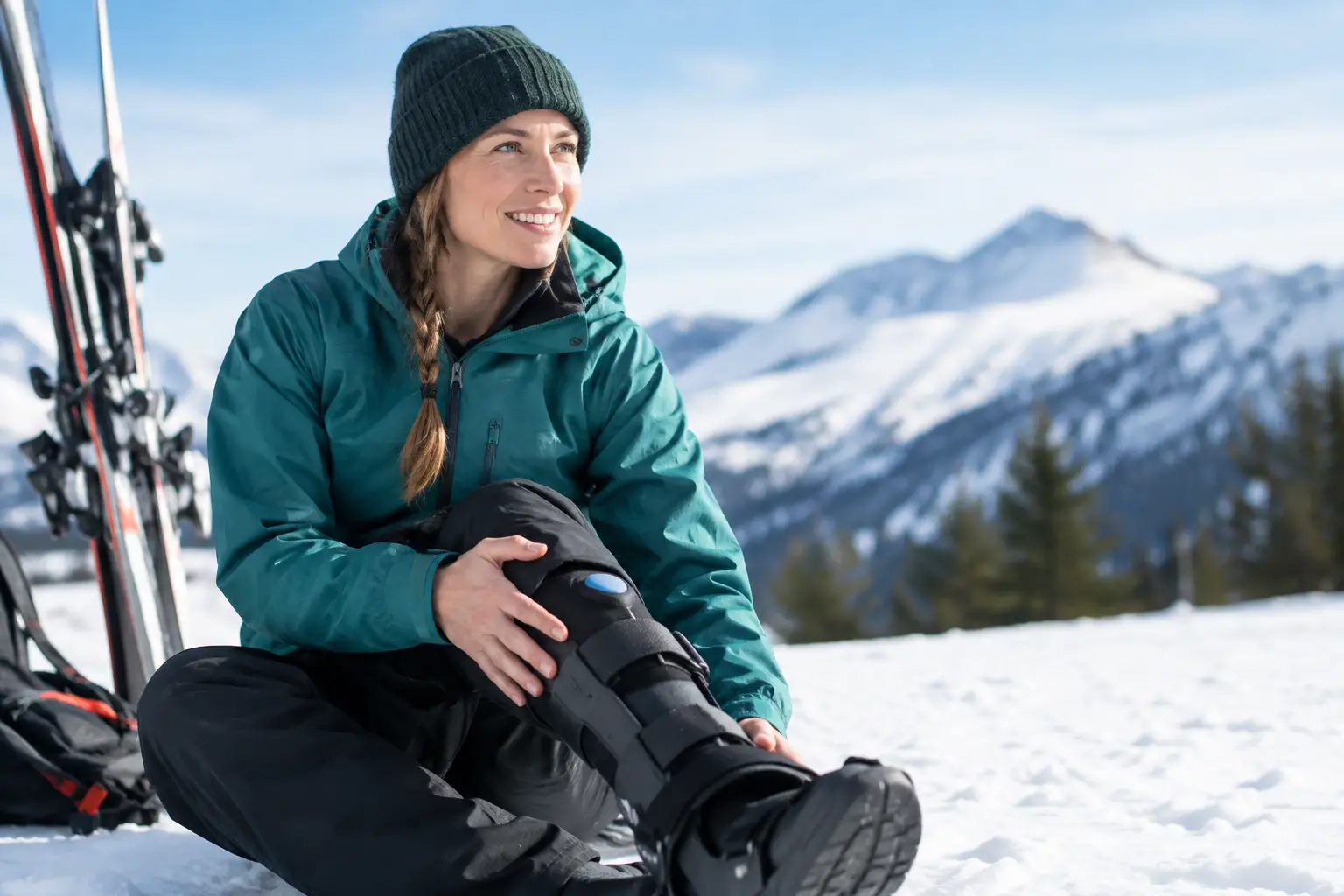
The awkward shuffle from the boot room to the lift is a familiar sight at any resort, but pain is not something to ski through for the sake of a long-awaited week in the mountains. Good ski injury recovery is less about rushing back to the piste and more about making smart decisions early, then rebuilding the strength, movement and confidence that skiing or snowboarding demands.
Whether the problem is a twisted knee after catching an edge, a sore shoulder from a fall, a thumb injured by a pole strap or a persistent ache that appeared halfway through the week, the route back should match the injury. A minor knock and a suspected ligament injury are not the same proposition, and neither are a first-time skier’s fall and an experienced rider’s crash in variable off-piste snow.
The first 48 hours set the tone
After a significant fall, stop and assess rather than trying to make a judgement from adrenaline alone. Ski patrollers are there for a reason, and an assessment on the hill can establish whether you need transport, immobilisation or further treatment. Seek urgent medical help for obvious deformity, severe or worsening pain, inability to bear weight, numbness, loss of circulation, a head injury, neck or back pain, or symptoms that do not settle after a hard impact.
Concussion deserves particular respect. A helmet reduces risk but does not make concussion impossible. Headache, nausea, dizziness, confusion, poor balance, unusual tiredness or memory gaps after a fall are reasons to stop riding and get assessed. Do not return to skiing or snowboarding that day simply because you feel better after a hot chocolate and a rest.
For less serious soft-tissue injuries, protect the area from further aggravation and follow the advice of a qualified clinician. Ice can help some people manage pain in the short term, but it is not a cure and should not be applied directly to bare skin. Compression and elevation may be useful where swelling is present. More importantly, avoid the classic holiday mistake of repeatedly testing an injury on the slopes because it feels slightly easier each morning.
If you are abroad, keep copies of medical notes, scans and receipts for insurance purposes. When you are back in the UK, arrange follow-up promptly if symptoms persist or you have been advised to do so. A diagnosis gives rehabilitation direction. Without one, it is easy to train the wrong thing, or return too early.
Ski injury recovery needs a clear diagnosis
“Knee pain” can mean anything from a bruise to a meniscus injury, a collateral ligament sprain or an anterior cruciate ligament rupture. Shoulder pain after a snowboard fall may be a simple strain, a dislocation, a fracture or an AC joint injury. The recovery timeline, treatment and safe return criteria can differ considerably.
A sports physiotherapist, GP, consultant or specialist clinician can help establish what is going on and whether imaging is needed. It is worth seeing someone who understands skiing and snowboarding if possible. They will appreciate that a recreational skier still needs to absorb uneven terrain, rotate through linked turns and cope with long days at altitude, rather than merely walk comfortably on level ground.
There is a trade-off here. Not every niggle needs a scan or a lengthy lay-off, and over-medicalising ordinary post-holiday soreness can create anxiety. Equally, persistent swelling, instability, locking, loss of movement or pain that limits everyday activity is not something to dismiss as “just ski legs”.
Rebuild for the movements snow sports require
Rehabilitation is rarely exciting, but it is where the next holiday is won or lost. The aim is not only to make the injured area less painful. It is to restore capacity for the positions and forces that occur on snow.
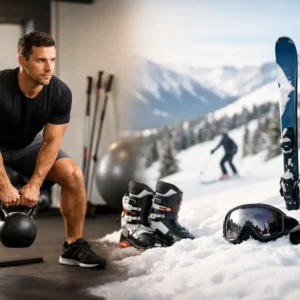
For knee injuries, that often means regaining full range of movement, then building quadriceps, hamstring, glute and calf strength. Single-leg work matters because skiing places substantial load through one leg at a time, particularly in turns, bumps and uneven snow. Step-downs, split squats, controlled lunges and balance work are common progressions, but the right exercises and loading depend on the diagnosis.
For shoulder injuries, mobility must be restored alongside strength and control around the shoulder blade and rotator cuff. Snowboarders in particular should not underestimate the demands of getting up repeatedly, carrying a board and using an arm to protect themselves in a fall.
As pain settles, rehabilitation should become more specific. Skiing asks for repeated leg flexion, lateral control, rotation and the ability to absorb changing forces. Snowboarding adds prolonged asymmetrical stance, edge-to-edge pressure and frequent demands on the wrists and shoulders when falls happen. A good programme may include cycling or walking for conditioning, strength training, balance drills, hopping or landing work, and gradually more demanding changes of direction.
The key word is gradually. A hard gym session that causes pain or swelling to spike for several days is feedback, not proof of toughness. A clinician or physiotherapist can help you judge whether discomfort is acceptable training response or a sign that the load needs reducing.
Do not neglect fitness while the injury settles
An injured knee or shoulder does not always mean complete inactivity. Subject to clinical advice, maintaining cardiovascular fitness can make the eventual return far easier. Options may include a stationary bike, swimming, deep-water running, an upper-body ergometer or brisk walking. The best choice depends on what hurts, what is safe and what you can do consistently.
This is particularly valuable for UK skiers preparing for one concentrated alpine week. General fitness will not replace technical preparation, but it reduces the shock of suddenly skiing six hours a day after months at a desk, in a car or on a train.
Set return-to-snow criteria, not just a date
The calendar can be misleading. Being six weeks, three months or nine months after an injury does not automatically mean you are ready for a ski holiday. Recovery timelines vary widely with the injury, treatment, age, previous fitness and how the body responds to rehabilitation.
A safer decision is based on function. Can you walk briskly, use stairs, squat, lunge, balance on one leg and complete your prescribed exercises without significant pain, swelling or giving way afterwards? Have you rebuilt strength and control to the standard your clinician recommends? Are you mentally prepared for the movement that caused the injury?
Confidence matters, but it should be earned through progressive exposure rather than forced. Many skiers protect an injured knee by sitting back, stiffening up or avoiding pressure on one ski. That can create a different problem on steeper terrain. Start with familiar, gentle slopes and conditions that allow space to practise. A snowboarder returning after a wrist or shoulder injury may want a quieter piste, soft snow and a session focused on clean basic turns rather than terrain park laps or side hits.
For a first day back, keep the ambition modest. Warm up properly, take frequent breaks and finish while you still feel in control. Fatigue changes technique, particularly in heavy afternoon snow. A half-day of composed skiing is far more useful than squeezing in a final run that leaves the joint swollen for the rest of the trip.
Make the next trip easier on your body
Good preparation can reduce the chance of repeating the same injury, although no plan removes risk from snow sports. Have bindings checked and adjusted by a qualified technician, particularly after a change in boot, weight, ability or equipment. Skiers should avoid carrying poles by the straps around the wrists during a fall, while snowboarders benefit from well-fitting wrist guards if they are appropriate for their riding and gloves.
Choose terrain honestly. The first holiday after a serious injury may not be the moment to chase powder, test a new line or keep pace with the strongest skier in the group. Conditions also matter: crowded pistes, low visibility, boilerplate hardpack and heavy chopped snow all increase the technical demand.
A lesson can be a sensible part of ski injury recovery rather than an admission that your skiing has slipped. An experienced instructor can identify compensations, rebuild confidence and help you return to a more efficient stance. For regular indoor-slope users, a few controlled sessions before departure can reveal whether your body is ready for a full mountain week.
The mountains will still be there next season, and so will the pleasure of linking turns with a body that trusts itself again. Give recovery the same patience you would give to choosing boots or planning a proper snow trip, and your return is far more likely to feel like a return to the sport you love rather than a gamble.