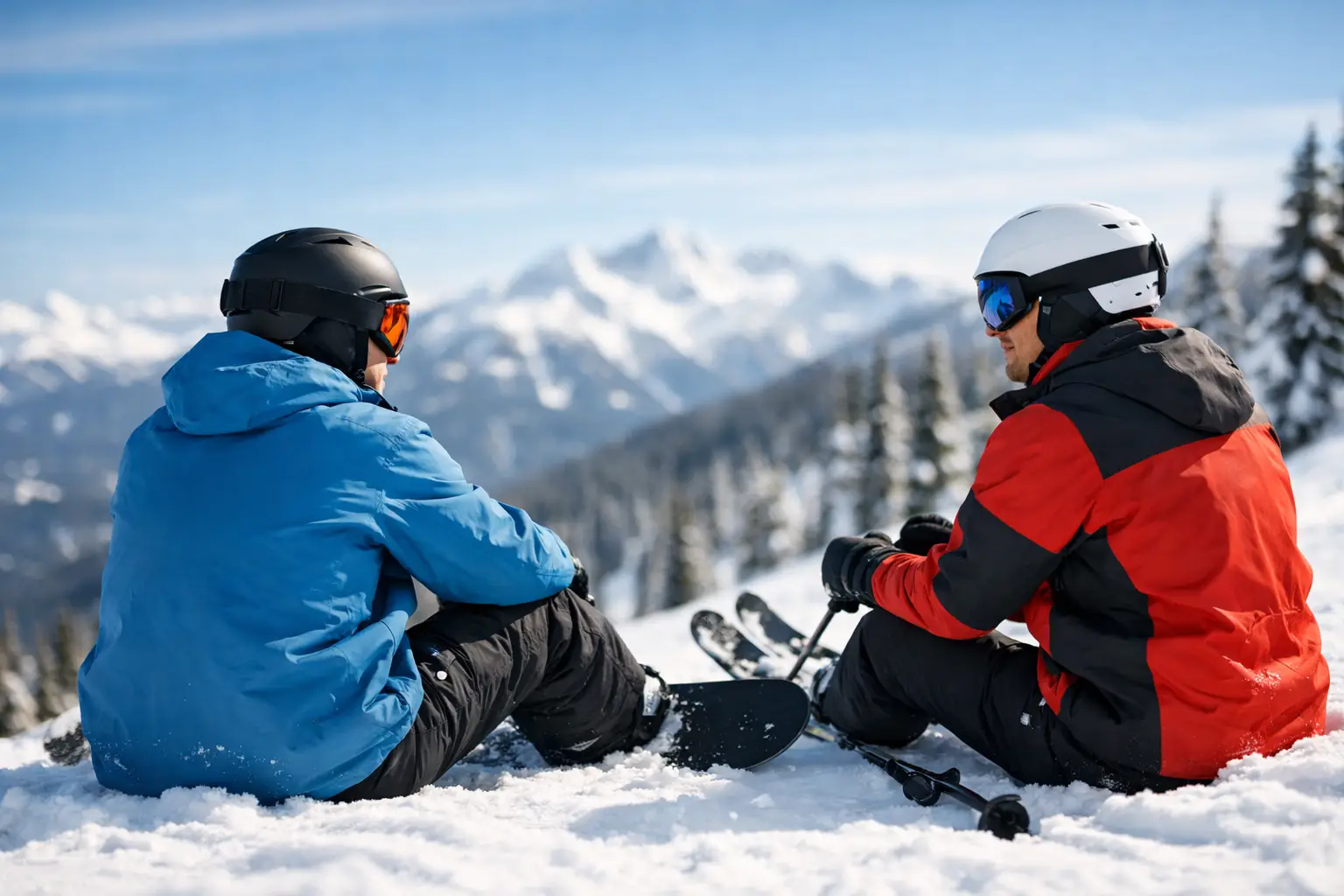
Stand at the bottom of a nursery slope for ten minutes and the question answers itself – then immediately becomes more complicated. Is snowboarding harder than skiing? For most complete beginners, yes, snowboarding usually feels harder in the first couple of days. But skiing often takes longer to do really well, especially once speed, steeper pistes and varied terrain enter the picture.
That is why the old debate never quite disappears. People are usually asking two different questions at once. Which sport is easier to learn on day one, and which is easier to master over a full winter holiday or over several seasons? Those are not the same thing.
Is snowboarding harder than skiing for beginners?
If you are starting from scratch, skiing tends to be more forgiving in the opening hours. You have two separate skis, your stance is more natural for walking and gliding, and you can often get moving with a basic snowplough sooner than a snowboarder can link smooth turns. Many beginners find that first sense of control arrives more quickly on skis.
Snowboarding, by contrast, asks you to commit to a sideways stance and to balance with both feet fixed to one board. That feels odd at first. Getting off a lift, moving on flat sections and standing up after a fall can all seem unnecessarily difficult when you are new to it. The first day on a snowboard can be bruising, both physically and mentally.
That said, the story changes surprisingly quickly. Once a snowboarder understands edge control and starts linking turns, progress can accelerate. It is common to see skiers looking more comfortable on day one, then snowboarders looking more fluid by day three or four. So yes, snowboarding is often harder at the start, but not always harder for long.
Why snowboarding feels tougher at first
The main reason is simple – beginners spend a lot of time on the ground. Heel-side and toe-side edges are not intuitive in the same way a snowplough is. Catch an edge at low speed and the fall is usually abrupt. Most new snowboarders collect a sore backside, bruised knees and aching wrists within a morning.
There is also less independence early on. A novice skier can shuffle about, skate a little on the flat and separate the movements of each leg. A novice snowboarder has fewer options. With one foot strapped in, traversing beginner areas and reaching lifts can feel awkward. That awkwardness makes the learning process feel steeper than it really is.
Then there is posture. Many first-time snowboarders instinctively lean back, which makes control worse. Good instruction fixes this quickly, but before that breakthrough, the board can feel like it has a mind of its own.
Where skiing becomes more demanding
Skiing’s advantage is that the first steps are often easier. Its challenge is that the skill ceiling is broad and technical. You can get down a gentle blue run on skis fairly early, but carving cleanly, managing pressure through both skis, skiing bumps well and handling chopped-up afternoon snow all require more refinement than many beginners expect.
Parallel turns on steeper slopes are a bigger jump than the snowplough stage suggests. A lot of skiers plateau because they can cope, but not yet with much efficiency or style. That matters on a week-long Alpine holiday, where confidence can be tested by changing snow, busy pistes and long descents.
Snowboarding has its own advanced demands, of course, especially in powder, terrain parks and narrow cat tracks. But many riders feel that once the fundamentals click, cruising red runs can come more naturally than it does for skiers at the same stage.
The learning curve is different, not simply harder or easier
This is the point most blanket statements miss. Skiing often offers a gentler introduction and a slower build. Snowboarding often gives a rougher introduction and a faster sense of flow once the basics land. Neither sport wins outright. They challenge you in different phases.
For adults choosing between the two, that distinction matters more than any pub argument. If you want a more encouraging first two days, skiing is usually the safer bet. If you are willing to endure a frustrating start for the chance of feeling smooth and stylish quite quickly, snowboarding may suit you better.
Age, fitness and sporting background also change the equation. Someone with skating, surfing or wakeboarding experience may find snowboarding more intuitive. A person with little board-sport background, limited flexibility or concerns about repeated falls may get on better with skis.
Is snowboarding harder than skiing on a one-week holiday?
For many British holidaymakers, this is the question that actually matters. If you have one week in the mountains and want to maximise slope time, skiing often makes more practical sense. The early progress tends to be quicker, and you may spend less of the holiday recovering from beginner tumbles.
A first snowboard trip can still be hugely rewarding, but it usually requires patience. Day one may feel grim. Day two can be inconsistent. By the second half of the week, many riders suddenly improve and start enjoying the mountain properly. If you can accept that pattern, snowboarding is not a bad choice at all. If you know you will be frustrated by a slow start, skiing may give you a better first holiday.
This is also where lessons make a real difference. In both sports, proper tuition shortens the painful stage. In snowboarding especially, a good instructor can prevent the classic cycle of edge-catching, leaning back and losing confidence.
Terrain changes the answer
On wide, gentle pistes, both sports are accessible, although skiing usually feels simpler first. On long flat sections, skiing is markedly easier. Skiers can glide and skate where snowboarders may need to unstrap and push, which is tiring and irritating if a resort has lots of traversing or poorly designed run-outs.
In powder, the answer depends on level. Many riders say snowboarding feels more natural in soft snow once you are competent, because the board can float smoothly with the right stance and speed. Skiers, though, have more options for balance and recovery if they are experienced.
In moguls, many recreational snowboarders struggle more than comparable skiers. In terrain parks, the preference often reflects background and personal style rather than difficulty alone. On icy pistes, neither discipline is especially forgiving for beginners, though edge control becomes critical in both.
The equipment influences confidence
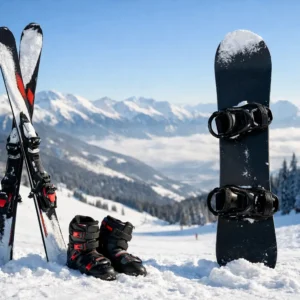
Skis and snowboards do not just behave differently – they shape your confidence in different ways. Beginners on skis often appreciate having poles, independent legs and a forward-facing stance. That combination feels reassuring. Beginners on a snowboard often appreciate the simpler idea of one board and no poles once they are moving well, but getting to that point is the challenge.
Boot comfort also matters. Many skiers dislike stiff hire boots, especially if the fit is poor. Snowboard boots are generally more comfortable for walking and standing around. That can make the off-snow side of a trip feel easier, even if the on-snow learning curve is tougher.
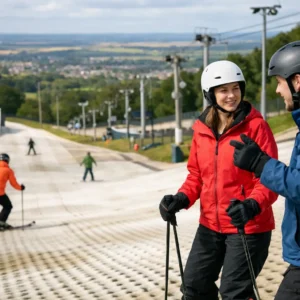
For UK readers doing a first indoor lesson before a mountain holiday, this is worth remembering. A rough first snowboard session at an indoor slope does not mean the sport is not for you. It may simply mean you are still in the awkward phase.
Who should choose skiing?
Skiing is often the better first choice for families, nervous beginners and anyone who wants to cover the mountain sooner. It suits those who value an easier opening experience and those likely to ski mixed terrain with friends of different abilities. It is also practical for people who only manage one annual trip and do not want to sacrifice half of it to the steepest part of the learning curve.
Who should choose snowboarding?
Snowboarding suits people who do not mind a tougher first couple of days and like the idea of a more compact, surfier feel once they are up and running. It appeals to many riders who enjoy board sports, want a strong sense of progression, or simply prefer the culture and movement of snowboarding to skiing’s more technical structure.
There is also the less scientific but still valid factor of motivation. If one discipline excites you more, you are more likely to persevere through the difficult bit. That counts for a lot.
So, is snowboarding harder than skiing?
In the early stages, usually yes. Over time, not necessarily. Skiing is often easier to start, while snowboarding can feel easier to settle into once the fundamentals click. The better question is not which sport is harder in the abstract, but which learning curve suits you, your holiday plans and your appetite for frustration.
If you are choosing for a first trip, be honest about what you want from the week. If you want quicker early wins, choose skis. If you are happy to earn your breakthrough the hard way, choose a snowboard. Either way, good instruction, realistic expectations and a sense of humour will do more for your progress than any argument about which discipline is tougher.