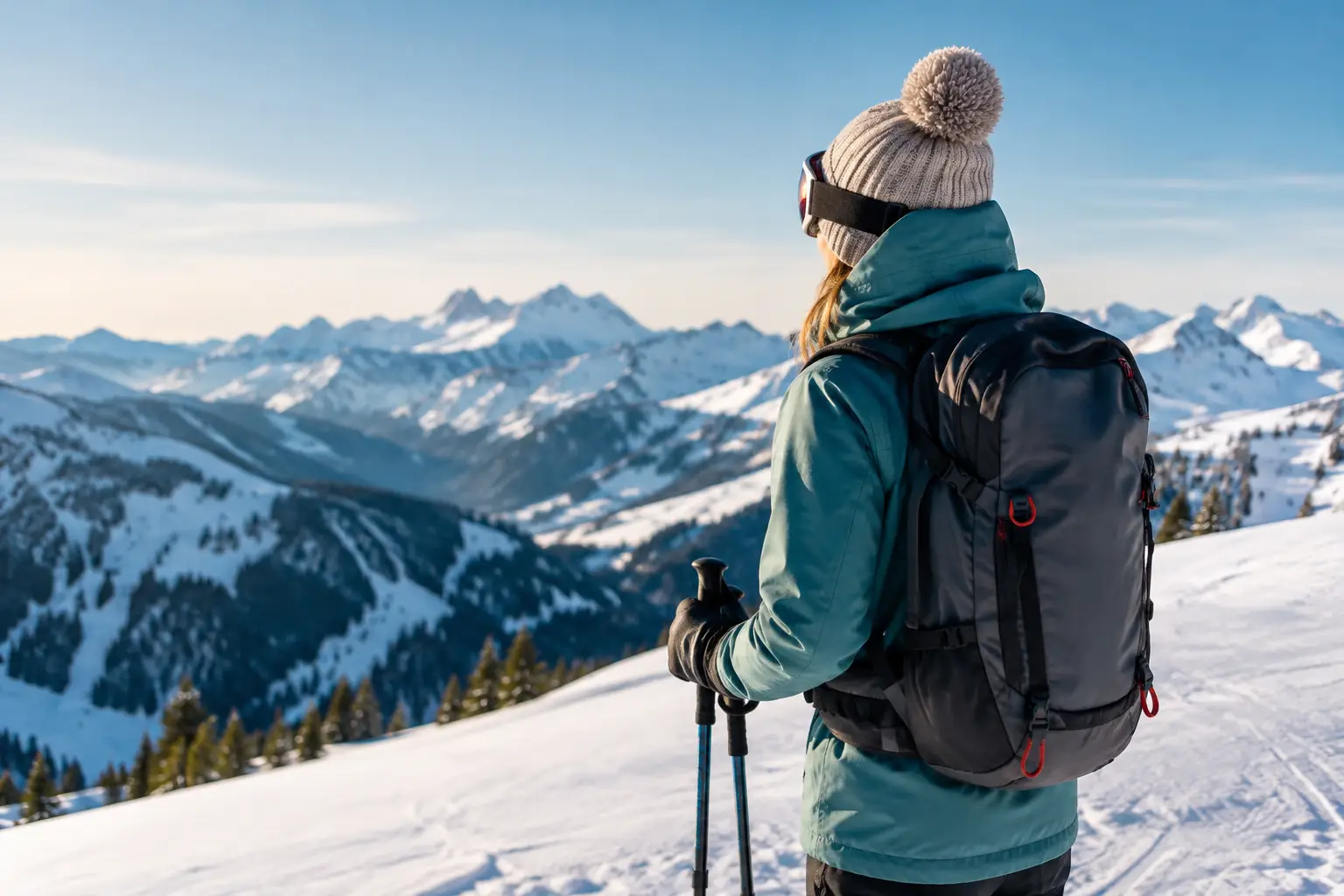
A ski backpack can be the difference between a relaxed day in the mountains and a constant battle with loose straps, cold hands and kit you cannot reach when you need it. This ski backpack review focuses on what genuinely earns space on your back, whether you are lapping a big Alpine ski area, heading into the sidecountry with a guide, or carrying boots and layers between the car park and a UK indoor slope.
The right choice is rarely the biggest or the most feature-packed model. It is the pack that stays stable at speed, makes sense for the kind of skiing or snowboarding you actually do, and does not become a nuisance every time you get on a chairlift.
Ski backpack review: start with your day on snow
A compact 12 to 18-litre pack is enough for many resort skiers and snowboarders. It will take a spare layer, gloves, goggles, sun cream, water, snacks and the usual pocket essentials without encouraging you to carry half the chalet. For a full-day lift-served outing, this is often the sweet spot: low-profile, light and much less likely to catch on a chair or feel top-heavy through bumps.
Move up to around 20 to 30 litres if you regularly carry extra insulation, a packed lunch, camera gear, children’s layers, or touring safety equipment. This size is also more realistic for a short backcountry tour, provided it has dedicated storage for shovel and probe. Above 30 litres, a ski backpack starts to become a specialist tool for longer tours, hut-to-hut trips or professional use. It may be excellent in the right setting, but it is unnecessarily bulky for a normal piste day.
Snowboarders should be especially honest about capacity. A pack that is comfortable on the lift can become awkward when worn over a jacket while riding, particularly if it sits high and projects far from the back. A clean, close-fitting profile matters more than an extra compartment you may use once a season.
Fit is the feature you notice every run
The most convincing pack on a shop floor can be disappointing once it is loaded, worn over ski clothing and taken down a red run. Look for shoulder straps that sit comfortably around the neck rather than pressing into it, and a sternum strap that can be adjusted without searching for tiny buckles in gloves.
A proper hip belt is valuable on larger packs and for touring, because it transfers weight towards the hips and stops the load swinging as you turn. On small resort packs, a simple waist strap may be enough, but it should still be easy to tighten and tuck away. Loose webbing flapping in the wind is more than an irritation: it can snag on lift hardware or get caught when loading a chair.
Back-panel length matters too. Shorter riders should not assume that a unisex pack will fit, while taller skiers may find a compact freeride model sitting too high between the shoulder blades. Women-specific fits can work well because they typically have a shorter back length and differently shaped shoulder straps, but the label is less important than trying the pack on with a realistic load.
Where possible, test it wearing your ski jacket. Zip it up, bend forward, twist at the waist and mimic the movement of getting onto a lift. If it shifts now, it will shift more on snow.
Access beats clever organisation
Skiing brings cold fingers, wind and the occasional need to find something quickly. The best designs keep essential kit straightforward to reach. A fleece-lined goggle pocket protects lenses from scratches, but it should be large enough for modern goggles and not filled by a helmet or bulky mid-layer beneath it.
A separate pocket for wet skins, crampons or damp gloves is useful for tourers, although it adds less value to a piste-only bag. Side access can be genuinely helpful when a pack is full, letting you retrieve a layer without unpacking everything from the top. It is not essential, however, and every additional zip is another potential weak point for snow and moisture.
Think about what you carry most often. If your phone, piste map and lift pass live in different inaccessible pockets, the organisation is working against you. A small, easy-to-find valuables pocket and a dependable key clip are modest details that make a pack feel far more considered over a season.
Hydration sleeves deserve a note of caution. They are useful in spring and on touring days, but a hose can freeze in sustained sub-zero temperatures unless it is insulated and routed sensibly. For many resort skiers, an insulated bottle carried inside the pack remains the simpler option.
Carry systems should suit the terrain
Ski carry is not a universal requirement, but it is worth having if your plans include boot packs, short hikes beyond the lifts or travel by public transport. A-frame carry, with skis held on either side of the pack, is balanced and secure. It is particularly good for touring, though it can be slower to set up.
Diagonal ski carry is quick and common on freeride packs. The trade-off is that the skis can sit high and feel unwieldy in wind or tight spaces. If you use wider skis, check that the straps are long enough and that the edges do not rub against fabric where they could cause wear.
For snowboarders, vertical or horizontal board carry is useful for approaches and airport transfers. Vertical carry is generally neater, while horizontal carry can feel more balanced with a heavy board but creates a much wider profile. In either case, secure compression straps are essential. A board that sways with every step soon becomes tiresome.
Helmet carry is another feature worth assessing in real terms. External helmet nets keep the main compartment free, but helmets can catch snow and branches, and a loosely fitted net can make the load feel untidy. If you only carry a helmet occasionally, a stowable attachment system is often preferable to a permanent mesh pouch.
Safety storage is not a marketing extra
For anyone travelling beyond patrolled resort terrain, dedicated avalanche-tool storage is a serious consideration. A separate, clearly marked compartment should hold a shovel and probe in a way that is quick to access and does not mix sharp metal edges with spare clothing. Practise taking the equipment out while wearing gloves before relying on it.
An airbag-compatible pack can be appropriate for experienced off-piste skiers and snowboarders who understand avalanche terrain and make regular use of qualified guides, forecasts and rescue training. It is not a licence to enter consequential terrain, nor does an airbag replace a transceiver, shovel, probe, sound judgement or companions who know how to use the same equipment.
For on-piste holidays, there is no need to buy a technical avalanche pack simply because it looks more serious. You will usually get better value from a comfortable, durable day pack with sensible storage.
Weatherproofing and durability in British reality
Most ski backpacks are water-resistant rather than fully waterproof, which is normally sufficient for snowfall and brief contact with wet chairlifts. Pay attention to the base fabric, zip quality and areas exposed to ski edges. A reinforced lower panel is particularly welcome when bags are dropped onto icy car parks, wet coach floors and chalet boot rooms.
Lighter materials reduce weight, but ultra-thin fabric can suffer if you regularly attach skis, carry a board or travel with the pack as hand luggage. There is a sensible middle ground: choose a pack light enough that it disappears while skiing, but tough enough for several winters of handling, baggage belts and mountain weather.
Colour is not merely a style decision. Bright shades can be easier for your group to spot at a crowded lift station or in flat light, while darker packs tend to disguise grime and grease from travel days. Neither is objectively better, but it is a small choice that affects daily use.
The verdict: buy for the trip you take most often
The strongest ski backpack is not necessarily the one designed for an expedition to remote terrain. For most UK skiers and snowboarders heading to the Alps, Pyrenees or Scottish mountains, a well-fitted 15 to 22-litre pack with a stable harness, accessible pockets and a simple helmet or ski-carry option will cover almost every resort day.
If touring and off-piste travel are central to your winter, step up to a purpose-built pack with a supportive hip belt, avalanche-tool compartment and carrying system you can operate confidently. Spend time adjusting it before the first ascent, rather than assuming the factory settings will suit you.
Choose the pack that leaves you free to concentrate on the snow ahead. When it fits properly and carries only what you need, you will barely notice it – which is exactly the point.