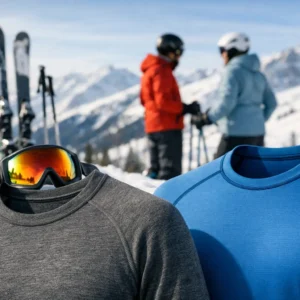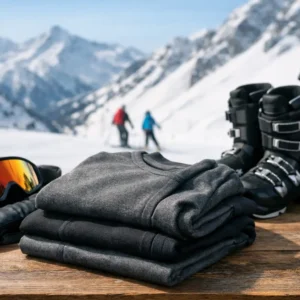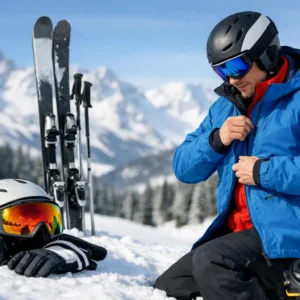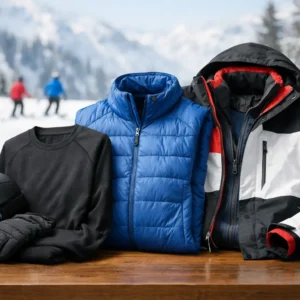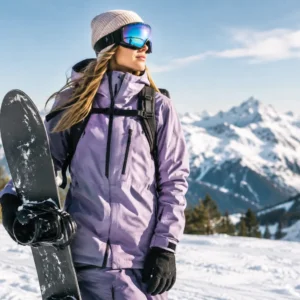
The first sign that a base layer is wrong usually arrives halfway down the morning’s first proper run. You are either clammy beneath your jacket, cold across the lift ride, or constantly tugging at a waistband that has slipped below your salopettes. None of this is dramatic, but it can make a long day on snow feel needlessly hard work. This guide to snowboard base layers focuses on the pieces that make the biggest difference: fabric, fit, weight and how your riding changes the equation.
A good base layer does not simply add warmth. Its primary job is to manage moisture next to the skin, moving sweat away so it can evaporate through the layers above. Get that right and you are more likely to stay comfortable from the first chair to the final lap, whether you are lapping a spring park, learning turns in a Scottish white-out or spending a January week in the Alps.
What snowboard base layers actually do
Snowboarding has a particular knack for exposing weak layering choices. You can work up a surprising amount of heat riding hard, hiking a feature or learning to link turns, then spend several chilly minutes sitting on a lift. Beginners also tend to spend more time on the snow, which makes a damp or poorly fitting layer far more noticeable.
Your base layer sits directly against the skin. It needs to wick perspiration, dry quickly and provide enough warmth for the conditions without making you overheat. The insulation comes mainly from the air trapped by the fabric and the layers above it, rather than from thickness alone.
That is why a cotton T-shirt is such a poor choice. Cotton absorbs moisture and holds it against the body. It may feel perfectly fine in the car park or the rental shop, but once it is wet it becomes slow to dry and cold on the chairlift. Save it for the journey home.
Choosing fabric: merino or synthetic?
The core choice in any guide to snowboard base layers is between merino wool and synthetic fabric. Both work well, but their strengths suit slightly different riders and trips.
Merino wool for comfort and variable conditions
Merino is popular because it feels soft, regulates temperature well and resists odour better than most synthetics. That last point matters on a week-long holiday when kit has to cope with repeated use in a compact flat or hotel room. A quality merino long-sleeve top is comfortable over a broad temperature range, making it an excellent all-round choice for relaxed piste riding, resort cruising and travel days.
It is not indestructible, however. Fine merino can wear through faster than synthetic fabric, especially where backpack straps, braces or waistbands create friction. It also dries more slowly once thoroughly soaked. Riders who sweat heavily, spend their days in the park or want one layer for regular indoor slope sessions may prefer the quicker drying performance and durability of synthetic options.
Synthetic layers for high-output days
Polyester and polyamide base layers are generally lighter, tougher and quicker to dry. They are a sensible option for splitboarding approaches, boot-packing, warm spring sessions and anyone who runs hot. Many have textured inner faces or body-mapped panels that improve breathability without leaving you exposed on the lift.
The compromise is odour. Modern treatments help, but synthetic tops can still smell sooner after several hard days. If you are packing light for a long trip, merino or a merino-synthetic blend can be easier to live with. A blend is often the sensible middle ground: it brings some of merino’s comfort and odour resistance, with better strength and drying time than pure wool.
Match the weight to the day, not the forecast alone
Brands commonly describe base layers as lightweight, midweight or heavyweight. Those labels are useful starting points, but the right choice depends on how you ride, your outerwear and how easily you feel the cold.
A lightweight layer is often enough for spring, indoor slopes, mild resort days and energetic riding. It is also the best foundation for a flexible layering system: add a fleece or lightweight insulated mid-layer when temperatures fall, rather than wearing an overly thick base layer all day.
Midweight layers are the dependable choice for most UK riders on a typical Alpine holiday. They offer welcome warmth on lifts and during slower periods without becoming excessive once moving. If you own only one set, this is usually where to start.
Heavyweight base layers have a place in genuinely cold conditions, especially for riders who feel the cold, spend long periods coaching children, or visit high, exposed resorts in midwinter. They are less adaptable, though. Put a heavyweight top under an insulated jacket on a mild day and you may quickly become sweaty, then cold when you stop.
Think beyond the temperature displayed on an app. Wind, humidity, shade, lift speed, altitude and your own pace all matter. A bluebird day at -8°C can feel warmer when riding than a damp, windy day just below freezing.
Fit matters more than most riders expect
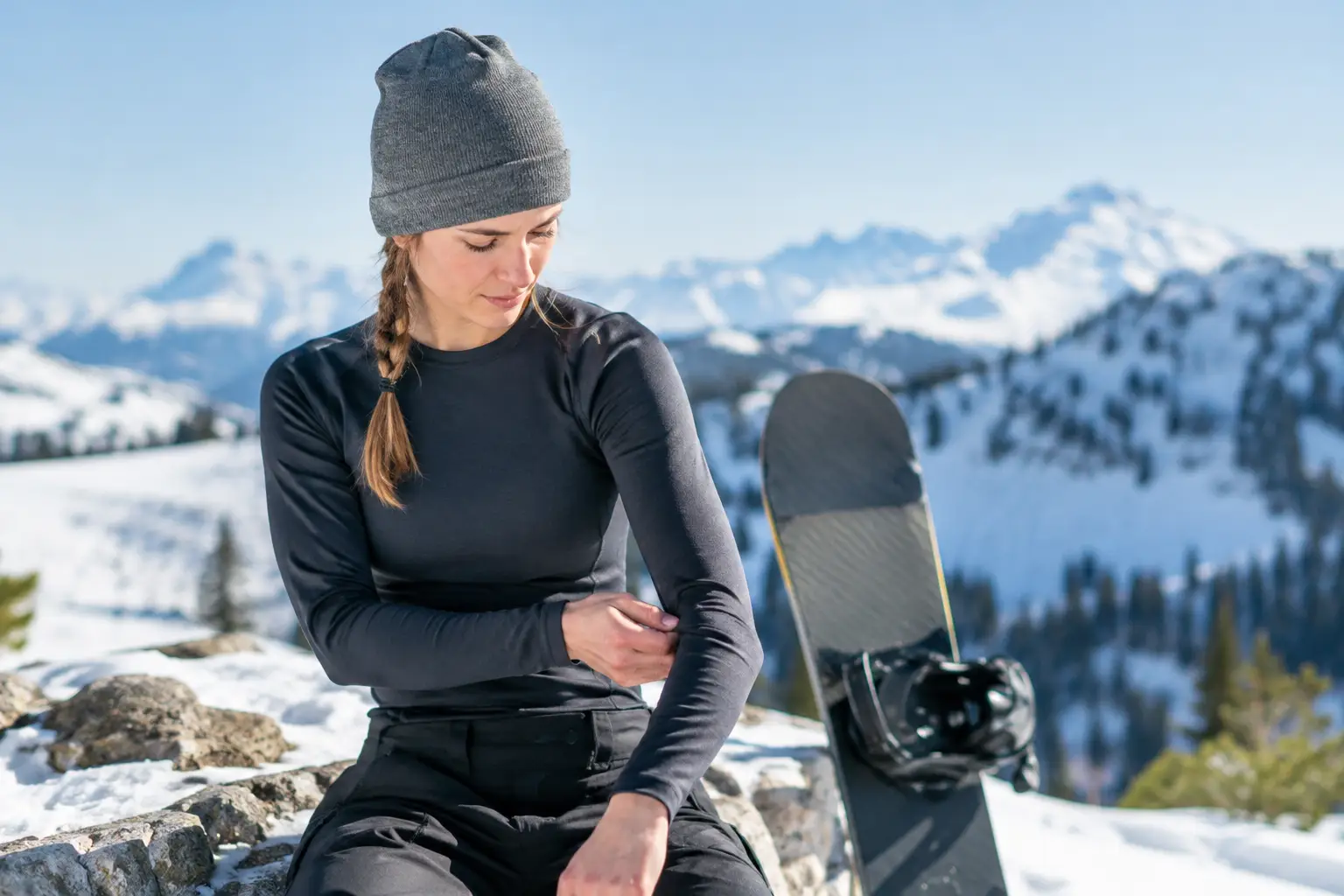
A base layer should sit close to the body without restricting movement. Loose fabric cannot move moisture as efficiently and tends to bunch under other layers. Overly tight fabric can feel restrictive through the shoulders, chest and knees, particularly when you are strapping in, grabbing a board or sitting down repeatedly.
For tops, look for enough length in the body that the hem stays tucked below your waistband when you reach forward. A high collar or short zip can be useful on cold chairlifts, but some riders dislike a tight neck when wearing a buff and helmet. Flat seams reduce rubbing, while raglan sleeves tend to sit more comfortably beneath backpack straps.
For bottoms, avoid bulky seams and thick waistbands. They can create pressure points under salopettes and make snowboard boots feel tighter once socks, boots and bindings are involved. Three-quarter-length base-layer bottoms are worth considering because they finish above the top of the boot. This avoids fabric bunching at the calf and keeps the boot-sock interface clean.
Socks are part of the base layer system
It is tempting to solve cold feet by wearing two pairs of socks. In snowboard boots, that often does the opposite. Extra bulk can restrict circulation, create wrinkles and leave your feet colder and less responsive.
Choose one pair of snowboard-specific or ski-specific socks with cushioning where you need it and a close, wrinkle-free fit. Merino blends are particularly useful for warmth and odour control. Avoid thick everyday hiking socks unless they work comfortably with your own boots, and never tuck base-layer bottoms into socks. Keep the layers smooth and let the sock be the only fabric inside the boot around the lower leg.
Build a system rather than buying the warmest option
The most useful approach is to build around a dependable base layer and adjust the layers above it. On a mild day, a lightweight or midweight top beneath a shell may be all you need. In colder weather, add a fleece, grid fleece or light synthetic insulated jacket. A shell then manages wind and snow while allowing you to vent heat.
This is particularly valuable for UK riders travelling from indoor snow centres or local clubs to the mountains. You may start a trip in wet, mild conditions and finish it in a cold, clear spell. A versatile system saves you from needing a separate wardrobe for every forecast.
Do not overlook care, either. Wash base layers according to the label, avoid fabric conditioner and make sure they are fully dry before packing. Fabric conditioner can reduce wicking performance, while damp layers left in a bag are an efficient way to create unwanted smells before the holiday has properly begun.
What is worth spending on?
Base layers are not the most visible piece of snowboard kit, but they are among the most frequently used. Prioritise comfort, fit and fabric over loud prints or complicated marketing claims. One or two well-chosen tops, a pair of bottoms and several pairs of proper socks will serve most riders better than a drawer full of cheap thermals.
If possible, test your layers on a dry slope or during a cold walk before travelling. The best setup is the one you forget about once you are riding – leaving you free to watch the snow, pick your line and enjoy the day with your crew.