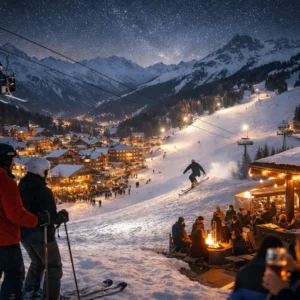
The clearest sign that apres ski fashion trends have shifted is this: the best-dressed people in resort no longer look as though they packed separately for the slopes and the bar. Mountain style has become far more integrated, with technical kit, relaxed tailoring and proper cold-weather function all working together. For British skiers and snowboarders, that matters. Most of us want clothing that can handle a freezing terrace in Val d’Isere, a walk through town in St Anton and a late lunch stop without needing a full costume change.
That change has made apres style more useful, but also a little harder to read. The old formula – shiny salopettes, novelty knitwear and moon boots for everyone – still appears in places, and there is room for that if the resort leans playful. Yet the broader direction is more considered. People want warmth, weather protection and clothes that feel current at home as well as in the mountains.
What apres ski fashion trends look like now
The strongest apres ski fashion trends are rooted in practicality first, then shaped by silhouette, fabric and attitude. That means insulated overshirts, quilted liners, technical fleece, wool-rich knits, weatherproof boots and outerwear with a cleaner cut than the bulky ski jackets of a decade ago. It is less about looking dressed up and more about looking properly equipped, with enough style to carry you from lift-close to dinner.
One reason this has taken hold is that resort wardrobes are under more scrutiny from travellers themselves. People are packing lighter, travelling with hand luggage where they can, and expecting more from fewer pieces. If one jacket can work over a mid-layer on the mountain road, over knitwear at drinks and over casual clothes for the airport transfer, it earns its place.
The other factor is the steady crossover between outdoor brands and mainstream fashion. Technical fabrics no longer signal pure utility. A good insulated gilet, a fleece with a strong cut, or a pair of lug-sole winter boots can look completely at home in a resort setting without feeling try-hard.
The move from statement pieces to versatile layers
The most useful shift is away from single-use apres items and towards a layered wardrobe. Instead of packing one dramatic chalet jacket that only works for an hour on the terrace, skiers are choosing pieces that adapt. A merino base layer under a brushed overshirt, topped with a lightweight down jacket, gives far more flexibility than one heavy sweater and a fashion coat that cannot cope with snow.
This is where quality matters. Merino has become central because it regulates temperature well, resists odour and works indoors and outdoors. Fleece has improved too. Modern pile and technical fleece pieces are warmer, neater and easier to style than the shapeless versions many of us remember. Worn with tailored ski trousers, relaxed cords or dark winter denim, they feel current without forcing the issue.
There is a trade-off, though. If you lean too heavily into technical layers, you can end up looking as if you never left the piste. For some resorts, especially smart Alpine bases with stronger evening dress codes, you still need a bit of polish. That might mean swapping softshell trousers for wool trousers, or adding a structured coat over your knitwear once the ski boots are off.
Quiet luxury, but mountain-ready
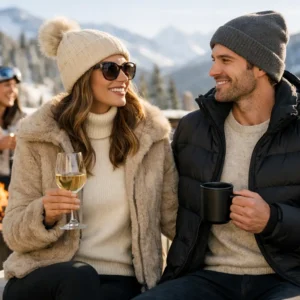
One of the biggest style influences on resort wear is the broader move towards understated dressing. In mountain terms, that means fewer loud logos, less neon and more texture-driven outfits in cream, navy, forest green, rust, black and stone. These shades are easy to combine and tend to photograph better in snowy light than heavily saturated brights.
That said, apres is not becoming dull. Texture is doing much of the work: ribbed wool, shearling trims, quilted nylon, brushed cotton and suede details all add interest. A simple cream knit under a dark down shirt jacket can look sharper than a far busier outfit built around prints and contrast panels.
Boots are doing more of the fashion work
If one item defines current apres dressing, it is the boot. The trend has moved well beyond traditional moon boots into more refined winter footwear with proper grip, insulation and water resistance. Lug soles are everywhere, as are lace-up alpine boots, insulated leather styles and technical hybrids that sit between a walking boot and a city boot.
For UK travellers, this is a sensible evolution. Resorts are slippery, pavements are often wet rather than beautifully snow-covered, and nobody enjoys hobbling through a village in footwear that looks good but cannot cope with compacted ice. The best pairs now manage both. They feel substantial enough for winter conditions while still working with slim or straight-leg trousers.
Fit matters more than trend here. Chunky boots can overpower smaller frames, while very sleek styles may not offer enough warmth in colder resorts. If your trip involves a lot of walking between accommodation, lifts and restaurants, prioritise support and sole grip before appearance. Style points disappear quickly once you are sliding around on polished cobbles.
The snowboard influence is still strong
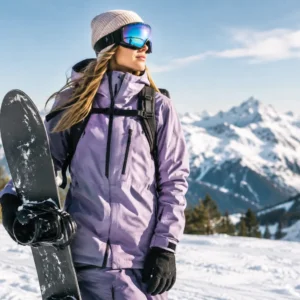
Apres fashion has not become uniformly Alpine and neat. Snowboard culture continues to shape the looser end of resort style, especially among younger riders and in resorts where the atmosphere is more relaxed. Baggy cargos, oversized puffers, heavyweight hoodies, beanies and workwear-inspired jackets remain influential, particularly in North American resorts and terrain-park-led scenes, but they are just as visible in parts of the Alps.
The key difference now is balance. The best looks in this lane still feel intentional. Wide trousers are paired with cleaner outerwear, or oversized jackets are grounded by simpler layers underneath. Done well, it looks authentic and mountain-led. Done badly, it can look as though someone packed for a rainy retail park rather than a ski holiday.
For mixed groups of skiers and snowboarders, this is often where personal style comes through most clearly. There is no need for everyone to converge on the same polished chalet aesthetic. Resort culture varies hugely, and your wardrobe should reflect where you are going. Verbier and Morzine do not dress the same way, and neither should you.
Accessories have become more considered
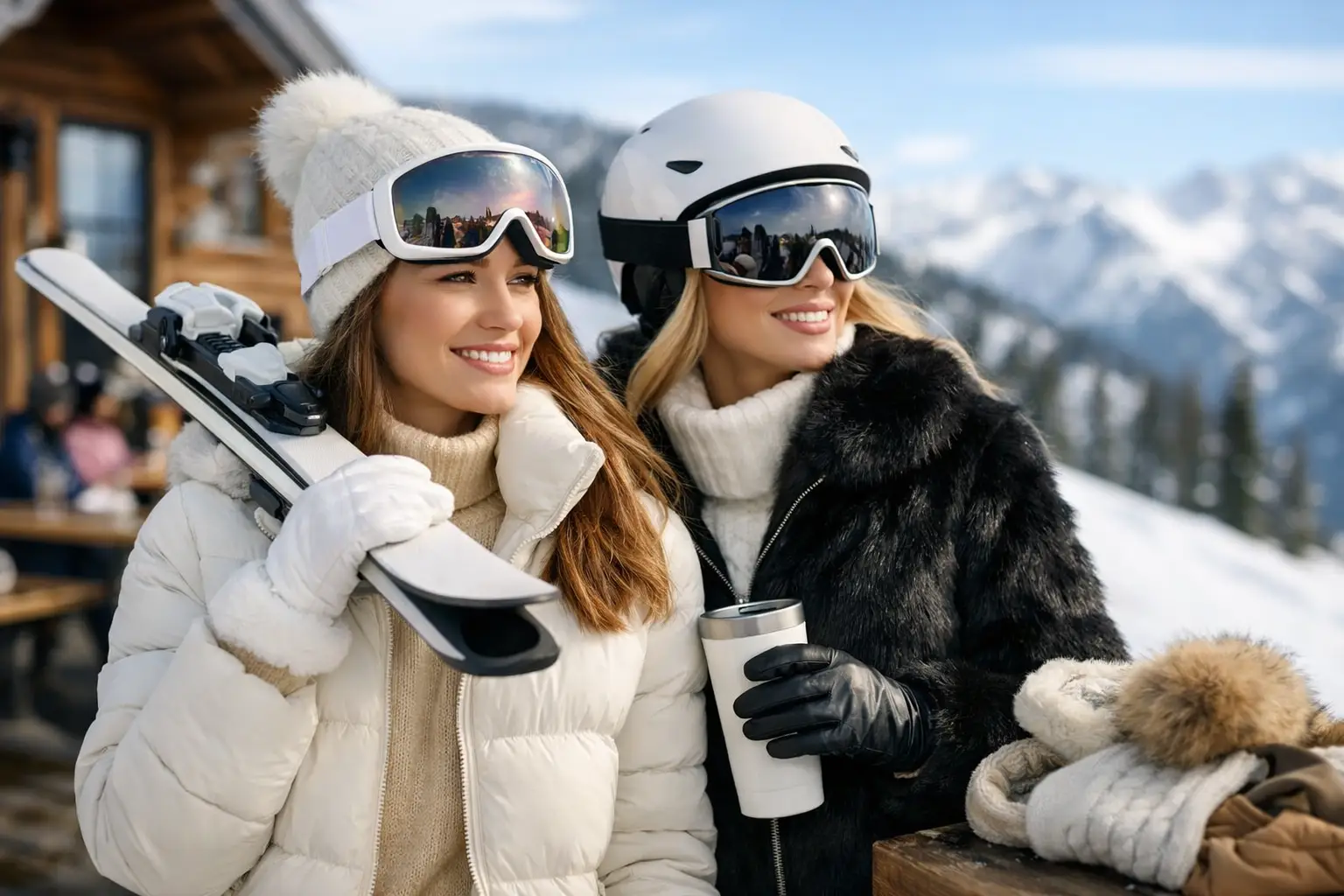
Accessories are no longer afterthoughts in apres ski fashion trends. They are often the difference between an outfit that feels practical and one that feels finished. Ribbed beanies, leather or technical gloves, oversized scarves, wool socks and compact cross-body bags all play a role, particularly when outerwear is relatively understated.
Sunglasses are worth mentioning too. Classic sport styles still have their place, but apres wear now leans towards frames that can move from mountain light to village lunch without looking overly athletic. The same goes for helmets and goggles once you are off snow. Carrying them neatly matters. Stuffing goggles into a pocket or wandering into a restaurant still wearing a helmet is rarely the look.
Colour and pattern still have a place
Muted palettes dominate, but there is still room for personality. Fair Isle knits, retro race stripes and bold beanies can all work, especially in festive periods and more traditional resorts. The trick is restraint. One expressive piece usually lands better than four at once.
British skiers in particular tend to overpack for the social side of a trip, then end up wearing the same useful layers on repeat. It makes more sense to choose a neutral base wardrobe and add character through one knit, one statement accessory or one stronger jacket.
How to build an apres wardrobe that actually works
Start with what happens between skiing and going out. If your hotel is ski-in ski-out and your evenings are casual, your apres needs are different from those of someone staying in a catered chalet ten minutes from town with dinner bookings most nights. That gap between the slopes and the evening is where most packing mistakes happen.
A reliable approach is to build around three elements: a warm base of merino or technical jersey, a mid-layer with some visual appeal such as a knit or fleece, and outerwear that can handle both snow and social settings. Add boots that cope with icy ground, then decide whether your resort warrants smarter trousers, a wool coat or a more elevated knit.
If you already own solid ski kit, there is no need to buy a completely separate apres wardrobe. In many cases, the most current look comes from blending your mountain pieces with everyday winter clothing. That is one reason readers of Skier & Snowboarder often get this right – people who spend real time in resorts usually know that comfort, weather protection and credibility count for more than chasing every passing look.
The best apres style is the kind that feels natural in the setting. It should keep you warm on a windy terrace, comfortable on a village stroll and suitably put together when the day stretches into the evening. Get that balance right and the trend element takes care of itself.