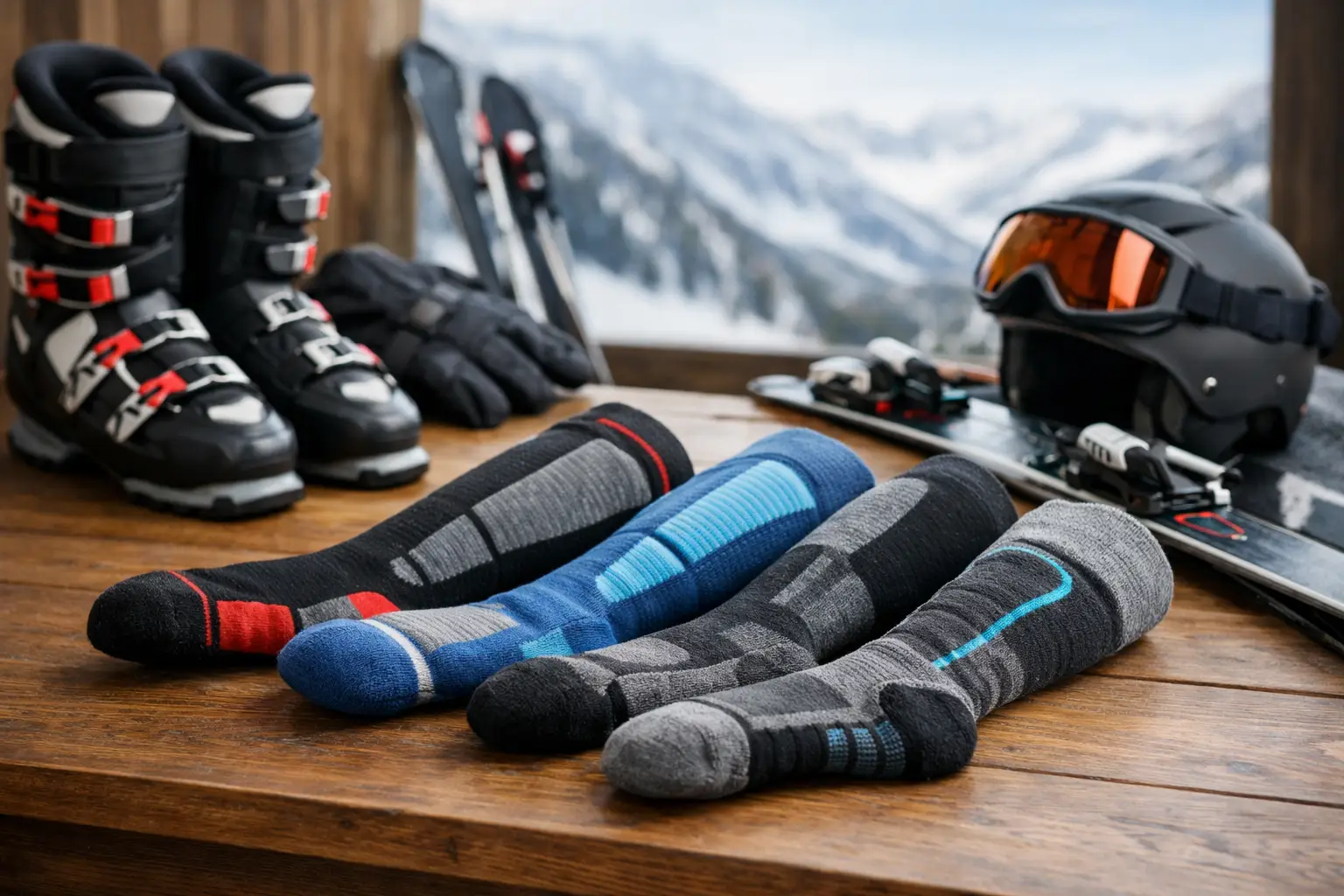
Cold toes at 10am can ruin a ski day faster than poor visibility or a slow lift queue. If you are wondering how to choose ski socks, the answer is less about piling on cushioning and more about getting the balance right between warmth, fit and control inside the boot.
Ski socks are one of the most misunderstood bits of kit in winter sports. Plenty of people still turn up with thick walking socks, doubled-up cotton pairs, or old football socks pulled high over the calf. It is an easy mistake to make, especially if you are new to the sport, but ski boots work best with socks designed specifically for the job.
How to choose ski socks for fit and comfort
The first thing to know is that ski socks should be thin to medium in thickness, not bulky. That sounds counterintuitive if your priority is staying warm, but modern ski boots are close-fitting by design. Add too much fabric and you reduce circulation, create pressure points, and make your feet colder rather than warmer.
A proper ski sock should sit smoothly against the skin with no bunching around the ankle, heel or toes. It needs enough stretch to stay in place all day and enough structure to offer support where the boot presses hardest. Most good pairs use targeted padding at the shin and underfoot rather than all-over bulk. That matters because your shin takes repeated contact with the tongue of the boot, while the footbed needs sensitivity as much as softness.
Length matters too. Ski socks should come up over the calf so the boot cuff sits against the sock, not bare skin. Anything shorter can rub and leave you spending the afternoon thinking about your legs rather than the piste.
If you are between sizes, err on the side of a precise fit rather than a roomy one. A sock that shifts inside the boot will create friction and hot spots. One that is too tight can dig in at the calf and restrict blood flow.
Fabric matters more than thickness
When people ask how to choose ski socks, fabric is often the real deciding factor. The best options are usually merino wool blends or high-quality synthetic blends. Both can work well, but they feel slightly different on snow.
Merino is a long-standing favourite for good reason. It regulates temperature brilliantly, feels comfortable next to the skin, and copes well with moisture. Even when damp, it tends to keep performing. For skiers who run cold, spend full days in resort, or want one reliable all-round option, merino is usually a safe bet.
Synthetic ski socks, often made with polyester, nylon and elastane blends, can be excellent for active skiers and snowboarders who generate a lot of heat. They dry quickly, hold their shape well, and can feel slightly more precise in a performance boot. Some also offer better durability over repeated hard use.
What you want to avoid is cotton. Cotton holds moisture, loses insulation when wet, and is far more likely to leave your feet clammy, cold and uncomfortable by lunchtime. That old gym sock logic does not belong in ski boots.
There is no single winner between merino and synthetics because it depends on how you ski, how warm your feet run, and how your boots fit. Many experienced skiers keep both in rotation.
Thin, medium or thick ski socks?
For most people, thin or medium ski socks are the right answer. Thin socks suit tighter, more performance-oriented boots and skiers who value precision. If your boots already fit closely, a thin sock will help you feel more connected to your skis and less likely to suffer pressure across the forefoot.
Medium socks are the broad middle ground and where many recreational skiers end up happiest. They offer a bit more insulation and a touch more padding without taking up too much space. If you ski a week each season, mix pistes with the occasional off-piste session, and want comfort without losing control, medium is usually the sensible place to start.
Thick ski socks are more niche than many people think. They can work for very roomy boots, particularly cold conditions, or skiers with circulation issues who know they need extra insulation. But thick socks are often used to solve the wrong problem. If your boots feel loose, adding a thicker sock is rarely the proper fix. Boot fit should be addressed with fitting adjustments, insoles or liners, not by stuffing in more fabric.
The features worth paying for
Not every branded extra is essential, but some features make a real difference on snow. Seamless or low-profile toe construction is one of them. In a tight ski boot, even a small toe seam can become irritating after several runs.
Shin padding is another worthwhile feature, especially for beginners, returning skiers, or anyone spending long days on harder pistes. Compression zones can also help the sock stay put and provide a more secure feel around the arch and ankle.
Some ski socks are split left and right for a more anatomical fit. Others include ventilation panels to improve moisture management. These details are not gimmicks if the rest of the sock is well made, though they matter less than getting the basics right. Fit, fabric and appropriate thickness still come first.
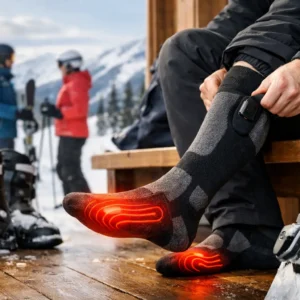
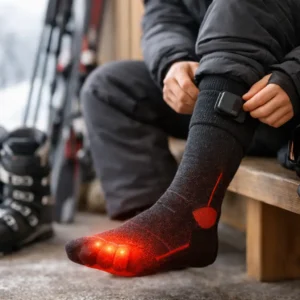
For anyone skiing in very cold climates or dealing with persistently cold feet, heated socks exist and can be genuinely useful. They are more expensive and involve charging batteries, so they are not necessary for most resort skiers, but for some people they transform the experience.
Common mistakes that make your feet colder
The biggest mistake is wearing two pairs of socks. It sounds practical. It nearly always backfires. Doubling up creates folds, increases friction and compresses the foot inside the boot. You lose circulation and your boot fit becomes less stable.
The second mistake is choosing socks to compensate for badly fitting boots. If the boots pinch, a thinner sock may help a little, but it will not solve a shell that is too small in the wrong place. If the boots feel sloppy, a thicker sock may mask the issue for a day, but it will not give you proper heel hold or control.
Another common error is ignoring moisture. Even good ski socks need drying fully overnight. Pulling on yesterday’s slightly damp pair is a strong start if your goal is cold toes by the first chair.
And finally, some skiers keep socks for years after they have lost elasticity and cushioning. If the fabric is thinning, sagging or twisting inside the boot, it is time to replace them.
Choosing ski socks for different skiers
Beginners usually benefit from a medium-weight merino or merino-blend sock with good shin protection. Newer skiers often spend more time standing, side-slipping and adjusting to the boot, so comfort matters.
Intermediate and advanced skiers often lean thinner, especially if they have well-fitted boots and prefer a more responsive feel. If you ski regularly or have invested in custom fitting, a lower-volume sock usually makes more sense.
Children are a separate case. Warmth and comfort come first, but avoid over-thick kids’ socks for the same reasons as adults. A proper junior ski sock is a far better choice than doubling up ordinary winter socks.
Snowboarders can use ski-specific or snowboard-specific socks, but the same principles apply. Smooth fit, moisture management and the right amount of cushioning matter more than simply going thicker.
How many pairs do you need?
For a week in the mountains, two or three pairs is usually enough if you can dry them properly between ski days. More than that is convenient, not essential. Quality matters more than quantity here. One excellent pair feels very different from a bargain multipack that slips, bunches and stays damp.
Wash them according to the care instructions, skip fabric conditioner, and let them air dry if recommended. A good ski sock should last several seasons if cared for properly.
At Skier & Snowboarder, we have seen every version of the cold-feet problem, and it rarely comes down to buying the thickest sock on the shelf. The best ski sock is the one that works with your boot, your circulation and the way you ride.
If you are choosing just one pair, go for a well-fitted merino or merino-blend ski sock in a thin-to-medium weight from a reputable winter sports brand. Then judge it on a real ski day, not in the shop. The right pair should disappear once your boots are on, which is probably the best compliment any ski sock can get.