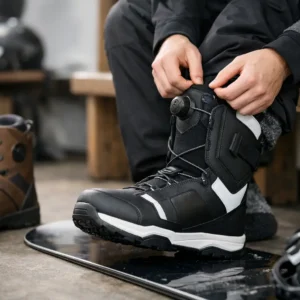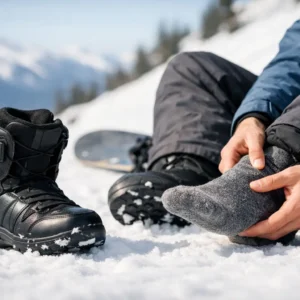
A boot that felt almost uncomfortably snug in the shop can feel noticeably roomier by the third day of a ski holiday. So, do ski boots stretch? In most cases, the plastic shell does not stretch in any meaningful way. What changes is the liner: its foam compresses, shapes itself around your foot and creates extra volume where pressure has repeatedly been applied.
That distinction matters. A little settling-in is normal and expected. Buying a boot that is already roomy because you expect it to become tighter or somehow more supportive is a common route to heel lift, cold feet and a frustrating lack of control.
Do ski boots stretch, or do liners pack out?
Modern ski-boot shells are designed to hold their shape under substantial load. The polyurethane, polyolefin or Grilamid used in a shell may soften slightly when warmed, particularly in spring conditions or a heated boot room, but it is not gradually stretching across the forefoot in the way a leather walking boot might.
The liner is the component that changes. Its foams compress under the heel, around the ankle bones, across the instep and at the toes. A standard liner can often gain a noticeable amount of internal space after several days on snow. How much depends on the liner’s density, the skier’s weight and skiing style, how closely the boot fitted at the outset, and how many days it has been used.
A softer, entry-level liner usually packs out sooner than a dense, performance-oriented liner. That does not make it inferior. It can be warmer and more forgiving for a newer skier. But it does mean the initial fit should be assessed with the likely change in mind.
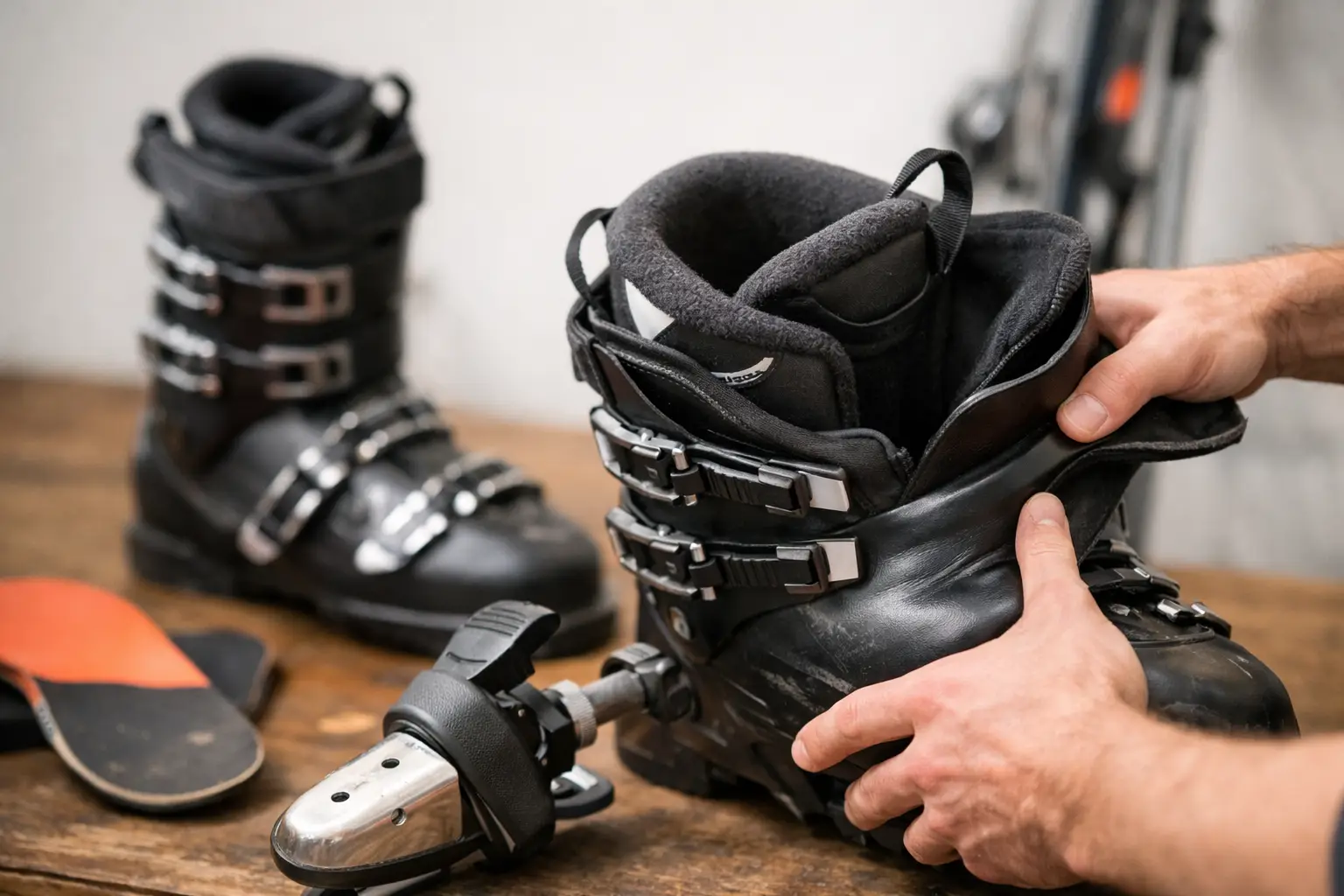
Heat-mouldable liners accelerate the process. A good boot fitter can warm and mould them to reduce specific pressure points and create a more accurate heel and ankle hold. Moulding is not the same as stretching a boot. It is controlled shaping of the liner, and it should refine an already promising fit rather than rescue a shell that is the wrong size or width.
How much extra room should you expect?
There is no reliable millimetre figure that applies to every boot, but most skiers should expect a new liner to relax enough that the boot feels less constricting after the first few proper days. If a boot feels perfect in a shop while standing upright, it can become too spacious once the liner settles.
A useful starting point is a snug, even fit with your toes lightly brushing the front when you stand tall. Flex forward into a skiing stance and your toes should draw back so they are no longer pressed hard against the shell. Your heel should remain planted when you flex, rather than lifting as you drive your knees forwards.
The sensation should be close, not painful. There is a meaningful difference between firm contact around the shin and forefoot, and numbness, burning or a sharp pressure point. Do not assume severe discomfort will simply disappear with use. It may indicate a shell that is too narrow in one area, too low over the instep, or an unsuitable last shape for your foot.
For committed skiers, a close initial fit is particularly worthwhile. Precise contact gives more immediate edge response, helps keep the lower leg centred over the ski and reduces the tendency to overtighten buckles. Recreational skiers who prioritise warmth and all-day comfort may prefer a little more space, but they still need enough hold around the heel and ankle to steer the ski confidently.
The shell fit is the real reference point
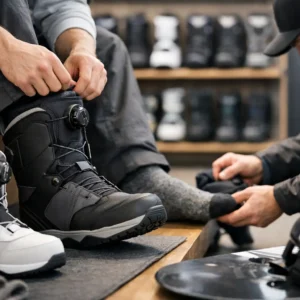
The best way to separate a manageable break-in period from a fundamentally wrong boot is a shell check. With the liner removed, slide your foot into the empty shell and move your toes gently to the front. The space behind your heel provides a much clearer guide to shell length than the soft liner does.
A performance fit may leave roughly one finger’s width behind the heel, while a more relaxed all-day fit may allow closer to two. The exact assessment depends on the shape of your fingers, foot and shell, which is why this is best done by an experienced boot fitter rather than treated as an absolute rule.
Shell width and shape deserve equal attention. A skier with a broad forefoot might have enough length but still feel crushed across the fifth toe. Someone with a narrow heel can be in the right-sized shell yet lose control because their ankle is swimming in the rear of the boot. Liners will pack out, but they will not correct these basic shell-shape mismatches.
Boot fitters can make targeted shell modifications where appropriate. Punching or stretching a localised area creates room at a bunion, prominent ankle bone or unusually wide forefoot. This is deliberate workshop work, not a change that occurs naturally through skiing. In the right hands it is one of the great advantages of buying from a specialist rather than choosing a boot solely by size, price or colour.
When a boot feels bigger after a few days
A boot that starts to feel loose is not always a sign that you bought the wrong shell. First, make sure you are buckling it properly. Start with the lower buckles lightly closed to position the foot, then secure the cuff without strangling the shin. Use the power strap firmly, ideally before closing the top buckle, to bring the shin into contact with the tongue.
If the heel is beginning to lift, a fitter may be able to restore hold with simple adjustments. A supportive footbed can stabilise the foot and prevent it spreading and sliding inside the boot. Volume reducers beneath the liner, heel-retention pads and denser replacement liners can also be effective, depending on the issue.
The temptation is to crank every buckle tighter. That often makes matters worse by crushing blood flow over the instep while doing little to improve heel retention. A well-fitted boot should feel secure with sensible buckle tension. If it only works on the tightest notch, it is time to have the fit checked.
Signs that packing out has gone too far
Some change is normal; persistent movement is not. Book a fitting appointment if you notice several of these issues after the initial break-in period:
- Your heel rises clearly each time you flex forward.
- You need the buckles on their tightest settings to feel connected to the ski.
- Your foot slides forwards, leaving you with bruised or black toenails.
- You feel delayed response when starting turns, especially on firm snow.
These symptoms can also stem from worn-out liners in older boots. A shell may remain structurally sound for years, while the liner slowly loses its ability to hold the foot. For frequent skiers, replacing a tired liner can transform a boot that had seemed ready for retirement.
Getting the fit right before your next trip
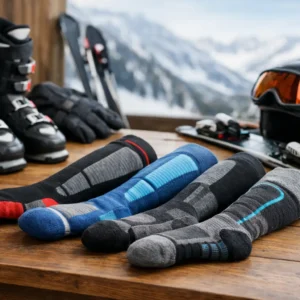
Try boots on late in the day, wearing a thin ski sock and with any orthotic or footbed you genuinely intend to use. Avoid thick socks as a shortcut to warmth. They usually reduce precision, bunch up and can make feet colder by restricting circulation. Warmth comes more reliably from a close but non-compressive fit, dry socks and sensible boot-room habits.
Spend time flexing in the shop. A boot can feel short while you are standing straight, then reveal the correct length once your ankle moves forwards. Tell the fitter where you ski, how often you travel, whether you favour groomers, moguls or off-piste terrain, and what has troubled you in previous boots. A skier doing a week each winter in the Alps may need a different balance of comfort and precision from someone skiing weekly at a UK indoor slope and taking several mountain trips each season.
It is also worth remembering that ski boots are not trainers. They should not feel casual when first put on, and they are rarely comfortable while walking around a shop. The aim is secure, progressive contact when you are flexed into a skiing stance, with no pain that worsens as the day goes on.
A little liner pack-out is part of owning ski boots, not a defect to fear. Start with the right shell, give the liner time to settle, and let a knowledgeable fitter solve specific issues rather than hoping another week on snow will change the plastic. The reward is more than comfort: it is the quiet confidence of knowing your skis will respond exactly when the piste steepens or the snow turns lively.