A bitter chairlift ride can turn an otherwise excellent ski day into a battle of concentration. When your toes have gone numb before the first coffee stop, the question is not whether another pair of thick socks will help. It is: are heated ski socks worth it?
For the right skier, they absolutely can be. Heated socks are not a universal bit of kit in the way a decent helmet or goggles are, but they can make a marked difference to comfort, confidence and time on snow for people who genuinely suffer with cold feet. The catch is that they work best when chosen and used properly. A poor fit, flat battery or overly warm setting can create new problems inside an already snug ski boot.
What heated ski socks actually do
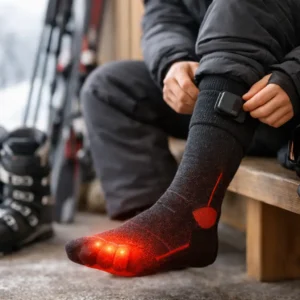
Heated ski socks contain slim heating elements, normally positioned around the toes and sometimes under the forefoot. A small rechargeable battery sits in a cuff pocket at the top of the sock, with several heat settings controlled by a button, remote control or phone app depending on the model.
The aim is not to make your boots feel like central heating. Good models provide a gentle, steady warmth that keeps circulation-sensitive toes comfortable through lift queues, exposed ridgelines and long periods of low activity. That distinction matters. A sock that feels hot in the chalet can become unpleasant once your feet are working hard on a steep piste.
Battery life varies dramatically according to the setting, air temperature and battery capacity. At a low setting, some systems can cover a full day of skiing. On maximum power in very cold weather, expect considerably less. For a week in the Alps or a cold Scandinavian trip, the realistic question is whether the battery will last through your own skiing pattern, rather than the most optimistic figure on the box.
Are heated ski socks worth it for your skiing?
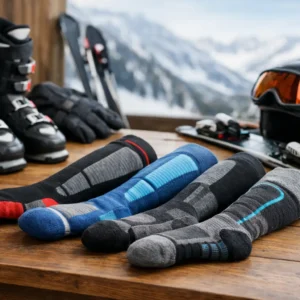
They are most worthwhile for skiers who repeatedly experience cold toes despite wearing well-fitting boots and suitable merino or synthetic ski socks. This includes people with naturally poor circulation, those returning to skiing after an injury, lighter-framed skiers who get cold quickly, and anyone who spends a lot of time with children or less confident companions on slow, stop-start days.
They also earn their keep on certain types of holiday. Think January in the Austrian Alps, a windy day above the treeline in France, a long Canadian lift ride, or a week where the temperature barely rises above -10°C. If you ski from first lift to last and dislike retreating indoors simply because your feet have become painfully cold, heated socks can feel less like a luxury and more like a practical solution.
For skiers who only feel chilly on the first lift and are comfortable once moving, they may be an expensive answer to a problem better solved by boot fit, drier socks or a warmer boot liner. Equally, if your feet run hot, heated socks are unlikely to add much beyond extra kit to charge and remember.
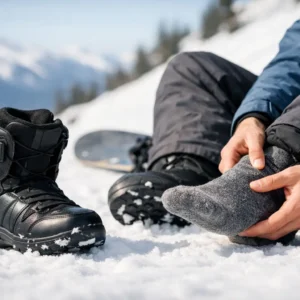
Snowboarders should be a little more selective. Snowboard boots are generally roomier and warmer than ski boots, so many riders will not need active heating. However, those who spend extended periods sitting on snow, teaching beginners or riding in deep cold can still benefit.
The fit question matters more than the heat
The biggest mistake is treating heated socks as a substitute for a correctly fitted ski boot. If boots are too tight across the forefoot or instep, they can restrict blood flow and cause cold feet in the first place. Adding a thicker sock, heating wires and a battery cuff will not cure that. It may make the boot feel even tighter.
Most quality heated ski socks are relatively thin, often with a close, technical fit designed for use in ski boots. They should sit smoothly against the foot, with no wrinkles around the toes or heel. The battery pack should remain securely above the boot cuff, where it will not dig into the calf or snag when you pull on a salopette.
If you have had persistent cold feet in the same boots for several seasons, speak to a reputable boot fitter before investing in electronics. A liner that has packed out, a shell that is too narrow, damp footbeds or buckles overtightened in the morning can all be part of the problem. Boot fitting and heated socks are not competing solutions. In some cases, the former makes the latter unnecessary; in others, a well-fitted boot plus gentle heat is the winning combination.
The trade-offs: cost, charging and durability
Heated socks are a premium purchase. The initial price is significantly higher than excellent merino ski socks, and it is sensible to budget for the complete system rather than focus on the socks alone. Replacement batteries, charging leads and spare pairs can add up.
They also require a little holiday discipline. Batteries need charging every evening, and you need to pack the correct charging equipment. For multi-day hut-to-hut tours or trips with uncertain access to power, this may be inconvenient. Lithium batteries should be carried in hand luggage when flying, subject to your airline’s current rules, rather than buried in checked baggage.
Washing needs more care too. Batteries must be removed, and the manufacturer’s washing instructions are worth following closely. The socks themselves are designed for this use, but they are still more delicate than a standard pair. If you are hard on kit or routinely lose small accessories in hotel rooms, factor that into the value calculation.
There is also a simple sensory trade-off. Some skiers barely notice the heating elements; others are aware of them, particularly in a very close performance fit. Try the socks on with your own boots where possible, not just in a shop with trainers.
How to get the best from heated socks
Start on a low setting. The temptation is to turn them to maximum as soon as you leave the accommodation, but gradual warmth is usually more comfortable and preserves battery life. Switch them on before your feet are thoroughly cold, particularly on a frosty first lift, then adjust only if needed.
Keep your feet dry. Heated socks are not a cure for wet boots, soaked liners or sweaty feet. Change into dry socks each morning, dry boots properly overnight and avoid stacking multiple socks in the hope of extra insulation. One good technical sock allows your boot to fit and your foot to function as intended.
It also helps to think beyond the sock. Avoid cranking down buckles during the first run when shells are cold, keep moving on long lift queues where practical, and take a proper indoor break before numbness becomes painful. Warm feet are partly about heat, but also circulation and sensible boot management.
A note for skiers with medical concerns
Anyone with diabetes, reduced sensation, circulatory problems or a condition affecting how they feel heat should take medical advice before using heated clothing. The point is to avoid cold-related discomfort, not to mask warning signs or risk a burn from a setting that feels mild to someone else.
What to look for when buying
Prioritise fit, battery performance at low and medium settings, and straightforward controls over gimmicks. A phone app can be useful for fine adjustment, but a glove-friendly button is often more practical on a chairlift. Check where the heat is placed, how bulky the battery is, whether spare batteries are available, and how the socks are sized.
For regular skiers, two pairs can be useful: one to wear and one to dry or keep as a backup. For occasional holiday skiers, one reliable pair may be all that is needed, provided you charge them each night. If you are buying as a gift, do not guess at size or assume thick equals warm. A precise fit is central to whether they become a favourite piece of winter kit or stay in a drawer.
Heated ski socks are worth the money when cold feet are the limiting factor in your day, not merely an occasional annoyance. Get the boot fit right first, choose controlled warmth rather than maximum heat, and they can keep you on the mountain longer when the temperature drops.