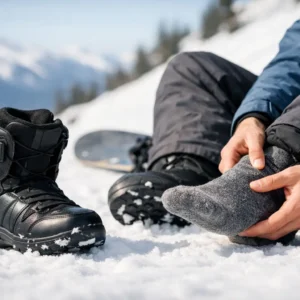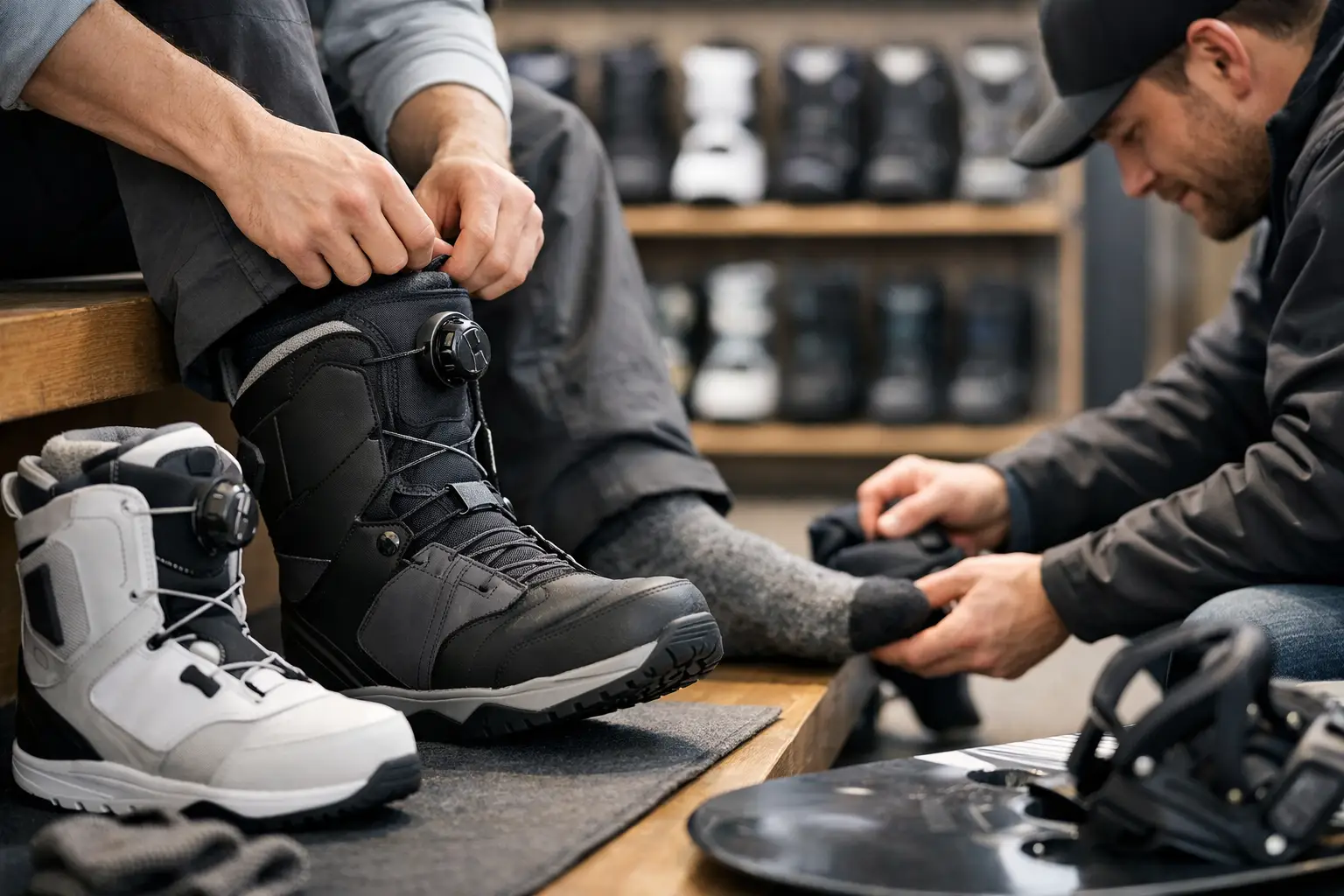
A snowboard can be forgiving. Bindings can be adjusted. Boots are far less polite. Get them wrong and you will feel every turn, every flat section and every slow walk back from the car park. If you are wondering how to buy snowboard boots, start here: fit matters more than graphics, more than brand loyalty and, in most cases, more than almost any other part of your setup.
For UK riders, that matters even more because many of us buy in a hurry before a trip, test kit on indoor slopes or dry slopes first, and want one pair of boots to cover everything from a week in the Alps to occasional dome sessions at home. That is perfectly realistic, but only if you choose carefully.
How to buy snowboard boots without guessing
The first thing to understand is that snowboard boots should not feel like trainers. In the shop, a good fit often feels surprisingly snug. Your toes should lightly touch the end when you stand upright, then pull back slightly when you flex into a riding stance. If your toes are curled or crushed, they are too small. If your foot slides around, your heel lifts noticeably or you can wiggle about with plenty of space, they are too big.
This is where many first-time buyers go wrong. A boot that feels comfortable in the shop like an everyday shoe can become a sloppy, unresponsive boot after a few days on snow. Liners pack out. Materials soften. What felt roomy on day one can feel vague by day five.
The best buying approach is simple: try multiple brands, focus on heel hold, and judge the fit in a snowboard stance rather than standing bolt upright. Different brands shape their shells and liners differently. One may suit a narrow heel and lower-volume foot, while another works better for wider feet or a higher instep. There is no single best brand, only the one that suits your foot.
Start with fit, then choose flex
If fit is the first filter, flex is the second. Flex affects comfort, control and the kind of riding the boot supports. Softer boots are more forgiving, easier to bend and often more comfortable straight away. Stiffer boots give more support and quicker response, especially at speed or in demanding terrain.
For beginners and casual riders, a soft to medium flex usually makes the most sense. It is easier to learn in, kinder on the legs and more versatile for mellow piste riding, side hits and occasional park laps. Intermediate riders often land in the medium range because it balances comfort and control well. Advanced riders who ride fast, carve hard or spend time in steeper off-piste terrain may prefer a stiffer boot, but even that depends on personal taste. Some excellent riders still choose a slightly softer boot for a more surfy feel.
Do not assume stiffer means better. A boot that is too stiff for your strength, technique or riding style can feel tiring and awkward. Equally, a boot that is too soft may leave you fighting for edge control once your riding improves. If you only want one pair, medium flex is usually the safest territory.
What flex feels like on snow
A softer boot absorbs mistakes. It allows more ankle movement and can feel less punishing on uneven terrain. That is helpful when you are learning turns or spending a lot of time riding indoors.
A stiffer boot feels more direct. Small movements transfer faster to the board, which helps with carving and technical riding, but it also demands more from you. If your riding is still developing, that extra precision is not always an advantage.
Lacing systems matter, but not as much as fit
Most snowboard boots use traditional laces, speed lacing or a dial-based system. Each has strengths and weak points.
Traditional laces are simple, widely trusted and often easier to tweak in different zones if you know what you are doing. They can, however, be slower to tighten and more fiddly with cold hands.
Speed lacing systems are popular because they are quick and usually separate the upper and lower parts of the boot, which helps with adjustment. The trade-off is that some riders find them less precise over time, and replacement parts can be more specific to the brand.
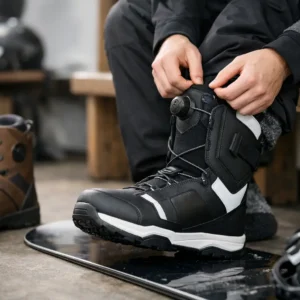
Dial systems are convenient and clean. They are especially appealing if you want quick adjustments on the hill or dislike wrestling with laces in a windy lift queue. Some boots use a single dial, others two or more for better zoning. The main point is not whether one system is fashionable, but whether you can get an even, secure fit around your foot and lower leg.
A poor-fitting boot with an excellent lacing system is still a poor boot. A well-fitting boot with a lacing system you slightly dislike is often the better choice.
How to buy snowboard boots for your riding style
Think honestly about where and how you ride. A rider spending most of their time on groomers in European resorts has different needs from someone lapping rails indoors, hunting powder in Japan or hiking for sidecountry lines.
If your riding is mainly piste, all-mountain comfort and consistent support should be the priority. You want enough response to hold an edge and enough comfort to wear the boots all day. If you like park riding, a slightly softer flex can help with presses, tweaks and less punishing landings. If freeride and steep terrain are your focus, more support and a more locked-in feel may be worth paying for.
For plenty of UK snowboarders, the answer is still the same: choose an all-mountain boot. It is the broadest, most useful category and rarely the wrong place to start unless you have a very clear specialist preference.
Indoor slope and dry slope riders
If you ride regularly in the UK before your mountain trips, your boots may get more frequent use than the average holiday rider. Comfort becomes even more important, but so does durability. Repeated sessions on artificial surfaces and regular carrying, changing and drying can be hard on kit. A boot that fits well and holds up over time will do more for your riding than one that feels impressive on the shelf.
Sizing is not just your normal shoe size
Snowboard boot sizing is notoriously inconsistent. Your everyday shoe size is only a starting point. The better guide is your actual foot length and volume, plus how that shape matches a particular brand.
If possible, get both feet measured, because many people have one foot slightly larger than the other. Wear the socks you would actually ride in – usually one thin or medium snowboard sock, not thick winter socks. Thick socks often create pressure points and reduce the liner’s ability to do its job properly.
Pay attention to width and instep height as much as length. Riders with wider feet often size up when they should really be looking for a boot with a roomier shape. That extra length can create heel lift and a sloppy ride. Heat-mouldable liners can help refine the fit, but they are not magic. They can improve a close fit, not transform the wrong shell into the right one.
Features worth paying for and those you can ignore
Better boots often justify their price through liner quality, support, cushioning and longer-lasting materials. If you ride several weeks a season or want boots that stay consistent for years, spending more can make sense.
That said, not every premium feature will matter to every rider. Extra shock absorption is useful if you ride park or spend long days on chopped-up pistes. Better outsole grip is handy for icy resort paths and car parks. Articulated cuffs can help reduce shell distortion and improve flex over time. These are genuine benefits, but none of them matter if the core fit is wrong.
What can be ignored more easily? Decorative design claims, vague marketing language and the idea that you need a specialist boot because one trip might include every type of terrain. Most riders are better served by a well-fitted, mid-flex all-mountain boot than by an ultra-specific model chosen for an imagined riding life.
Try before you commit if you can
A proper boot fitting in a knowledgeable snowboard shop is still the best route. You are not just buying a size. You are checking shape, pressure points, heel hold and how the boot behaves when flexed. Good staff will also spot issues such as excessive volume, poor ankle retention or a mismatch between your riding and the boot’s stiffness.
If you are buying online, be disciplined. Try boots on indoors, keep tags on, wear your snowboard socks and spend time flexing in them. Do not just decide in two minutes. If there is heel lift or obvious pressure straight away, it is usually not going to improve enough to be worth the gamble.
Common mistakes when buying snowboard boots
The biggest mistake is buying too big. The second is choosing by brand or colour before fit. The third is assuming discomfort and performance are the same thing. A good snowboard boot should feel secure and close, but not painful.
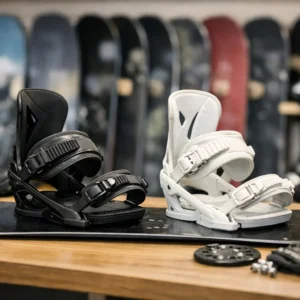
Another common mistake is ignoring your bindings. Most modern setups are compatible, but boot bulk and footprint still matter, especially if you are trying to avoid toe and heel drag on a narrower board. It is worth checking your overall setup rather than treating each purchase in isolation.
Snowboard boots are personal in a way boards often are not. Two riders of the same level can prefer very different feels. That is why the best advice from any experienced shop, coach or publication, including Skier & Snowboarder, tends to circle back to the same point: trust the fit on your foot, not the story on the box.
Buy the pair that feels secure, matches the way you actually ride and still makes sense for the trips you really take. Your feet will notice before anything else does.