Frank ‘Scoop’ Baldwin takes a look at the reasons skiers and snowboarders are choosing to make their own tracks on holidays.
Recent years has seen a growing number of skiers and snowboarders discovering that the best person to share a winter holiday with is quite simply… themselves.
Previously, ski holidays have been the preserve of couples, groups and families. This brought logistical challenges such as trying to coordinate half a dozen people’s diaries and choosing a resort and accommodation that suited everybody.
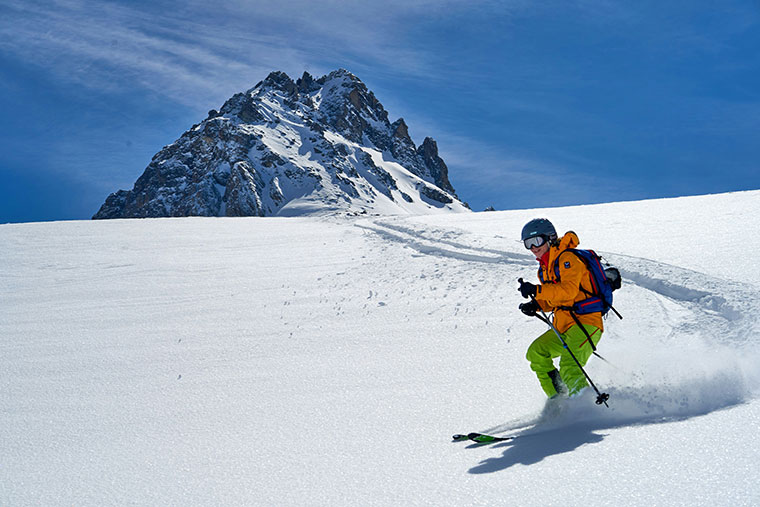
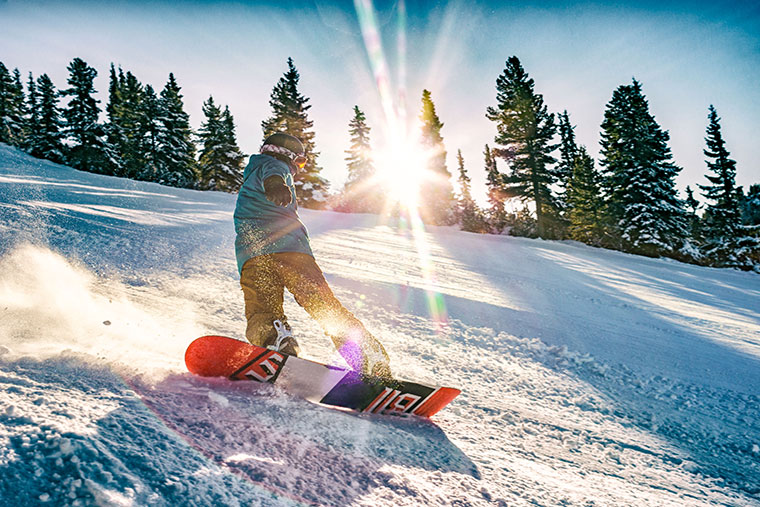
Photo by Cyprien Delaporte on Unsplash
Going it alone was considered to be the preserve of gap-year travellers or seasoned adventurers, but in recent years, solo skiing and snowboarding has become one of the fastest-growing trends in winter tourism.
From dedicated group departures for solo travellers to hotels offering communal dining and ski host programmes, the industry has adapted to cater for those who prefer making their own tracks without having to compromise on pace, budget or itinerary.
The appeal is easy to understand. You can be first on the lift and enjoy freshly groomed pistes or untouched powder, spend time refining your technique at your own speed, or linger over a long lunch on a sunny terrace without worrying about anyone else’s plans or needs.
Colum McLornan Managing Director of Friendship Travel, which specialises in escorted ski and snowboard trips, said: “A common concern for first-time solo travellers is whether they’ll feel out of place, but in reality ski holidays designed specifically for solo travellers create a welcoming environment where everyone is there for the same reason – to enjoy the sport and meet like-minded people.
“With Friendship Travel, guests will have a dedicated host, and a group of fellow travellers helps remove much of the uncertainty that can sometimes come with travelling alone.
“We’ve seen growing demand for solo ski holidays from travellers who want the flexibility of travelling independently without sacrificing the social side of a winter sports break. The right group holiday offers the best of both worlds: personal freedom on the slopes combined with the opportunity to share experiences with new friends.”
Several factors have contributed to the rise in solo ski holidays.
Flexible working has encouraged more people to take shorter breaks outside school holidays, making it easier to travel independently. At the same time, more adults are choosing not to wait until friends can commit to a trip, particularly as costs and availability can make coordinating group holidays difficult.
The growth of organised solo travel companies has also transformed perceptions. Many now arrange chalet weeks, guided skiing and shared accommodation specifically for solo guests, removing much of the anxiety around travelling alone.
There is also a growing emphasis on experiences rather than simply destinations. Skiers increasingly view a week in the mountains as an opportunity for personal challenge and wellbeing, whether that means improving technique, tackling more demanding terrain, switching off from everyday life or simply doing things when it suits you.
Perhaps the biggest benefit is complete freedom.
Without having to match the abilities of a mixed group, solo travellers can ski entirely at their own level. Advanced skiers can spend all day exploring challenging off-piste routes, while beginners can dedicate uninterrupted time to lessons or practicing without feeling pressured to keep up.
Booking ski schools or mountain guides is often easier as an individual and many resorts actively encourage social interaction through group lessons, guided tours and hosted ski days.
Janie Burt, MD of Solos, said: “Skiing is one of those rare, deeply meditative sports where you’re entirely in your own head. Out on the mountain, you have the freedom to ski at your own pace, choose the runs that suit your ability and enjoy the day exactly as you want.”
Solo travel can also lead to more meaningful encounters. Sharing lifts, joining mountain lunches or meeting fellow guests during après-ski often creates conversations that might never happen with an established friendship group.
Janie added: “What’s driving the rise in solo ski holidays isn’t just that independence – it’s the chance to enjoy it alongside a group of like-minded solo travellers. You can often find people skiing at a similar level, making it easy to buddy up if you want to, before coming together afterwards for après-ski and shared experiences. It’s the best of both worlds: complete freedom on the slopes with the reassurance and sociability of travelling as part of a group.
“We’re also seeing more people taking up skiing for the first time after 50. Travelling with other solo adventurers creates a supportive environment where beginners can learn at their own pace, without feeling they’re holding anyone back. It’s an experience that’s just as much about building confidence and making new friendships as it is about skiing.”
For snowboarders in particular, travelling alone offers flexibility to ride terrain parks or spend hours perfecting tricks without feeling they’re slowing others down.
Of course, going solo isn’t without some drawbacks.
Accommodation remains one of the biggest obstacles. Some hotels and chalets may charge a single supplement, meaning solo travellers can pay more per person than couples or groups.
There are also practical safety considerations. Skiing alone on marked pistes is generally straightforward, but venturing off-piste without a qualified guide is never recommended. Even experienced skiers should ensure someone knows their plans and make use of resort safety apps where available.
Solo travel can occasionally feel daunting during evenings if accommodation lacks communal spaces or organised activities. Choosing properties that offer shared dining, social events or hosted skiing can make a big difference.
Finally, there are the inevitable moments when sharing spectacular mountain views with someone else makes the experience even more memorable.
As ski resorts continue to introduce more solo-friendly accommodation, hosted activities and community-focused experiences, the idea of going it alone is shedding its niche reputation.
Some of Europe’s best resorts for solo skiing and snowboarding
St Anton, Austria: One of Europe’s most sociable ski destinations, St Anton combines world-class skiing with a famously welcoming après-ski scene. The lively village atmosphere makes it particularly easy for solo travellers to strike up conversations after a day on the slopes, while guided ski groups help visitors explore the vast Arlberg region.
Val d’Isère, France: A favourite among confident skiers. The ski area offers extensive terrain alongside excellent ski schools and guiding services. The international crowd means solo visitors rarely feel out of place, and there is always something happening both on and off the mountain.
Morzine, France: Situated in the vast Portes du Soleil ski area, Morzine has built a reputation for attracting independent travellers, seasonal workers and mixed-age visitors. Like many resorts, English is widely spoken, making it particularly appealing for solo skiers, and the resort offers a relaxed, friendly atmosphere.
Saalbach-Hinterglemm, Austria: With hundreds of kilometres of interconnected pistes, this Austrian favourite allows solo skiers to explore at their own pace. Numerous mountain huts, hosted ski tours and a bustling village centre make meeting other visitors remarkably easy.
Livigno, Italy: Known for its excellent value and welcoming atmosphere, Livigno appeals to solo travellers looking to balance skiing with affordability. Its compact town centre, duty-free shopping and lively après-ski scene create plenty of opportunities to socialise, while snowboarders are drawn to one of Europe’s best terrain parks.
Verbier, Switzerland: For experienced skiers and snowboarders, Verbier offers outstanding freeride terrain, regular guided excursions and an energetic nightlife. While accommodation can be expensive, it remains one of the easiest places to connect with like-minded mountain enthusiasts from around the world.
Les Deux Alpes, France: The resort has a long-established reputation for attracting younger travellers, seasonnaires and international visitors, making it particularly easy for solo travellers to meet people both on and off the slopes. The glacier ensures reliable snow conditions and extends the season, while the numerous mountain restaurants, bars and après-ski venues create natural opportunities to strike up conversations and join groups for an afternoon drink or evening out. The resort also offers a variety of activities beyond skiing and snowboarding, including nightlife, spas and events, ensuring that solo travellers rarely feel isolated. Les Deux Alpes provides both convenience and a welcoming atmosphere for anyone travelling alone.
Alpe d’Huez, France: Known as the ‘Island in the Sun’, the resort offers a social setting that is ideal for solo travellers spending long days on the mountain. Alpe d’Huez also has a strong community feel, with numerous ski schools, guided excursions and social events that make it easy to meet fellow skiers and snowboarders. The village itself is vibrant but less intimidating than some larger purpose-built resorts, with plenty of cafés, restaurants and après-ski spots where people naturally gather after a day on the slopes. Excellent lift connections and a wide range of accommodation options further add to its appeal, making Alpe d’Huez an attractive destination for solo travellers seeking both adventure and opportunities to connect with others.
Related Posts:
Categories: Austria, France, Holiday News & Special Offers, Italy, News, Switzerland
Leave a Reply
You must be logged in to post a comment.