You can spot the apres ski rookie a mile off – still in drenched salopettes, ski boots clomping across a polished hotel floor, trying to pretend they are perfectly comfortable. Knowing what to wear apres ski is less about looking polished for the sake of it and more about getting that awkward transition from mountain to bar, terrace or dinner right.
Apres is one of those parts of a ski holiday where the details matter. It sits somewhere between practical mountain dressing and social dressing, and the balance changes depending on whether you are heading for a sunny slopeside beer, a resort centre wine bar, or a long evening meal that starts at eight and ends considerably later. Get it right and you feel relaxed, warm and appropriately dressed. Get it wrong and you spend the evening either overheating, freezing or looking like you never left the lift queue.
What to wear apres ski really depends on the setting
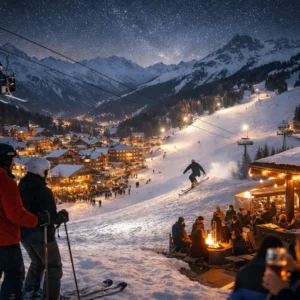
There is no single apres uniform, because apres itself means different things in different resorts. In St Anton or Val d’Isere, the late afternoon scene can be loud, busy and fairly forgiving, especially straight off the hill. In somewhere more understated, such as a traditional Swiss village or a smarter French resort hotel, the shift from piste kit to evening wear tends to happen earlier.
That is why the best approach is to think in layers and in stages. What works for the terrace at 4pm may not work for dinner at 8pm. A good apres outfit should handle both if needed, or at least make the first part of the evening easy before you change.
At the casual end, you want warmth, dry fabrics and footwear you can actually walk in. At the smarter end, you still want mountain practicality, but with cleaner lines, fewer technical details and less obvious ski kit. British skiers and snowboarders often overcomplicate this, packing for a fashion shoot when most resorts really reward simple, functional choices that look considered.
The core rule: change out of your ski kit
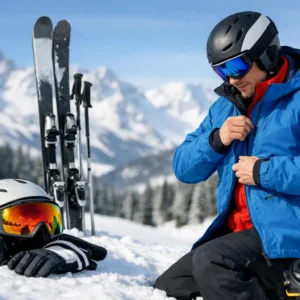
If there is one reliable answer to what to wear apres ski, it is this: get out of your main ski layers if you can. Base layers that have done a full day, damp mid-layers and insulated ski jackets built for chairlifts are rarely ideal once you are indoors. Even if the venue is casual, changing makes a huge difference to comfort.
A dry knit, fleece or overshirt instantly feels better than a sweaty mid-layer. Trousers matter too. Jeans can work if the weather is dry and you are not trudging through slush, but they are not always the mountain miracle some people think they are. If they get wet, they stay wet. Better options are heavier leggings under a skirt or dress, tailored stretch trousers, corduroy, or winter walking trousers that do not scream technical outerwear.
For men, dark trousers, a fine knit and a casual insulated jacket or overshirt usually cover a lot of apres ground. For women, knitwear, thermal layers worn discreetly underneath, and practical winter boots do most of the heavy lifting. The aim is not to look urban. It is to look ready for mountain life off the slopes.
Footwear can make or break the whole outfit
Nothing improves your mood faster after skiing than taking off ski boots. Nothing ruins an apres walk faster than putting on something flimsy that cannot cope with snow, ice or grit.
The sweet spot is a warm, grippy boot with enough weather protection for resort streets and enough style to work indoors. Waterproof ankle boots, insulated lace-up boots and smart winter boots with a proper sole all earn their place in a ski bag. If you are staying close to the lifts and only moving between terrace and hotel, you can get away with more style and less technical performance. If your evening involves steep lanes, compacted snow or a shuttle bus stop ten minutes away, prioritise grip every time.
This is also where resort type matters. A car-free village with snowy walkways asks more of your footwear than a polished high-end resort with heated paths and short transfers. Looking good is one thing. Sliding into a snowbank on the way to dinner is another.
The best apres ski outfits are built around layering
Mountain weather changes quickly, and apres often means moving between cold outdoor air and overheated interiors. Layering solves that better than one thick statement piece.
Start with a light base if you run cold, but make sure it is fresh. Add a knit, fleece or brushed shirt, then finish with an outer layer that feels less technical than your ski shell. A wool coat can work beautifully in a dry resort setting, but it is less useful in snow showers or wet conditions. A lightweight insulated jacket is more versatile, even if it is less glamorous.
Texture helps. Merino, fleece, shearling linings, brushed cotton and chunky knits all look right in the mountains because they belong there. Shiny city outerwear or shoes that only work on dry pavements can feel oddly out of place. Resort dressing is not formal, but it is environment-aware.
Colour and style matter less than practicality
Neutral shades, darker tones and classic winter colours are easy to wear and easy to mix. That said, apres is not the place to be precious. Snow, mud, salt and spilled beer are all part of the programme. If you have one white cashmere jumper and you are debating whether to wear it to a packed mountain bar at sunset, you probably already know the answer.
The most successful apres wardrobes are usually quite simple. A few interchangeable knits, comfortable trousers, one dependable pair of boots and an outer layer that works across different settings will take you further than a suitcase full of single-purpose pieces.
What to wear apres ski for different occasions
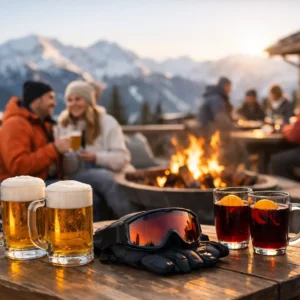
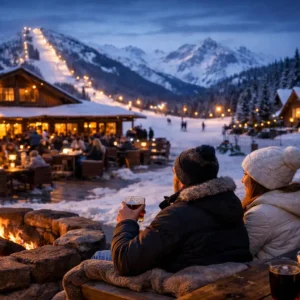
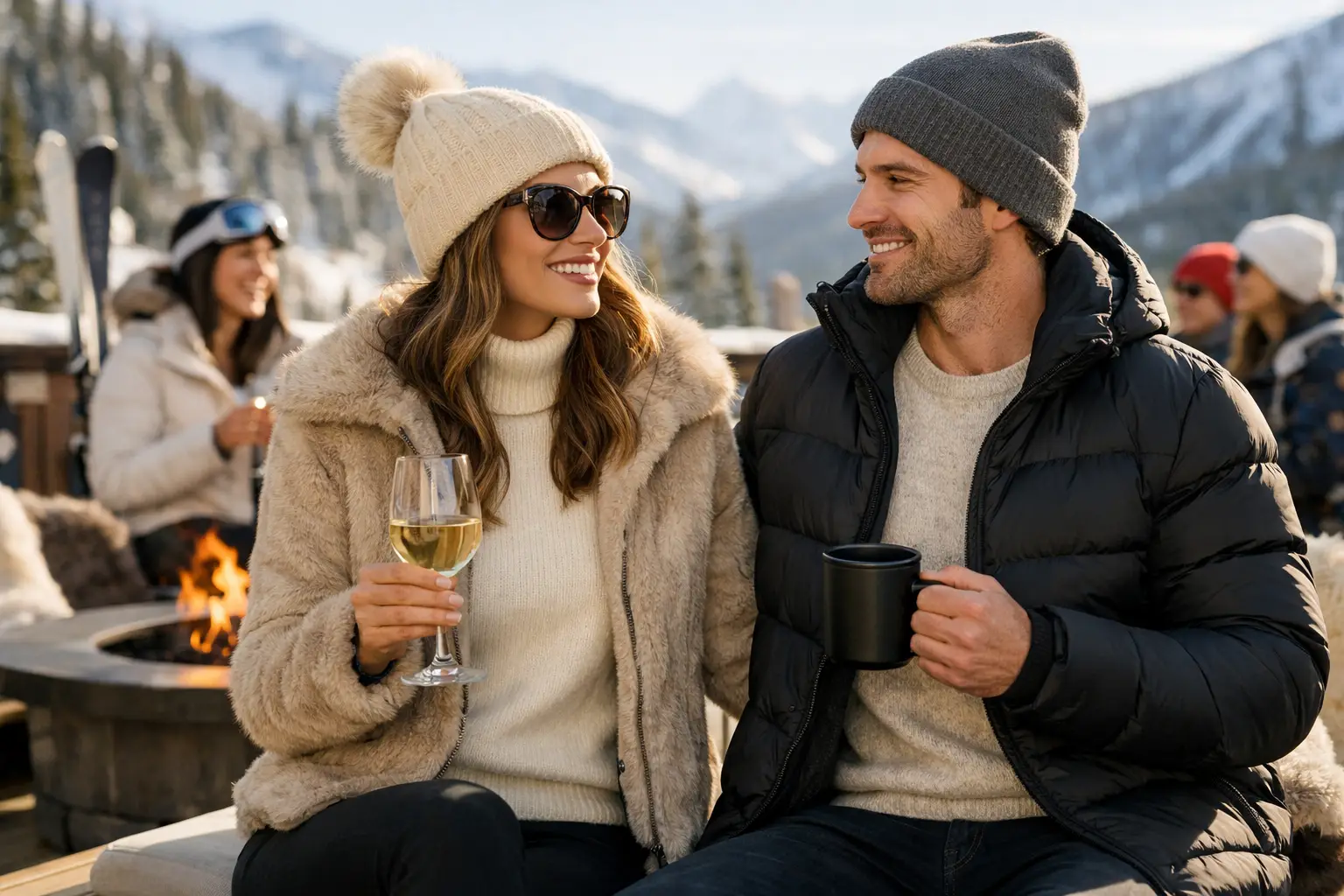
A slopeside beer straight after skiing is the most relaxed version of apres. Here, clean thermals under a fresh fleece or knit, winter boots and an insulated jacket are usually enough. If you are outdoors for a while, a hat and gloves still matter. People often underestimate how quickly you cool down once you stop moving.
For a resort bar or hotel lounge, step it up slightly. Swap obvious ski trousers for proper trousers or leggings, lose the helmet hair as best you can, and go for layers that feel less sporty. You still do not need to be dressed formally, but looking as though you planned to be there helps.
For dinner, especially in more traditional or upmarket resorts, make a clearer break from daytime kit. That might mean a dress with tights and boots, smarter knitwear, tailored trousers, or a collared shirt under a jumper. You do not need city eveningwear in most ski resorts, but you do want to look as though your day on the mountain has actually ended.
Snowboarders and skiers alike can lean into the more casual side of resort style, and many places welcome that. But there is a difference between relaxed and half-dressed. A lot depends on the venue, and if you are dining somewhere known for a smart room or long service, it is worth making the effort.
What not to wear apres ski
The usual mistakes are predictable. Staying in full ski kit too long is the big one. So is choosing footwear with no grip. Another common error is dressing for Instagram rather than for an alpine resort in winter.
Tiny fashion boots, bare ankles, fabrics that cannot handle moisture, or outfits built around looking chic for five minutes outside the hotel all tend to disappoint in practice. The same goes for wearing too much technical gear when it is no longer needed. A full shell, backpack and goggles on your head may be efficient, but indoors it can make you look and feel overdressed.
There is also a cultural point here. Some resorts are famously flamboyant, and if you want faux fur, statement knitwear or retro one-pieces after dark, there are places where that fits perfectly. Elsewhere, understated works better. Reading the room is part of good resort dressing.
A sensible apres packing strategy
If you are planning a week in the mountains, you do not need a second wardrobe. You need a compact set of pieces that work together. Two or three good knits, a pair of smarter trousers, a comfortable casual option, winter boots, and one versatile outer layer will cover most trips. Add a scarf, warm socks and perhaps one slightly smarter dinner option, and you are sorted.
This is where experienced travellers usually save space. They pack for the reality of resort life, not a fantasy version of it. Most evenings repeat the same formula with minor changes. Comfort matters, warmth matters, and having dry clothes waiting for you after the slopes matters most of all.
For UK skiers and snowboarders heading abroad, there is often a temptation to bring too much for evenings because mountain resorts feel like a special occasion. Sometimes they are. But apres style works best when it feels easy. The people who look most at home in resort are usually the ones wearing simple clothes well, not the ones trying hardest.
If you are ever unsure what to wear apres ski, start with this test: can you walk comfortably in it, stay warm outside for half an hour, and sit indoors without overheating? If the answer is yes, you are probably on the right track. The best apres outfit is the one that lets you enjoy the mountain long after the lifts have stopped turning.