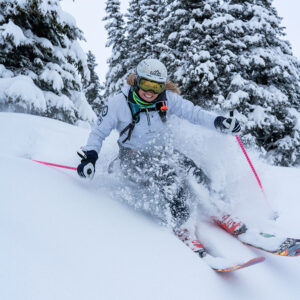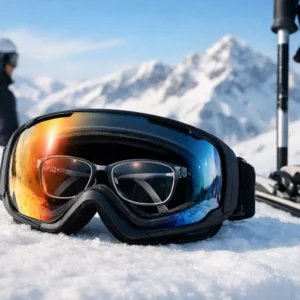
The wrong goggles usually reveal themselves halfway down a flat-light run, when the piste turns into a blank sheet of white and every bump arrives half a second too late. If you are wondering how to choose ski goggles, that is the place to start – not with frame graphics or whatever looked good under resort lights the night before, but with how well they help you see, fit and stay comfortable in real mountain weather.
For many skiers and snowboarders, goggles are treated as a finishing touch. In practice, they are one of the most important bits of kit you will wear all week. Good lenses help you read terrain, spot changes in snow texture and ski with more confidence when the light turns awkward. A good fit also matters more than many people realise, especially if you wear a helmet all day or tend to overheat on the hill.
How to choose ski goggles for the conditions you actually ski
The first decision is not brand. It is where and when you normally ride. A skier taking one or two Alpine holidays a year, mostly in mixed weather, needs something different from a spring park rider or a regular indoor slope user in the UK.
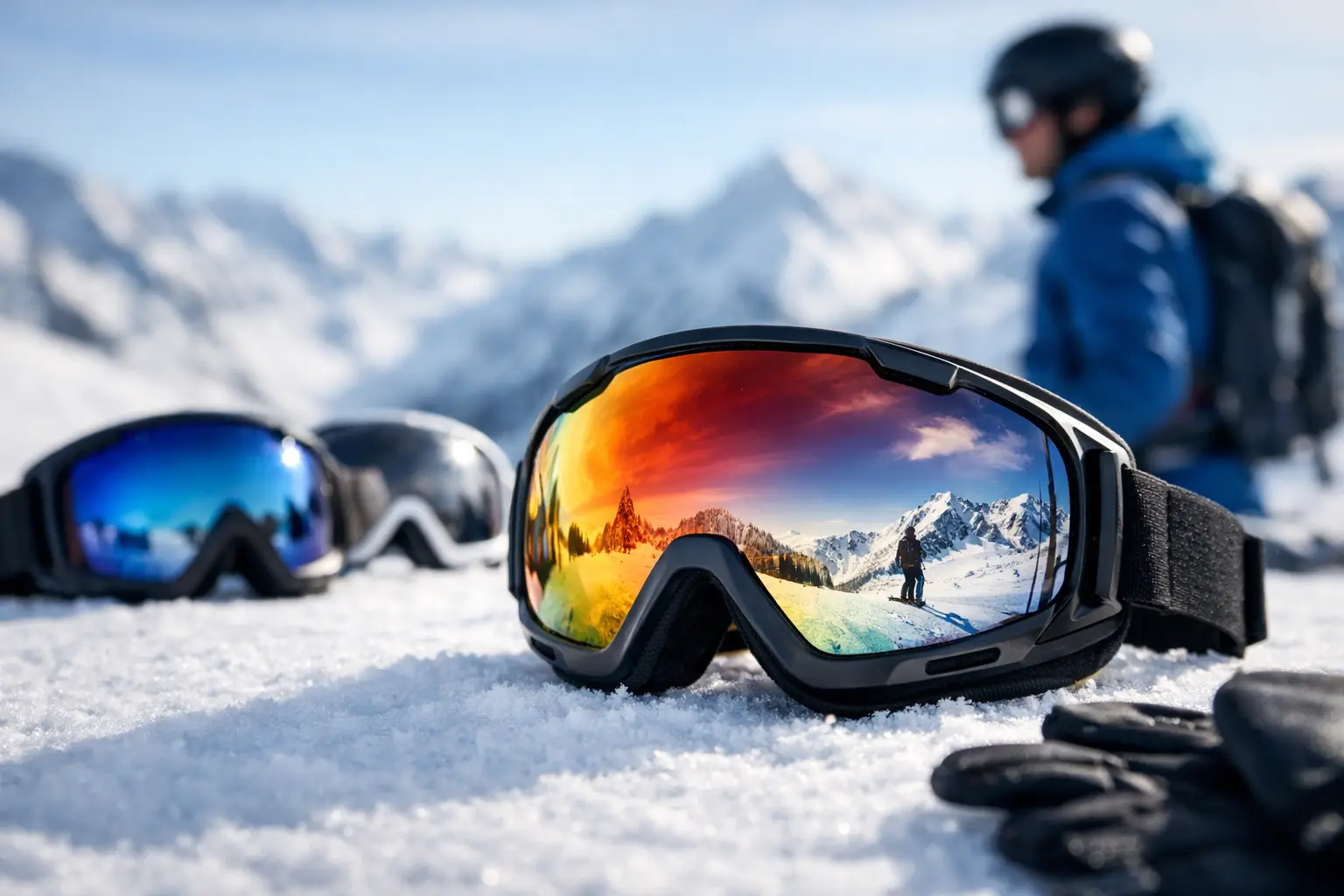
Lens tint and visible light transmission, often shortened to VLT, are the big factors here. In simple terms, a high VLT lens lets in more light and suits darker, stormier or flat-light days. A low VLT lens blocks more light and suits bright sunshine. If you mainly ski in classic mid-winter Alpine weather, where a week can include low cloud, snowfall and bluebird afternoons, a mid-range all-round lens is usually the safest choice.
That does mean compromise. An all-round lens will not be quite as sharp as a dedicated low-light lens in a snowstorm, and it will not be quite as comfortable as a dark sun lens on a blazing glacier day. But for most recreational skiers and snowboarders, especially those packing for one annual trip, versatility beats specialisation.
If you ski often and care a lot about visibility, interchangeable lens systems are worth considering. They add cost, and some are easier to swap than others with cold hands, but they can make a real difference across a mixed week in the mountains.
Lens colour, contrast and what matters on snow
Lens colour is often misunderstood. The point is not simply to make the world look brighter or darker. The best lenses improve contrast, helping you separate shadows, ridges and tracked snow from flatter sections of piste.
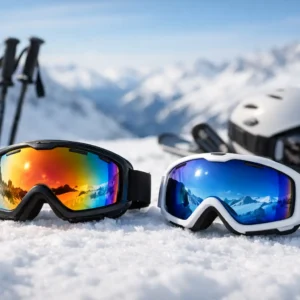
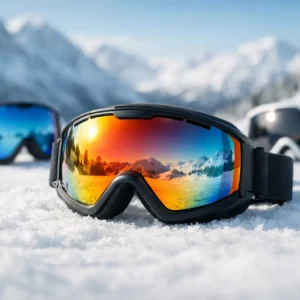
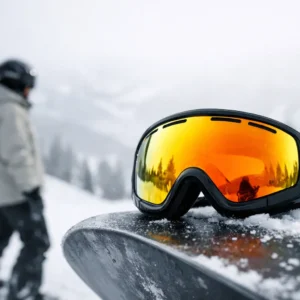
Rose, amber, copper and similar tints tend to work well as all-round options because they boost contrast without becoming too dark in poorer light. Yellow and lighter rose lenses are often strong in very flat conditions, though they can feel too bright if the sun suddenly appears. Dark grey, mirrored and very low VLT lenses are excellent in strong sun, but less forgiving when cloud rolls in.
Marketing language can get overexcited here. Not every branded lens technology is transformational. Some genuinely do offer better contrast and less eye strain over a full day, while others feel like marginal improvements dressed up as a revolution. If possible, look at how a lens handles detail in mixed light rather than judging it by how dramatic it looks in the shop.
Polarised lenses are another area where it depends. They can reduce glare nicely, particularly on very bright days, but some riders find they make it harder to read icy patches or interact with certain screens and displays. They are not automatically the best answer for everyone.
Fit comes before almost everything
A brilliant lens in the wrong frame is still the wrong goggle. Fit is what determines comfort, ventilation and whether you spend the day fiddling with your strap instead of skiing.
The frame should sit evenly against your face with no obvious pressure points around the nose or temples. The foam should feel soft but supportive, creating a proper seal without digging in. If there are gaps, especially around the cheeks, cold air can get in and fogging often follows.
Face shape matters. Some goggles suit broader faces, others narrower ones, and many brands now offer low-bridge or smaller-fit options. That is particularly useful for younger riders, women with smaller facial proportions, or anyone who has always found standard goggles oversized.
Field of view matters too. Larger cylindrical or toric designs can offer excellent peripheral vision, which is helpful in busy lift queues, on crowded pistes and when checking around you on traverses. Bigger is not always better, though. Oversized frames can feel cumbersome on smaller faces and may not integrate neatly with every helmet.
Helmet compatibility is not a detail
If you wear a helmet, and most skiers and snowboarders now do, try the goggles with one. The goggle-helmet fit should be smooth across the forehead, with no awkward gap between helmet and frame. That gap, often called a gaper gap, is not just a style issue. It can expose skin to cold air and usually signals a poor fit between the two pieces.
The strap should sit securely on the helmet without needing to be overtightened. If you have to crank it down hard to stop the goggles moving, the shape probably is not right. Equally, a frame that presses heavily into the bridge of your nose when paired with a helmet is unlikely to become more comfortable after six hours on snow.
This is one area where trying combinations in person still beats buying purely from specs. Two excellent products do not always work well together.
Fogging, ventilation and why maintenance matters
Most people blame the lens when goggles fog, but the cause is often a mix of poor fit, blocked vents, sweat and bad habits at lunch. Ventilation design matters, but so does how you use the goggles.
Double lenses are standard for good reason. They create thermal separation that helps reduce condensation. Proper venting along the top and bottom of the frame also helps warm, moist air escape. Beyond that, helmet fit, hat bulk, face covering placement and how hard you are working all play a part.
If you regularly ski in damp British snow domes, wet snowfall or changeable Alpine weather, anti-fog performance is worth prioritising. Just remember that anti-fog coatings are delicate. Wiping the inside of the lens with a glove, sleeve or rental-shop tissue is a quick way to shorten its life. Let moisture dry naturally where possible.
Pushing goggles up onto a warm helmet during a stop can also encourage condensation. Sometimes it is unavoidable, but if your goggles are prone to fogging, that habit is worth reducing.
Should you choose spherical, cylindrical or toric lenses?
This sounds technical, but the practical differences are fairly straightforward. Cylindrical lenses curve horizontally and have a flatter profile vertically. They are common, often slightly cheaper and can work very well. Spherical lenses curve in both directions, which can improve optics and interior volume, sometimes helping with fog resistance too.
Toric lenses sit somewhere between the two and are increasingly popular in premium models. They can offer strong optics with a shape that sits neatly on the face.
For most recreational users, lens quality and fit matter more than geometry alone. A well-made cylindrical goggle is better than a poorly fitting spherical one every time.
OTG models, prescription needs and smaller details
If you wear glasses, look for OTG – over the glasses – compatibility rather than hoping a standard frame will cope. Dedicated OTG goggles have more internal volume and better channel space around the temples. They are not foolproof, because glasses can still contribute to fogging, but they are a far better option than squeezing spectacles under a tight frame.
Strap quality, buckle adjustment and foam layering are smaller details that become more noticeable over a full week. A wide silicone-backed strap tends to hold better on a helmet. Multi-layer foam usually feels better against the face and manages sweat more effectively. These are not glamorous features, but they often separate decent goggles from genuinely good ones.
Price, brand reputation and what counts as value
There is a genuine jump in performance once you move beyond the cheapest end of the market. Better optics, better coatings, better foam and better venting all tend to show up in the mid-range and above. That said, the most expensive model is not always the best value for a skier who only heads to the Alps once a year.
A sensible approach is to buy the best fit and clearest lens you can afford for the conditions you actually ski. If your budget stretches to an interchangeable lens model and you know you will use the second lens, that can be money well spent. If not, a strong all-round lens in a comfortable frame may serve you better than a premium package full of features you rarely touch.
At Skier & Snowboarder, we would always lean towards performance you notice on snow rather than showroom appeal. Good goggles earn their keep when the light turns awkward, the weather closes in and you still want to ski with confidence.
The best pair is the one you stop thinking about after the first lift – because you can see clearly, your face feels comfortable and the mountain makes sense in front of you.