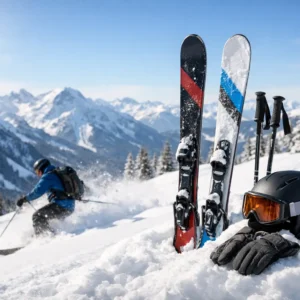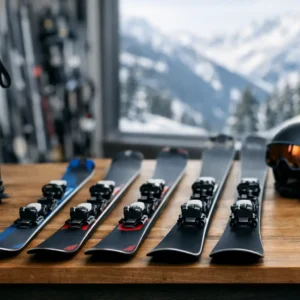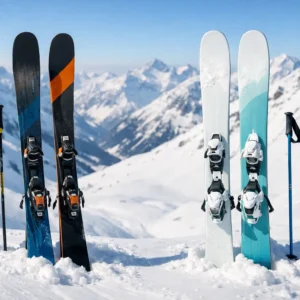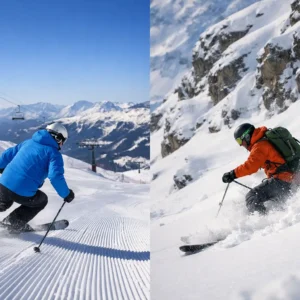
Stand at any ski shop wall long enough and this question turns up quickly: all mountain vs piste skis – which one actually makes sense for the way you ski? For plenty of UK skiers, the answer is not about marketing categories. It is about where you spend most of your week, what the snow usually looks like by 11am, and whether you want one dependable ski or a more specialised tool.
The short version is simple. Piste skis are built to feel precise, quick edge-to-edge and composed on groomed runs. All mountain skis aim to keep enough of that grip and predictability while adding more versatility when the snow gets chopped up, softer or less than perfect. The right choice depends less on ability labels and more on your habits on snow.
All mountain vs piste skis: what is the real difference?
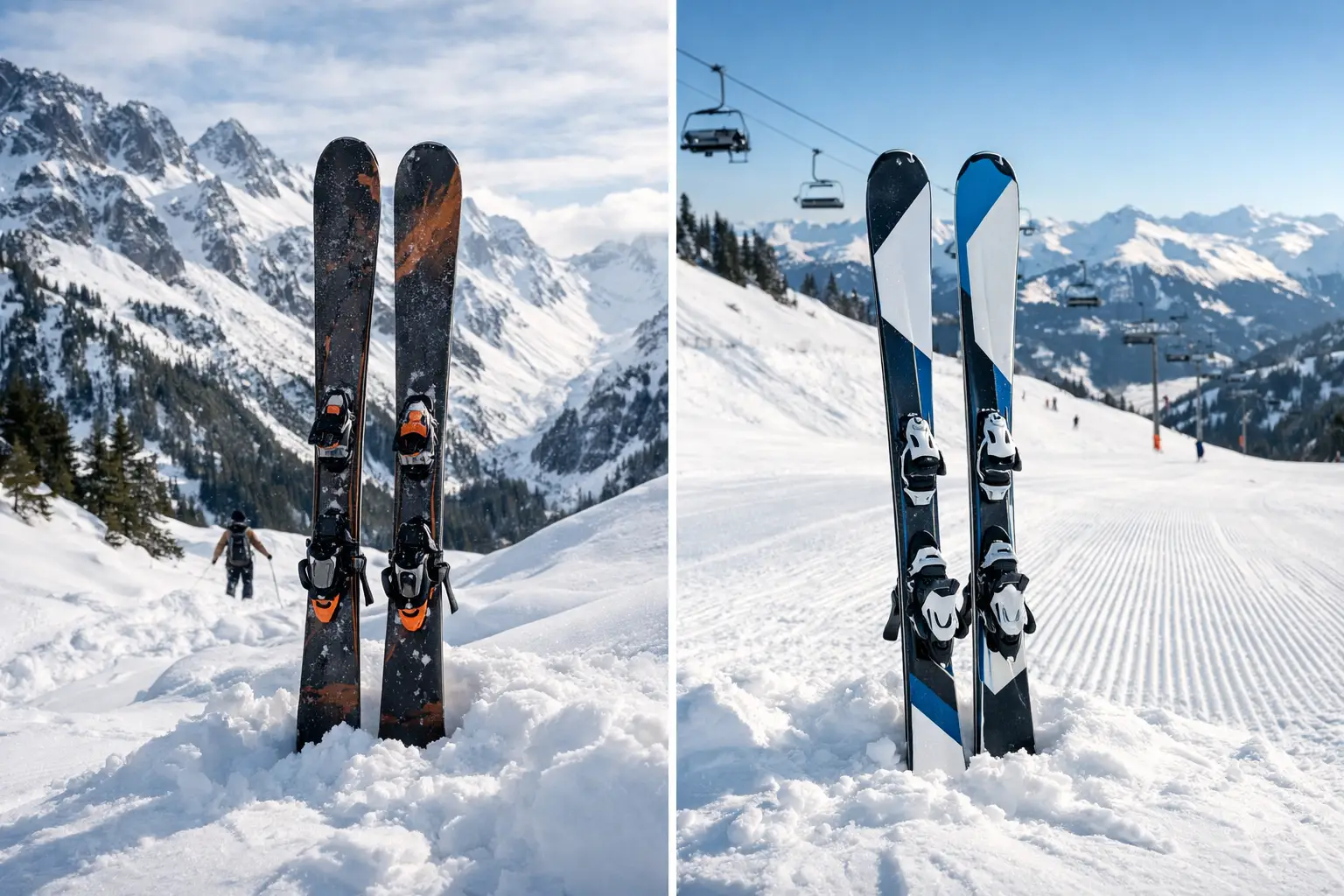
The biggest difference is usually waist width, followed by shape and how the ski is tuned to flex. A piste ski is generally narrower underfoot, often somewhere around the low 70mm to low 80mm range. That narrower platform helps the ski roll onto edge quickly and hold a clean line on hardpack. It feels neat, direct and quite efficient when the runs are freshly groomed.
An all mountain ski is usually wider, often from the mid-80mm range into the 90s, sometimes more. That extra width gives it a broader platform in mixed conditions. It can smooth out chopped snow, spring slush and softer snow at the side of the piste better than a narrow frontside ski. Many all mountain models also use a little more rocker in the tip and sometimes tail, which makes them less hooky and easier to steer when the surface is variable.
That does not mean one is automatically more advanced than the other. It means they prioritise different sensations. A piste ski wants to carve. An all mountain ski wants to adapt.
Why piste skis still make perfect sense
If your ski holidays revolve around well-groomed resorts, morning corduroy and linking clean carved turns on marked runs, piste skis still have a very strong case. They tend to feel lively and confident on firmer snow, particularly in the Alps when temperatures drop and the pistes set up hard overnight.
For improving intermediates, they can also be a useful teacher. A narrower ski is often easier to tip onto edge and gives clearer feedback through the turn. If you are working on balance, edge grip and carving rather than skidding, a piste-oriented ski can accelerate that learning because it rewards good input.
There is also the fatigue factor. On-piste skis are often less work on groomers because they move cleanly from one turn to the next without asking you to muscle a wider platform. If most of your skiing is in resorts like Val d’Isere, La Plagne or Saalbach and you rarely leave prepared runs, a true piste ski may simply feel better all day.
The trade-off is that once conditions get messy, narrow skis can feel less forgiving. Afternoon chop, pushed-up snow and slushy lower runs can make them feel twitchier and less relaxed than an all mountain option.
Where all mountain skis earn their place
All mountain skis suit the reality of many British ski trips rather well. A lot of us get one or two main holidays a season, book months ahead, and do not always land in perfect snow. One day you have crisp pistes, the next you have soft spring snow, windblown ridges or a few centimetres of fresh covering chopped-up terrain by lunchtime.
That is exactly where all mountain skis come into their own. They are not trying to be race skis, and they are not pretending to be deep-day powder boards either. They sit in the useful middle ground. You can ski groomers in the morning, drift to the side of the piste in softer snow, and still feel comfortable when the resort gets cut up later in the day.
For many recreational skiers, that broader comfort zone is more valuable than having the sharpest possible carving performance. The best all mountain skis now hold an edge far better than older, vague do-it-all models ever did. If you choose sensibly, you are not giving up as much piste performance as you might think.
All mountain vs piste skis for UK skiers
UK skiers often buy with a different pattern in mind from locals who ski every weekend. If you only get limited mountain time, your ski needs to cope with whatever the week delivers. That makes all mountain skis attractive, especially in the 84mm to 92mm bracket, where many models feel very happy on piste but have enough substance for rougher snow.
There is another practical point. Plenty of British skiers want one ski that works for a main alpine holiday, a short break, and perhaps a few indoor or dry slope sessions back home. A full-on piste ski can be brilliant on smooth, firm surfaces but a little one-dimensional for everything else. An all mountain ski often gives more use across a whole season.
That said, if your trips are mostly to high, snow-sure resorts, you ski almost entirely on marked runs and you love laying trenches on corduroy, do not let the market push you away from a piste ski. Versatility is useful, but only if you need it.
How ability level changes the answer
Beginners do not usually need a wide all mountain ski. In fact, a sensible piste-oriented or frontside ski is often easier to learn on because it is manageable, predictable and quick to respond at lower speeds. Very wide skis can slow down progression on hardpack if the skier is still learning how to engage the edge properly.
Intermediates are where the choice becomes more interesting. If you are comfortable on reds, building confidence on steeper blues and venturing onto mixed conditions, an all mountain ski may help you explore more of the resort without feeling out of place. If you are committed to improving your carving and ski mostly groomed runs, a piste ski remains a smart choice.
Advanced skiers can go either way depending on preference. Some want maximum energy and precision underfoot. Others prefer a slightly wider ski that handles a whole mountain day without complaint. Skill level does not settle the question by itself. Style does.
Width, radius and rocker without the shop jargon
If you are comparing skis, waist width is the easiest starting point. Roughly speaking, piste skis often sit around 70mm to 82mm. Frontside-all mountain crossover skis sit around 82mm to 88mm. True all mountain models often land between 88mm and 96mm for mixed resort use.
Turn radius matters too. Shorter radii generally feel keener to pull into carved turns, while longer radii feel calmer and more stable at speed. Then there is rocker. A little rocker in the tip helps with easier turn initiation and better handling in soft or uneven snow. Too much, for a skier focused on piste grip, can reduce that locked-in carving feel on hardpack.
This is why category labels can mislead. Two skis both described as all mountain can behave very differently. One may feel like a piste ski with broader horizons. Another may clearly prefer softer snow.
The buying mistake many skiers make
The most common error is buying for the fantasy day rather than the typical day. People remember that one magical run through fresh snow beside the piste and convince themselves they need a much wider ski. Then they spend most of the season on groomed snow wondering why their new purchase feels slower edge-to-edge.
The opposite happens too. Some skiers buy a narrow piste ski because it feels brilliant in the shop brief or on a demo morning, but then find it less enjoyable when the holiday turns warm, chopped up and busy.
A good rule is to choose for the conditions you meet most often, not the ones you photograph most enthusiastically.
So which should you choose?
If you ski almost entirely on groomed runs, enjoy carving, value precision and want the ski to help sharpen your technique, piste skis are the better fit. They are cleaner, quicker and more purposeful where most resort skiing still happens.
If your skiing includes variable snow, the odd venture off the side of the piste, spring afternoons, mixed weather and a general desire for one ski that can cover a lot of ground, all mountain skis are usually the smarter buy. For many UK holiday skiers, that middle category makes practical sense.
If you are torn, the sweet spot is often a narrower all mountain ski rather than a very wide one. Something in the mid-80s underfoot can be a particularly strong one-ski option for resort use. It will not match a dedicated piste ski for the cleanest carved turn on hard snow, but it may prove more useful over an entire week in the mountains.
The best ski is not the one with the broadest claims. It is the one that still feels right on day five, when the legs are heavier, the snow is scraped off at the top, slushy at the bottom, and you still want one more run before the lifts shut.