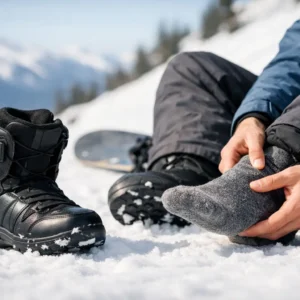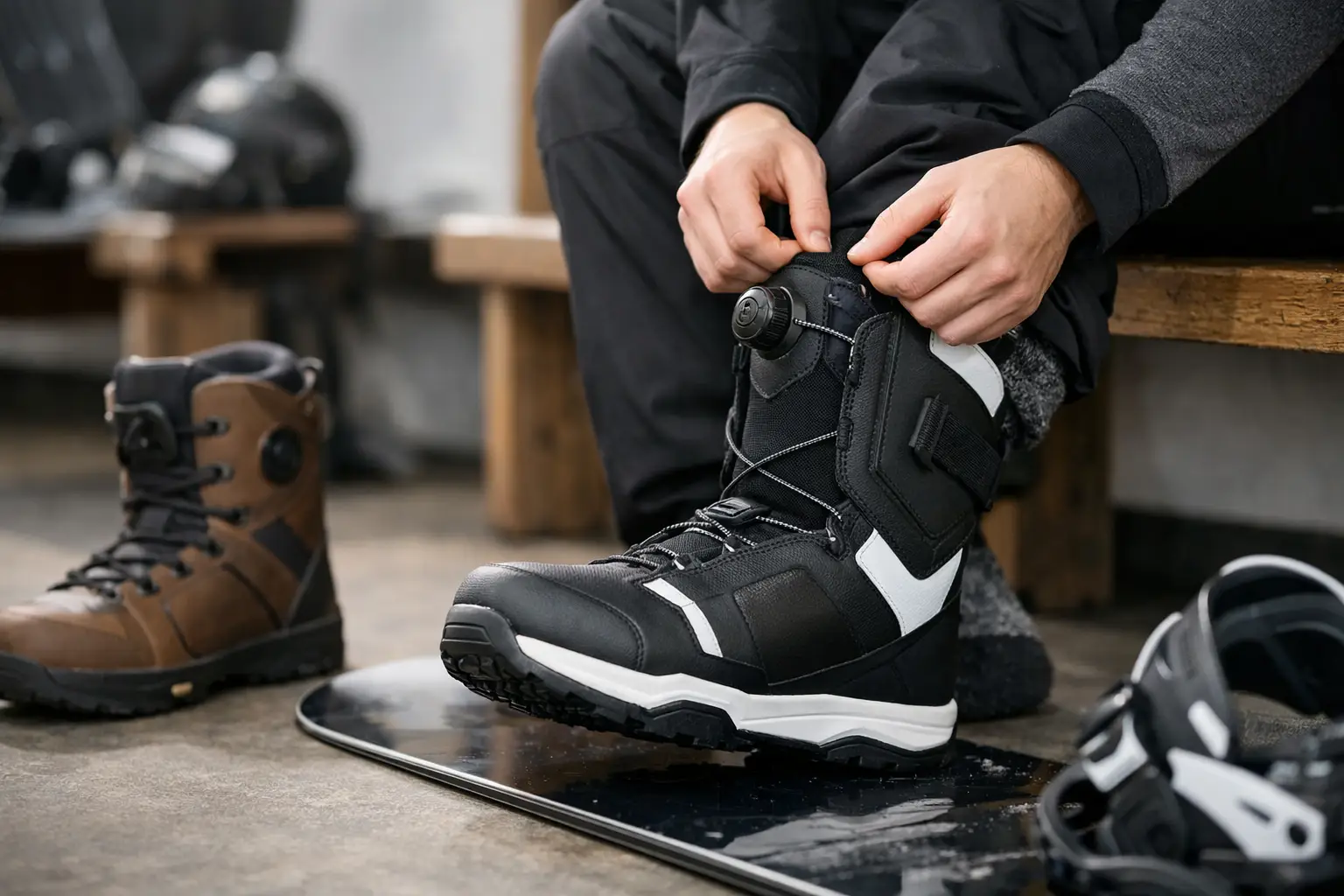
A lot of snowboard fit problems start before you ever clip into a binding. If you are asking how should snowboard boots fit, the short answer is snugger than most first-time buyers expect – but never painfully tight. Get this wrong and even a brilliant board setup can feel awkward, cold and hard to control by lunchtime.
Boots are the most personal part of any snowboard setup. Boards and bindings matter, of course, but boots are where comfort, precision and confidence all meet. For UK riders planning a week in the Alps, lapping an indoor slope, or squeezing in a few Scottish days when the weather lines up, a proper fit makes a noticeable difference from the first run.
How should snowboard boots fit on your feet?
A good snowboard boot should feel close and supportive all the way around the foot. Your heel should stay put, your toes should just brush the end when you stand upright, and the pressure should feel even rather than sharp or pinching. Once you flex into a riding stance, your toes should pull very slightly away from the front.
That last point catches a lot of people out. Standing straight in the shop is not the same as riding. When you bend your knees and drive your shins forwards, your foot sits differently in the boot. If your toes are curled hard in the shop, the boot is too small. If they float freely with plenty of extra room, it is usually too big.
The aim is a performance fit, not a slipper fit. Snowboard boots pack out over time as the liner compresses, especially after the first few days of riding. A boot that feels generously roomy on day one often becomes loose quite quickly.
The signs of a good fit
There are a few things experienced riders look for straight away. Your heel should have minimal lift when you bend your knees. A tiny amount of movement can be normal, but your foot should not slide upwards every time you flex. Too much heel lift means delayed response and a higher chance of blisters.
Your toes should make light contact with the front of the liner when standing tall. Not jammed. Not curled. Just present. Once you adopt an athletic stance, they should sit more naturally with a touch more space.
The midfoot should feel secure without being crushed. If you feel a hard hotspot across the widest part of the foot, the shape may be wrong even if the length seems right. That is why choosing by size number alone rarely works.
Around the ankle and cuff, the boot should feel supportive and consistent. You want hold, not dead space. If the boot feels easy to wiggle around in before you even ride, it will only feel sloppier after a few days on snow.
What a bad fit feels like
Boots that are too big are often mistaken for comfortable boots. In reality, they are one of the most common causes of tired feet and poor board control. You may find yourself over-tightening the laces or Boa system just to compensate, which creates pressure points while still allowing the heel to move.
A too-big boot can make turning feel vague, particularly on heel-side edge changes. It can also leave you with shin bang because your lower leg is moving independently inside the cuff.
Boots that are too small bring a different set of problems. Numb toes, cramping arches, cold feet and sharp pressure on the sides of the foot usually point to a fit that is overly tight or simply the wrong shape. Some pressure can ease as liners mould and soften, but pain is not something to try to ride through for a week.
Why width and shape matter as much as size
Snowboard boots are not built on a universal foot shape. Some are better for narrow heels and lower-volume feet, while others suit wider forefeet or a higher instep. This matters just as much as the size stamped on the box.
A rider with a wide foot can size up to chase comfort and end up with a sloppy heel. A rider with a narrow foot can size down for hold and end up crushing their toes. In both cases, the issue is not really length. It is shape.
This is where trying on several brands and models pays off. Two boots marked the same size can feel completely different. For newer riders, that can be surprising. For experienced riders, it is why loyalty to one model often develops over time.
How should snowboard boots fit for beginners?
Beginners usually benefit from a snug, forgiving fit rather than the tightest possible performance fit. That does not mean buying them big. It means choosing a boot with enough support and comfort to allow long learning days without excessive movement inside the shell.
A softer to medium-flex boot can be a smart choice because it is more accommodating as you learn balance, linking turns and basic edge control. But the fit principles stay the same. Heel secure, toes lightly touching, no major pressure points.
If you are new to the sport, resist the temptation to buy for après-ski comfort. Walking around a shop or chalet in a roomy boot is not the test that matters. Riding is.
How should snowboard boots fit for more advanced riders?
As ability increases, most riders become more sensitive to small fit issues. Advanced riders often prefer a closer, more responsive fit because it translates movements to the board more directly. If you ride fast, spend time carving hard, or head into steeper terrain, support and heel hold become even more important.
That said, there is still a balance. A freeride boot for all-day use should not leave you counting the minutes until the lifts close. Precision matters, but so does circulation and stamina. The best setup is one that feels controlled from first lift to last run.
Trying boots on properly
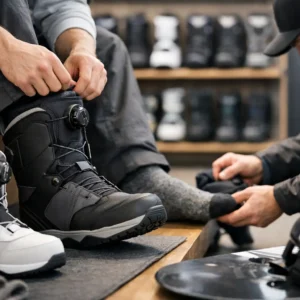
The best time to try snowboard boots is later in the day, when your feet are slightly more swollen and closer to how they will feel after activity. Wear proper snowboard socks – thin or medium, not bulky. Thick socks usually create more problems than they solve.
Fasten the boot fully, then spend time in it. Stand up, flex forwards, mimic a riding stance and pay attention to heel movement. A quick stroll around the shop tells you very little. Ten focused minutes tells you much more.
If the liner is heat-mouldable, remember that moulding can improve comfort and lock-in, but it will not turn the wrong shape into the right boot. It fine-tunes the fit. It does not rescue a poor starting point.
Common mistakes UK riders make
One classic mistake is buying boots online without ever trying that brand before. If you already know the exact model and size that works for you, fair enough. If not, it is a gamble.
Another is sizing up for thick socks or cold weather. In practice, a well-fitted boot with decent circulation is warmer than a loose boot with extra sock bulk. Too much room lets the foot move and can actually make feet colder.
Then there is the holiday panic buy. Plenty of riders realise on day one in resort that their old boots are finished and grab the first pair that feels tolerable in a busy shop. Sometimes you get lucky. Often you do not. Trying boots properly before you travel is the smarter move.
Lacing systems and fit feel
Traditional laces, speed laces and Boa systems can all work well, but they change how the fit feels. Traditional laces often allow the most custom tuning across different zones of the boot. Speed lace systems are quick and practical. Boa systems are popular for convenience and micro-adjustment, though the feel varies depending on whether the boot uses a single dial or multiple zones.
The key point is this – no lacing system fixes the wrong shell shape. It can refine hold, especially around the ankle and cuff, but it should not be doing all the work.
When to replace your boots
Even a boot that fitted brilliantly when new will not stay that way forever. Liners pack out, support softens, and heel hold drops off. If you are cranking the closure tighter every season, feeling new movement in the heel, or losing response edge to edge, the boot may simply be worn out.
This tends to creep up on regular riders. Because the change is gradual, it is easy to adapt without noticing how much performance and comfort you have lost. Fresh, well-fitted boots can feel like a bigger upgrade than a new board.
For riders weighing up options before the season, coverage from specialist titles such as Skier & Snowboarder can help narrow the field, but fit still needs to be decided on your feet rather than on paper.
The simplest rule to remember
If you remember one thing, make it this: snowboard boots should feel snug, secure and supportive on day one, with toes just touching and heels staying put when you flex. Not roomy. Not painful. Just properly close.
Get that right and everything else works better – your comfort on long days, your confidence on steeper runs, and the way your board responds under you. A good boot fit does not shout for attention. It simply lets you get on with riding, which is exactly how it should be.