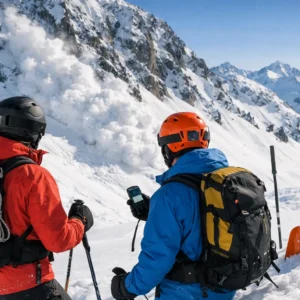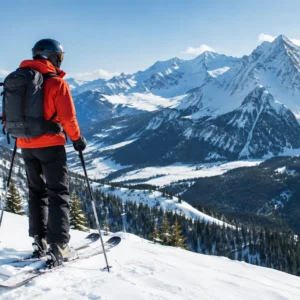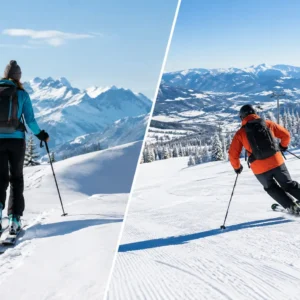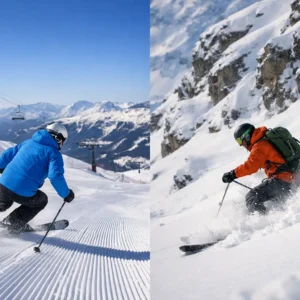
A mountain safety equipment guide is not a shopping list for the most dramatic day in the backcountry. For skiers and snowboarders, it is a way of matching the kit in your pack to the terrain, forecast, group and consequences of getting something wrong. A bluebird powder day beyond the lifts can become serious remarkably quickly when visibility closes in, a binding breaks or a slope releases.
The first principle is simple: equipment supports sound judgement, but it cannot replace it. An avalanche transceiver does not make an unstable slope safe. A bivvy bag does not make it sensible to continue into a whiteout. The strongest safety set-up begins with conservative decisions, current local information and the willingness to turn around.
Start with the day you are actually planning
A piste holiday in a large, well-managed resort calls for a different level of preparation from a ski tour in the Cairngorms, a lift-accessed powder day in La Grave or an off-piste itinerary with a guide. It is tempting to treat all ‘off-piste’ skiing as one category, but there is a sizeable gap between a short, visible line beside a marked run and committing terrain where help may be hours away.
Before leaving the valley, consider where you will ski or ride, how many people are in the group, the forecast, avalanche bulletin, lift opening information and your likely return time. Tell somebody outside the group where you are going if you are heading away from resort infrastructure. A charged phone is useful, but cold drains batteries quickly and coverage is far from guaranteed. Keep it warm in an inner pocket and save local emergency numbers before setting out.
For many UK visitors to the Alps, the most useful upgrade is not another gadget but a day with a qualified instructor or mountain guide. They can help translate a regional avalanche forecast into terrain choices, identify local hazards and build habits that travel from one trip to the next.
Mountain safety equipment guide: the essential layers
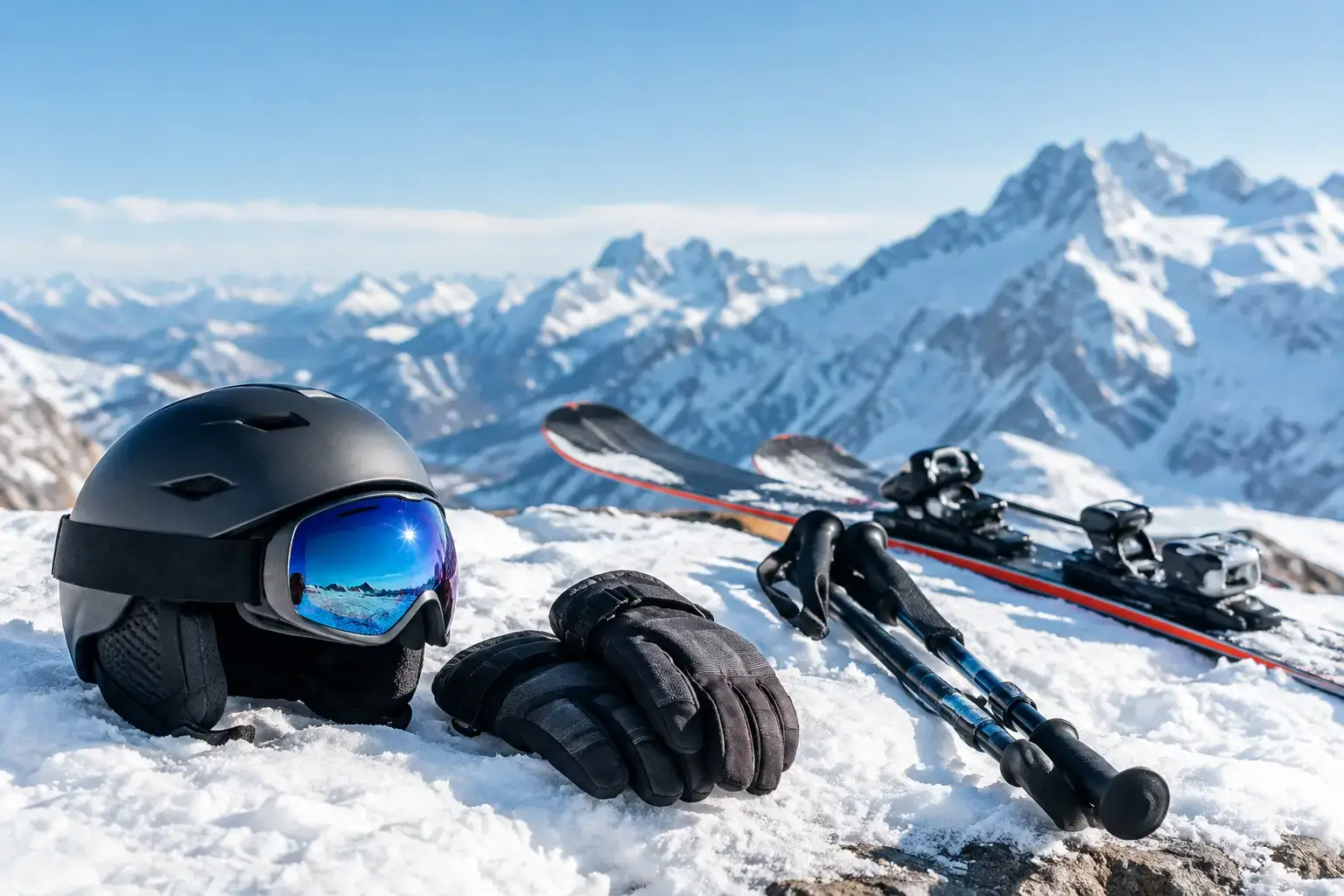
For a normal resort day, a properly fitted helmet, goggles suited to the light, warm gloves, spare dry layer and a small amount of water are practical safety equipment, not luxuries. Cold hands reduce dexterity just when you need to adjust a binding or use a phone, while poor lens choice can make flat light far more difficult to read.
Choose goggles with a lens appropriate to conditions rather than relying on a single dark lens all week. In snowfall, cloud or late-afternoon shade, a high-contrast low-light lens can make undulations and icy patches much easier to see. A helmet should meet the relevant snow-sports safety standard, fit snugly without pressure points and work with your goggles. Replace it after a significant impact, even if the outer shell looks largely unmarked.
A compact resort pack earns its place when it carries spare gloves, a light insulated jacket, sunscreen, lip balm, water and a small snack. Add a basic first-aid kit if you are skiing with children or travelling further across a linked area. The aim is not to haul a survival shop around the pistes; it is to avoid minor problems becoming reasons to make poor decisions.
Avalanche kit: carry it only if you can use it
Once you leave controlled pistes, or travel in terrain where avalanche risk is present, the baseline rescue kit is a transceiver, probe and shovel for every member of the group. The three items work together. The transceiver helps locate a buried person, the probe pinpoints their position and depth, and the shovel is what gets them out. In a burial, efficient digging matters enormously.
Buy a modern digital transceiver from a reputable brand and learn its functions before your holiday. Practise switching from transmit to search, following a signal, probing systematically and shovelling as a team. Do not leave the device in a rucksack: it should be worn in its harness against the body, under outer layers, switched on before departure and checked with the group. A quick transceiver check at the start of the day should be routine.
An avalanche airbag can improve the odds in some avalanche scenarios, but it is not a permit to ski steeper, more consequential slopes. It adds weight, costs money and requires attention to airline and cartridge rules when travelling. For regular off-piste skiers and snowboarders who have training and make conservative terrain decisions, it may be a worthwhile extra. For everyone else, the first investment should be education, a dependable rescue set and time spent practising.
A RECCO reflector is also worth understanding. It is passive and often built into outerwear or boots, but it is not a substitute for a transceiver. RECCO searches depend on professional rescuers arriving with detectors, whereas a transceiver enables companions to begin a rescue immediately.
Tools for weather, navigation and an unplanned stop
Navigation equipment becomes more relevant the further you move from lifts, pistes and familiar landmarks. A map, compass and the knowledge to use both remain valuable when screens fail. A phone with offline mapping can be excellent as a supplementary tool, provided it is protected from cold and supported by a power bank. Do not assume a blue dot on a screen confirms that a route is safe, open or within your ability.
For longer tours, remote itineraries or days with a realistic chance of delay, add a headtorch, insulating layer, emergency bivvy bag, first-aid kit, repair tape, multitool and fire-starting equipment where appropriate. Skiers should carry a binding repair option; snowboarders should have spare binding screws and a suitable tool. The precise contents depend on the objective, but the principle is consistent: carry the means to stabilise a problem, stay warm and communicate.
Four items deserve a place in most off-piste packs:
- A headtorch with fresh batteries, because even a short delay after sunset changes the stakes.
- A lightweight emergency shelter or bivvy bag, particularly in cold, windy or remote terrain.
- A first-aid kit tailored to the group, including any personal medication.
- A repair tool and materials appropriate to skis, snowboard bindings, skins or splitboard hardware.
For ski touring, skins, ski crampons and boot crampons are movement tools rather than emergency kit, and each has a specific use. Ski crampons help on firm, steep skin tracks; boot crampons and an ice axe demand instruction and judgement. Carrying technical equipment without the skills to assess snow, self-arrest or move securely on hard snow can create false confidence.
Fit, familiarity and group discipline matter most
The best kit is of limited use if it stays at home, sits at the bottom of a pack or has never been tested. Try your gloves with your beacon controls. Assemble your probe while wearing mitts. Check that your shovel handle locks securely. Practise removing skins in wind and putting a board back together with cold fingers. Small failures are easier to solve in a car park than halfway through a descent.
Groups should also agree how they will travel. Keep one another in sight where terrain permits, stop in safe islands rather than below steep slopes or cornices, and avoid exposing the whole group to a hazard at once. On a powder day, enthusiasm can push people to follow tracks without asking where they lead. Fresh lines are not evidence of safe snow.
Conditions change through the day. Wind can load a slope after a reassuring morning forecast, sun can affect snow stability on certain aspects, and visibility can conceal terrain traps such as gullies, rocks and stream beds. If the picture no longer matches the plan, reduce the ambition of the plan.
Build a safety system, not just a kit bag
Good mountain days are built from modest, repeatable habits: check the bulletin, choose terrain that suits the conditions, test rescue equipment, communicate clearly and leave enough margin for the unexpected. That approach applies whether you are taking your first guided off-piste day from a French resort or planning a regular touring season closer to home.
The equipment matters, and the right pieces can make a profound difference. But the most valuable item you carry is the judgement to recognise when the mountain is asking you to ski somewhere else – or save the line for another day.