A lift queue at first bell, fresh corduroy beneath the skis and coffee before the next lap remains one of winter’s great pleasures. Yet more British skiers are looking beyond the marked piste map. Ski touring versus resort skiing is not simply a choice between uphill effort and chairlift comfort. It is a question of what you want from a day in the mountains, how much responsibility you are prepared to take on, and where your experience currently sits.
Touring can deliver silence, solitude and a line that feels genuinely earned. A resort day can offer huge vertical, varied terrain, dependable logistics and the freedom to focus on skiing rather than route-finding. Neither is inherently the more authentic option. The better choice depends on the conditions, the group and the sort of holiday you want.
Ski touring versus resort skiing: the central difference
Resort skiing is built around lift-accessed terrain. You buy a lift pass, use groomed pistes and marked runs, and benefit from a managed mountain operation that may include avalanche control, piste patrol, signposting, mountain restaurants and a clear route back to town. That does not make every inch of a ski area safe in every circumstance, but it creates a structured environment with obvious boundaries.
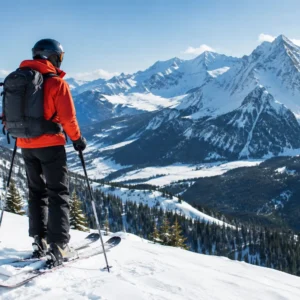
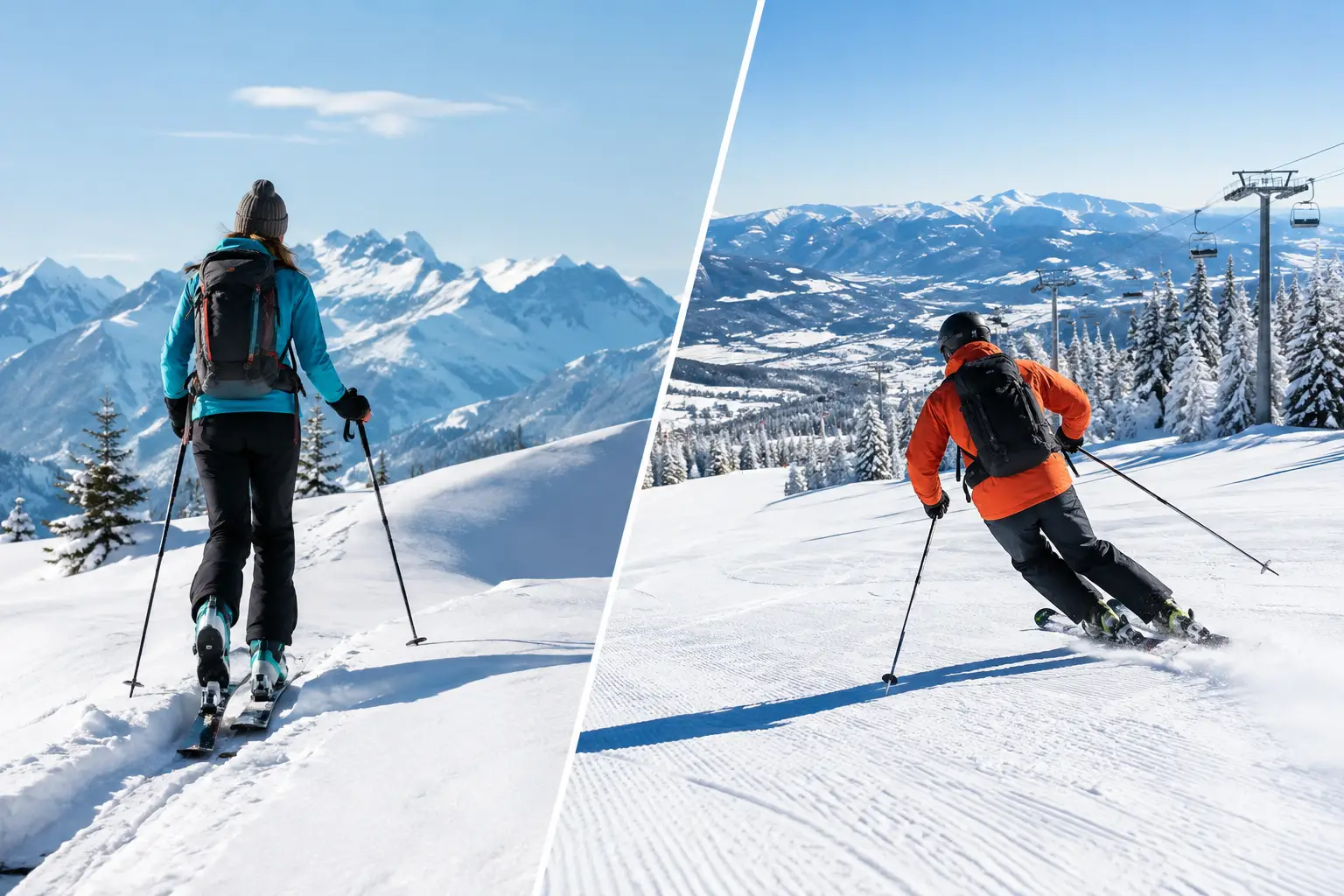
Ski touring replaces lift access with human power. Skiers fit climbing skins to the bases of touring skis, release their heels for the ascent and follow a route uphill. At the top, skins come off, boots are locked into ski mode and the reward is the descent. The splitboarding equivalent follows the same principle, with a snowboard separating into two skis for the climb before being reassembled for the ride down.
That simple description conceals a major shift in decision-making. In a resort, the lift network largely dictates where you can go. On tour, the terrain, avalanche forecast, weather, snowpack, fitness, navigation and turnaround time dictate the day. Touring is not just resort skiing without the lift pass.
The day on snow feels very different
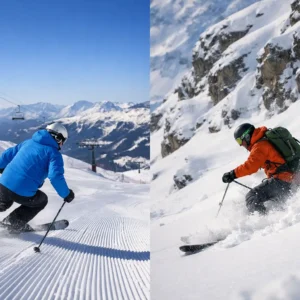
A strong resort can give an intermediate or advanced skier more quality skiing in a morning than most people will manage over a full touring day. Modern lifts cover serious vertical quickly, and a large ski area offers everything from perfectly prepared pistes to moguls, trees and marked itineraries. For a short annual holiday, especially with mixed abilities in the party, that efficiency is difficult to beat.
Touring changes the rhythm. The ascent is part of the experience rather than the inconvenience before it. You notice the temperature changing with altitude, watch the light move across a valley and have time to read the snow beneath your skins. The descent may be brief by comparison, but it can be exceptional: cold, untracked snow, a broad alpine face and no one else in sight.
There is a less romantic side, too. Skins can ice up, transitions take practice, a long flat exit can be tiresome, and a descent on breakable crust is no less frustrating because it was earned. Touring days are often brilliant precisely because they are not guaranteed. Anyone who needs every run to be a good one may be happier staying within the resort boundary when conditions are uncertain.
Freedom has limits
The appeal of touring is often described as freedom, but experienced tourers understand it as freedom within constraints. A beautiful slope may be off the agenda because it faces the wrong way for the day’s warming, has a suspect snowpack, or would leave an awkward and time-consuming exit. Turning around before the summit can be the best decision of the day.
Resort skiing has constraints too: queues, closed lifts, wind holds and the occasional busy piste. But these are generally logistical frustrations rather than consequences that could place the group in serious danger. For many holiday skiers, that distinction matters.
Cost, kit and fitness
Touring is sometimes presented as a cheaper way to ski because there is no daily lift pass. In reality, the upfront investment is substantial. Touring skis, bindings, compatible boots, skins, poles, rucksack and avalanche safety equipment all cost money. A transceiver, shovel and probe are essential kit in avalanche terrain, not accessories to buy and leave unused. Training, guiding and transport can add further expense.
Resort skiing has its own familiar costs, particularly in major Alpine destinations where lift passes, accommodation and mountain lunches can soon mount up. However, hire shops make it straightforward to arrive with little more than clothing, and a lift pass delivers predictable access to a great deal of terrain. If you ski one week a year, resort skiing is usually the more economical and less complicated route.
Fitness is another honest dividing line. You do not need to be an endurance athlete to start touring, but steady uphill movement for several hours is demanding, particularly at altitude. Efficient technique matters as much as raw power. A regular skier with good cardiovascular fitness can progress quickly, while a very capable downhill skier may be surprised by their first sustained climb.
Do not underestimate the skills gap
Strong piste technique is useful, but it is not a touring qualification. Off-piste snow requires adaptable balance and sound judgement, while safe travel demands knowledge of avalanche terrain, route planning, weather, snow conditions, navigation and group management. Learning to use rescue equipment is vital, but it is only one part of avoiding an avalanche in the first place.
A qualified guide or properly run introductory course is the sensible start. The aim is not to remove risk – mountains do not work that way – but to understand it, make better choices and recognise when a plan needs changing. Resort off-piste lessons are also an excellent bridge for skiers who want to improve in variable snow before committing to skins and a full touring set-up.
Safety is the decisive trade-off
Within marked, open pistes, ski resorts actively manage hazards. Avalanche control, patrol teams and closures reduce risk, although collisions, changing weather and poor visibility still require care. The moment you pass beyond the piste boundary, the responsibility shifts sharply, even if you are only a few turns from a chairlift.
Touring means accepting that responsibility from the outset. The group must assess the avalanche bulletin, choose conservative terrain when appropriate, carry the right equipment, know how to use it and maintain enough margin for mistakes. A transceiver does not make a slope safe. It may help locate someone after an avalanche, but prevention, disciplined terrain choice and informed decision-making are what matter most.
This should not put people off learning. It should put them off treating touring as a casual extension of a resort holiday. There are superb guided options across the Alps, from first skinning days near established ski areas to multi-day hut tours for experienced groups. Scotland can also be an excellent place to develop mountain awareness, provided expectations are realistic about weather, snow cover and the speed at which conditions can change.
Which skier will enjoy each most?
Choose resort skiing if your priority is mileage, convenience and variety. It is ideal for family groups, social holidays, improving technique with an instructor, chasing well-groomed pistes or fitting as much skiing as possible into a precious week away. It also makes sense when poor visibility, high avalanche danger or variable snow make a controlled environment the wiser choice.
Touring suits skiers who enjoy the whole mountain day, including planning, climbing and adapting to the weather. It rewards patience and curiosity more than a need to clock vertical metres. The strongest candidates are not necessarily the fastest skiers, but those who can remain calm, work as part of a group and take satisfaction from making a conservative decision.
Many committed skiers find that the answer is not either-or. A lift-served day can be the perfect warm-up, a sensible choice after heavy snowfall or the best option for skiing with friends. Touring may fit naturally on quieter days, with a guide, or after lifts close in spring when the snow is stable and the timing is right.
A sensible route into touring
Before buying a full touring set-up, try a guided introductory day in a resort with accessible backcountry terrain. Hire equipment, learn the mechanics of skins and transitions, and discover whether you enjoy the climb as much as the descent. Book an avalanche education course, then keep practising transceiver searches until the process feels familiar rather than theoretical.
It is also worth being candid about the people you tour with. A group only moves safely at the pace of its least comfortable member, and differing appetites for exposure, effort and risk can make an otherwise straightforward day difficult. The best touring partners communicate clearly, welcome a change of plan and never make somebody feel pressured into terrain they do not want to ski.
The mountains offer more than one good way to spend a winter day. Take the lift when you want maximum skiing and shared resort energy; earn the climb when you have the skills, conditions and appetite for a slower, more self-reliant adventure. The most rewarding choice is the one that leaves you wanting to return, with enough energy and judgement to do it well.