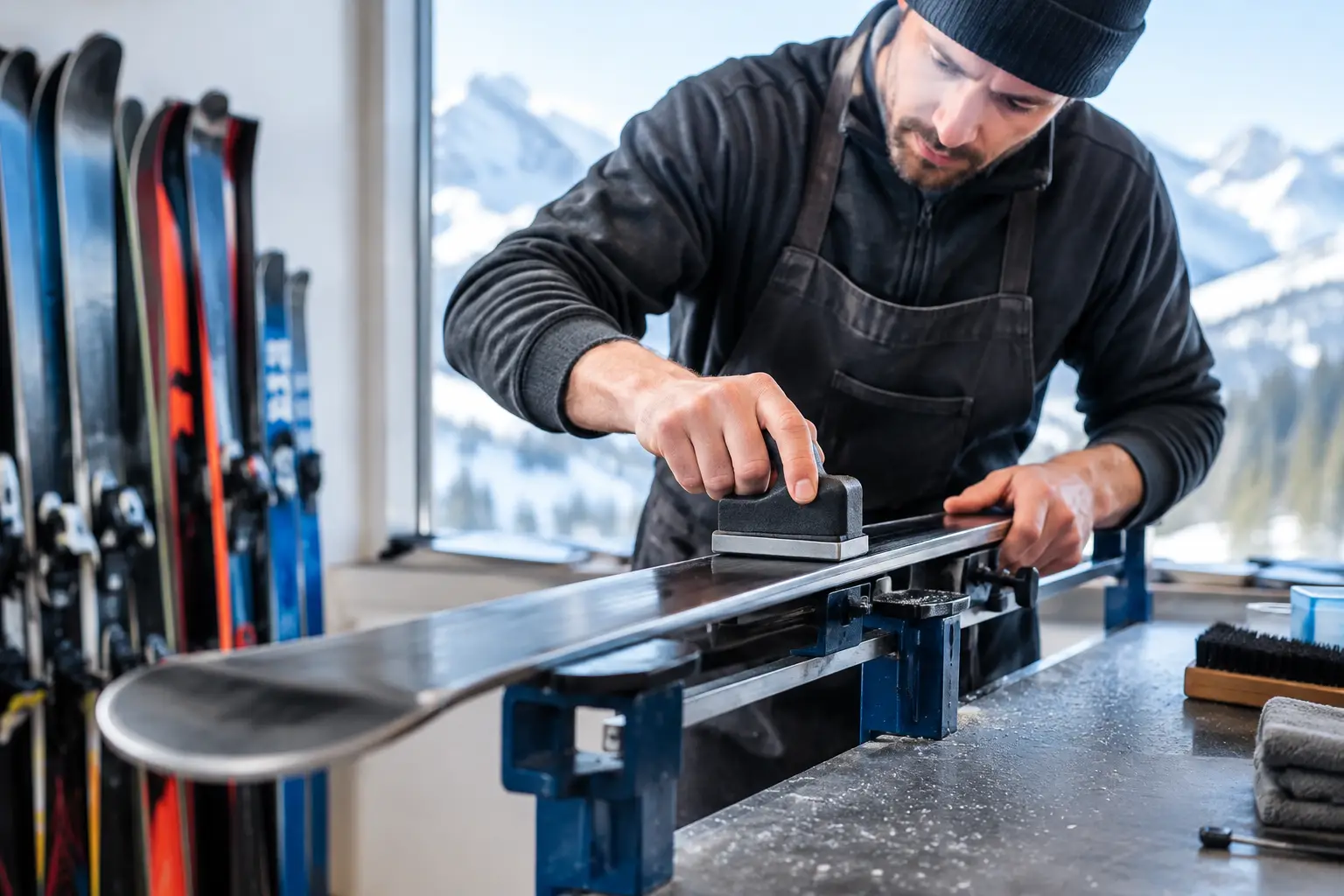
A ski that feels reluctant to run flat, chatters on hardpack or refuses to hold an edge is not necessarily past its best. More often, it is asking for attention. Getting ski servicing frequency right is one of the simplest ways to make every turn feel more predictable, whether you are fitting in evening laps at a UK snow centre or heading to the Alps for a long-awaited week away.
There is no single number that suits every skier. A careful holiday skier using their own kit for six days each winter needs a different routine from a racer, instructor or regular indoor skier. Snow temperature, piste preparation, ski construction and the way you travel all matter. The useful rule is to service according to what the skis are telling you, then use the number of days skied as a sensible back-up.
Ski servicing frequency: the practical answer
For most recreational skiers, a hot wax every four to six days on snow is a good starting point. If the bases begin to look pale, dry or furry around the edges, do not wait for a diary date: wax them. Fresh wax protects the base material as well as improving glide, and it is particularly worthwhile before a major trip.
Edge work normally needs less frequent intervention than waxing. A light edge tidy every six to 10 days suits many piste skiers, while a more thorough workshop service once or twice a season is enough for skis that have had no serious encounters with rocks, lift queues or car-park gravel. If you ski hard, spend time on injected race pistes, or use an indoor slope regularly, shorten those intervals.
A full service is not simply a sharper edge. It can include base repairs, a base grind to restore structure and flatness, edge sharpening and finishing, binding inspection, and a fresh wax. That level of work is valuable when the ski has become slow, uneven or unpredictable, but it is not automatically needed every few outings. Over-servicing, especially aggressive edge grinding, removes material and can shorten the useful life of a ski.
Start with the snow, not the calendar
Dry, abrasive man-made snow wears wax away rapidly. This is why regular users of UK dry slopes and snow centres often notice their bases turning white sooner than they would on a soft, snowy Alpine piste. Spring conditions can be similarly demanding: warm, dirty snow drags on the base and can leave it feeling slow by lunchtime.
Cold, dry natural snow is generally kinder to a ski, although very cold conditions still reward the right wax. A week of gentle cruising in fresh snow may leave your skis in better shape than two energetic days on firm, polished pistes. The number of runs matters less than the surface you have skied, your speed and how forcefully you load the ski.
Your skiing style plays a part too. A developing skier who skids turns at modest speed will usually need less edge attention than a confident skier carving steep morning corduroy. Moguls and variable off-piste snow are not necessarily damaging, but hidden stones and thin cover are. After a low-snow holiday, inspect the bases before putting the skis away rather than discovering a deep gouge next season.
The signs that your skis need attention
Wax is the service you can judge most easily. Look along the base in good light. Healthy bases should appear consistently dark and smooth. Grey or chalky patches, especially near the tips and tails or beside the steel edges, suggest the ski is dry. A base that feels rough when you run a hand along it also deserves a wax.
Edges require a little more judgement. Light surface rust after a damp journey home is common and can often be removed with a fine diamond stone or addressed during a routine service. Burrs, however, are different. If an edge feels nicked or catches your fingernail, it may grab unexpectedly on snow. A few careful passes with a diamond stone can restore smoothness; larger damage is best left to a technician.
On snow, the most telling sign is a change in behaviour. If a ski that normally grips confidently begins to wash out on firm pistes, inspect the edges. If it feels sticky and slow on shallow terrain, look at the bases first. Do not assume every handling issue requires the sharpest possible edge. A ski with an overly aggressive tune can feel hooky, particularly for less experienced skiers or in softer snow.
What should you do yourself?
Routine care at home makes workshop servicing more effective and less frequent. After each trip, dry the skis thoroughly, including the edges and bindings, before storing them somewhere cool and dry. Never leave them wet in a roof box, ski bag or car boot for days after travelling home.
A simple home kit – a brass brush, scraper, wax, iron, rubber bands and a diamond stone – is enough for basic maintenance once you have learned the process. Regular hot waxing is well within reach for many skiers, and it gives you a close view of the base condition. Use a purpose-made waxing iron rather than an old clothes iron, keep it moving, and avoid smoking the wax or overheating the base.
Edge tuning needs more restraint. Removing rust and smoothing minor burrs is sensible, but changing side-edge angles, setting base bevels or trying to repair a substantial impact can alter how a ski feels. If you do not know the existing tune, a reputable ski workshop is the safer option. Ask what edge angles they use and explain where and how you ski. A race-style tune is not automatically the best choice for a relaxed all-mountain holiday.
Bindings are another reason not to treat every service as a purely cosmetic job. Have bindings checked by a qualified technician at appropriate intervals, particularly if the skis have suffered a hard impact, you have changed boots, or your weight and ability have changed significantly. Binding settings should never be adjusted casually to make them feel ‘safer’.
A sensible seasonal routine
For a typical UK skier with one or two holidays a year, prepare skis before departure with a wax and a close inspection of bases, edges and bindings. During a week away, wax if the bases look dry or the snow is especially abrasive, and deal promptly with any fresh gouge. On returning home, dry everything carefully and assess whether damage needs repairing before storage.
At the end of the season, a storage wax is worthwhile if the skis will sit unused for months. Apply a generous layer and leave it on to protect the bases; scrape and brush it off before the next trip. Store skis away from direct heat and persistent damp, with brakes restrained if needed, but avoid strapping them together so tightly that moisture is trapped between them.
Regular indoor skiers may need a quicker cycle: inspect bases and edges every few sessions, wax frequently, and book a proper tune whenever the ski loses its familiar edge hold or develops visible damage. For frequent Alpine visitors, an early-season check and a mid-season service often make more sense than waiting until the bases are badly neglected.
When a full workshop service is worth it
Book a professional service when there are deep cuts in the base, a section of edge is compressed or pulling away, the skis feel markedly uneven, or you can see substantial rust. It is also worthwhile before an important trip if the skis have spent a year untouched in a garage. A good workshop can assess whether a base grind is genuinely needed rather than applying one as standard.
The aim is not to chase a factory-fresh finish after every holiday. It is to preserve the shape, base and edges that make your skis enjoyable to use. A modest amount of regular care gives better results than one dramatic rescue service every few years.
Treat servicing as part of the rhythm of skiing: a few minutes of inspection after a day on snow, timely wax before the bases dry out, and professional help when damage or performance calls for it. Your skis will run faster, grip more consistently and be ready when the next weather window appears.