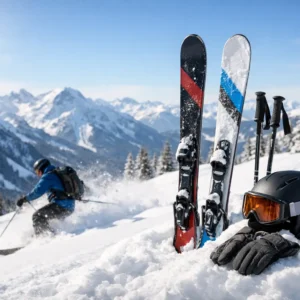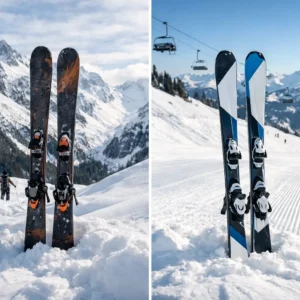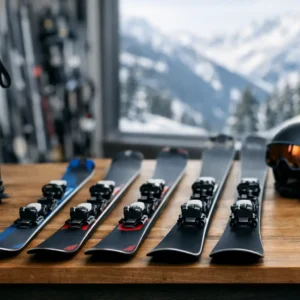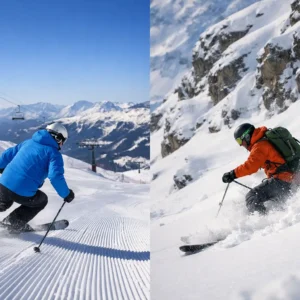
A waist-deep morning in St Anton can make every wide ski on the shop wall look essential. Yet the freeride skis vs powder skis decision is less about choosing the fattest model available and more about being honest about the snow you actually ski. For most UK skiers, that means a mix of groomed pistes, chopped-up afternoon powder, tracked sidecountry and perhaps a handful of genuinely deep days each season.
The labels overlap, which is where much of the confusion starts. Both categories are built to leave the piste and make soft snow more enjoyable, but they prioritise different things. Freeride skis aim to remain capable across varied mountain conditions. Powder skis are more specialised tools for deep, untracked snow.
Freeride skis vs powder skis: the essential difference
A freeride ski is designed for the whole mountain beyond the corduroy. It will usually have a broad platform, a rocker profile that helps it pivot and float, and enough edge hold and stability to cope when the fresh snow has been tracked, pushed into piles or refrozen overnight. It is the ski you can take out when a storm has arrived, then happily keep on your feet when the visibility closes in and the route back to the lift involves firmer snow.
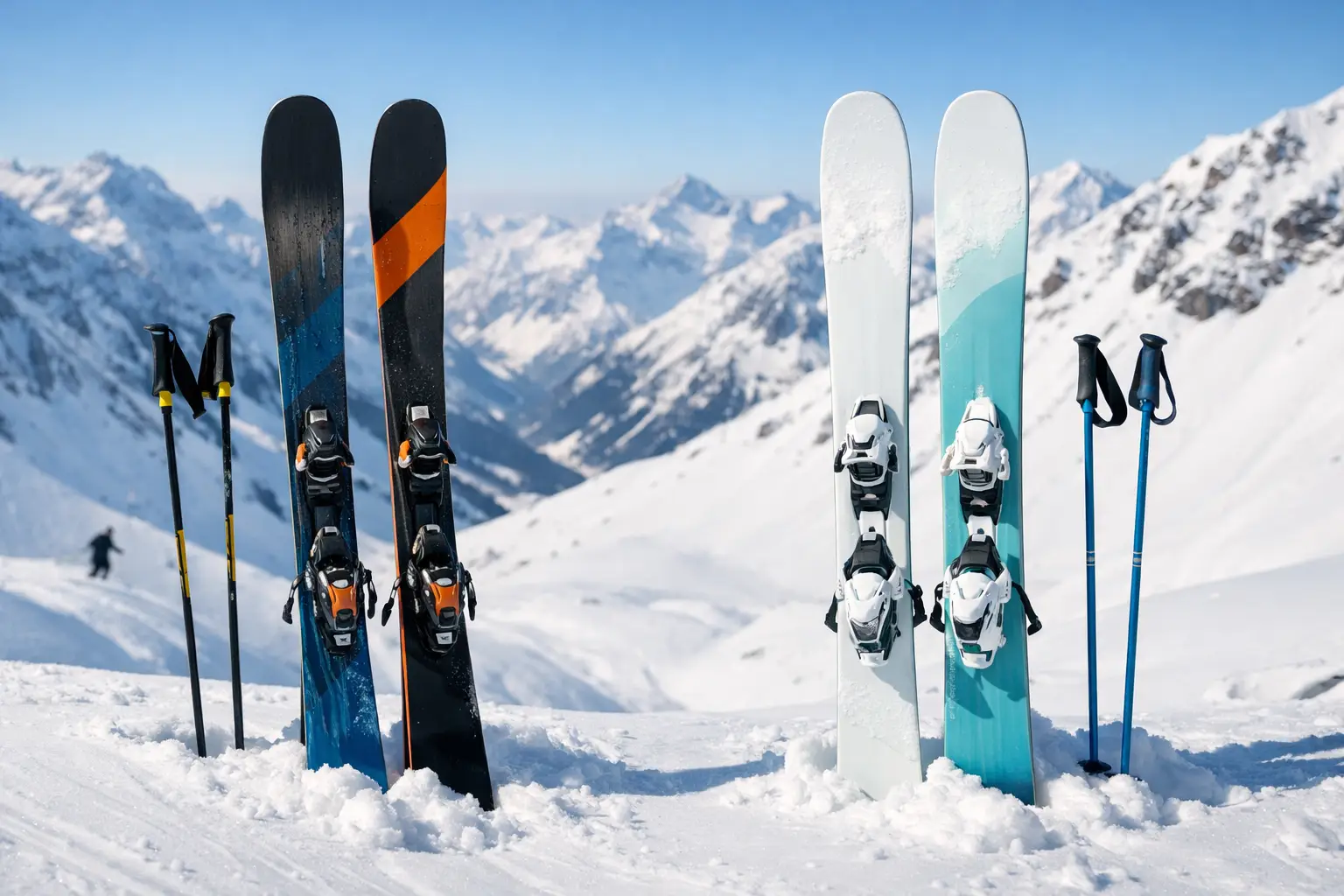
A powder ski puts flotation first. It is normally wider, often with pronounced tip and tail rocker, a more tapered shape and sometimes a more centred mounting position. Those features help the ski rise through deep snow rather than dive beneath it. In the right conditions, the sensation is wonderfully surf-like: easy to smear, playful and far less tiring than trying to force a narrower ski through 30cm of fresh.
That does not make one inherently better. It simply means that a powder ski has a narrower brief. On a properly deep day in Japan, British Columbia or during a major Alpine dump, that brief can be exactly what you want.
Width is useful, but it is not the whole story
Ski width, measured underfoot in millimetres, is the quickest way to start comparing models. A freeride ski commonly sits around 95mm to 110mm underfoot, although the category stretches either side of that. A dedicated powder ski is more likely to start around 110mm and may reach 120mm, 130mm or beyond.
For a British skier taking one pair abroad, 100mm to 108mm is often a highly sensible freeride sweet spot. It provides meaningful float in soft snow but does not feel unduly slow edge to edge when the piste is unavoidable. It also suits the changing conditions typical of a week in the Alps, where yesterday’s snowfall can turn into chopped crud by lunchtime and polished hardpack after a cold night.
Above 115mm, the benefit in deep snow becomes obvious, especially for heavier skiers or those who favour open bowls and gladed terrain. The trade-off is less convincing performance on firmer pistes. Very wide skis need more leverage to tip on edge, can feel cumbersome on narrow cat tracks and are less reassuring on an icy traverse. They are not impossible to carve, but that is not what they were made for.
Do not choose purely by waist measurement. A 108mm ski with a long, low rocker line and a stiff, directional build may feel very different from a 108mm ski with deep rocker, soft flex and a playful twin-tip shape. Effective edge length, taper, sidecut and where the ski is mounted all affect its behaviour.
Rocker, camber and shape on snow
Most modern freeride and powder skis combine rocker with camber. Rocker means the tip, and sometimes the tail, rises away from the snow early. It helps the ski plane in soft snow, prevents the tips from hooking and makes tight turns easier. Camber underfoot creates pressure and grip when the snow is firmer.
Freeride skis usually retain a useful amount of camber and effective edge. This gives them composure when conditions become rough or when you need to put in a proper turn on a steep, scraped-off pitch. Their tails may have modest rocker, but often still provide support at the end of the turn.
Powder skis tend to use more rocker and taper. In deep snow, that lets the ski pivot easily and float with less effort. A heavily rockered powder ski can feel considerably shorter than its stated length because less edge is in contact with the snow. This is helpful in trees and tight terrain, but it also means less bite on hard snow.
Think about where and how you ski
The best question is not, ‘How much powder do I hope to ski?’ It is, ‘What will this ski spend most of its time doing?’ There is no prize for owning a 120mm powder ski if it spends 90 per cent of its life negotiating busy red runs back to the village.
If you take one or two Alpine holidays a year, enjoy lift-served off-piste routes and want a ski that can handle fresh snow without abandoning piste performance, choose a versatile freeride model. Skiers who split their time between a local indoor or dry slope and winter holidays may also appreciate its more manageable width and stronger edge hold.
If your trips are planned around snowfall, you regularly book guides, chase storms or travel to reliably deep-snow regions, a powder ski becomes much easier to justify. It can transform those exceptional days from a leg-burning battle into the kind of skiing that keeps people returning to the mountains year after year.
Ability matters, but not in the simplistic sense that only experts should ski wide boards. A confident intermediate can enjoy a forgiving, rockered freeride ski, particularly in soft conditions. However, a very wide powder ski asks for sound balance, an active stance and the willingness to ski with a different technique. You are not driving it round every turn as you might on a frontside piste ski. In deep snow, you let the ski build speed, stay centred and work with the snow beneath you.
Directional or playful?
Within both categories, there is another important divide. Directional skis are intended to be driven from the front, with a longer effective edge, a supportive tail and a stable feel at speed. They suit skiers who enjoy charging open faces, making deliberate turns and dealing with variable snow at pace.
More playful skis often have twin tips, a centred stance and softer flex. They are easier to slash, spin, ski switch and manoeuvre in trees or natural features. They can be enormous fun, but may feel less settled when the snow is chopped up or the terrain becomes steep and consequential.
Neither style is reserved for a particular age or ability. It comes down to what makes you smile. A former racer who wants to ski fast through tracked powder may prefer a directional freeride ski around 105mm. Someone who spends the day looking for banks, rollers and soft side hits may favour a more centred, twin-tipped shape, even if it gives away a little top-end stability.
Length, bindings and a realistic quiver
Length should be chosen from more than a chart. Your height, weight, confidence, preferred terrain and the ski’s rocker all count. A ski with substantial rocker can often be selected longer than your piste skis because its effective edge is shorter. Longer lengths add stability and flotation; shorter lengths are easier to pivot and control, particularly in trees and confined terrain.
Bindings deserve equal attention. A resort-based freeride setup needs a dependable alpine binding with appropriate release settings and a boot-binding combination checked by a qualified technician. If you intend to tour, a hybrid or pin binding may make sense, but do not accept compromises in downhill performance merely because touring looks appealing on paper. Skins, avalanche equipment, knowledge and a suitable partner or guide are essential when leaving controlled terrain.
For many skiers, the most useful two-ski quiver is not a piste ski plus an enormous powder ski. It is a piste-focused ski for ordinary hardpack days and a 100mm to 110mm freeride ski for everything softer, rougher and more adventurous. A dedicated powder ski becomes the memorable third addition, rather than the default answer.
Make the choice for the day you will actually have
Demo days are valuable because they reveal what specifications cannot. Try a freeride ski on a mixed-condition day, not just in fresh snow, and notice how it feels when you are tired late in the afternoon. If possible, test a powder ski after a decent snowfall and take it onto a groomer as well. The contrast will tell you more than a catalogue description.
Choose freeride skis when you need one capable partner for the full, unpredictable Alpine week. Choose powder skis when deep snow is the point of the trip and you want the mountain to feel looser, faster and more playful. The right pair is the one that encourages you to take another run when the snow is at its best.