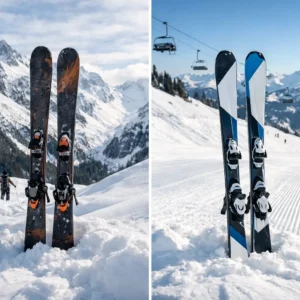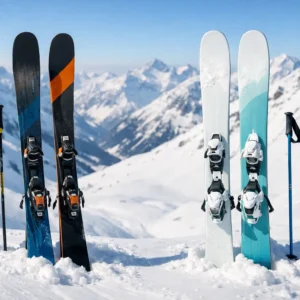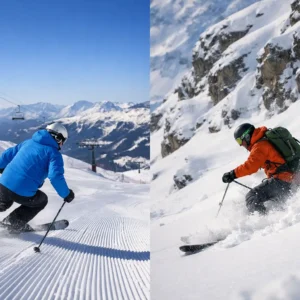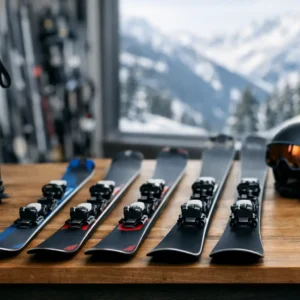
By 10am, the groomers are busy, the edges of the piste are scraped off, and that neat overnight corduroy has turned into a mix of hardpack, pushed-up snow and soft piles. That is exactly where an all mountain skis review becomes useful, because this category is built for the skiing most people actually do on a winter holiday – not perfect race conditions, and not waist-deep powder every day.
For many UK skiers, the appeal is obvious. You want one ski that feels composed on piste, copes when the snow gets cut up, and does not become hard work the moment you duck onto the side of a run or ski a rough late-afternoon red. The catch is that all-mountain is now such a broad label that two skis in the same category can feel completely different on snow. Some are frontside skis with a bit more width. Others are freeride skis toned down for resort use. If you buy on waist width alone, you can easily end up with the wrong tool.
What an all mountain skis review should really tell you
A good all mountain skis review is not just a list of dimensions and marketing claims. It should tell you where the ski feels calm, where it starts to feel compromised, and who it suits. That matters because all-mountain skis are, by definition, about balance.
The best ones manage three jobs at once. They hold an edge well enough for confident piste skiing, they stay stable when the surface becomes chopped or variable, and they offer enough float and manoeuvrability for softer snow at the sides of the piste. No ski does all three equally well. A narrower, stronger ski will reward speed and grip but can feel less forgiving in soft snow. A wider, looser ski may feel easy and confidence-boosting in mixed conditions but less precise on harder pistes.
That trade-off is the whole category. The right choice depends less on what brands promise and more on how and where you ski.
The key differences in an all mountain skis review
Waist width matters, but only up to a point
Most all-mountain skis sit somewhere between about 80mm and 100mm underfoot. For UK skiers spending the majority of a trip on piste in the Alps, the sweet spot often lands around 84mm to 92mm. In that range, you get enough platform to smooth out rough resort snow without losing too much edge-to-edge quickness.
Go narrower and you move closer to a piste-focused feel. That suits skiers who enjoy carving clean arcs and spend most of the day on groomed runs, but still want a ski that is less twitchy when conditions deteriorate. Go wider and the ski becomes more relaxed in soft snow and afternoon chop, though usually at the expense of the sharp, grippy feel some skiers want on hardpack.
Shape changes the personality
Rocker in the tip helps the ski start turns more easily and ride over variable snow with less effort. Tail rocker can make a ski feel looser and more forgiving, particularly in bumps or soft snow, but too much can reduce the finish of the turn on piste. Traditional camber underfoot still matters for grip and rebound.
This is why two 88mm skis can feel nothing alike. One may be lively, precise and energetic on piste. Another may feel surfier and easier, especially when the snow gets messy. Neither is better in absolute terms. One simply matches a different skier.
Construction tells you who the ski is for
Metal laminates, denser woods and stiffer constructions usually bring composure at speed and better damping in rough snow. They also ask more from the skier. Lighter builds are often easier to handle and less tiring over a full day, but can get knocked about when the pistes are busy and cut up.
For stronger skiers, a bit of substance is usually welcome. For lower intermediates, too much ski can be a genuine problem. A model that feels superb in a test review may still be the wrong choice if it only comes alive when driven hard.
Who should buy all-mountain skis
If you ski one or two weeks a season and want a single pair that handles mixed resort conditions, this is probably the category to start with. It is especially well suited to progressing intermediates, advanced recreational skiers and confident holiday skiers who do not want separate piste and powder skis.
It is also a sensible category for anyone who likes to ski the whole mountain within reason. That might mean lapping groomers in the morning, skiing broken snow after lunch, and taking the occasional line through the side of the piste when the conditions are inviting.
Where it may be less ideal is at either extreme. If you are a committed piste skier who values edge grip above everything else, a dedicated frontside ski may suit you better. If your season revolves around storm days, off-piste missions or touring, an all-mountain ski may feel like a compromise too far.
How the best all-mountain skis tend to divide up
Frontside-leaning all-mountain skis
These are often around the low-to-mid 80mm mark and suit skiers who still spend most of their day on piste. They feel quicker edge to edge, generally carve more cleanly, and give a familiar sense of security on firmer snow. For many UK skiers heading to mainstream Alpine resorts, this is the most logical choice.
The limitation is that once the snow turns soft or chopped, they can feel more demanding than slightly wider alternatives. You gain precision, but not always ease.
True middle-ground all-mountain skis
This is where a lot of the market now sits – roughly 86mm to 92mm, moderate rocker, enough structure to hold on piste, enough width to cope with the rough stuff. For many skiers, this is the genuine one-ski answer.
A good ski in this bracket does not excel in one narrow scenario. Instead, it stays pleasant and trustworthy in a wide range of conditions. That might sound less exciting than a specialist ski, but on a six-day holiday it often proves the smarter buy.
Softer-snow all-mountain skis
Move into the mid-to-high 90mm range and the ski starts to favour off-piste resort skiing more clearly. There is more float, a more relaxed feel in broken snow, and often a looser, more playful ride. If you regularly chase fresh snow and spend less time worrying about textbook piste performance, that can be ideal.
The trade-off is obvious on hard snow. Wider skis can feel slower edge to edge and less exact when the piste is firm. They are not necessarily poor on piste, but they rarely feel as crisp.
What to look for if you are buying in the UK
This is where context matters. British skiers often want gear that works for a week in the Alps across mixed weather, variable resort snow and long days on lift networks rather than local daily skiing in one consistent climate. That makes versatility more valuable than category labels suggest.
If you are choosing without testing, be honest about your skiing rather than your aspirations. Many skiers say they want an off-piste-capable ski, but still spend 80 per cent of the day on piste. In that case, a mid-80mm to low-90mm ski is usually a better fit than something wider and trendier. You will feel the benefit every run.
Boots and bindings also affect the result. A powerful ski with a poor boot fit will not perform well, while a slightly more forgiving ski paired with supportive boots can feel excellent. Skis never work in isolation.
Common mistakes when reading an all mountain skis review
One mistake is assuming that advanced means suitable. Plenty of strong all-mountain skis are marketed at advanced skiers, but some are simply too stiff or demanding for relaxed holiday use. There is no prize for buying the burliest model if it leaves you tired by lunch.
Another is giving too much weight to fresh-snow performance in a category that will mostly be used in tracked resort conditions. A ski that feels brilliant in 15cm of soft snow may be less enjoyable for the other five days of your trip. The right review should reflect that reality.
It is also easy to ignore turn radius and overall feel. Width gets the headlines, but the way a ski enters and exits a turn, how calm it feels in choppy snow, and how much input it needs from the skier often matter more.
Our view on the category
The strongest skis in this class are not the ones trying to be everything. They are the ones that know their lane. A frontside-leaning all-mountain ski should feel lively and dependable on piste, with enough versatility for mixed snow. A wider all-mountain ski should make rough and softer conditions easier without pretending to be a carving ski.
That is the most useful way to read any all mountain skis review. Do not ask which ski is best in isolation. Ask which ski best suits your speed, technique, preferred terrain and likely snow conditions. The answer is usually less glamorous than the marketing copy and far more helpful.
For most skiers, the sweet spot is not the most aggressive, widest or most talked-about ski. It is the one that makes a normal holiday feel better from first lift to last run, whether the mountain serves up fresh corduroy, refrozen hardpack or the usual late-afternoon mess. Choose for the skiing you actually do, and you will rarely regret it.