You usually notice bad layering at about 11am. That is the point when the first lift has felt freezing, the sun has come out, your back is damp, and you are either fiddling with zips or wondering why your expensive ski jacket is not doing its job. If you want to know how to layer for skiing, the goal is not simply to stay warm. It is to stay dry, regulate temperature and keep moving comfortably from the first chair to the last run.
That matters whether you are heading to the Alps for a week, taking the family on a half-term trip or squeezing in a long weekend after checking the forecast like a hawk. Skiing in the UK and abroad often means dealing with shifting conditions – cold valley starts, windy ridgelines, sunny terraces, wet snow, sleet and the odd surprise storm. Good layering is what lets your kit adapt.
How to layer for skiing: think in three parts
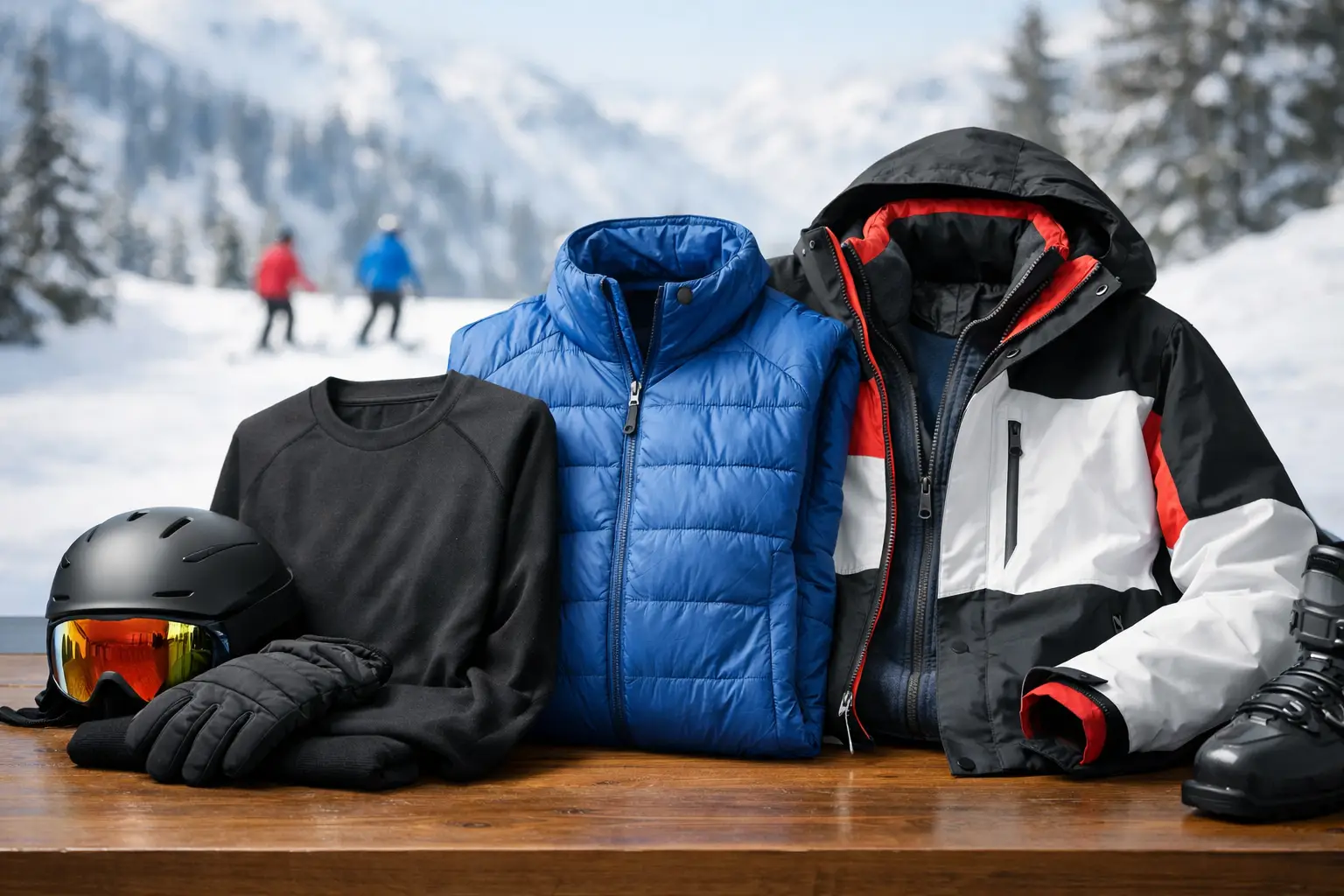
The simplest way to approach it is to build your clothing system in three parts: a base layer next to the skin, a mid layer for insulation and an outer layer for weather protection. Each one has a separate job. When people get cold on the mountain, it is often because one layer is doing too much or the wrong material is in the wrong place.
The base layer manages moisture. The mid layer traps warmth. The outer layer keeps out wind, snow and, ideally, excess moisture from outside. Get those three working together and you are far more comfortable than if you rely on one thick jacket and whatever happened to be in the suitcase.
Start with the base layer
Your base layer is the one you should think about first, because skiing generates more heat than many beginners expect. Even on a cold day, you can sweat on a long descent, while carrying skis, or when a queue backs up in the sun. If that moisture sits against your skin, you cool down quickly once you stop moving.
That is why cotton is such a poor choice for skiing. A cotton T-shirt or vest absorbs moisture, stays wet and loses warmth fast. It may feel harmless in the hotel room, but on the hill it becomes a problem.
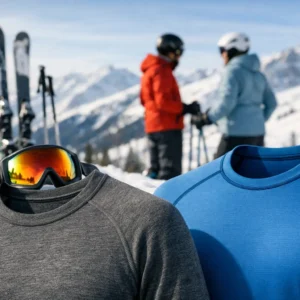
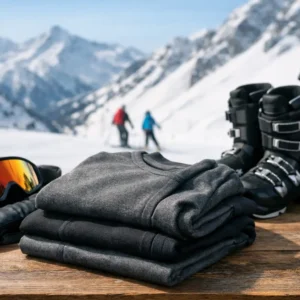
Merino wool and good-quality synthetic fabrics are the standard options. Merino is popular because it regulates temperature well, feels comfortable against the skin and does not hold odour in the same way as many synthetics. Synthetic base layers tend to dry faster and can be a better bet if you run hot, ski hard or want something more budget-friendly.
Fit matters too. A base layer should sit close to the body without feeling restrictive. If it is loose, it cannot move moisture as efficiently. For most skiers, a long-sleeve top and full-length bottoms are the sensible starting point, especially in midwinter. In spring, or for those who overheat easily, lighter-weight options can make more sense.
The mid layer is where warmth is managed
If the base layer is about staying dry, the mid layer is about controlling insulation. This is the layer that changes most depending on temperature, your skiing style and how much heat you generate.
For many UK skiers, a fleece, lightweight insulated jacket or technical grid fleece is ideal. Fleece remains a classic because it is breathable, reliable and easy to live with. A lightweight insulated piece can work brilliantly under a shell on very cold days, but it can also become too much if temperatures rise or you are skiing hard all day.
This is where trade-offs come in. More insulation feels great on a freezing chairlift, but too much can leave you sweaty on the descent. If you tend to ski fast, spend little time standing around and feel warm quickly, a thinner mid layer is often the smarter call. If you are a beginner, move at a gentler pace or feel the cold on lifts, you may want more warmth in reserve.
A useful rule is to avoid doubling up with several bulky layers unless conditions really demand it. Too much bulk restricts movement, makes your jacket fit poorly and can reduce breathability. Skiing is easier when your clothing moves with you rather than bunching at the elbows and shoulders.
Your outer layer should block weather, not trap sweat
The outer layer is the part most people focus on first, but its job is straightforward. It should protect you from wind, falling snow and wet conditions while allowing heat and moisture to escape.
You have two main choices: insulated ski jackets and shell jackets. Insulated jackets combine weather protection and warmth in one piece. They are convenient, particularly for casual skiers or anyone who does not want to think too hard about layering combinations. Shell jackets have little or no insulation, so they rely on your base and mid layers for warmth. They are more adaptable, which is why many experienced skiers and snowboarders prefer them.
Neither is automatically better. If you ski one annual holiday in cold midwinter conditions and want simplicity, an insulated jacket can be spot on. If you ski across a wider range of temperatures, travel more often or like adjusting your setup day by day, a shell gives you more control.
The same applies to ski trousers. Shell bibs or trousers offer flexibility, while insulated trousers can be reassuringly warm. For wetter weather, especially in mixed snow and rain or during shoulder season trips, waterproofing matters just as much as warmth.
How to layer for skiing in changing conditions
This is where experience counts. The right setup at 8.30am may not be the right one at 1pm. Alpine weather can turn quickly, and even a single run can take you from shaded cold to bright sun and spring slush.
On very cold, dry days, a heavier merino or synthetic base layer, a solid fleece or light insulated mid layer and a shell or insulated jacket often works well. On milder spring days, many skiers are better off with a lighter base layer, a thin mid layer or none at all, and a shell on top.
Wind changes everything. A still day at minus 2 can feel easier than a windy day at plus 1. That is why a good outer layer earns its keep. Likewise, wet snow is often more uncomfortable than dry cold, because once moisture gets in, warmth disappears quickly.
If you are skiing with children or less experienced adults, build in slightly more warmth than you would for yourself. Beginners tend to spend more time stationary, and that can mean feeling cold sooner. More advanced skiers usually create enough heat to dress a little lighter.
Small details make a big difference
Layering does not stop at your torso and legs. Socks, gloves, neckwear and helmet liners all affect comfort more than people think.
Ski socks should be a single, proper ski-specific pair. Thick everyday socks or doubled-up socks usually create pressure points and colder feet. Good ski socks are designed to work with the boot liner, not fight it.
For hands, mittens are generally warmer than gloves, though gloves offer more dexterity. If you regularly get cold fingers, this is one area where a change of kit can transform your day. A neck tube is also more useful than a scarf, which has no place flapping about on a chairlift.
Helmet liners, thin beanies under helmets and extra tops stuffed around the collar can all interfere with fit. If your helmet no longer sits properly, your layering has gone wrong somewhere.
Common mistakes skiers make
The most common mistake is overdressing before you start. People stand outside the chalet, feel the morning chill and add too much. Twenty minutes later they are damp and overheating. It is better to feel slightly cool before the first run than boiling by the second lift.
Another mistake is assuming expensive means foolproof. High-end fabrics help, but they cannot rescue a poor system. A premium shell over a cotton T-shirt is still a poor setup. Equally, a modestly priced layering system chosen well can perform very effectively for recreational skiing.
The third mistake is ignoring ventilation. Pit zips, front zips and leg vents are there to be used. Good skiers adjust throughout the day. They do not simply zip up at breakfast and hope for the best.
A practical layering setup for most UK skiers
For a typical alpine holiday, many skiers will be well served by a long-sleeve merino or synthetic base layer, a midweight fleece or light insulated layer, and a waterproof ski jacket or shell. On the lower half, thermal bottoms under ski trousers are usually enough in colder conditions, while milder days may need less.
That setup covers a wide range of temperatures and gives you room to adapt. If the forecast turns warmer, lose the heavier mid layer. If a cold front arrives, switch in a warmer base or add insulation. The point is flexibility, not carrying your entire wardrobe up the mountain.
At Skier & Snowboarder, we have long found that the best kit choices are rarely the most complicated ones. They are the ones that let you ski longer, stay comfortable and think about the snow rather than your clothing.
Layer well and the whole day improves. You stop wasting energy on being too hot, too cold or too damp, and get back to what you came for – better turns, longer runs and more time enjoying the mountain.