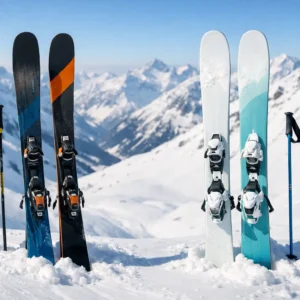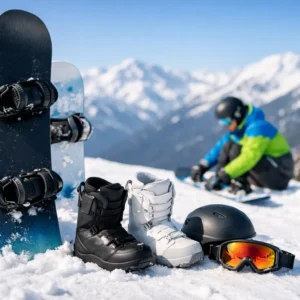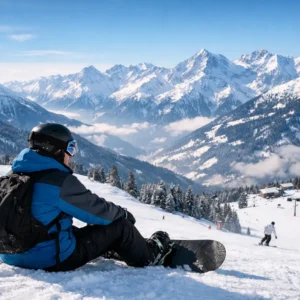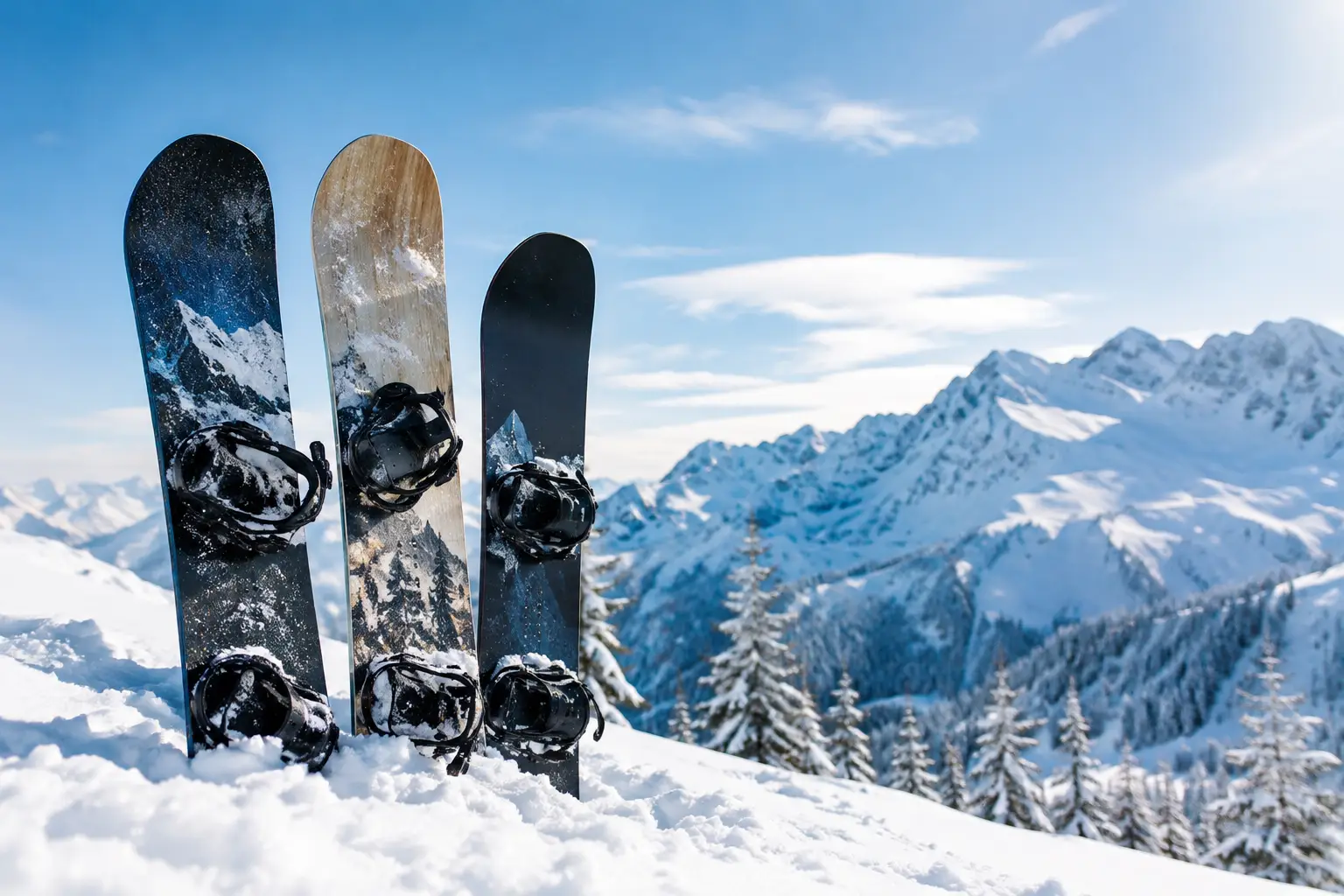
A proper powder day changes the rules. The piste board that feels lively on a hard morning can become work when the snow reaches your knees, while the right shape makes every turn feel lighter, faster and far more instinctive. The top powder snowboards are not simply wider boards with a dramatic nose: they are purpose-built tools for staying afloat, finding natural turns and making the most of those rare deep days we travel so far to find.
For UK riders, that matters. Most of us want a board that earns its place in a board bag on a week in Japan, a storm-chasing break in the Alps or a freeride trip to North America. It needs to handle soft snow brilliantly, but it may also need to cope with a tracked-out run back to the lift, a firm cat track and the occasional groomer.
What makes a great powder snowboard?
Float begins with surface area, but shape matters just as much. A long, rockered nose rises above soft snow, while a shorter or tapered tail naturally sinks. This sets the rider slightly further back without the exhausting back-leg burn associated with riding a traditional twin in deep conditions.
Many powder boards use setback stance positions, directional camber and a swallowtail, pin tail or fishtail-inspired profile. None is automatically better. A fuller tail gives useful support when snow becomes chopped up; a heavily tapered or split tail produces a more surf-like feel and quicker release in deep snow.
Width is another major consideration. A wide waist helps flotation and can reduce toe and heel drag for riders in larger boots, but excessive width slows edge-to-edge response on packed snow. The best choice is a board wide enough for your boot size and intended conditions, rather than the widest one on the shop wall.
Flex brings a further trade-off. Softer powder boards are playful, forgiving and easy to slash. Stiffer options hold their line at speed and remain composed in alpine terrain, but demand a rider who is happy driving the board through a turn. Think about where and how you actually ride, not just the deepest line in a film edit.
Top powder snowboards worth shortlisting
The following boards represent different approaches to deep snow riding. Availability, lengths and constructions can alter between seasons, so check the current specification before buying, particularly if you are choosing a volume-shifted shape.
Jones Hovercraft 2.0
The Hovercraft has long been a reference point for directional freeride design. Its substantial nose, tapered shape and setback stance are built to keep the rider centred in soft snow rather than permanently hanging off the back foot. It remains a sensible choice for the rider who wants a serious powder board that can still handle a fast, variable descent when the fresh snow has been cut up.
It is not a freestyle twin, and that is the point. This is a board for committing to turns, using terrain and riding down the mountain rather than merely across it.
Burton Family Tree 3D Deep Daze
Burton’s Family Tree range has always made space for more unusual, snow-specific shapes, and the 3D Deep Daze is aimed squarely at buoyant, slash-heavy riding. The lifted shaping around the nose and tail helps the board avoid catching in soft snow, while its directional profile encourages a relaxed, surf-inspired approach.
It will appeal to riders who see a powder board as a second board with a distinct character, rather than a one-board compromise. On a deep day in Niseko, Revelstoke or a snowy corner of the Three Valleys, that character makes sense very quickly.
Korua Shapes Dart
Korua’s Dart is recognisable before it is even out of the rack: a broad, rounded nose, a noticeably tapered tail and a silhouette drawn from carving and surf culture. It floats exceptionally well, but its appeal goes beyond untracked snow. The camber and sidecut give it real energy on a groomed slope, so it suits riders who enjoy laying out big directional turns between storms.
The Dart rewards deliberate riding. If your ideal day includes fresh snow in the morning and high-speed corduroy later on, it is one of the more versatile powder-led options.
Nitro Dinghy
The Dinghy shows why volume-shifted boards have become so popular. It is ridden shorter than a conventional freeride deck, but its width and shape create enough platform for soft snow. The shorter length also makes it easy to throw around in trees, tight gullies and natural side hits.
For a rider accustomed to a standard all-mountain board, this can be one of the friendlier routes into dedicated powder shapes. Take care with sizing, though. Choosing by your usual length alone misses the point of the design.
YES. 420
The 420 is a classic short, wide powder concept. Its generous planing surface and compact outline make it enjoyable in deep snow, while its shorter running length encourages quick turns and a playful feel. It is particularly well suited to sheltered tree runs and softer resort terrain where manoeuvrability counts as much as outright speed.
It is less suited to riders who want a long, powerful platform for huge open faces. But for many holiday riders, its accessible nature is precisely the attraction.
K2 Special Effects
The Special Effects sits in the space between a pure powder shape and a hard-charging directional freeride board. Its setback design and tapered outline provide the lift needed in fresh snow, while a more supportive build gives it authority when visibility drops and the route back becomes chopped, heavy and uneven.
This is the sort of board that makes sense for experienced riders who do not stop riding when the powder becomes tracked. It has enough backbone for consequential terrain, but it does not require a heli-drop to justify taking it away.
CAPiTA Spring Break Powder Racer
The Spring Break Powder Racer is designed around fun rather than formality. Its compact, wide platform and directional shaping are made for slashes, pillows and playful terrain choices. It will not replace a high-speed freeride charger for everyone, but it can turn a modest snowfall into a day worth remembering.
For riders who want a board that encourages them to look for banks, rolls and soft landings rather than simply chase vertical metres, this remains a compelling category of powder board.
Choosing the right length and volume
A powder board often looks wrong on paper because it may be shorter than the all-mountain board you usually ride. That is normal. Volume-shifted boards gain flotation through width, taper and surface area, not just added length. A rider on a 158cm conventional board may comfortably ride a 154cm or even shorter powder shape, depending on the model and body weight.
Use the manufacturer’s weight range as the starting point, then consider boot size and riding style. Heavier or faster riders generally benefit from more length and support. Lighter riders, or those spending their day in trees and softer terrain, may prefer the quicker feel of a shorter size. If you are between sizes, choose the larger option for open bowls and high-speed riding, and the smaller option for manoeuvrability.
Do not overlook stance. Set the bindings back to the board’s recommended reference position before deciding whether a new powder board floats properly. A centred stance may be useful for switch riding, but it defeats much of the design work on a directional deck.
Is a dedicated powder board worth it for UK riders?
If you ride one week a year, an all-mountain freeride board with a directional shape may be the sensible single-board answer. It will travel well, cope with mixed conditions and still offer a noticeable improvement in soft snow over a true park twin.
But if deep snow is the reason you choose a resort, watch forecasts obsessively and are willing to book around a storm cycle, a dedicated powder board is not a luxury purchase. It changes the physical effort of riding and opens up a more natural style of turning. Your legs last longer, your confidence rises and the terrain starts to look different.
The best powder board is therefore not necessarily the most dramatic shape. It is the one that fits your boots, your weight, the terrain you seek and the way you want a deep day to feel. Choose with those details in mind, then save it for the morning when the lifts open to silent trees and a fresh line is waiting just beyond the piste markers.