A ski boot that feels comfortable in a shop can still become painful halfway down the first long run. Equally, a boot that feels snug when new may prove to be exactly right after a few days on snow. Knowing how to fit ski boots is less about finding the softest option and more about matching shell shape, volume, flex and stance to your feet and the way you ski.
For most skiers, a proper fitting is one of the best investments they can make before a mountain holiday. Skis can be changed as confidence grows, but boots are the direct connection between your body and the ski. When that connection is loose, cold or uncomfortable, technique suffers quickly.
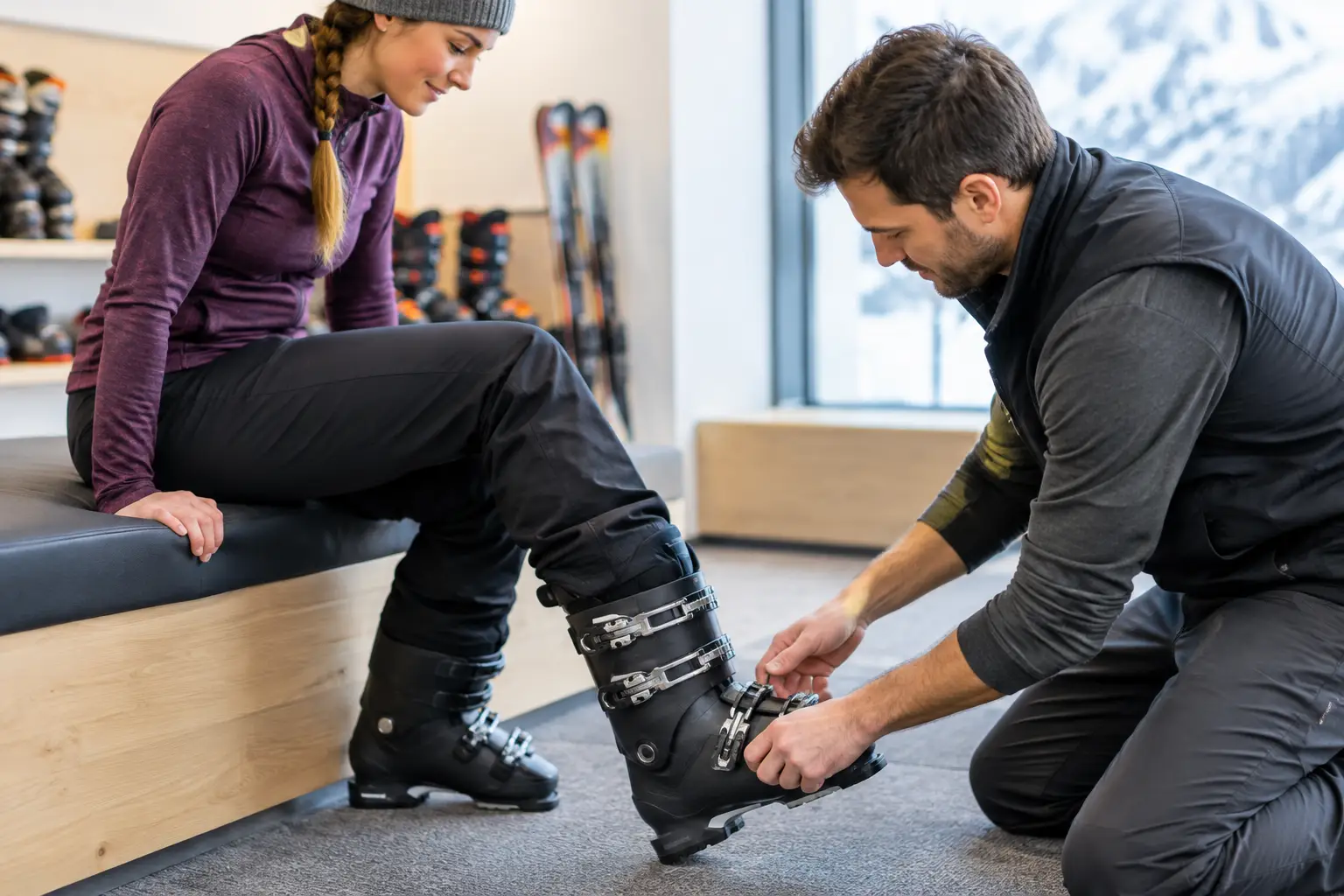
Start with a proper boot-fitting appointment
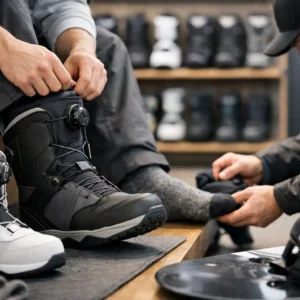
A specialist boot fitter should begin with your feet, not a row of boxes. Expect them to measure both feet for length and width, assess arch shape, ankle and calf volume, and ask about previous injuries, circulation issues and where you ski. The larger foot sets the starting point, even if the difference is small.
Be honest about your skiing. A progressing intermediate who enjoys long, varied days around a large Alpine resort needs something different from a committed piste skier who wants a more responsive boot, or a skier spending most weekends training on a UK indoor slope. Ability matters, but fitness, weight, preferred terrain and how hard you drive the ski matter too.
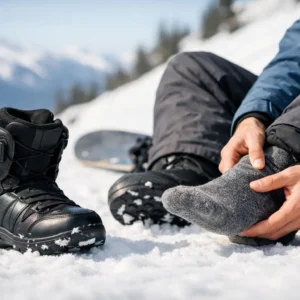
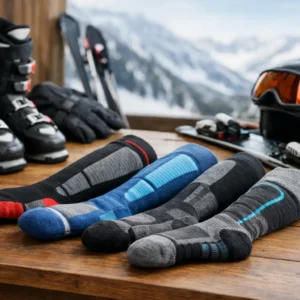
Take one pair of thin ski socks to the appointment – the type you genuinely intend to wear. Thick socks do not cure a roomy boot. They tend to bunch, reduce circulation and make it harder to feel what the ski is doing. Avoid wearing two pairs.
How to fit ski boots: get the shell size right
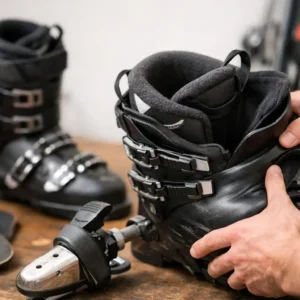
The most useful early check is the shell fit. With the liner removed, place your foot in the empty plastic shell and slide your toes forward until they lightly touch the front. A fitter can then assess the gap behind your heel.
There is no single magic measurement, but the principle is straightforward. A performance-focused fit has less room than a comfort-led recreational fit. Too much space behind the heel usually means the boot will feel easy at first but become imprecise once the liner packs out. Too little room may be possible for some experienced skiers with careful shell work, but it is not a shortcut to better skiing.
Do not choose a boot simply because it is the same Mondopoint size as your trainers. Ski boots are made around their internal shell dimensions, and fit differs markedly between brands and models. One 26.5 can feel appreciably narrower, lower over the instep or shorter in the toe box than another.
When you try a boot with its liner in place, your toes may brush the front while standing upright. Flex forward into a skiing stance and they should usually draw back slightly. That contact is not automatically a problem. Crushed or curled toes, numbness and a hard pressure point are different matters and need addressing.
Match the boot shape to your foot
Boot width is often described by the last measurement, usually given in millimetres. Narrower lasts can offer a close, precise feel; higher-volume boots provide more room through the forefoot, instep and lower leg. But those figures are only a guide, since they are commonly quoted for one reference size and change as shell size changes.
The key question is where the boot holds you. Your heel should stay planted when you flex forward, without the need to overtighten the buckles. The forefoot should feel evenly contained rather than squeezed from the sides. Across the top of the foot, you want secure contact but enough room for blood flow during a full day outside.
Pay particular attention to your heel and ankle. Heel lift can make skiing feel vague, encourage you to grip with your toes and lead to rubbing at the heel pocket. A fitter may improve this with a better-shaped liner, heel hold pads or a supportive footbed. Buying a smaller shell to solve heel lift is often the wrong answer if the rest of the boot has become too tight.
Women, lighter skiers and those with lower calves should also assess cuff shape carefully. Some boots have adjustable cuff alignment or a calf-specific design. Pressure at the top of the cuff is not something to ignore, especially if it appears the moment you bend your knees.
Choose flex for your skiing, not your ego
Flex ratings are useful but not standardised between brands. A 100-flex boot from one manufacturer may feel noticeably firmer or more progressive than another. Temperature also changes the feel: plastic stiffens in the cold, which is why a boot that feels manageable in a warm shop can feel far more demanding on a January morning.
A softer boot can be more forgiving, warmer and easier to flex for lighter or less assertive skiers. A stiffer boot offers stronger support and more immediate energy transfer, particularly at speed or on firmer snow. Yet a boot that is too stiff can push a skier into the back seat and make it harder to absorb terrain. The right choice is the stiffest boot you can flex consistently in a balanced stance, not the stiffest boot you can force once in a showroom.
Buckle with purpose, then give the liner time
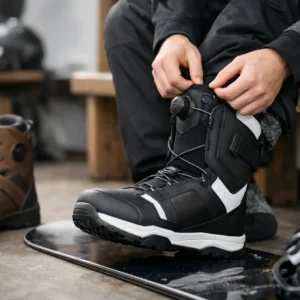
Close the buckles lightly at first. The lower buckles should secure the foot without crushing it, while the instep buckle helps hold the heel back. The upper cuff buckles and power strap then bring the shin into contact with the boot. Tightening every buckle to its maximum setting is a reliable route to cold feet and discomfort.
New liners will compress after several days of skiing, sometimes quite noticeably. This is why a well-fitted new boot should feel firm and close rather than slipper-like. Many modern liners can be heat moulded, which can improve contact around the ankle and reduce minor pressure areas. Heat moulding refines a sound fit; it cannot turn the wrong shell shape into the right one.
Give the boots a realistic test at home before travelling. Wear them indoors for 20 to 30 minutes, flexing into a ski stance rather than standing rigidly upright. Some warmth and pressure are normal. Tingling, burning, sharp pain or numb toes are signs to return to the fitter before the holiday, not problems to endure on day one.
Use footbeds and adjustments when they solve a real issue
Many skiers benefit from a supportive footbed. It can stabilise the foot, reduce arch collapse and help keep the knee tracking more naturally over the ski. That may improve comfort and control, especially for people whose feet flatten under load. It is not compulsory for every skier, but it is worth discussing if you struggle with cramping, heel movement or recurring pressure on one side of the foot.
A good shop can also make targeted adjustments. Shell punching creates local space for a prominent bone or bunion; stretching can ease a tight area; cuff alignment can help accommodate leg shape. These are normal parts of ski boot fitting, not evidence that something has gone wrong. The limitation is that meaningful width can be created in a small area, but overall volume cannot be invented without compromising the fit.
Know what should improve on snow
After a few ski days, the boot should feel more natural as the liner beds in. You should be able to stand comfortably between runs, maintain warm, mobile toes and drive the ski without your heel repeatedly lifting. A little buckle adjustment through the day is normal, especially as the liner warms and snow conditions change.
Persistent numbness, pins and needles, sharp shin pain, repeated cramp or a heel that moves every turn are worth investigating. Do not assume you simply need to toughen up. Small changes made early can protect a holiday and often transform how confidently you ski.
The best ski boot fit does not announce itself every run. It lets you focus on the line ahead, trust the ski beneath you and keep skiing until the lifts close.