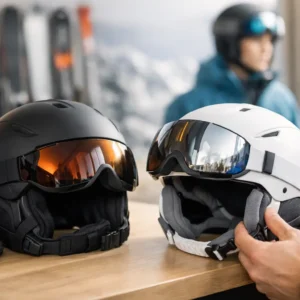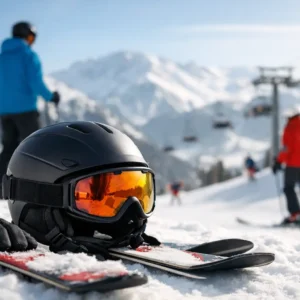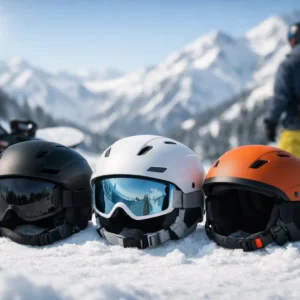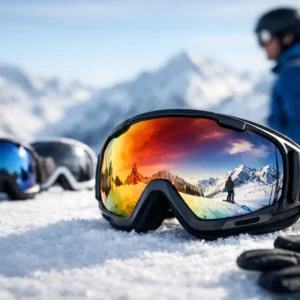
A ski helmet is one piece of kit you notice most when it is wrong: a pressure point above the temple on a long chairlift, a goggle gap on a cold day, or a sweaty forehead while lapping an indoor slope. The best ski helmets are not simply the lightest or most expensive models. They are the ones that fit your head properly, work with your goggles and stay comfortable from the first run to the last.
For UK skiers and snowboarders, that can mean one helmet doing a lot of jobs. It may see a warm day in the Three Valleys, a freezing week in Tignes, a spring park session and a few evenings at Snozone. This guide focuses on the models and features worth considering, rather than treating a prominent safety logo as a substitute for fit.
What makes the best ski helmets?
Every helmet sold for snowsports should meet the relevant safety standard, commonly EN 1077 in Europe. That matters, but it is only the starting point. The standard assesses impact protection in defined test conditions; it cannot promise to prevent concussion or every injury in a real-world crash. Ski and snowboard helmets are designed primarily for single significant impacts, so a helmet that has taken a hard knock should be replaced even if the shell appears intact.
Beyond certification, the main decision is construction. In-mould helmets bond a hard outer shell to the impact-absorbing foam liner. They are generally lighter and well ventilated, making them a strong choice for all-day piste skiing and touring. Hardshell designs add a separate, more durable outer shell. They can feel more substantial and often appeal to park riders or anyone hard on their kit, although they may be heavier.
Many premium helmets now use rotational-impact systems such as Mips, SPIN, Spherical or 2Vi. These vary by brand, but broadly aim to allow controlled movement between layers during certain angled impacts. They are a worthwhile feature when choosing between otherwise similar helmets, but they should not override fit. A correctly fitted standard helmet is the safer purchase than a loose premium one.
Ventilation is equally personal. Adjustable vents are useful for British indoor sessions and sunny spring skiing, while fixed vents can be simpler and lighter. If you ski in cold resorts or regularly use lifts in wind and snow, check that vents can be closed effectively. Removable ear pads, a washable liner and a secure goggle-retention clip are small details that become valuable after a full season.
Best ski helmets to consider
The following models represent different strengths rather than a single ranking. Try before buying wherever possible, ideally with the goggles you intend to wear.
Smith Vantage Mips: premium all-mountain choice
The Smith Vantage Mips remains a familiar sight in lift queues for good reason. Its hybrid shell construction balances low weight with a confidence-inspiring feel, while the adjustable ventilation is genuinely useful across changing Alpine temperatures. Smith’s Boa fit system gives fine adjustment around the head, and its goggle integration is particularly strong with Smith eyewear.
It is a serious investment and its highly vented build may be more helmet than an occasional skier needs. For frequent skiers who want one refined all-mountain option, however, it has long set a high benchmark.
Giro Grid Spherical: for riders wanting top-end protection features
Giro’s Grid Spherical uses a ball-and-socket-style version of Mips technology, with two foam layers designed to move relative to each other in an angled impact. It also combines in-mould and hardshell construction, producing a helmet that feels protective without becoming excessively bulky.
The fit is plush and the venting is extensive, making it well suited to confident resort skiers who rack up long days. As with several high-end Giro models, its shape will suit some heads better than others, so do not assume the size you wear in another brand will translate directly.
POC Obex Mips: clean design, broad appeal
The POC Obex Mips is a strong all-round proposition for piste skiers who value a low-profile helmet with practical adjustment. It is relatively light, has adjustable ventilation and offers a straightforward fit system that works well for many head shapes. POC’s styling is recognisable without being overdone, and the helmet is available in a useful range of colours.
The Obex is not built as a specialist race helmet or a heavy-duty park shell. That is part of its appeal. It is a sensible, versatile option for skiers who want dependable performance for resort use without a long list of features they will never touch.
Salomon Driver Prime Sigma Plus: best for integrated convenience
An integrated-visor helmet is not for everyone, but the Salomon Driver Prime Sigma Plus makes a convincing case for the format. The visor is convenient for glasses wearers, removes the problem of mismatched goggles and helmet, and is easy to raise on lifts or in cafés. The lens system is designed for changing mountain light, while the helmet includes Mips protection.
The trade-off is clear: goggles offer more choice, are easier to swap for different conditions and can feel more familiar when skiing hard in poor visibility. But for relaxed piste skiers, especially those who wear prescription glasses, an integrated visor can make getting ready considerably simpler.
Sweet Protection Trooper 2Vi Mips: for freeride and hard-charging days
Sweet Protection’s Trooper 2Vi Mips has earned a devoted following among freeriders and instructors. Its shell construction feels substantial, its fit is secure, and its protection package is among the more considered on the market. It is also styled with the slightly more purposeful, mountain-led look many advanced skiers prefer.
That protection and build quality come with extra weight compared with a minimalist in-mould helmet. If your skiing is mostly gentle blue runs for one week each year, it may be unnecessary. If you ski regularly, venture off-piste with the appropriate knowledge and equipment, or simply want a more planted feel, it is worth trying on.
Oakley MOD5: a comfortable resort performer
The Oakley MOD5 is aimed squarely at resort skiing, combining a neat profile with adjustable ventilation and a fit system that makes on-the-fly tweaks easy. Its goggle compatibility is naturally good with Oakley goggles, including larger cylindrical lenses that can be awkward with some helmet shapes.
It is a polished choice for skiers who prioritise comfort and a clean goggle-to-helmet interface. Check the shell profile in a mirror before committing: helmet aesthetics are secondary to safety, but feeling comfortable in your kit means you are more likely to wear it correctly every day.
Fit matters more than brand loyalty
A helmet should sit level, covering the forehead without pushing down towards the eyebrows. With the chin strap undone, it should remain in place when you shake your head firmly. Once adjusted, the helmet should feel evenly snug around the whole head, not tight in one spot and loose elsewhere. The chin strap should sit snugly beneath the jaw, with room for no more than one or two fingers.
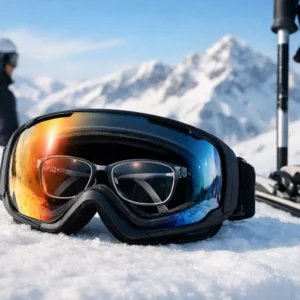
Try the helmet with goggles. There should be no exposed strip of skin between goggle frame and helmet, often called a gaper gap, but the helmet should not force the goggles down onto your nose. Check side vision too. A helmet that clashes with your preferred goggles is not a minor cosmetic issue; it can be irritating enough to distract from skiing.
Head shape varies more than sizing charts suggest. Smith and Giro may suit one skier, while POC, Salomon or Sweet Protection feels immediately better on another. Do not buy a helmet solely because a friend loves theirs, or because it is reduced online. If ordering online is unavoidable, measure your head accurately, use the brand’s chart and make sure returns are possible before removing labels.
Features worth paying for, and those that can wait
For most skiers, the best spending priorities are a secure fit, recognised certification, compatibility with existing goggles and enough ventilation for the conditions they ski. A rotational-impact system is a worthwhile upgrade if it fits the budget. Removable liners and ear pads also make a real difference to hygiene and longevity, particularly if the helmet is shared within a family or used at UK dry slopes.
Audio-ready ear pads, magnetic buckles and highly elaborate vent controls are pleasant extras rather than essentials. A magnetic buckle is handy when wearing gloves, for example, but it should not be a reason to accept poorer fit. Likewise, a very lightweight race-inspired helmet can be excellent for some skiers but less warm and less durable for everyday resort holidays.
Avoid buying second-hand unless you know its full history. Foam liners can be compromised by an impact that leaves little visible evidence, and age, heat and careless storage all take their toll. Keep your own helmet away from radiators, car boots in summer and harsh solvents. After a crash, inspect it carefully and follow the manufacturer’s replacement guidance.
A good helmet should disappear once you are skiing: no wobble, no pressure, no battle with your goggles and no temptation to undo it on the lift. Find that fit, look after it, and it will be one of the most valuable pieces of kit in your ski bag.