A 40cm snowfall figure can look like the answer to every skier’s holiday hopes. It rarely is. A useful guide to ski resort snow reports means looking beyond the headline number and asking where that snow fell, when it fell, what sits underneath it and whether the lifts are actually turning. That is the difference between booking a promising week and arriving to find chopped-up pistes, wind holds and a misleadingly cheerful snow widget.
Snow reports are valuable, particularly when you are choosing between resorts or deciding whether a late-season break is worth the journey. But they are a snapshot, not a guarantee. Read them as a set of clues and they become one of the best planning tools in your ski or snowboard bag.
What a ski resort snow report is really telling you
Most resort reports lead with upper and lower slope depths, recent snowfall, the number of open lifts and pistes, and a short weather forecast. These figures are useful, but each measures something slightly different.
The upper-slope depth is normally the more encouraging number. Higher terrain is colder, often receives more snow and is less exposed to rain. The lower-slope figure tells a more practical story, especially for a family holiday, a beginner group or anyone staying in a valley resort and relying on home runs at the end of the day.
Neither figure necessarily describes the snow you will ski. A reported 150cm base can be firm, wind-packed and fast after a dry cold spell. Equally, a modest 60cm base on groomed pistes can provide excellent carving and cruising if temperatures have stayed low and the resort has strong snowmaking coverage.
For snowboarders, the wording around terrain matters just as much. A piste count may look healthy while flatter linking routes remain slow or closed. If you are hoping to ride powder, park or tree lines, a generic snow depth says little about whether those areas are open, safe or worth the effort.
Depth is not the same as fresh snow
Snow depth describes the settled cover on the ground. Fresh snowfall describes what has arrived recently. They answer separate questions.
A large settled base is reassuring for long-term cover and off-piste options, particularly from January onwards. Fresh snow can transform the skiing, but only if conditions allow it to settle. Twenty centimetres of light snow over a firm piste base can make for a brilliant morning. Twenty centimetres falling in high winds may load exposed slopes unevenly, bury piste markers and lead to delayed openings.
Check the reporting period as well. “30cm in the last seven days” is very different from 30cm overnight. A resort may also total snowfall from several points across a large ski area, so the figure may not represent the village where you are staying.
How to read ski resort snow reports by terrain
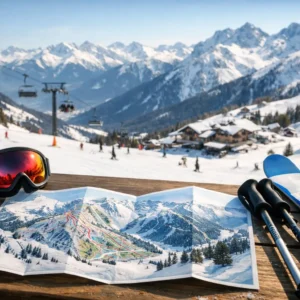
The most dependable report is one that you can place on a piste map. Start with altitude. Resorts with extensive high terrain generally retain snow better through warm spells, but altitude alone is not a magic answer. A high, south-facing bowl can soften quickly in spring sunshine, while a shaded north-facing run lower down may hold dry snow for days.
Aspect matters most when the weather is changing. In midwinter, it can determine whether slopes feel chalky and grippy or polished and hard. By March and April, it often shapes the rhythm of the day: firmer snow first thing, forgiving corn snow from late morning, then heavy or patchy lower pistes in the afternoon.
Look at the spread between upper and lower depths. If the top reports 120cm and the base village 20cm, the resort may still offer a very good holiday, but it is a signal to choose accommodation and routes carefully. You may need to download by lift or cable car at the end of the day, and beginner zones close to the valley can be under pressure.
Also consider how much of the advertised ski area actually sits high. A resort can quote a lofty summit while much of its useful intermediate terrain lies considerably lower. For a mixed-ability group, the quality of the accessible middle mountain often matters more than one impressive top-station statistic.
Open lifts and pistes need a little scepticism
A report saying that 90 per cent of lifts are open sounds excellent. It may still conceal a meaningful closure: the single gondola from the valley, the chair serving the best sheltered terrain, or the connection to the neighbouring sector that makes the ski area feel properly large.
Read the lift status alongside the forecast. Strong wind affects exposed chairs, drag lifts and high cable cars first. In stormy weather, a lower, tree-lined sector with fewer open lifts can deliver a far better day than a high, open glacier that looks impressive on paper.
Piste totals deserve similar context. A closed black run may not trouble most holiday skiers; a closed blue link can cut off an entire area for beginners and cautious intermediates. If the report provides lift-by-lift and run-by-run information, that is usually more useful than a headline percentage.
Forecasts matter more than the snowfall total
A good snow report looks forward as well as back. Temperature, freezing level, wind and visibility will decide how the next few days ski.
The freezing level is especially useful when rain is a possibility. If it is forecast above the resort’s lower pistes, expect wet snow or rain at village level, with better conditions higher up. That does not automatically write off the trip. It may simply mean starting early, skiing higher and choosing a resort with easy uplift to colder terrain.
Wind is routinely underestimated by people checking conditions from the UK. A forecast can show cold temperatures and new snow, yet a strong wind can close key lifts and make exposed pistes unpleasant or difficult to navigate. Gust speed is often more revealing than the average wind figure.
Visibility is the other holiday-maker’s spoiler. Flat light on a treeless alpine slope can make even a familiar blue piste feel awkward, while snowfall can quickly hide bumps and changes in pitch. If a whiteout is likely, look for lower tree skiing, clearly marked pistes and resorts where sheltered terrain is not an afterthought.
Where snow reports can mislead
Resort-produced reports are the right place to confirm operational facts: lift openings, piste status, road access and official safety messaging. They are not always the most neutral source for describing snow quality. That is understandable – a resort is communicating with guests – but it is a reason to compare the official update with recent on-the-ground reports, webcams and weather observations.
Webcams are particularly revealing when used properly. Do not judge an entire mountain from one camera trained on a sunny terrace or a shaded nursery slope. Instead, compare cameras at different elevations, check whether trees are carrying fresh snow, and look for bare patches on heavily used runs. The time stamp matters too. A picture taken at 8am before a warm afternoon says little about how the lower mountain will look at 3pm.
Third-party snow apps can be excellent for comparing several resorts quickly, but automated depth data may update at different times and use different measuring points. Treat broad comparisons with caution. A reported depth of 80cm in one resort is not necessarily measured in the same way as 80cm elsewhere.
A practical guide to ski resort snow reports before you travel
For a holiday booked months ahead, snow history and altitude give you the broad picture. In the final week, switch to daily detail. Check upper and lower depths, snowfall timing, the freezing level, wind, and whether the key lifts and pistes for your group are operating.
If conditions are mixed, plan around them rather than abandoning the day. Fresh snow and poor visibility may favour sheltered blues through the trees. A warm spring afternoon may be the moment for a long lunch before moving to higher, shadier pistes. Hard-packed mornings reward a properly tuned ski edge, while snowboarders may prefer to avoid flat, sun-softened traverses later in the day.
Pack for the report you have, not the one you hoped to see. A cold forecast calls for an extra layer and a spare pair of gloves. Wet snow makes waterproofing and lens choice more important. Warm weather makes sunscreen, hydration and an early start essential. This is practical mountain judgement, not pessimism.
Let the conditions shape the best day
The strongest snow report is not necessarily the one with the biggest number. It is the one that matches how and where you want to ride. A compact resort with 40cm of cold, well-groomed snow and reliable lifts may suit a first family ski week far better than a vast area with deeper snow, high winds and difficult connections.
Use the report to set realistic expectations, then keep some flexibility once you are there. Mountains change quickly, and the local patroller, lift operator or ski school instructor often has the most useful answer to a simple question: where is skiing best today? That willingness to follow the snow is usually what turns a decent week into a memorable one.