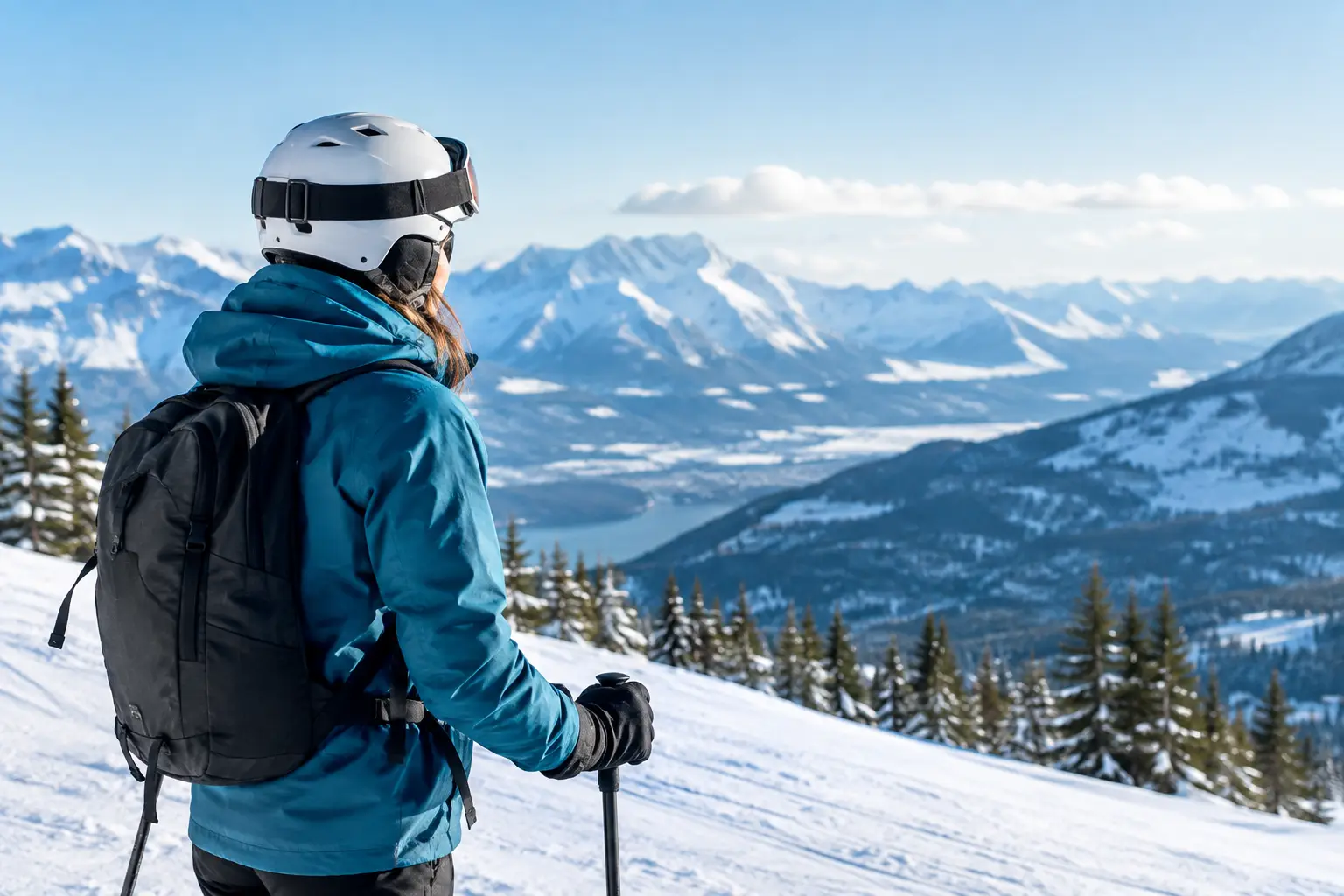
A December snowfall that once settled the argument can now disappear behind a warm front before the Christmas week begins. For British skiers and snowboarders booking months ahead, climate skiing is no longer a distant industry discussion. It is part of the practical calculation: which resort, which dates, how high to stay, and whether the trip still offers the sort of snow time that makes the cost worthwhile.
That does not mean the Alps are about to become ski-free, nor that every low resort is a poor bet. Mountains still produce exceptional winters, deep powder cycles and cold spells. But the margin for error is narrowing, particularly at lower elevations and on sunny, south-facing slopes. The sensible response is not panic booking at the highest possible resort. It is learning to read a ski area with more care.
Climate skiing is about more than warmer winters
The obvious effect of a warming climate is a higher snow line. Resorts that historically relied on natural cover in village level terrain are more exposed to rain, thaw and shorter periods of continuous snow cover. Yet the reality on the hill is more complicated than one average temperature figure.
Snow arrives through individual weather systems. A cold, stormy week can transform a resort, while a mild and dry spell can strip thin cover surprisingly quickly. Aspect, altitude, shade, terrain management and the ability to make snow all shape what a skier or snowboarder actually finds underfoot. A north-facing piste at 2,000 metres can remain firm and enjoyable while a sunny run several hundred metres lower turns soft by mid-morning.
For holidaymakers, this distinction matters. A resort may retain excellent skiing across its upper mountain even when its home run is closed. Another may have a high top lift but only a small amount of meaningful terrain above the snow line. When judging snow reliability, look at the elevation of the linked network, not simply the highest point printed in a brochure.
What climate skiing means when choosing a resort
The most useful question is not, “Will there be snow?” It is, “How many good options will this resort retain if conditions are less favourable than hoped?” The answer comes from the shape of the mountain as much as its headline altitude.
Look at the skiing altitude, not just the village
A high village is a strong starting point, especially for early-season and spring trips, but it is not the whole story. Check where the main lifts begin, how much terrain sits above roughly 2,000 metres, and whether lifts provide straightforward access to that terrain from several parts of the resort.
Large, linked areas often offer a valuable form of insurance. If one sector is sun-affected, wind-hit or below the best snow level, there may be another valley, bowl or shaded face to explore. That flexibility can be more useful than a single glacier run, particularly for groups with mixed abilities who want full days on the mountain rather than a narrow corridor of preserved snow.
Aspect deserves equal attention. North and north-west-facing slopes generally hold snow better than broad south-facing pistes, especially from February onwards. This does not make sunny slopes undesirable – far from it on a cold midwinter day – but it does affect the rhythm of the day. In spring, experienced riders often follow the snow: firmer shaded pistes first, then softer sunny slopes once they have thawed.
Treat the calendar differently
The traditional season still has its patterns, but the old assumptions are less dependable. Christmas and New Year can be brilliant, though low resorts increasingly need a solid early cold spell and effective snowmaking to open their full offering. January often remains a strong value month, with shorter queues and a better chance of sustained cold, although no week is guaranteed.
February brings school-holiday demand as well as the prospect of excellent base depths. For families tied to half-term, choosing a resort with ample high, sheltered terrain is a more meaningful safeguard than chasing a single long-range forecast. March and April can deliver some of the most enjoyable skiing of the year, with longer days and a more relaxed mountain atmosphere, but they reward a resort chosen for height, aspect and lift access.
For snowboarding, spring conditions bring a particular trade-off. Softer snow can be friendly for progressing and forgiving in the park, while flat light and heavy afternoon slush can make long traverses less enjoyable. Boarders should consider the layout of the mountain as well as its altitude, especially if the group includes newer riders.
Snowmaking helps, but it is not a free pass
Modern snowmaking is one reason many resorts can maintain good piste coverage through variable periods. It protects key links, nursery slopes and busy routes, helping operators open more reliably when natural snowfall is thin. For beginners, that can make a major difference. A well-prepared learning area can be far more valuable than a huge ski map with limited accessible terrain.
But snowmaking requires sufficiently cold conditions, water, energy and substantial investment. It cannot reproduce the depth, softness or off-piste potential of a natural storm cycle, and it is not equally available across every slope. The environmental and economic pressures are real too. Resorts are having to weigh water storage, electricity use, local landscapes and the cost of keeping lower pistes viable.
The practical takeaway is to see snowmaking as part of a resort’s resilience, not proof that conditions will always be fine. Ask whether the system serves the pistes you are likely to use, and whether there is enough higher terrain to complement it.
Travel choices now matter on and off the mountain
Climate skiing also raises a fair question for a UK audience: if we care about snow futures, how should we travel to the mountains? There is no perfect answer, particularly for families carrying luggage, ski equipment and the logistics of a one-week holiday. Flying is often the quickest option from the UK, while rail can require more time, changes and planning.
Still, travelling by train is increasingly realistic for certain Alpine trips, especially where a direct or straightforward connection leaves you close to a major resort transfer. It can turn the journey into part of the holiday rather than an airport endurance test. For those who fly, selecting a longer stay, sharing airport transfers, travelling light where possible and avoiding unnecessary car hire are practical ways to reduce the trip’s footprint without pretending it disappears.
Once in resort, the better ski areas are increasingly investing in pedestrian centres, local buses, efficient lift systems and year-round transport. These improvements are not only about emissions. They make a mountain holiday easier, quieter and safer after a long day on snow.
Resorts are adapting – and some changes improve the experience
The most credible mountain communities are not presenting climate adaptation as a glossy marketing claim. They are making hard operational choices: improving snowmaking where it is viable, protecting water resources, replacing ageing lifts, managing pistes more carefully and building a year-round economy around walking, biking, food, culture and mountain sport.
For winter visitors, diversification can sound like bad news, as though skiing is being pushed aside. Often, it means the opposite. A financially healthy resort is better placed to maintain lifts, local jobs, public transport and mountain services through difficult winters. The concern comes when expansion is used to avoid rather than address environmental limits. Every project deserves scrutiny, especially in fragile alpine landscapes.
There is also a cultural shift worth acknowledging. Skiers and snowboarders have always followed weather, terrain and seasonal change. Being more selective about dates, more curious about a mountain’s geography and more realistic about conditions is not a lesser version of the sport. It is simply better mountain sense.
A better way to book your next snow holiday
For an early or late-season trip, prioritise a resort with substantial skiing at altitude, varied aspects and reliable lift links to its upper slopes. For a midwinter family week, strong snowmaking on beginner and return runs may matter just as much as a lofty summit. If powder is the goal, build flexibility into the booking where possible and choose a region with plenty of terrain, rather than betting everything on one famous off-piste face.
It also pays to keep expectations grounded. A bluebird week does not require fresh powder every morning, and a forecast showing mild valley temperatures does not automatically mean poor skiing higher up. Check recent conditions close to departure, pack for a wider range of weather than you once might have, and be ready to alter your plan during the day.
The mountains will continue to reward the people who pay attention. Choose a resort for the snow it can offer across changing conditions, not just the image it sells on a perfect February morning, and your next turn is far more likely to feel like money well spent.