The first bad ski day many people have is not caused by poor snow or tired legs. It starts with being too cold on the chairlift, too hot on the piste, or soaked through by lunch. If you want to know how to dress for skiing, the answer is less about wearing as much as possible and more about wearing the right layers in the right order.
That matters whether you are heading to a January week in the Alps, a school-holiday trip at half term, or an Easter break with bright sun and slushy afternoons. British skiers often pack for the coldest conditions they can imagine, then spend the day overheating because skiing is active. Good ski clothing should regulate temperature, move moisture away from the skin and protect you from wind and snow, without making you feel bulky or restricted.
How to dress for skiing: start with the layering system
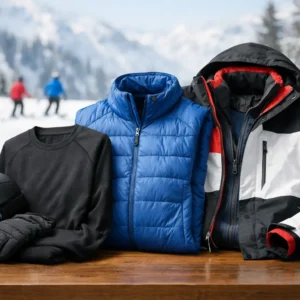
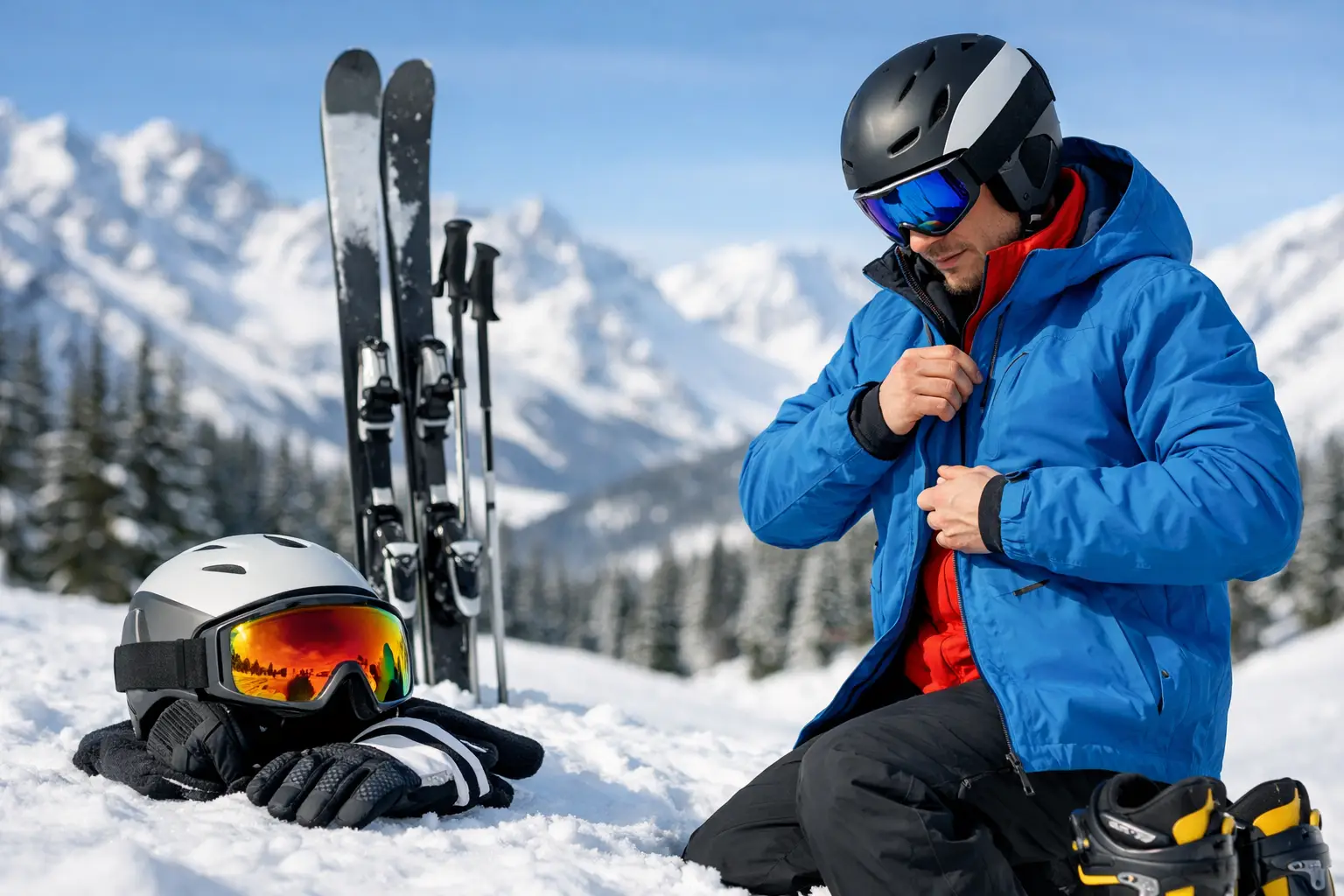
The simplest way to get it right is to think in three parts: base layer, mid layer and outer layer. Each does a separate job, and when one of those jobs is missing, comfort tends to unravel quickly.
Your base layer sits next to the skin. Its role is not to make you roasting warm. It is there to manage sweat. Merino wool and quality synthetics both do this well, while cotton does not. Cotton holds moisture, cools quickly and feels clammy once you stop moving. That is why an ordinary T-shirt under your jacket is one of the easiest ways to end up chilled.
On top of that comes the mid layer, usually a fleece, lightweight insulated jacket or technical knit. This is your adjustable warmth. Some skiers need only a light fleece in milder weather, while others will want a warmer insulated option in midwinter, particularly if they feel the cold on chairlifts or ski at a more relaxed pace.
The outer layer is your shield against wind, snow and changing mountain weather. A proper ski jacket and ski trousers or salopettes are designed for movement and exposure in a way general winter clothing often is not. You can get away with a normal winter coat for the walk to the pub. On a mountain in driving snow, it is a different conversation.
The base layer: the part people get wrong first
A good base layer should fit close without feeling restrictive. Too loose, and it does not move moisture efficiently. Too tight, and it can feel uncomfortable under the rest of your kit. Long sleeves and full-length bottoms are usually the best call for skiing, especially for a full day on the hill.
Merino remains a favourite for many experienced skiers because it handles temperature swings well and does not hold odour in the same way some synthetics can. Synthetic base layers, though, tend to dry fast and can be excellent value. There is no single correct answer here. If you run hot and ski hard, a lighter synthetic may suit you perfectly. If you want comfort across a wider range of conditions, merino is hard to beat.
Avoid doubling up with multiple base layers unless conditions are truly severe. Two sweaty, bunched-up layers are often less effective than one technical layer plus a proper mid layer.
The mid layer: warmth you can adjust
This is where flexibility lives. If you are skiing in December or January, or spending time high up in exposed terrain, you may want more insulation. If you are skiing in March, especially in the afternoon sun, too much mid-layer bulk can leave you unzipping constantly.
Fleece remains a reliable choice because it is breathable, warm for its weight and easy to regulate. Light insulated jackets work well too, especially under a shell jacket, but they can be too much for warmer days. The key is to dress for the effort level as much as the forecast. Beginners often spend more time stopping and starting, which means they can cool down quickly. Strong skiers covering ground all day may need less insulation than they think.
Choosing the right outerwear for skiing
If you are wondering how to dress for skiing in a way that actually works on the mountain, outerwear is where ski-specific features earn their keep. A proper ski jacket should offer weather protection, ventilation and room to move. Waterproof and breathable fabrics matter, but so does the cut. You need enough freedom for turns, poling and lift riding without acres of excess material flapping about.
Ski trousers should sit comfortably over base layers without restricting movement at the knees or hips. Salopettes add extra coverage and are a very sensible choice for colder conditions or deep snow days, while regular ski trousers can feel less bulky and easier for resort skiing.
Look for useful details rather than gimmicks. Vent zips help when the temperature rises. Snow gaiters at the cuffs stop snow getting in. Adjustable cuffs work well with gloves. A powder skirt can be handy, though not everyone considers it essential for piste skiing. It depends how and where you ski.
Shell outerwear paired with adaptable layers underneath gives the greatest range across a full season. Insulated jackets are convenient and popular, but they can be less versatile if temperatures swing between cold mornings and mild afternoons.
Don’t overlook hands, head and feet
Cold fingers can ruin a day faster than almost anything else. Gloves or mittens should be waterproof, insulated and long enough to overlap properly with your jacket cuffs. Mittens are generally warmer, while gloves offer more dexterity. If you suffer with cold hands, this is one area where spending a bit more usually pays off.
For your head, a helmet is standard for good reason. Underneath, a thin liner or skull cap can help in very cold weather, but avoid anything bulky that affects fit. A neck tube or buff is far more useful than a traditional scarf, which has no place flapping around on lifts.
Ski socks deserve more thought than they often get. Wear one good pair, not two. Doubling up tends to create pressure points and reduce circulation, which can leave feet colder rather than warmer. Ski-specific socks should be breathable, shaped and relatively thin in the wrong places, with cushioning only where it helps.
Boots change everything
Even the best clothing setup can feel miserable if your boots are too tight or badly matched to your socks. Restricting circulation is one of the main reasons feet get cold. A properly fitted boot with a single technical sock is usually warmer and far more comfortable than a cramped boot with extra layers stuffed in.
If you hire equipment, take your own socks and pay attention during fitting. It is worth getting right before you head for the first lift.
Weather, season and resort all change the answer
There is no single formula that works for every ski trip. A freezing week in Scandinavia calls for a different setup from a sunny April holiday in the French Alps. Wind can matter more than the number on the forecast, and damp snowfall often feels colder than dry, crisp conditions.
Altitude makes a difference too. A resort village may feel mild, while the top lift is bitterly cold and exposed. That is why adaptable layering beats one heavy outfit. You want the ability to remove or add warmth without compromising weather protection.
For family holidays and mixed-ability groups, it is also worth remembering that slower skiers and children often cool down more quickly. Standing around in ski school meeting points or on open chairlifts is a different test from skiing continuously.
What beginners really need – and what they don’t
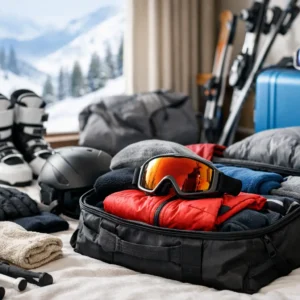
New skiers often assume they need the thickest jacket in the shop and every thermal extra going. Usually, they need a well-chosen, simple setup instead. One good base layer, one mid layer, proper ski outerwear, decent gloves, ski socks and a neck tube will cover most holiday conditions.
You do not need to look like you are heading for an expedition. And you do not need to wear every winter item you own at once. Too many layers make movement awkward, lead to overheating and can leave you chilled later in the day when damp clothing starts to cool.
If you are hiring or borrowing clothing, prioritise fit and weather protection over style details. Fashion has its place in mountain towns, but comfort on the hill always wins.
Small mistakes that make a big difference
The classic errors are predictable. Cotton next to the skin. Jeans anywhere near snow. Two or three pairs of socks. A hoodie under a ski jacket that bunches at the neck and traps moisture. Gloves that look warm in the car park but soak through by mid-morning.
Another common mistake is ignoring ventilation. If your jacket has pit zips or your trousers have vents, use them. Open them on a long descent or in spring conditions before you become sweaty, not after. Staying dry is easier than drying out.
Pockets matter as well. You need enough storage for a pass, mobile phone, tissue and perhaps a snack, but overloading your jacket can make it awkward and unbalanced. Keep it practical.
Dressing well for skiing is really about making smart decisions before you click into your bindings. Get the fabrics, fit and layering right, and you spend less time thinking about the cold and more time enjoying the mountain. That is the kind of preparation that pays you back from the first lift to the last run.