You notice it halfway through the first morning. Your toes are throbbing on the lift, the top of your foot feels crushed, or your calves are being chewed up every heel-side turn. If you have ever asked why do snowboard boots hurt, the short answer is that most boot pain comes from fit, not from riding itself – and small fitting mistakes can feel brutal once you are strapped in for a full day.
That matters because snowboard boots are not supposed to be cosy in the way a winter shoe is cosy. They should feel snug, supportive and precise. For newer riders, that often gets mistaken for discomfort and, just as often, genuine pain gets shrugged off as something you simply have to put up with. You do not.
Why do snowboard boots hurt in the first place?
The main reason is simple: snowboard boots need to hold your foot firmly enough to transfer movement to the board. That close fit creates very little room for error. A boot that is slightly too small, the wrong shape, badly laced or paired with the wrong socks can create hot spots within minutes.
There is also the break-in question. New boots often feel stiffer and less forgiving during the first few days. That is normal. Sharp pain, numbness, cramping or rubbing that gets worse every run is not. The difference between a firm performance fit and an actually painful fit is one of the most important things to understand before you spend a week in resort limping back to the chalet.
The most common causes of snowboard boot pain
Your boots are the wrong size
This is still the biggest culprit. Many riders buy boots the way they buy trainers, with a little spare room at the end. In snowboarding, too much space is a problem. Your foot slides, your heel lifts, and you instinctively tighten the boot harder to compensate. That extra pressure then crushes the top of the foot, squeezes the toes and restricts circulation.
The opposite problem is just as common. Boots that are too short can drive your toes into the front, especially when flexing forward or landing. On a shop floor this can feel merely snug. On snow, after hours of movement and swelling, it can become properly uncomfortable.
The shape is wrong for your foot
Not all size 9s fit the same way. Some boots suit wider forefeet, some suit narrower heels, some have more instep volume, and some simply do not match your foot shape at all. This is where plenty of riders come unstuck. The length might be right, but the boot pinches the little toe, crushes the arch or leaves dead space around the ankle.
That shape mismatch is why one person swears a certain model is brilliantly comfortable while another cannot last two runs in it. Brand loyalty only gets you so far. Fit always comes first.
You are overtightening them
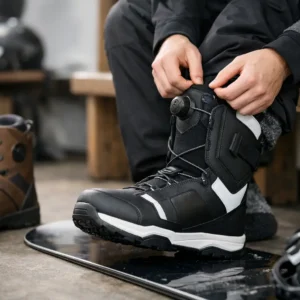
If your heel is lifting, many riders crank the laces or BOA dial until the whole foot is clamped in place. It can feel secure for ten minutes, then circulation drops and pressure points start to build. Numb toes are often caused by this rather than by cold alone.
There is a balancing act here. A performance fit should be close, but it should not feel like a vice. Tension needs to be even, especially over the instep and around the ankle.
Your socks are making things worse
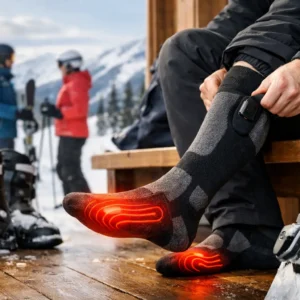
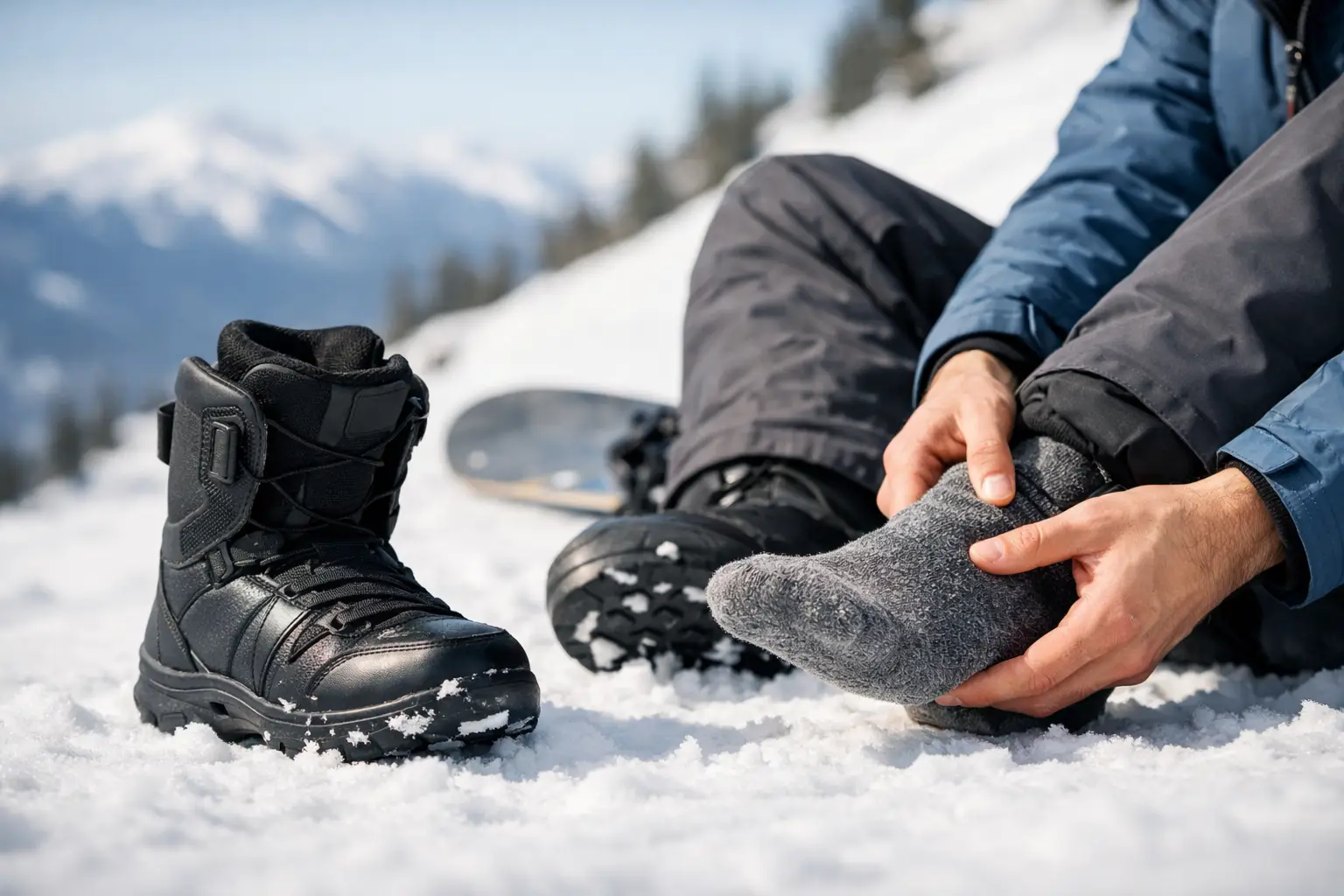
Thick socks sound sensible in cold weather, but they often create more problems than they solve. Extra bulk changes the fit of the boot, causes bunching and increases pressure in the wrong areas. Worse still, wearing two pairs is a classic recipe for friction and hot spots.
A single, thin technical snowboard sock is usually the best answer. It keeps the fit consistent and lets the liner do its job.
The liner and shell have not settled yet
Most modern boots do bed in. Liners compress, foam adapts and the fit becomes more personalised after a few days of use. Heat-mouldable liners can speed that process up considerably. Until then, some stiffness and mild pressure are fairly common.
What you should not expect is serious rubbing, pins and needles or pain that forces you to stop riding. Breaking in is one thing. Battling through the wrong boot is another.
Your stance, bindings or technique may be part of it
Not every ache starts inside the boot. If your bindings are set too tight, your stance is unusual for your body, or you are riding in the back seat all day, you can create pressure in the calves, arches and shins that feels like boot pain.
Beginners often spend long periods tense and defensive, gripping with their toes and stiffening their lower legs. That can lead to cramp and fatigue, especially on indoor slopes or early trip days when fitness is still catching up.
Where the pain is tells you a lot
Toe pain
Toes hitting the front usually point to a short boot, too much foot movement, or your foot sliding forward because the heel is not held properly. Cold, numb toes can also mean the boot is simply too tight across the forefoot.
Pain on top of the foot
This is often caused by overtightening across the instep, especially with BOA systems. It can also signal that the boot does not have enough volume for your foot shape.
Heel lift and ankle rub
If the heel moves up and down while turning, friction follows. The boot may be too big, the shape may not suit your ankle, or the liner may not be locking your heel down well enough.
Arch pain or cramp
Flat feet, unsupported arches and poor footbeds are common causes here. Stock insoles are often basic. A better footbed can make a very noticeable difference, especially for riders spending full days on snow.
Shin or calf pain
This can come from a boot digging into the lower leg, but it can also be a sign of stance issues or simply spending too much time braced backwards. If the cuff height or forward lean does not suit you, discomfort builds fast.
How to stop snowboard boots hurting
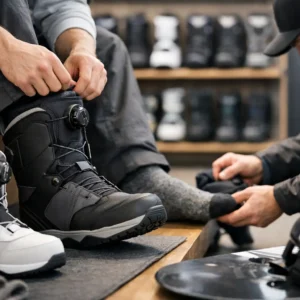
The best fix is to start with a proper fitting. That means measuring both feet, checking width and volume, and trying on several models rather than assuming your usual shoe size will do. A good boot fitter can spot issues you may not notice standing in the shop.
If you already own the boots, there are still sensible adjustments to try. First, strip things back. Wear one thin pair of snowboard socks and relace or retighten the boots carefully from scratch. Make sure your heel is seated properly by tapping it back before fastening everything up. If your system allows separate upper and lower adjustment, use it. Many riders put too much pressure over the foot when the real support needs to come from around the ankle and cuff.
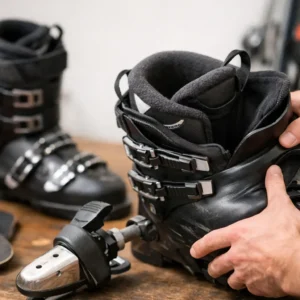
Heat moulding can help if your liner is designed for it. So can a better insole. For pressure points, some shops can make small shell or liner adjustments. This is particularly useful if the fit is mostly right but one area is persistently painful.
If the pain is severe and repeated, be realistic. Some boots are simply the wrong shape for your foot. No amount of determination turns a bad match into a good one.
When discomfort is normal and when it is not
A new snowboard boot should feel close and controlled. Your toes may lightly brush the end when standing upright, then pull back slightly when you flex into riding position. That is fairly normal.
What is not normal is losing feeling in your toes, getting stabbing pain, developing blisters every session or feeling relief only when you unstrap immediately. If you are counting down runs until you can take the boots off, something is off.
Why beginners often suffer more
New riders are more likely to hire boots, choose the wrong size, wear bulky socks and overtighten everything because they want to feel secure. They also spend more time standing awkwardly, falling, braking hard and using muscles that are not yet conditioned for a full day on snow.
That combination can make boot pain seem like a rite of passage. It is not. Better fit and a calmer setup usually solve far more than people expect.
For UK riders heading to the mountains for a one-week trip, this is worth sorting before you travel. A painful hire boot in a French or Austrian resort can spoil expensive days very quickly. If you ride regularly, investing time in the right boot is one of the smartest equipment decisions you can make.
At Skier & Snowboarder, we see this issue crop up season after season because boots sit in that awkward category between comfort item and performance tool. Riders want both, and rightly so. The trick is knowing that comfort in snowboarding does not mean roomy and soft. It means precise support without pressure where you do not need it.
If your snowboard boots hurt, do not just assume your feet need to toughen up. Pain is usually useful information. Listen to where it is, work out why it is happening, and fix the cause before your next trip – your riding will be better for it.