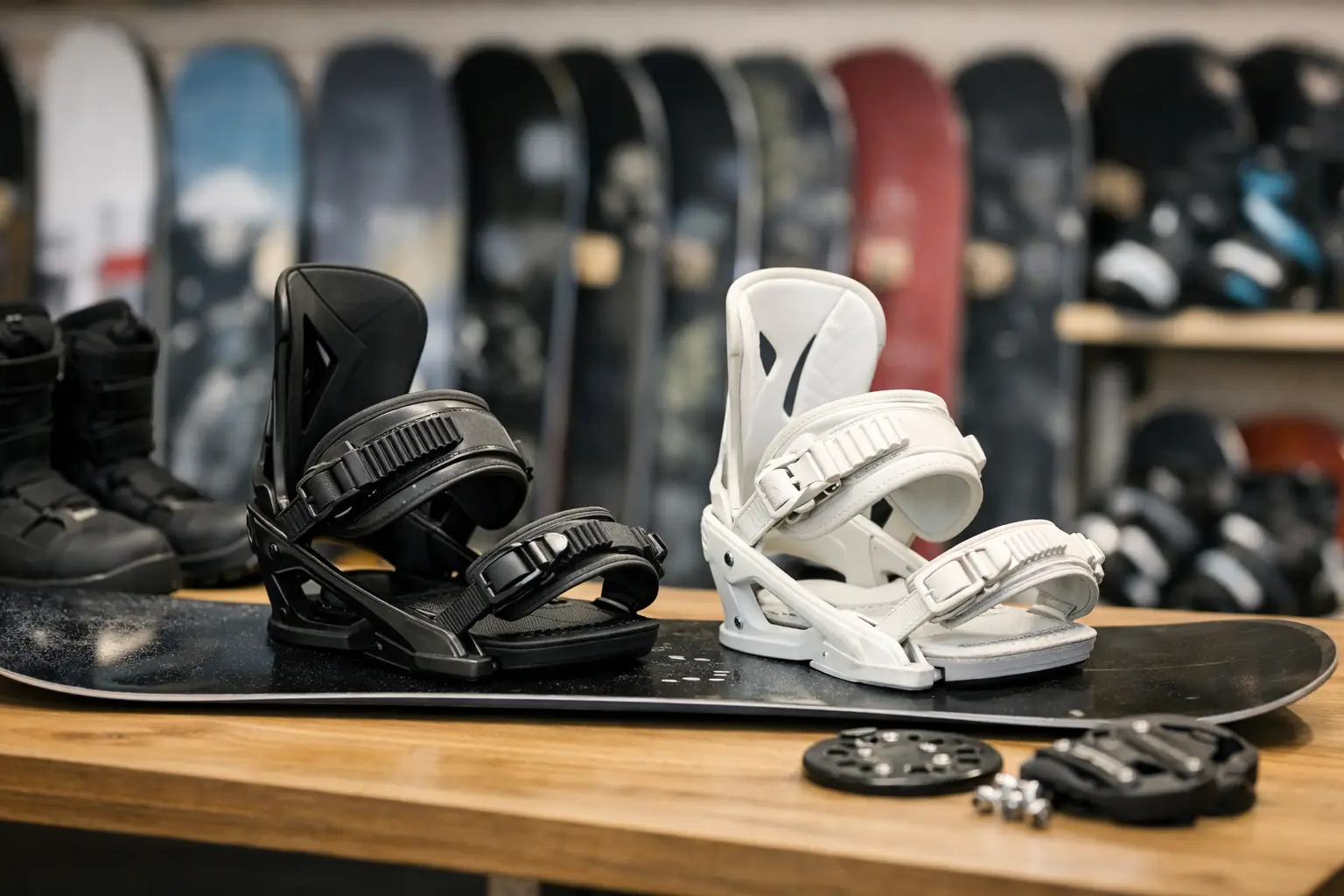
You feel bad bindings before you understand them. The board might be right, the boots might fit well in the shop, yet on snow the whole setup can still feel twitchy, sluggish or oddly hard work. That is why learning how to choose snowboard bindings matters more than many riders expect. Bindings are the connection point that dictates how power gets from your body to the board, and the wrong match can make a good snowboard feel average.
For UK riders especially, bindings are often bought in a hurry – at a snow dome, before a trip, or as part of a package when one component gets upgraded and the others stay put. That is where mistakes creep in. The best choice is not simply the stiffest, lightest or most expensive model. It is the one that suits your boots, your board and the way you actually ride.
How to choose snowboard bindings for your riding
Start with riding style, because that narrows the field quickly. If most of your days are spent cruising pistes, hitting the odd side hit and venturing off the edge of the run when conditions allow, an all-mountain binding is usually the sensible place to look. This category suits the broadest range of UK snowboarders because it balances support, comfort and control without feeling too specialised.
If you ride park regularly, spend time on rails and boxes, or prefer a looser, more playful board feel, softer freestyle bindings make more sense. They allow easier tweaks, a bit more freedom of movement and a less punishing ride on landings. The trade-off is that they can feel vague at speed or less supportive in chopped-up snow.
At the other end, freeride bindings are designed for response. They tend to be stiffer, more precise and better at driving a board hard through turns or variable terrain. That can be brilliant in steep alpine conditions, but it also means they are less forgiving. Beginners and casual holiday riders often mistake that extra stiffness for better performance, when in reality it can make snowboarding more tiring and less intuitive.
If your riding is mixed, which is true for most people, stay in the middle. A medium-flex all-mountain binding is very often the right answer.
Flex matters more than marketing
Binding flex is one of the biggest factors in how a setup feels. Brands measure it slightly differently, so a 6 out of 10 from one company may not feel identical to a 6 from another, but the principle is consistent. Softer bindings are easier going and more forgiving. Stiffer bindings transmit movement more quickly and offer more support under pressure.
For beginners, softer to medium flex is usually best. It helps with learning edge control, keeps the ride less twitchy and makes long days less demanding. Intermediate riders often get on well with medium flex because it covers a lot of ground, from piste laps to sidecountry exploring. Advanced riders may want something stiffer, but only if it matches the rest of the setup.
This is where a lot of people get caught out. Bindings should complement your board and boots, not fight them. Put very stiff bindings on a soft board and the setup can feel unbalanced. Pair soft bindings with stiff boots and an aggressive board and you may lose precision where you want it most. The best snowboard setups feel coherent rather than extreme.
Match your bindings to your boots
If there is one rule worth remembering, it is this: fit your boots first, then choose bindings around them. Boots determine comfort and control far more directly than most riders realise, and bindings need to hold them securely without pressure points or sloppy movement.
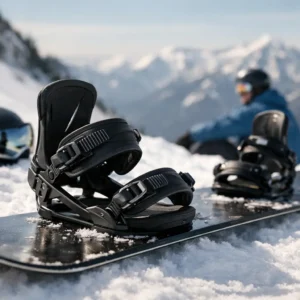
A good fit means the boot sits properly in the heel cup, the straps wrap cleanly across the boot rather than crushing awkwardly, and the toe strap sits where it is meant to. If the boot overhangs too much at the heel or toe, or if there is too much spare room side to side, performance suffers.
Sizing varies by brand, so never assume your usual binding size will be right across the board. A UK rider in a size 9 boot may fit a medium in one brand and a large in another depending on the shell shape. Modern boots also differ in footprint. Some have reduced outer dimensions, which can affect how snugly they sit in the binding.
Whenever possible, check the boot and binding together rather than buying each in isolation. The cleanest-looking spec sheet means little if the straps do not sit properly on your actual boots.
Baseplate, straps and highback
Bindings are easy to reduce to a flex rating, but details matter. The baseplate affects how connected or cushioned the ride feels. Some riders prefer a damp, shock-absorbing feel for choppy pistes and heavy landings, while others want a closer, more direct connection to the board. Neither is universally better. It depends on whether you value comfort or immediacy more.
Straps are often overlooked until they become annoying. Better ankle straps spread pressure more evenly and hold the boot firmly without creating pinch points. Toe straps should lock the front of the boot in place securely rather than constantly slipping. Ratchets should tighten smoothly and release without drama, especially when it is cold and you are wearing gloves.
The highback influences heel-side response and overall support. Taller, stiffer highbacks tend to suit faster or more aggressive riding, while softer highbacks feel more relaxed and surfier. Some bindings let you adjust forward lean, which can sharpen response, but too much can feel restrictive if you prefer a casual stance.
How to choose snowboard bindings for your board
Compatibility still matters, although it is much less confusing than it once was. Most bindings now work with the standard mounting systems used by major snowboard brands, but it is still worth checking before you buy. The disc and mounting pattern need to match your board.
Beyond that, think about width and intended use. If you ride a wide board because of larger boots, make sure the binding size suits it properly. If the binding is too small, boot support suffers. Too large, and the board can feel less precise underfoot.
There is also no point buying a high-end freeride binding for a soft jib board unless you are deliberately building an unusual setup. In most cases, keeping board and binding in the same performance lane leads to a better ride.
Adjustability is not just a bonus
A binding that can be adjusted properly is easier to live with and easier to fine-tune. Heel cup adjustment, strap positioning, highback rotation and tool-free tweaks all help you dial in the fit. That is not just shop-floor fussiness. Small adjustments can make a noticeable difference to comfort and edge response.
For newer riders, simple adjustment can be especially helpful. If you are still working out stance angles and width, or sharing setup advice with a more experienced friend at the indoor slope, accessible hardware makes life easier.
Budget, durability and where to spend
Bindings sit in a wide price range, and spending more does not always mean riding better. Entry-level bindings from reputable brands are often perfectly good for beginners and occasional riders. They offer enough comfort and control without overwhelming the rider with stiffness or unnecessary complexity.
In the mid-range, you usually see the best value. Materials improve, straps tend to be more comfortable, ratchets more reliable and the ride quality more refined. For many intermediate riders, this is the sweet spot.
Premium bindings can absolutely be worth it if you ride a lot, know what feel you want and demand lighter weight or more precise response. But they are not magic. If your boots are poor or your board is not suited to your riding, top-tier bindings will not solve that.
Durability also matters for UK riders who spend time on dry slopes or indoor snow as well as in the mountains. Repeated wear, travel and mixed conditions can be hard on straps and buckles. Solid construction and easy-to-replace parts are worth paying attention to.
Common mistakes when choosing bindings
The most common error is buying for the rider you hope to become rather than the rider you are now. Plenty of people choose very stiff bindings because they sound advanced, then spend a week battling them on piste. A setup should encourage progression, not punish you for not being at expert level yet.
Another mistake is ignoring boot fit. A slightly mismatched binding may still work, but it rarely works well. The same goes for overlooking comfort in favour of weight savings or technical claims.
There is also a tendency to treat bindings as an afterthought compared with boards. In reality, they shape board feel dramatically. At Skier & Snowboarder, we see this repeatedly with riders who upgrade their board and only later realise the old bindings are holding the setup back.
If you are unsure, aim for balance. Medium flex, proper boot compatibility, solid straps and enough adjustability will suit a large proportion of riders far better than a niche design chosen for its sales pitch.
The right bindings should disappear beneath you once you start riding. Not because they do nothing, but because everything works as it should – secure, responsive and comfortable enough that your focus shifts back to the mountain rather than your feet.