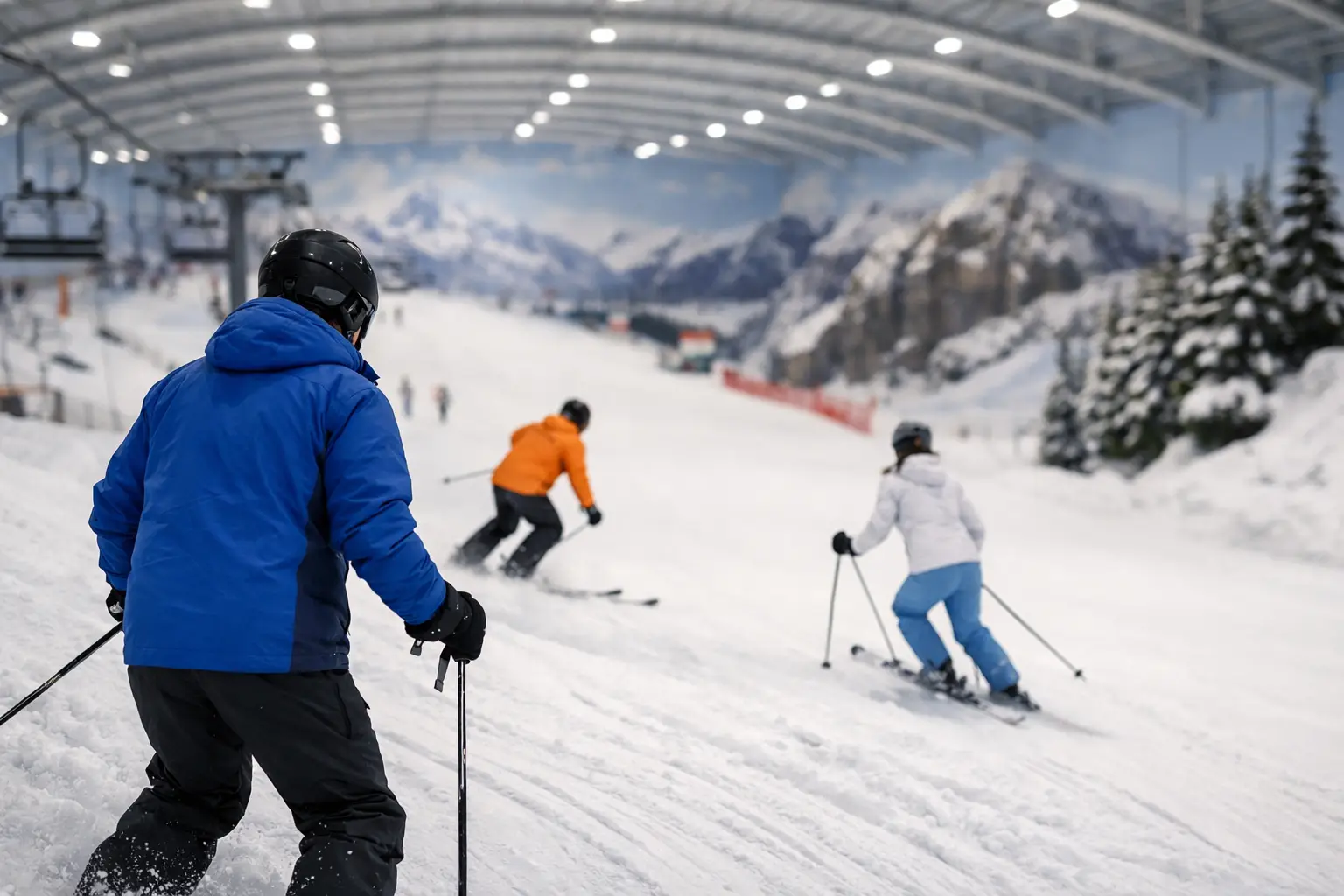
A rainy Tuesday in October is often when winter starts to feel real for UK skiers and snowboarders. Flights may not be booked, boots may still be in the loft, but one session on real snow is enough to bring the season back into focus. That is exactly why the best UK indoor ski slopes matter – not as a substitute for the mountains, but as a reliable way to sharpen technique, rebuild confidence and keep snow sports in the weekly routine.
For committed riders, the question is rarely whether an indoor slope is worth using. It is which one suits the job. Some centres are best for beginners taking their first lessons. Others work better for race training, freestyle features or simply getting ski legs back before an alpine trip. The right choice depends on where you live, what you ride and how seriously you want to train.
What makes the best UK indoor ski slopes?
Not every indoor snow centre offers the same experience. On paper they may look similar – a main slope, beginner area, rental shop and lessons – but on snow the differences are obvious.
Gradient is one of the biggest factors. A steeper pitch gives stronger intermediates and advanced skiers more to work with, while gentler slopes can feel limited once basic turns are secure. Slope length matters too, although indoor runs are always short compared with the Alps. What you are looking for is enough vertical to link proper turns rather than just slide from top to bottom in seconds.
Snow quality is another dividing line. Some centres maintain a firmer, more consistent surface that lends itself to edging drills and higher-volume training. Others can feel softer or more churned up at busy times. Neither is automatically better – softer snow can be friendlier for novices – but regular skiers will notice the difference.
Then there is the wider setup. Good lift flow, competent instructors, race training access, freestyle programming and a sensible layout all count. The best venue for a family taster session is not always the best venue for a club racer or a snowboarder wanting park laps.
Best UK indoor ski slopes for different skiers and riders
Chill Factore, Manchester
If you are looking for scale, Chill Factore remains one of the strongest contenders. Its long main slope gives it a little more room to breathe than many UK indoor centres, and that extra length makes a difference once you move beyond first turns. Intermediates can actually build a rhythm, and stronger skiers have enough space to focus on turn shape rather than merely reacting to the end barrier.
It is also one of the more versatile venues in the country. Lessons, open practice, race training and freestyle all have a place here, which helps create a snow-sports atmosphere rather than a pure leisure-centre feel. For Greater Manchester and much of the North West, it is often the obvious answer for pre-season sessions.
The trade-off is that popularity brings traffic, both on the roads and on the slope. Peak sessions can feel busy, particularly when school groups and casual users overlap with regulars. Go at the right time, though, and it is one of the most useful year-round training venues in the UK.
The Snow Centre, Hemel Hempstead
For skiers and snowboarders in London, the South East and the Home Counties, Hemel is usually the practical favourite. It is accessible, established and consistently busy with everyone from first-timers to experienced recreational skiers preparing for a trip.
What sets The Snow Centre apart is its usability. It tends to work well for lessons and confidence-building, but it also has enough gradient and pace for useful technical mileage if your expectations are realistic. Many clubs and regular skiers rate it because it feels straightforward – you can get in, get changed, get some turns done and head home without too much fuss.
It is not the steepest or most dramatic indoor slope in Britain, and advanced skiers will still treat it as a training aid rather than a challenge. But for convenience and consistency, it earns its place near the top of any serious shortlist.
Snow Factor, Braehead
Scotland’s main indoor snow venue has long served a broad mix of users, from local beginners to more experienced skiers wanting regular snow time between Highland and Alpine trips. Snow Factor’s strength is less about headline size and more about its role in the western Scottish snowsports scene.
For Glasgow-based riders in particular, it offers a practical way to stay active on snow without relying on weather windows further north. That matters more than ever in a country where outdoor conditions can swing quickly. Boarders often appreciate the scene here as well, especially when freestyle sessions are programmed properly.
As with most indoor centres, session timing is everything. At quieter periods it can feel genuinely productive. At busier times, especially with mixed abilities on the slope, stronger riders may find flow harder to maintain.
Snozone Milton Keynes
Milton Keynes has developed into one of the country’s better-known indoor snow destinations, helped by its location and broad appeal. For skiers spread across the Midlands, the northern edge of the South East and parts of East Anglia, it is often a realistic drive for an evening session.
The slope setup supports a healthy range of users, and that is really its appeal. Beginners are well catered for, but it also has enough infrastructure around lessons, coaching and recreational use to keep more regular snow users coming back. If you are rebuilding confidence after a lay-off, this is the sort of centre that tends to feel approachable rather than intimidating.
The compromise is that broad appeal can make a place feel generalist. Dedicated advanced skiers and snowboarders may prefer a centre with a sharper focus on training or freestyle when that is the priority.
Snozone Castleford
Castleford deserves more attention than it sometimes gets in national round-ups. For Yorkshire skiers and snowboarders, it is a valuable local option with a loyal user base and a strong role in keeping people on snow throughout the year.
Like Milton Keynes, it covers the fundamentals well. That means reliable beginner progression, regular recreational sessions and a setup that suits families as much as committed participants. It may not be the first place every advanced skier names, but that can also work in its favour. Depending on timing, it can feel less hectic than some larger-profile centres.
If your goal is simply to get quality repetitions in before a holiday, local convenience often outweighs marginal differences in slope character. Castleford makes a strong case on that basis.
How to choose between the best UK indoor ski slopes
The best slope for you is usually the one you will actually use often. That sounds obvious, but many skiers overvalue marginal differences in steepness or length while undervaluing travel time. A slope ninety minutes away that you visit twice a year is less useful than one forty minutes away that becomes part of your winter routine.
Ability level matters as well. For complete beginners, the quality of instruction and the feel of the learner area count for more than the main slope’s pitch. For intermediates, progression space is the key question. You want enough length and angle to practise linked parallel turns, pole timing and balance drills without feeling rushed. Advanced skiers and snowboarders should look more closely at coaching opportunities, race lanes, freestyle sessions and whether the snow surface holds up under harder skiing.
There is also a difference between training and entertainment. Some centres are excellent for family sessions, corporate groups and a broad leisure offer. Others have a stronger technical culture, with ski clubs, instructors and regulars who treat the place as proper preparation for the mountains. Neither approach is wrong, but it helps to know which atmosphere suits you.
Indoor snow versus dry slope – where indoor centres win
Dry slopes still play a crucial role in British skiing and snowboarding, particularly for clubs, race development and accessible local training. But indoor snow offers something dry slope cannot fully replicate: the feel of edges, pressure and sliding on actual snow.
That matters for beginners, because fear tends to come down when the surface feels more natural. It matters just as much for experienced skiers. If you are tuning boot setup, revisiting carving drills or simply waking up muscles before a trip, indoor snow gives clearer feedback than synthetic matting.
The obvious limitation is run length. You are never going to recreate a long red in Austria or a steep black in Val d’Isere under a British roof. Indoor centres are best used with a clear purpose. Think technique, repetition, confidence and conditioning – not simulated mountain mileage.
When to book and how to get more from a session
If you want the slope at its best, avoid the busiest public times where possible. Early morning, late evening and midweek sessions often give you more space and a more consistent surface. That can turn an average hour into a genuinely useful one.
Come with a plan. One session might be about balance and stance, another about short turns, edge grip or getting comfortable again after months off snow. Without that focus, indoor sessions can become a handful of fast laps followed by a coffee, which is enjoyable enough but not always great value.
If you own boots, bring them. Rental equipment has improved, but familiar boots still make the biggest difference to control and comfort. More experienced skiers may also find that a lesson or coaching session delivers better returns than simply free-skiing for longer.
The strongest indoor slopes in Britain are not trying to be the Alps. Their value lies elsewhere. They keep technique ticking over, shorten the adjustment period on day one of a holiday and make snow sports feel less distant in a country that spends much of autumn under low cloud and drizzle. Choose the centre that fits your goals, use it with intent, and your next mountain trip will start a step ahead.