A good snowboard outfit has always said something before the first run: how you ride, what conditions you expect and whether you have spent enough time on a chairlift to value a properly placed pocket. The strongest snowboard fashion trends for winter 2026 reflect that reality. The look is looser and more expressive than the streamlined ski aesthetic, but it is grounded in kit that can take a wet British lift queue, a whiteout on the hill and a long afternoon in the park.
For UK riders, the useful question is not whether a look is fashionable. It is whether it works from the dry slope or fridge-snow dome to a week in the Alps, Scotland, Norway or North America. This season’s best styling has room for individuality without asking riders to compromise warmth, movement or weather protection.
Snowboard fashion trends: relaxed, not careless
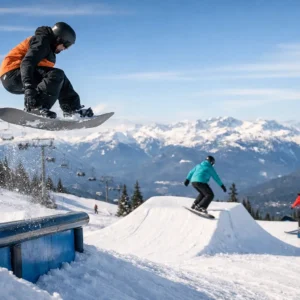
The oversized silhouette remains central, particularly in snowboard trousers with a wider leg and jackets cut with enough volume for layering. It is an evolution of the baggy park fit rather than a straight revival of early-2000s excess. The proportions are more considered: a shorter, boxier shell paired with fuller trousers, or a longer jacket over a simpler, straight-leg pant.
There is a practical reason this works. A roomier outer layer makes it easier to move through grabs, tweaks and deep knee bends, while also accommodating a fleece or insulated mid-layer on cold days. But there is a line between relaxed and cumbersome. Trousers dragging under bindings will get shredded, and an excessively long jacket can bunch against a backpack waist belt or make riding a chair less comfortable.
Look for adjustable hems, articulated knees and a fit that still allows the boot gaiter to sit cleanly over your boots. Try the whole system on together if possible. A pair of trousers that looks right over trainers can feel very different when strapped into bindings.
Utility details are part of the look
Cargo pockets, visible zips, reinforced kick panels and webbing-style adjusters are having a strong moment. On snow, these details earn their place when they are genuinely useful. A secure thigh pocket can keep a lift pass accessible; a large internal pocket can carry goggles between runs; reinforced fabric around the ankle is worth having if you regularly walk over icy car parks.
The caution is bulk. Overloaded pockets can make a pant swing around while riding, and loose straps need to be secured before they meet a lift mechanism. Choose functional detailing with a clean finish rather than treating your outerwear as a tool belt.
Technical layering is becoming more visible
Snowboard style no longer means hiding every layer beneath a black jacket. Technical fleeces, grid-backed mid-layers and textured hoodies are increasingly part of the outfit, especially when worn under an uninsulated shell. This is welcome news for riders who want one jacket to cover a broad range of conditions.
A shell-and-layers approach is particularly sensible for British travellers. On a mild, wet day in resort, wear a moisture-managing base layer and a light fleece. When temperatures drop or the wind picks up, add insulation underneath rather than relying on one heavy jacket that may become too warm by lunchtime. It also gives your kit a longer useful season, from indoor sessions to spring slush.
Cotton hoodies still have a place in the car park, the chalet and the après bar, but they are a poor choice next to the skin on a full mountain day. Once wet, they stay wet and can leave you cold on a long lift. The current street-influenced look is easy to achieve with technical alternatives: brushed-back synthetic layers, merino blends or breathable fleece all deliver a similar relaxed profile with far better performance.
The balaclava has become a genuine essential
A fitted balaclava or hooded base layer is now as much a style marker as a cold-weather solution. Neutral versions keep things understated, while bright patterns can add character beneath a helmet. More importantly, a good one protects the face and neck without the constant adjustment of a loose scarf.
Choose a breathable fabric around the mouth and nose, especially if you run warm or ride hard. Make sure it works with your helmet and goggles before travelling. Poor compatibility can create pressure points or direct breath straight into the lens, which is an unfashionable way to spend a powder morning.
Colour is returning, with purpose
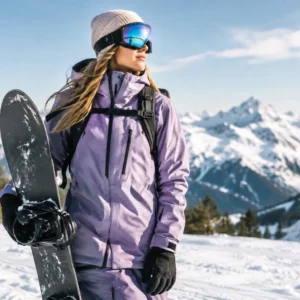
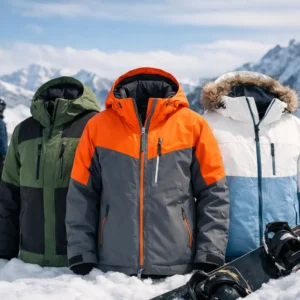
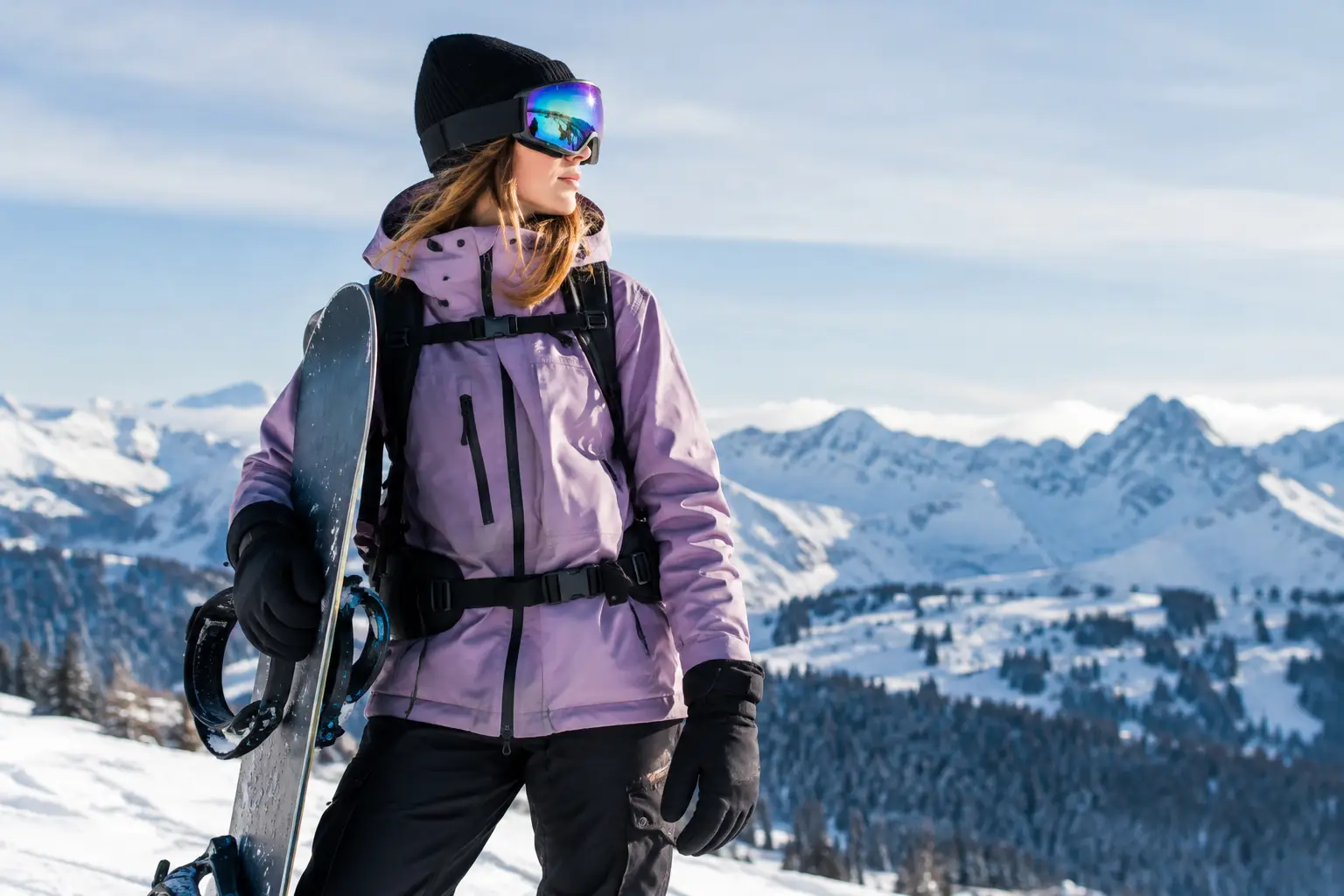
Black outerwear is never going away. It is easy to match, tends to hide lift grime and can look sharp for several winters. Yet this season, colour is confidently back in the mix. Expect deep forest green, rust, cobalt, wine red and bright primary shades, alongside softer stone, cream and muted lilac.
The most effective outfits generally use colour in one clear place. A vivid jacket with dark trousers is dependable and practical, particularly for visibility in flat light. Equally, neutral outerwear can be lifted by a coloured hood, mitts or goggles with a contrasting strap. Matching every item precisely can look overly styled, while one deliberate contrast feels more natural.
Pattern is also returning, although in a more controlled form. Checks, abstract camouflage and retro-inspired graphics work best when balanced by plainer pieces. If your trousers make a statement, let the jacket do the technical heavy lifting without competing for attention.
Goggles, helmets and mitts deserve the same attention
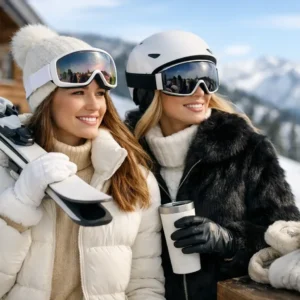
Accessories can make an outfit feel considered, but they should be selected from the inside out: fit and protection first, appearance second. A helmet should sit level, feel secure without pressure and work with your goggles without a visible gap across the forehead. That fit matters more than whether the shell has the most fashionable shape.
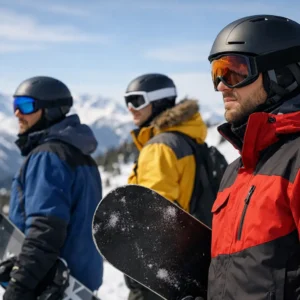
Lens choice is equally practical. A low-light or variable-light lens is a sensible starting point for many UK holidaymakers because alpine weather rarely follows the forecast. High-contrast lenses can make terrain easier to read in cloud and snowfall, while a darker lens is preferable for sustained bright days. Riders who can justify it often carry two lenses rather than forcing one to handle every condition.
Mitts remain popular within snowboard culture, partly for their clean shape and partly because they are warmer than gloves for many people. Gloves offer more dexterity for adjusting bindings, using a mobile phone or managing a camera. Neither is universally better. If your hands get cold easily, choose mitts with a liner; if you regularly fine-tune gear on the hill, gloves may save frustration.
Buy fewer pieces that will survive more seasons
The most encouraging shift in snowboard clothing is away from disposable trend-chasing. Riders are asking about fabric weight, waterproof ratings, repair services, recycled materials and whether a brand can supply replacement parts. Durability is fashionable because it is economically sensible. Quality outerwear costs enough that it should see more than one trip.
That does not mean every rider needs the most expensive three-layer shell. A beginner taking one holiday may be better served by well-fitting, sensibly priced insulated outerwear than an ultra-technical backcountry jacket. Conversely, someone riding weekly, travelling often or spending long days in wet snow will notice the benefit of tougher fabrics, better venting and more dependable waterproofing.
Care makes a visible difference too. Dry outerwear properly after riding, wash it according to the label and reproof it when water stops beading on the surface. Repair a small cut before it becomes a torn knee. A well-looked-after jacket develops character; a neglected one simply loses performance.
Build a look around how and where you ride
The most convincing snowboard style is never copied item for item. A park rider who spends weekends at a UK dome may prioritise movement, durable trousers and a lighter layering system. A family holiday rider may value an insulated jacket, easy-access pockets and a helmet-and-goggle combination that works without fuss. A splitboarder will make different decisions again, favouring low weight, ventilation and weather protection over the baggiest possible fit.
Start with boots and outerwear that fit properly, then use layers and accessories to show some personality. That approach leaves room for the season’s relaxed cuts, richer colours and utility influence without turning a day on the mountain into a costume change. The best kit should make you want to stay out for one more run, whatever the weather has in store.