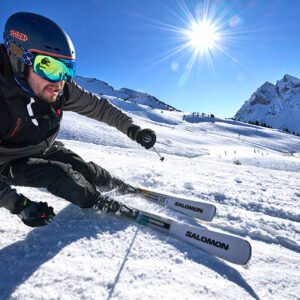
A search for ski clubs near me can lead to far more than a few names and a membership form. The right club can turn a handful of annual mountain days into a year-round connection with the sport – from dry-slope evenings and indoor-snow sessions to coached development, race training, club holidays and the simple benefit of knowing people who understand why fresh snow changes the week’s priorities.
For UK skiers and snowboarders, clubs remain one of the most effective ways to stay active between trips. But they are not all built for the same member. Some revolve around a local artificial slope; others have a long-established programme of Alpine holidays. A few are serious race environments, while others are social groups whose main achievement is filling a coach to the mountains every winter. Choosing well starts with being clear about what you want from your time on snow.
What Ski Clubs Near Me Can Actually Offer
The strongest clubs do more than arrange a trip. They create regular reasons to ski or ride, and that continuity matters. A weekly session at a dry slope, indoor snow centre or local club night keeps movement patterns familiar, helps maintain confidence and makes the first day of a holiday much less of a shock to the legs.
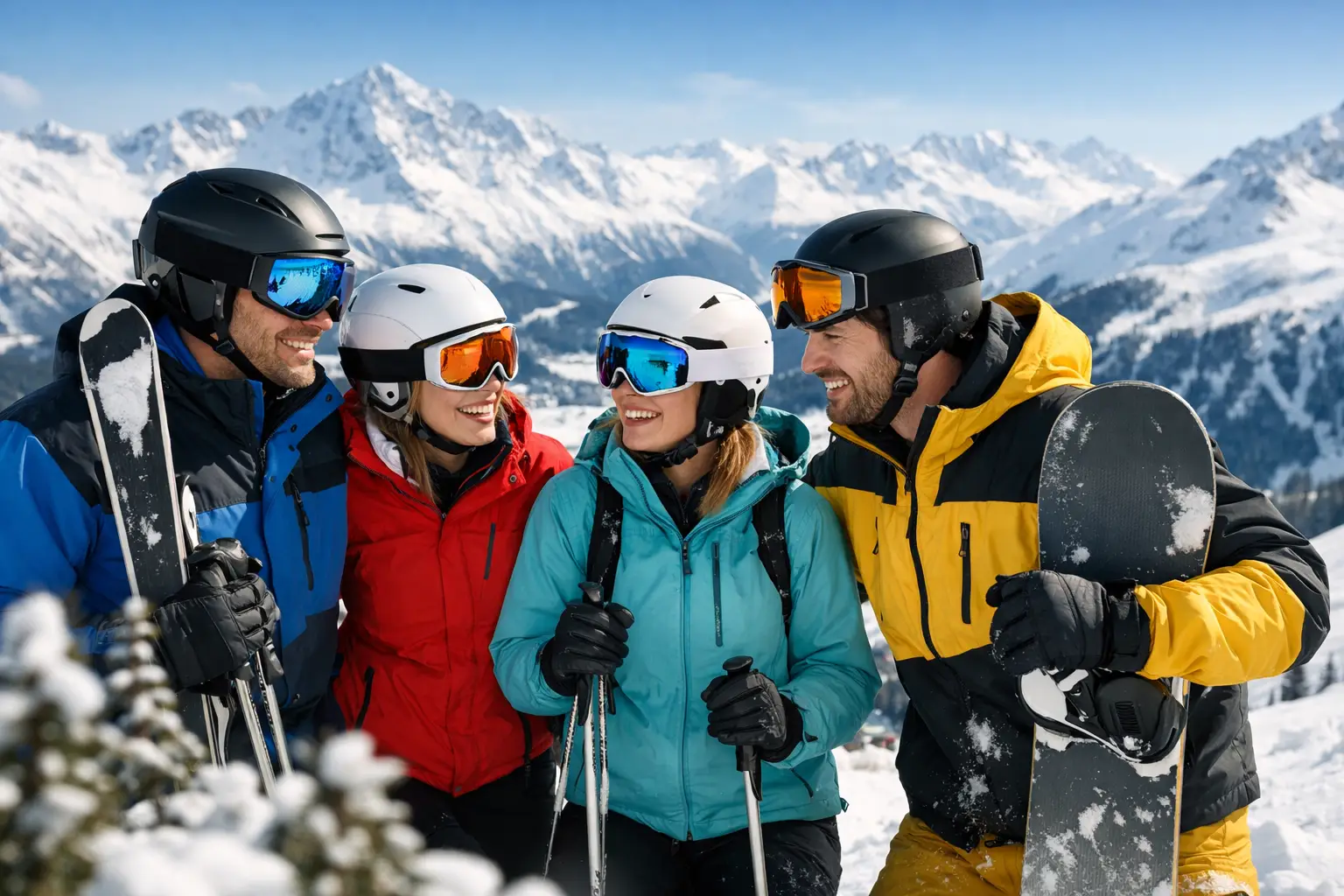
For newcomers, a club can offer a more welcoming route into snowsports than trying to organise everything alone. There may be access to lessons, informal advice on equipment, lift-sharing to a local slope and a ready-made group for a first trip abroad. For experienced skiers and snowboarders, the appeal often shifts towards training, like-minded company, discounted slope access where available, race calendars and holidays with people who will be up early for the first lifts.
There is also a practical value that is easy to underestimate. Club members tend to know which boot fitter is worth the journey, when a local slope is quietest, whether a jacket is genuinely suitable for a February chairlift, and which resort will suit a mixed-ability group. That knowledge is not a substitute for making your own choices, but it can save money and bad decisions.
Start With Your Local Snow Scene
Your nearest club may be based at a dry ski slope, an indoor snow centre, a university, a school, a workplace or a community sports association. Do not assume the club with the nearest postcode is automatically the best fit. In many parts of the UK, travelling an extra half-hour can mean access to a much more active programme or a better match for your ability and ambitions.
Search locally, then look at how the club actually operates. A current events calendar is a useful sign. Are there regular sessions throughout autumn and winter? Does the club mention both skiing and snowboarding if that matters to you? Are beginners visibly catered for, or is the focus clearly on racing and performance training? A club with modest facilities but energetic volunteers and a full diary can be far more rewarding than one with a polished website and little activity.
It is worth checking regional snowsport associations too, particularly if you are interested in racing, freestyle or instructor development. These groups often connect local clubs, run competitions and provide a pathway for younger athletes and committed adults who want structured progression.
Dry slope, indoor snow or mountain-first?
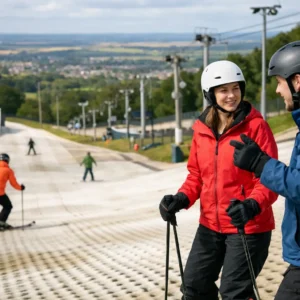
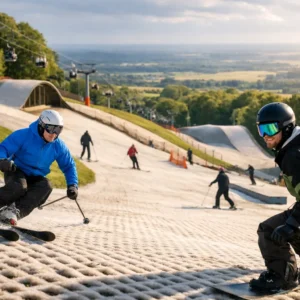
A dry-slope club makes sense if you want regular, affordable practice close to home. Modern surfaces can be surprisingly useful for balance, edging and fitness, although they do not replicate the feel of natural snow. They are especially good for keeping children engaged, rebuilding confidence after time away or developing basic technique before a holiday.
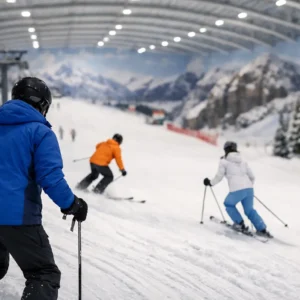
Indoor snow centres offer a more familiar sliding surface and may suit skiers and snowboarders who want to practise carving, freestyle basics or short-slope drills. The limitation is terrain: even the larger UK centres cannot replace the sustained vertical, changing snow and varied pistes of the Alps, Pyrenees or Scottish mountains.
Mountain-first clubs place the emphasis on trips. This can be ideal if your main goal is to travel with a group, particularly if you dislike the admin of organising accommodation, transfers and companions. The trade-off is that your local engagement may be limited outside the holiday itself. For some people, that is exactly the point; for others, it is worth finding a club that combines both local activity and a proper trips programme.
Match the Club to How You Ski or Ride
Before joining, consider your likely role in the group. If you are a beginner, look for clear coaching options and a culture where asking basic questions is normal. A good club will not make someone feel out of place because they need help understanding piste grading, bindings or how to pack for their first week in the mountains.
Intermediates often benefit most from clubs with regular social skiing and organised trips. This is the stage at which mileage, varied terrain and relaxed guidance from stronger friends can produce real progress. A group that splits sensibly by pace and confidence is usually more enjoyable than one that insists everyone stays together all day.
Advanced skiers and snowboarders should look beyond the phrase ‘all abilities welcome’. That is positive, but it does not guarantee suitable riding partners. Check for race training, touring groups, freeride-focused trips, instructor-led development or a membership base that is genuinely keen to explore beyond the same blue run each day. If off-piste is part of the appeal, ask how the club approaches decision-making, guiding and avalanche safety. Enthusiasm is not a safety system.
Families need a slightly different calculation. Junior coaching, safeguarding, equipment hire arrangements and realistic session times can matter more than a busy social calendar. A club where children progress alongside familiar faces can be one of the best introductions to the sport, but parents should be clear about supervision and what is included in each activity.
Questions Worth Asking Before You Pay
Membership costs vary, and a low annual fee is not always the best value. Some clubs include discounted slope sessions, social events or priority booking; others charge separately for every activity. Ask for the full picture, including coaching, lift passes, race entry, kit hire, transport and trip deposits.
It is also sensible to ask whether you can attend a taster session. One evening will reveal more than a page of club history. Notice whether people introduce themselves, whether instructors and organisers communicate clearly, and whether the atmosphere feels encouraging rather than cliquey. Skiing and snowboarding are social sports, but you should not have to work excessively hard to be included.
If a club runs overseas holidays, establish what type of trip it is. Some are independently paced, with members making their own plans on the hill. Others have a leader, organised groups, coaching and a set itinerary. Neither model is better, but the difference matters if you are travelling solo, bringing teenagers or hoping to ski hard from first lift to last.
The Value of Being Part of a Club
There is a persistent idea that clubs are mainly for racers, long-standing members or people with time to spare. The best ones prove the opposite. They lower the barrier to participation by making the sport feel local, even when the nearest proper mountains are a flight away.
They also preserve an important part of British snow culture. Dry slopes, indoor centres, volunteer coaches and club trips have introduced generations of skiers and snowboarders to the mountains. In a sport where holidays can be expensive and planning can be complicated, that shared infrastructure still has real value.
A club will not magically create more snow days or guarantee a perfect group of friends. You may try one and find that its pace, location or focus is wrong for you. That is useful information, not a failure. The right fit is the club that makes you more likely to practise, travel and stay involved when the next season comes round.
Choose a session, go along with an open mind and bring the questions that matter to your skiing or riding. The most useful local club is not necessarily the biggest one – it is the one that gets you back on snow, or at least keeps you moving towards it.