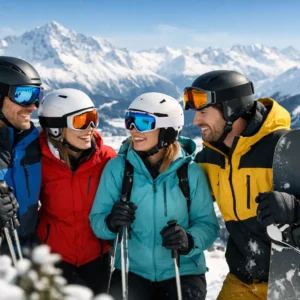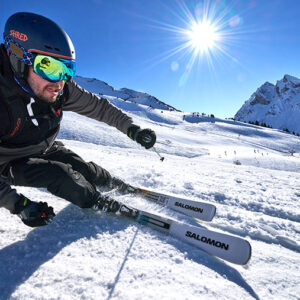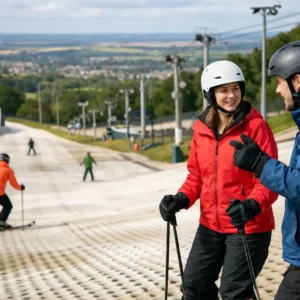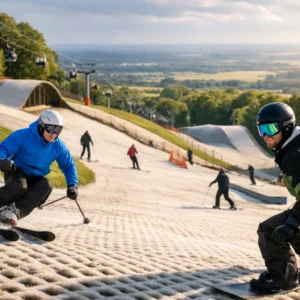
A good ski club can turn the long stretch between winter holidays into part of the season, rather than a wait for it. This ski club guide is for UK skiers and snowboarders who want more time on snow, sharper technique, reliable travel companions and a stronger connection to the sport – whether they are returning after a few years away or have a cupboard full of lift passes.
The UK club scene is broader than many people realise. Alongside long-established snowsports clubs with full winter programmes, there are university groups, race and freestyle programmes, dry-slope communities, indoor-snow-centre regulars and informal local groups built around a shared appetite for the mountains. The right one is not necessarily the biggest or cheapest. It is the club whose people, activity and pace suit the way you actually want to ski or ride.
What a ski club can add to your season
The immediate attraction is often a club holiday. Group trips can make the numbers work better, especially when accommodation, airport transfers or lift passes are arranged together. More importantly, they remove much of the admin that can make a last-minute ski week feel like a military operation. A well-run trip has a clear organiser, useful resort knowledge and fellow travellers who understand why an early lift matters after fresh snow.
But the value of membership should not rest on one week in the Alps. The strongest clubs create year-round momentum. That might mean a weekly dry-slope session, coached evenings at an indoor centre, race training, conditioning sessions, kit swaps, film nights or simply a dependable après-ski crowd. For people without a regular ski partner, that continuity is often the difference between intending to get better and genuinely progressing.
There is also a confidence benefit. Beginners may find it less daunting to join a trip with others who know the airport routine, rental-shop process and etiquette of shared mountain days. More experienced skiers and snowboarders can meet people willing to start early, hunt out quieter sectors or book an instructor for a focused half-day. A club should make the sport more accessible, not dilute the adventure.
Choosing a ski club that fits
Start with the practical question: where will you use it? A club based around a local artificial slope or snow centre only works if you can attend often enough to benefit. Check travelling time on a weeknight, session times and whether the group skis, snowboards or does both. Some clubs have an excellent mixed community; others are more clearly focused on racing, moguls, adaptive snowsports, alpine skiing or freestyle.
Then look beyond the membership fee. Ask what it includes, what costs extra and how often the club is active. A low annual fee is good value only if the calendar has events you want to attend. Conversely, a club with coaching, race gates or regular social sessions may justify a higher subscription if it gives your winter a clear structure.
The atmosphere matters just as much. Some groups are brilliantly sociable and lively, with large trips and full après schedules. Others are quieter, technical or family-led. Neither is better, but a mismatch can make even an impeccably organised club holiday feel like hard work. If possible, attend a taster session, a social evening or a local slope meet before committing. Notice whether newcomers are introduced, whether snowboarders are properly included, and whether the conversation is all about last year’s trip or next month’s plan.
Questions worth asking before you join
Ask how trips are allocated when demand is high, whether single travellers are matched with compatible room-mates, and what happens if you need to cancel. Find out if the club uses qualified instructors or coaches for development sessions, and whether it has clear safeguarding and insurance expectations where children, racing or organised activities are involved.
It is also sensible to ask how broad the ability range is on a typical trip. A club may welcome everyone, but that does not automatically mean a first-timer and an expert off-piste skier will find the same programme rewarding. Good organisers are honest about who a trip suits and create enough flexibility for people to ski or ride at their own level.
Club holidays: where the details matter
A ski club trip can be the best way to discover a new resort, particularly if the organiser knows which village gives easy lift access, where late-season snow holds, and how the local lift system works in practice. Yet group travel has trade-offs. Fixed departure dates, shared coaches and set accommodation can be less flexible than booking independently. If you value choosing your own boutique hotel or changing resorts when the forecast shifts, a club trip may be better as one part of your winter rather than every holiday.
Read the trip information closely. Resort name alone tells you little. Check the airport, transfer duration, accommodation location, board basis, baggage allowance and whether lift passes, lessons and equipment hire are included. For snowboarders, it is worth checking local terrain rather than assuming a large piste map guarantees a good ride. Flat links, slow drag lifts and long traverses can shape the week more than headline kilometre totals.
Ask about the social structure without treating it as a trivial detail. Is there a welcome meeting? Are ski groups arranged by ability, or are people expected to make their own plans? Is there a trip leader available when something goes wrong? The most successful club holidays strike a balance: there is enough organisation that nobody is left adrift, but nobody is obliged to spend every waking hour with the group.
Improving at home before the mountains
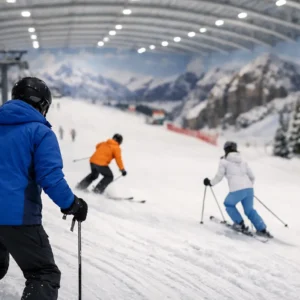
UK slopes are not a substitute for a full alpine week, but they are exceptionally useful for building habits. Regular turns on a dry slope can improve edge awareness, balance and confidence on steeper terrain. Indoor snow centres offer a more familiar snow feel and are ideal for revisiting the fundamentals before departure. A few coached sessions in autumn can save several precious mountain mornings spent trying to remember how your legs and timing work.
For skiers, that may mean refining stance, pressure control and short-radius turns. For snowboarders, it can mean cleaning up linked turns, developing stronger edge changes or becoming more comfortable riding switch. The best progression is rarely glamorous. Repeating one well-chosen drill until it becomes automatic will pay off more than charging around a short slope in survival mode.
Fitness deserves the same grounded approach. You do not need an elaborate athlete programme, but skiing and snowboarding reward leg strength, mobility, balance and the ability to recover for another run. A club conditioning session can provide useful accountability, while regular walking, cycling, strength work or hill time will all help. The goal is not to arrive invincible. It is to preserve enough energy and concentration to enjoy the final afternoon as much as the first.
Make the most of joining
Joining is only the first step. Turn up consistently for the first few events, introduce yourself and be clear about what you hope to get from the club. If you are looking for a spring trip, race coaching, family-friendly travel or riding partners for a snow centre session, say so. Winter sports communities are generous with knowledge, but people cannot read your mind.
Equally, contribute where you can. That might be helping load equipment, sharing a useful restaurant tip after a resort visit, welcoming another newcomer or volunteering on a trip. Clubs rely on members who put something back, and involvement is the quickest route from being on the mailing list to feeling part of the community.
A well-chosen club will not replace the freedom of a spontaneous powder day or a carefully planned trip with close friends. It can, however, give your season a dependable rhythm and introduce you to people who understand why a good snow forecast changes the mood of an entire week. Find the group that makes you want to turn up, and the next mountain day is likely to arrive sooner than you think.