The quickest way to sour a ski holiday is to book it like a weekend away with friends. Mountains magnify small differences: one person wants first lifts and black runs, another needs a gentle green piste and a long lunch, while somebody else is quietly worried about the total cost. Knowing how to plan group skiing means dealing with those differences before anyone pays a deposit – not trying to fix them in the lift queue.
A successful group trip is not one where everybody skis the same runs all day. It is one where every member knows what the plan is, has a fair chance to enjoy the mountain, and still wants to join the group for dinner afterwards.
How to plan group skiing: start with the right questions
Before comparing resorts, establish who is actually committed. A busy group chat can make a dozen people sound certain, but until dates, budget and payment deadline are agreed, numbers are only provisional. Nominate one organiser – or a small pair – to make final calls after consulting the group. Committee planning tends to create endless options and no booking.
Ask everyone for three things: their available dates, an honest all-in budget, and their ability level. The last point needs more detail than “intermediate”. Find out whether they are comfortable on red runs, happy in variable snow, interested in off-piste with a guide, or returning to snowboarding after a long break. A competent piste skier and a rider who wants powder every day may both describe themselves as advanced, but they need different terrain.
It also pays to ask what people want from the week. For some, the priority is mileage and lift access. For others it is a lively resort, childcare, ski school, a spa, or simply a sensible transfer after an early flight from the UK. These preferences are not minor details. They should shape the destination from the outset.
Choose a resort that gives the group room to split up
The best group ski resorts have more than a large piste map. They make it easy for people of differing standards to ski separately and meet again without a logistical expedition. Look for a clear lift network, several mountain restaurants, obvious meeting points and runs that converge at key lifts or villages.
A high, snow-sure area is often worth the extra spend for a mixed group travelling in early season or around Easter. It reduces the risk that beginners are confined to a thin strip of snow while stronger skiers chase conditions elsewhere. Equally, do not choose an enormous linked domain purely for its headline kilometre count if half the group will spend the week near the nursery slopes. A compact resort with well-designed progression terrain can deliver a better holiday.
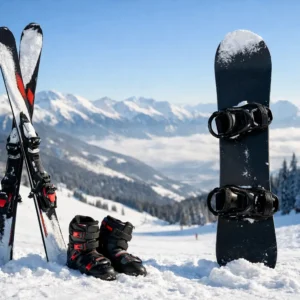
For a group containing skiers and snowboarders, check the mountain’s practical details. Long flat traverses, drag lifts and awkward cat tracks can frustrate boarders, particularly those still building confidence. Conversely, a resort with forgiving blue runs, terrain parks and wide open pistes may keep both camps happier than somewhere famous for steep, narrow descents.
Accommodation location matters as much as the resort name. Ski-in/ski-out is convenient, but it can be expensive and may leave the group spread across several buildings. A central base near the main lift, ski hire and evening restaurants is often more useful. If you are self-catering, check the nearest supermarket and whether the kitchen can genuinely cope with feeding ten people after a day on snow.
Set a budget that includes the expensive bits
Groups fall out over money when the quoted package price becomes the assumed total cost. Build a realistic per-person figure before booking, covering travel, accommodation, lift pass, equipment hire or carriage, lessons, transfers, lunches, evening meals, drinks, insurance and any planned activities. A supposedly cheap flat can become poor value once taxis, checked bags and daily restaurant breakfasts are added.
There is no single right approach to shared costs. A chalet can make budgeting straightforward, while a self-catered flat gives flexibility. The important thing is to agree what is shared and what is personal. Food shops, airport parking, taxis and communal supplies should not be left to vague memory at the end of the week.
A simple shared expense pot can work well for groceries and common household items, provided the group sets a limit at the start. Lift passes, lessons, ski hire and personal lunches are usually cleaner as individual costs. If someone wants premium equipment, a private guide or a wine-heavy dinner, they should be free to choose it without making others feel obliged to follow.
Book lessons and guiding early
Lessons are not only for first-timers. A few mornings with an instructor can transform a group holiday, especially where confidence levels vary. Beginners gain a structured start rather than relying on well-meaning friends, while intermediates can improve on steeper terrain, moguls or carving. It also gives the stronger members of the group permission to ski their own programme without guilt.
If the group wants to venture off-piste, treat a qualified guide as part of the plan, not an optional extra. Local knowledge adds far more than route finding: guides read conditions, choose appropriate terrain and make sound decisions when weather or avalanche risk changes. Off-piste travel requires the right equipment, education and judgement, even in resorts where ungroomed snow is easily reached from a lift.
Book popular ski schools, childcare and guides well ahead for peak weeks. Christmas, New Year, half-term and Easter can leave late organisers with awkward lesson times or no availability at all.
Agree a flexible daily rhythm
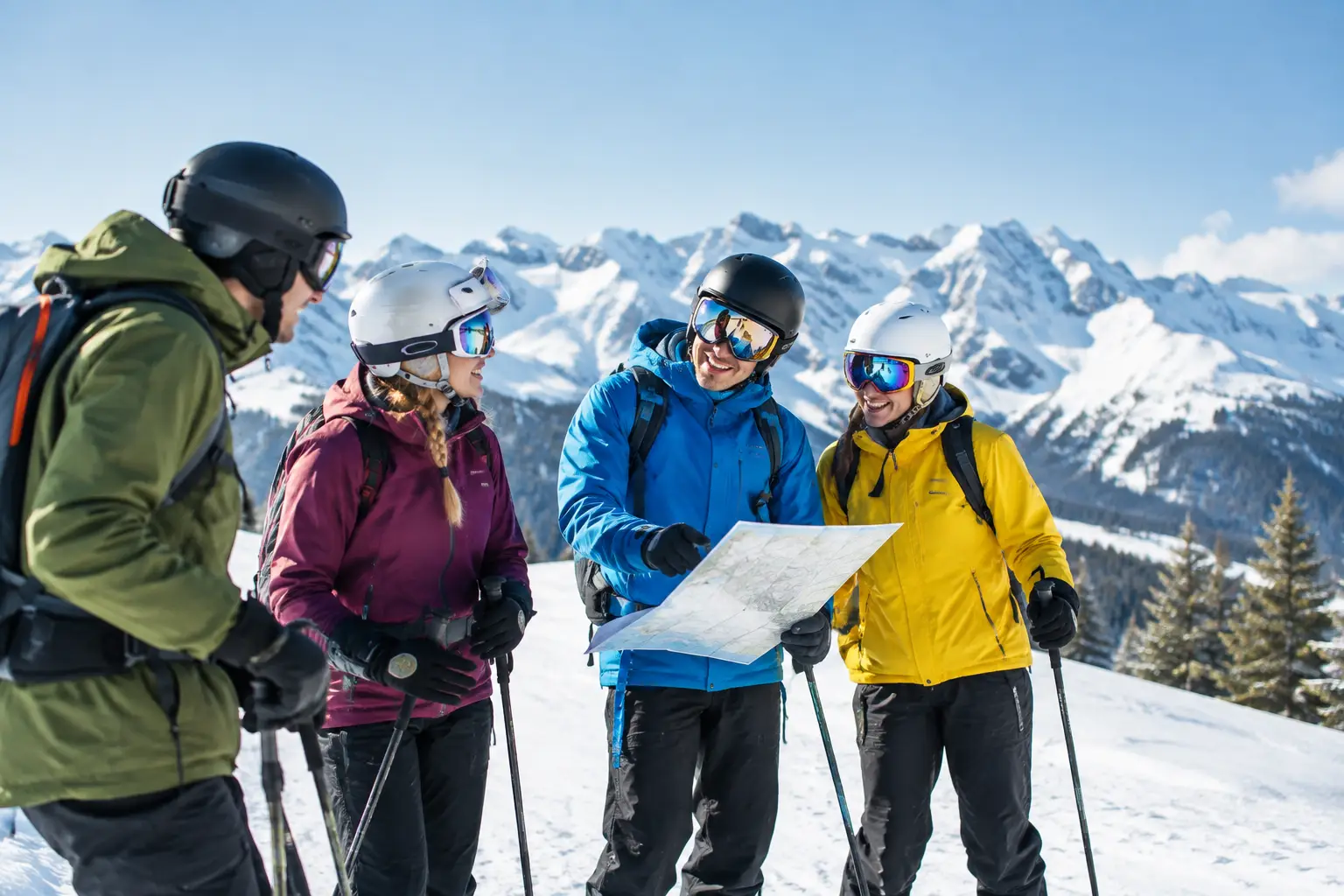
A group does not need a military timetable, but it does need a few anchors. Decide where to meet for first lifts, whether there is a lunch rendezvous, and what time people should be back for dinner or an evening booking. Share the accommodation address, local contact numbers and a clear meeting point in case mobile phones lose signal or their batteries fail in the cold.
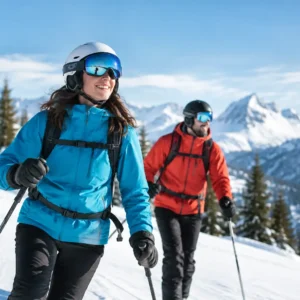
Then allow people to peel away. One of the enduring pleasures of a mountain holiday is choosing your own line, pace and amount of vertical. Trying to keep a dozen people together from breakfast to après is exhausting. Split into natural ability or energy groups, then reconnect over lunch, a final run or a drink at the end of the day.
Weather can change the plan quickly. Whiteout, wind closures and heavy snowfall may make the original itinerary irrelevant, so give the group permission to adapt. A bad visibility day may be ideal for a technique lesson, a lower-tree-lined area, a long lunch, or a rest afternoon rather than a frustrated march across the mountain.
Sort the practical details before departure
The least glamorous preparation prevents the most avoidable problems. Check passport validity, travel insurance that covers winter sports, baggage rules for skis and snowboards, and driving requirements if hiring a car. Anyone travelling with their own kit should confirm airline charges and transfer capacity; not every shared shuttle can take several ski bags comfortably.
Create one concise trip document or message containing flight times, transfer arrangements, accommodation details, emergency contacts and the name of the lead organiser. It should also record who is arriving when. Nothing tests a group’s patience like discovering at the airport that two people assumed somebody else had booked the transfer.
Encourage everyone to service or check equipment before travelling. Boots should be tried on well before day one, bindings adjusted by a competent technician, and helmets fitted properly. Beginners hiring kit should pre-book where possible and arrive with their height, weight, shoe size and ability level to hand. A rushed rental queue is a poor start to a short holiday.
Make space for different versions of a good week
The organiser’s job is not to make every decision for the group. It is to create enough structure that people can make their own choices confidently. That includes being clear about the evening programme. Reserve one or two group dinners if the party is large, but do not turn every night into an obligation. Some will want live music and après, others an early supper and fresh legs for powder in the morning.
The same goes for skiing. Celebrate the first blue run, the first black descent, a big park progression or a perfect corduroy morning, even if everyone’s highlight looks different. A well-planned group trip leaves room for those individual moments, while ensuring there is always a warm table, a shared story and a clear plan for tomorrow.