The moment the chairlift carries you above the village for the first time, the scale of a ski holiday becomes clear. There is more to it than getting down a slope: changing weather, unfamiliar equipment, busy boot rooms and the satisfying tiredness that follows a day learning something new. A good first ski holiday experience is not about covering the most kilometres or finding the highest resort. It is about giving yourself the right conditions to enjoy the sport from day one.
For UK newcomers, that starts well before departure. The best first trips pair a sensible resort choice with proper tuition, realistic expectations and a little space in the itinerary to enjoy mountain life beyond the piste.
Choose a resort that makes learning easy
A resort can look excellent on paper and still be the wrong place for a first-timer. A huge linked ski area is attractive, but beginners do not need hundreds of kilometres of terrain. They need gentle, confidence-building slopes close to their accommodation, reliable lifts, a well-run ski school and a village that is straightforward to navigate in ski boots.
Look closely at the beginner area rather than the resort’s headline piste map. Ideally, it should have a dedicated zone with magic carpets or easy drag lifts, then several green and easy blue runs that allow progression without forcing you onto a steeper route. A nursery slope at the foot of the village is useful, particularly on the first morning, but it should not be the only option. The aim is to move beyond it once you have learnt to turn and stop.
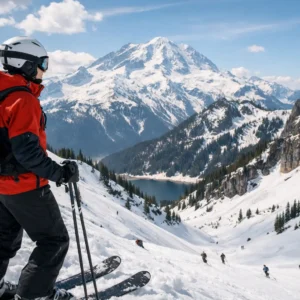
Altitude matters, though not in isolation. A high resort can offer better snow security, especially later in the season, but it can also be colder, windier and more exposed. Lower, tree-lined resorts often provide better visibility in poor weather and a more forgiving atmosphere for nervous beginners. School-holiday weeks bring a livelier feel and plenty of families, but also fuller lifts and higher prices. Outside peak dates, you may find more room on the slopes and better value, provided snow cover is dependable.
Accommodation deserves equal attention. A ski-in, ski-out hotel sounds ideal, but a short, flat walk to a lift can be just as practical and often costs less. What matters is avoiding a complicated bus journey or a long uphill trudge carrying skis every morning. For a first trip, convenience preserves energy and patience.
Lessons are the best investment on a first ski holiday
A group lesson is not a compromise. It is the foundation of a safe and enjoyable week. An instructor will teach the movements that are hard to pick up from watching friends: how to stand balanced over the skis, control speed, use lifts safely and understand where to stop on a piste. Just as importantly, they will choose terrain that matches your stage of learning.
Booking lessons for the first few mornings is a sound approach. You will learn when your concentration is freshest, then have time after lunch to practise at your own pace. A full week of group tuition can work brilliantly for complete beginners, particularly if you enjoy the encouragement of learning alongside others. Private lessons cost more, but can be worth considering if you are travelling with family, feel anxious in groups or want focused help with a specific issue.
Do not let a more experienced partner rush the process. The classic mistake is joining friends on a blue run before you can comfortably control your speed on green terrain. Skiing is far more enjoyable when you progress one sensible step at a time. A confident green skier will get more from the week than someone who has been frightened down a blue run and decides the sport is not for them.
Skiing or snowboarding?
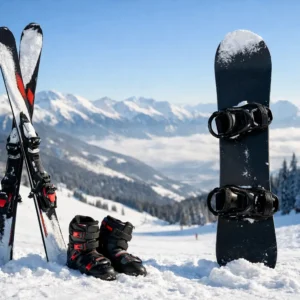
For most adults on a first snow holiday, skiing offers a gentler first few days. You can face forward, move around flat areas more easily and usually start linking turns sooner. Snowboarding has a steeper initial learning curve because falling is part of the process, but many riders find it particularly rewarding once the basics click.
Neither choice is universally better. If the idea of snowboarding genuinely excites you, book a lesson and commit to it. If you are undecided, skis are generally the more straightforward introduction. Whichever you choose, avoid swapping disciplines halfway through a short trip. Each demands its own technique and muscle memory.
Hire kit that fits, then dress for the conditions
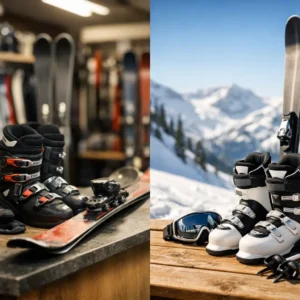
There is no need to buy skis, boots or a board before discovering whether you love the sport. Hiring is sensible for beginners because the shop can match equipment to your height, weight, ability and the prevailing snow. Modern beginner skis are designed to turn easily, while a correctly fitted boot makes a greater difference to comfort than many first-timers expect.
When trying boots, say something if there is painful pressure, numbness or excessive heel lift. Ski boots should feel snug, especially around the lower leg and heel, but they should not hurt. Spend a few minutes walking, flexing and standing in them in the shop. The same applies to snowboard boots: secure around the heel, with room to wiggle toes, not a cramped fit.
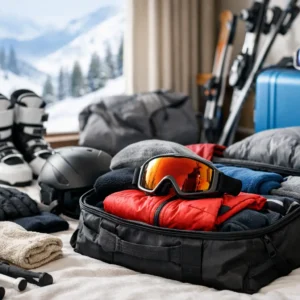
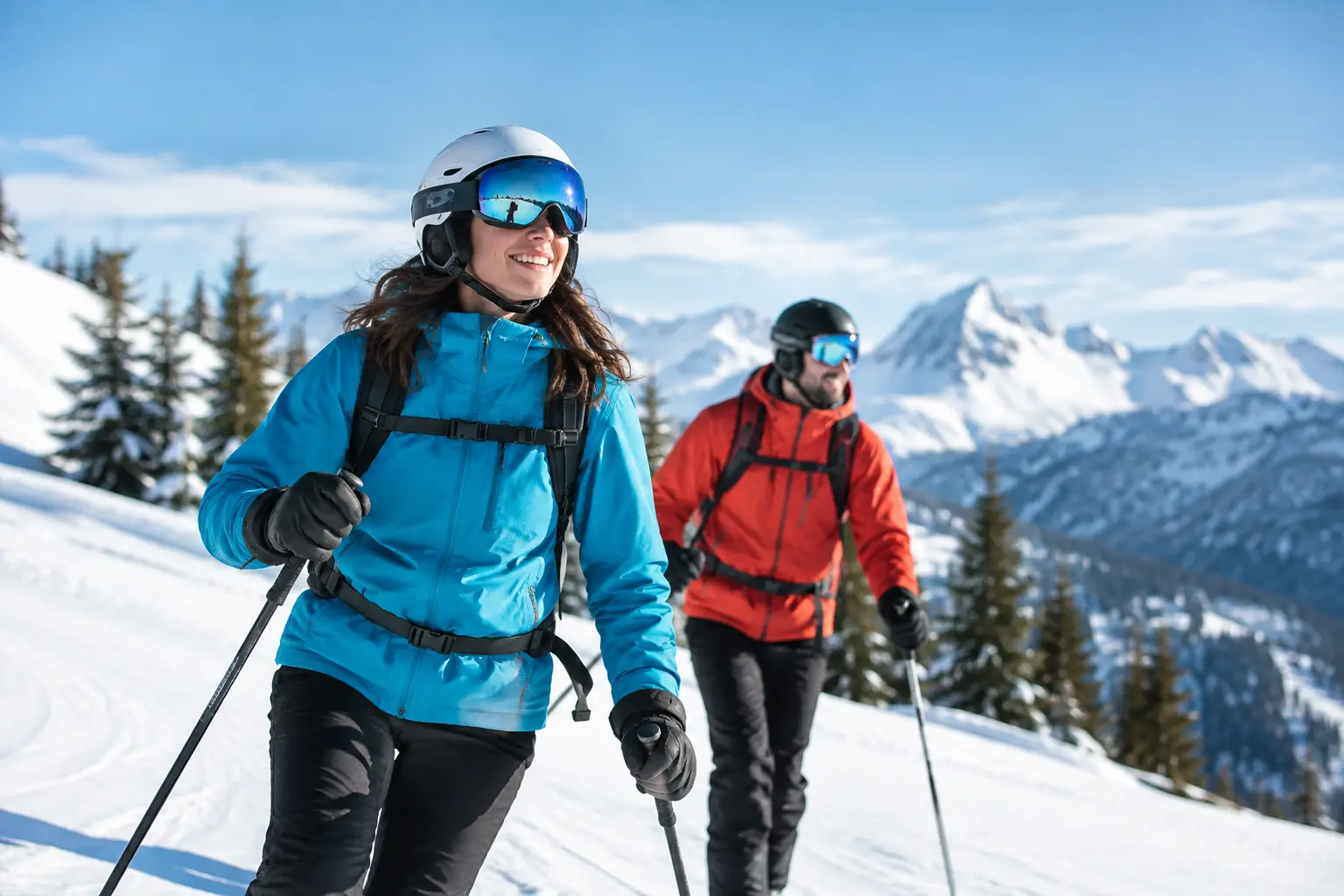
Your clothing should keep you warm without making you clammy. A moisture-wicking base layer, an insulating mid-layer and a waterproof outer jacket and trousers are the dependable combination. Avoid cotton next to the skin, as it stays damp when you sweat. Good gloves or mittens, a neck tube, ski socks and goggles are not minor extras. They can determine whether a cold, snowy afternoon feels atmospheric or miserable.
A helmet is now standard equipment for many skiers and snowboarders, and it makes particular sense while learning. Sunglasses are useful on bright days, but goggles are better in falling snow, flat light and wind. If you wear prescription glasses, check whether your goggles will fit over them before travelling.
Let the first two days be deliberately small
Beginners are often surprised by how physical skiing feels. Your thighs, feet and core work constantly, and altitude can leave you tired even before the first descent. Build in a gentle start. There is no prize for being first on the lift and last off the mountain when you are learning.
On day one, focus on the fundamentals: carrying equipment, clipping in, moving on gentle ground, stopping and getting up after a fall. A couple of hours can be plenty. Finish while you still feel positive rather than trying to squeeze in one final run with tired legs.
The next day is often harder. You may be sore, and the novelty has worn off just enough for the technical challenge to become apparent. This is normal. Drink water, eat a proper breakfast, take breaks before you are exhausted and accept that progress is rarely a straight line. One run can feel brilliant; the next can be awkward. Snow conditions, visibility and fatigue all change the equation.
Learn the mountain habits that keep everyone safe
Ski resorts have an unwritten rhythm, but a few basic rules will quickly make you feel at home. The skier or snowboarder downhill of you has priority because they cannot see you approaching. Look uphill before joining a piste or setting off after a stop. Stop at the side of the run where you are visible, not below a crest or in a narrow section.
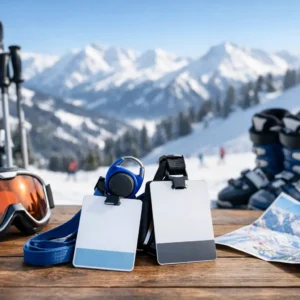
Keep an eye on piste signs and colours, but remember that grading differs between countries and occasionally between resorts. A blue run can vary from a gentle motorway-like piste to something narrower and more demanding. Ask your instructor or the lift staff if you are unsure. There is no embarrassment in taking an easier route down.
If weather closes in, visibility can become the biggest challenge. Tree-lined runs offer definition when an open slope turns white, while goggles with a suitable lens help you read changes in the snow. On a difficult day, lower your ambitions, stay within familiar terrain and finish early if conditions are draining your confidence.
Make room for the holiday, not just the skiing
A first ski holiday is also your introduction to the social side of the mountains. Long lunches are optional, but a hot chocolate on a terrace, a swim after skiing or a walk around a snowy village can become the moment you remember most clearly. For groups of mixed ability, arranging a meeting point and time for lunch takes pressure off the day. Nobody needs to spend every run together.
This is where a well-chosen resort earns its place. Good cafés, simple evening options and a welcoming local atmosphere matter when you are recovering from unfamiliar exertion. You do not need a party town to have fun, but you do want somewhere that feels enjoyable after the lifts close.
Your first ski holiday experience should leave you wanting one more run, one more lesson and another week in the mountains. Give yourself permission to learn slowly, celebrate the small breakthroughs and call it a day while the smile is still there. That is how skiing becomes a habit rather than a one-off challenge.