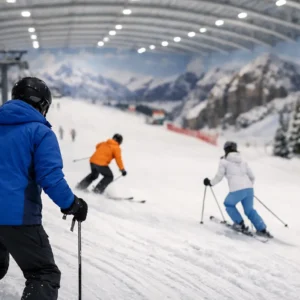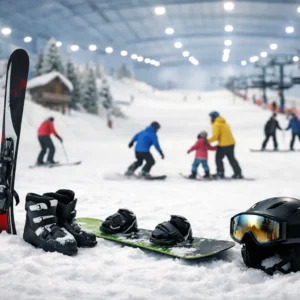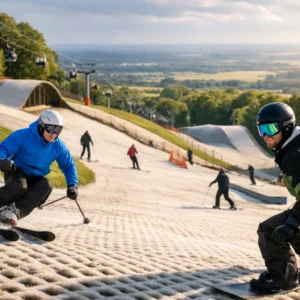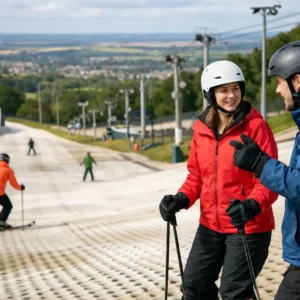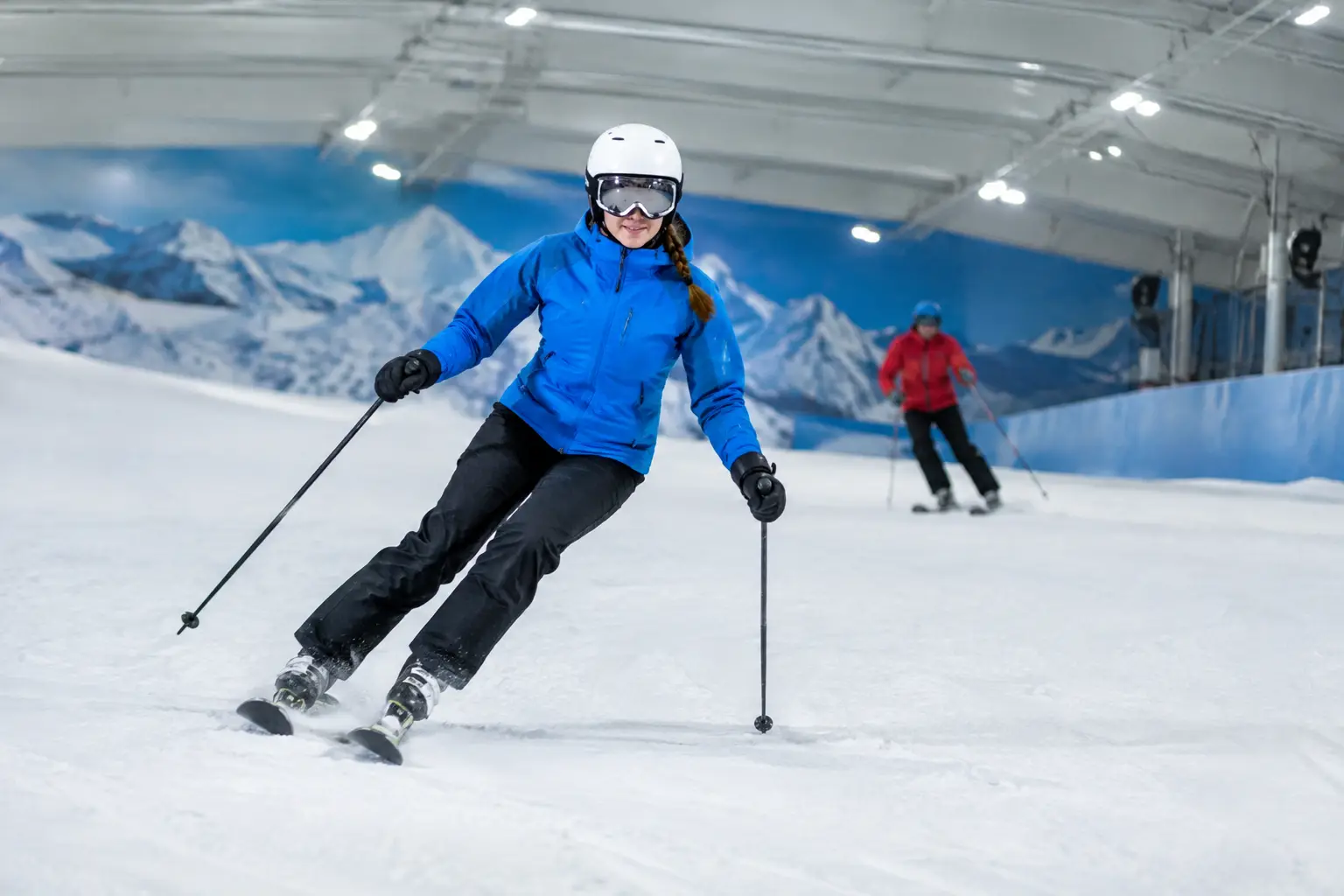
A 90-minute session under a British roof will not replicate a powder day in the Alps, but it can expose a lazy outside ski, wake up neglected snowboard legs and make the first morning of a ski holiday far more enjoyable. The best indoor ski slopes UK riders have access to are proper training grounds: real snow, sustained gradients and enough space to make purposeful turns rather than simply slide downhill.
For beginners, an indoor centre can remove much of the uncertainty from those first few days on snow. For experienced skiers and snowboarders, it is a way to arrive in resort with the basics already switched on. The right choice depends less on a single league table than on your location, ability and what you want from the session.
The best indoor ski slopes UK riders can use
1. Snozone Manchester – best for a longer, more resort-like run
Manchester’s major indoor snow slope has long been a favourite for North West skiers and snowboarders, largely because its main run is among the UK’s longest at around 180 metres. That extra distance matters. It gives intermediates time to settle into a rhythm, work on turn shape and speed control, and link more than a handful of turns before reaching the lift.
It is a strong option for families too, with a substantial beginner area and a busy programme of lessons and coached sessions. Freestyle riders should check the timetable before travelling, as park features and dedicated sessions can change through the season.
The trade-off is popularity. Weekend afternoons and school holidays can feel busy, particularly when lessons occupy a share of the piste. Skiers wanting clear space for drills will get more from an early weekday session.
2. Snozone Milton Keynes – best all-rounder for the South East
Milton Keynes remains one of the most useful real-snow facilities for London, the Home Counties and anyone heading north on the M1. Its main slope is roughly 170 metres long and broad enough to accommodate lessons, casual lift passes and focused practice without feeling overly narrow.
For a skier preparing for a holiday, this is a particularly good place to rebuild confidence on steeper blue-run terrain. Snowboarders can use it to reacquaint themselves with edge-to-edge movement before the first chairlift of the season. It is also well set up for progression, from first-timer lessons through to improver coaching.
It will not give advanced riders the sustained pitch or changing snow they find in the mountains. But for carving fundamentals, short-radius turns, posture and balance, it is one of the best indoor ski slopes in the UK. Treat it as training, rather than a substitute for a full day in resort, and it delivers.
3. The Snow Centre, Hemel Hempstead – best for pre-holiday preparation
The Snow Centre is a familiar stop for skiers and snowboarders across Hertfordshire, Buckinghamshire and north London. Its main slope is shorter than Manchester’s, at about 160 metres, but it has enough length for a valuable skills session and an especially good reputation for beginner and improver development.
The centre makes sense for a practical pre-trip plan: book a lesson or a few hours on snow two to four weeks before departure, then use the final session to ski in the boots, helmet and outerwear you intend to take away. That is also the moment to discover whether the children have outgrown their gloves or whether your own boots need attention.
More confident riders should arrive with a purpose. Spend a few runs on a clean traverse and controlled stops, then work on upper-body discipline or varied turn radii. A targeted hour can be more productive than lapping without a plan.
4. Snozone Castleford – best for Yorkshire accessibility
At Xscape Yorkshire, Snozone Castleford provides a reliable real-snow option for riders across Leeds, York, Sheffield and the wider region. The main slope is around 150 metres, so it is not the place to chase maximum vertical, but it is well suited to regular practice and introducing newcomers to snow sports.
Its strength is convenience. A skier who can make a short evening trip every few weeks through autumn will progress more effectively than someone who only thinks about technique on the first day of an annual holiday. Castleford works well for that habit, whether you are returning after a break, taking the children for their first slide, or building confidence before a group trip.
As with every indoor venue, the snow surface can become softer and more chopped up during a busy day. That is not necessarily a drawback. Learning to stay centred and steer through inconsistent snow is useful preparation for the scraped-off pistes and end-of-day piles found in many resorts.
5. SnowDome Tamworth – best for Midlands skiers and families
SnowDome has been part of the UK’s snow-sports landscape for decades, and its location makes it a natural choice for the Midlands. The main slope is approximately 170 metres, supported by a separate learner area that helps keep first lessons from overwhelming the main piste.
For families, that layout is a genuine advantage. Children can gain their first confidence away from faster traffic, while more experienced parents can still enjoy proper runs nearby. The centre also suits adults returning to skiing after years away from the sport, when a low-pressure lesson can be far more productive than trying to keep up with friends in the Alps.
There is a lively leisure atmosphere here, so those seeking a quiet technical session should choose their timing carefully. Go outside peak weekend hours if possible. On the right day, it is an accessible and enjoyable place to put in meaningful snow time.
6. Glasgow’s indoor snow centre – best for Scottish city riders
Glasgow’s indoor snow centre offers a welcome real-snow option for Central Belt skiers and snowboarders when the Scottish mountains are waiting for their weather window. Its run is around 168 metres, with a genuine slope feel that is more useful for conditioning and technique than a dry slope can provide.
That distinction matters for anyone planning to ride Glencoe, Nevis Range, Glenshee or the Lecht. Scotland’s mountain conditions can be brilliant, but they can also demand adaptability: variable visibility, wind-affected snow and terrain that changes quickly. Indoor practice cannot reproduce that environment, yet it can ensure your legs, stance and basic edge control are ready when a good forecast appears.
What makes an indoor slope worth your time?
Run length attracts attention, but it is not the only measure. A longer slope gives intermediates more opportunity to build rhythm and is generally better for carving practice. A good learner area, however, may matter far more for a nervous beginner than another 20 metres of piste.
Look at the session type as closely as the slope itself. General lift passes can be ideal for confident, self-sufficient riders, while a lesson offers far better value if you are still developing linked turns, controlling speed or learning to use a snowboard edge. Freestyle sessions, race training and academy coaching can make the same facility feel completely different depending on your aims.
Equipment is another consideration. Centre hire kit is convenient and perfectly sensible for a first lesson, but regular skiers and snowboarders will learn more about their own setup by using their own boots and helmet where possible. A well-fitted ski boot or snowboard boot gives more consistent feedback than rental footwear, and indoor snow is an excellent environment for checking comfort before travelling.
How to get more from an indoor snow session
Do not arrive expecting every run to be exciting. Arrive with one or two technical intentions. Skiers might focus on maintaining pressure over the outside ski through the middle of each turn, or keeping their hands calm and forward. Snowboarders might work on a centred stance, clean C-turns and progressively changing edge angle rather than forcing a skid.
A short warm-up is worthwhile, particularly in the cooler indoor environment. Then keep the first few runs conservative. The snow is often firm and grippy, and indoor pistes can feel steeper than their statistics suggest when you have not skied for months.
If you are travelling with a group before a holiday, resist the temptation to turn the session into a race to the bottom. Film a couple of runs, book an hour with an instructor, and use the feedback. One small correction made at home can prevent a week of rehearsing the same mistake abroad.
The best choice is ultimately the slope you will use consistently. Pick the centre that fits your journey, book at a quieter time where possible, and make each visit purposeful. When the mountains finally call, your first turns will feel less like a return to snow and more like picking up a conversation you never really stopped having.