On 1 September 2026, the BBC confirmed what many long-time viewers had quietly feared for years: Ski Sunday, the programme that introduced generations of us to downhill racing, slalom gates and the particular thrill of watching someone hurtle down a mountain at 80mph on a Sunday afternoon, will not be coming back. After a run of nearly 50 years, one of British broadcasting’s most recognisable sporting institutions has been retired.
What the BBC actually said
In its statement, the BBC did not pretend this was an easy call. “Following careful consideration, BBC Sport has decided to say farewell to Ski Sunday, ending a remarkable run over nearly five decades,” the corporation said, adding that “changing audience behaviours and the tough financial decisions needed to meet savings requirements mean BBC Sport must continually review how it delivers value for licence fee payers.”
Philip Bernie, head of events at BBC Sport, was more personal in his tribute, describing Ski Sunday as “a truly iconic programme and a much-loved part of BBC Sport’s output for many years”, while acknowledging that decisions of this kind are never easy. The BBC has said it remains committed to winter sports coverage, particularly around Olympic Games events, but has confirmed no direct like-for-like replacement for the weekly show. The wider context is a corporation working towards roughly £500 million in savings by 2028, a target that has already claimed Football Focus and the BBC’s rights to the Commonwealth Games and the Boat Race. Ski Sunday, it seems, is simply the latest and most emotionally resonant casualty of that arithmetic.
Nearly 50 years of Sunday afternoons
For those too young to remember its beginnings, Ski Sunday first aired on BBC Two on 15 January 1978, in the afterglow of the 1976 Winter Olympics, as an offshoot of the Saturday afternoon institution Grandstand. It began life focused squarely on alpine skiing, downhill and slalom, before broadening over the decades to take in skeleton, snowboarding and freestyle skiing, sports in which British athletes went on to win Olympic medals and, in no small part, public affection.
The programme’s early years belonged to David Vine and Ron Pickering, who anchored it for the best part of two decades before stepping back in the mid-1990s. Hazel Irvine carried the baton through the years that followed, alongside a rotating cast that has included Matt Chilton, Graham Bell and, from 2013, Olympic skeleton champion Amy Williams. In more recent seasons the show has been fronted by Ed Leigh and Chemmy Alcott. Alcott posted her own tribute to the programme on Instagram following the announcement, a reminder that this news lands as heavily on those who made the show as on those of us who grew up watching it.
That music
No retrospective on Ski Sunday would be complete without a word on the theme tune, arguably as famous as the programme itself. “Pop Looks Bach”, composed by Sam Fonteyn and originally recorded in 1970 for the Boosey & Hawkes Music Library, became inseparable from Sunday afternoons in British households for close to 50 years, its brisk, faintly baroque swagger unmistakable within half a second of the titles rolling. The tune was also used in BBC Winter Olympics coverage until 2006 and has regularly featured in critics’ lists of the greatest sports theme tunes in British television history. It is the kind of music that, once heard, plants itself permanently in the part of the brain reserved for childhood Sundays, wet ski boots drying by the radiator and the vague sense that winter was somehow more exciting than it actually was outside the window.
What this means for the winter sports fan
We will not pretend that this is anything other than a loss. Ski Sunday was, for many readers, the only regular television window onto racing, freestyle and snowboarding that this country had and its disappearance leaves a real gap in mainstream coverage, one that will be felt most keenly during the build-up to the 2026 Winter Olympics and beyond. The BBC’s promise to keep covering winter sports “particularly around Olympic Games events” is welcome, but it is a long way from a weekly programme that fans could set their Sunday around.
What we can promise is this: Skier & Snowboarder is not going anywhere, and neither is our commitment to covering everything happening on snow, from resort news, gear reviews and the everyday stories of people learning to ski for the first time. Where the BBC’s coverage will necessarily narrow, we intend to do the opposite. Alongside the magazine, our relaunched website will carry more coverage, more resort and industry news and more regular updates than before, and we are expanding our presence across social media specifically to fill the gap that a weekly terrestrial highlights show leaves behind.
If Ski Sunday gave a generation their first glimpse of what this sport could be, our job now is to make sure the next generation, and the rest of us, never lose sight of it.
Getting in touch
We know this news will prompt strong feelings, and we would like to hear them. Whether it is a favourite Ski Sunday memory, a view on where winter sports coverage goes from here or simply a request for what you would like to see more of from us in print, online or on social media, get in touch through the usual channels.
Ski Sunday may be ending, but the story it started telling in 1978 is very much still being written, and we intend to keep telling it.
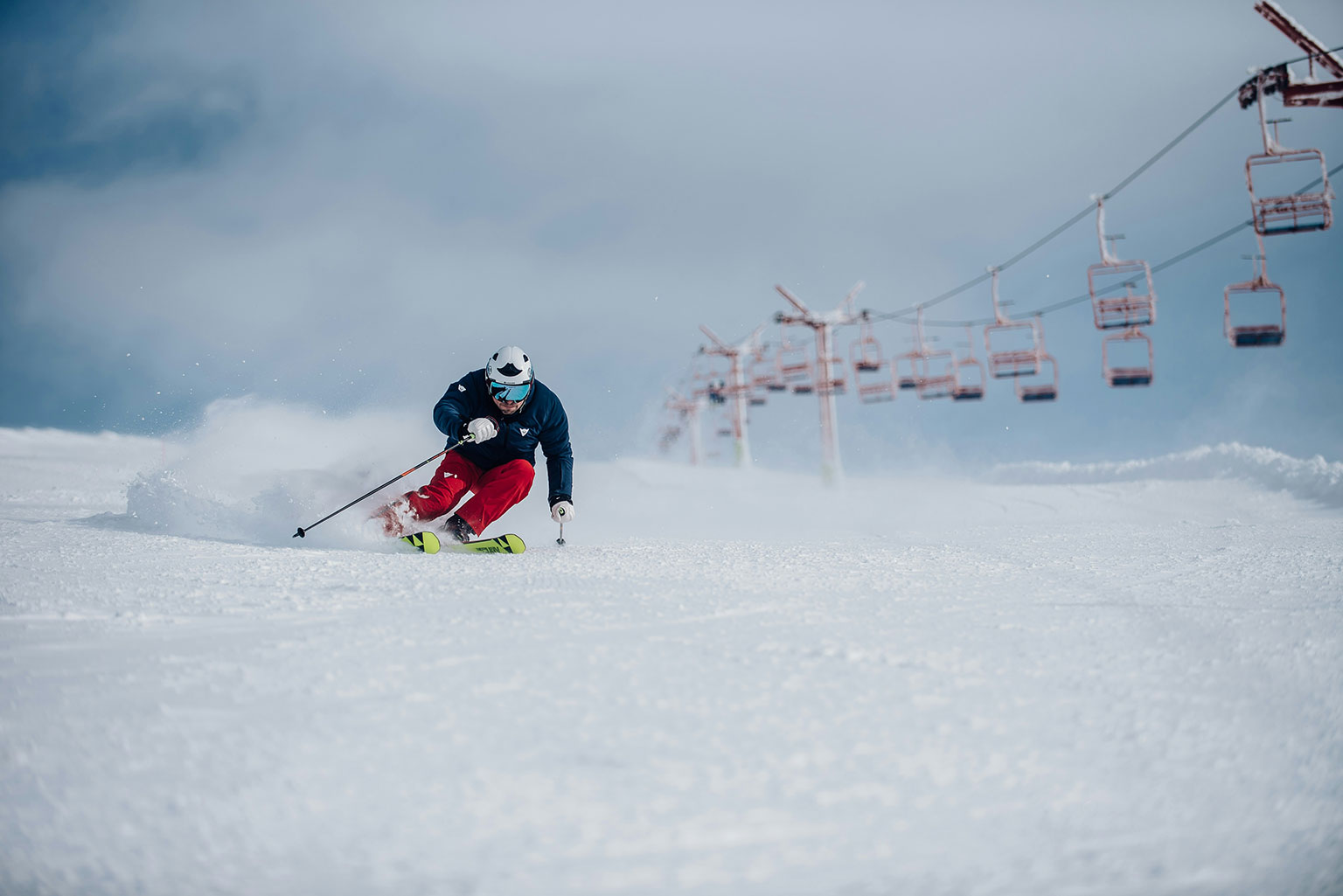
Image Photo by Andrei Stefan on Unsplash