The feeling is unmistakable. Tip the skis on edge across a freshly groomed, firm morning piste and they pull you through the arc with a clean, quiet certainty. That is the attraction of ski carving versus skidding – but the common assumption that carving is always good and skidding is always bad causes plenty of unnecessary frustration.
Both are essential ways of turning skis. A strong recreational skier can choose between them according to gradient, snow, traffic and intention. The aim is not to carve every metre of a run. It is to have enough control to make the right turn for the snow in front of you.
What happens when skis carve?
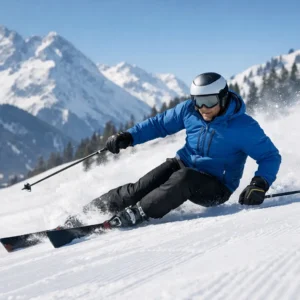
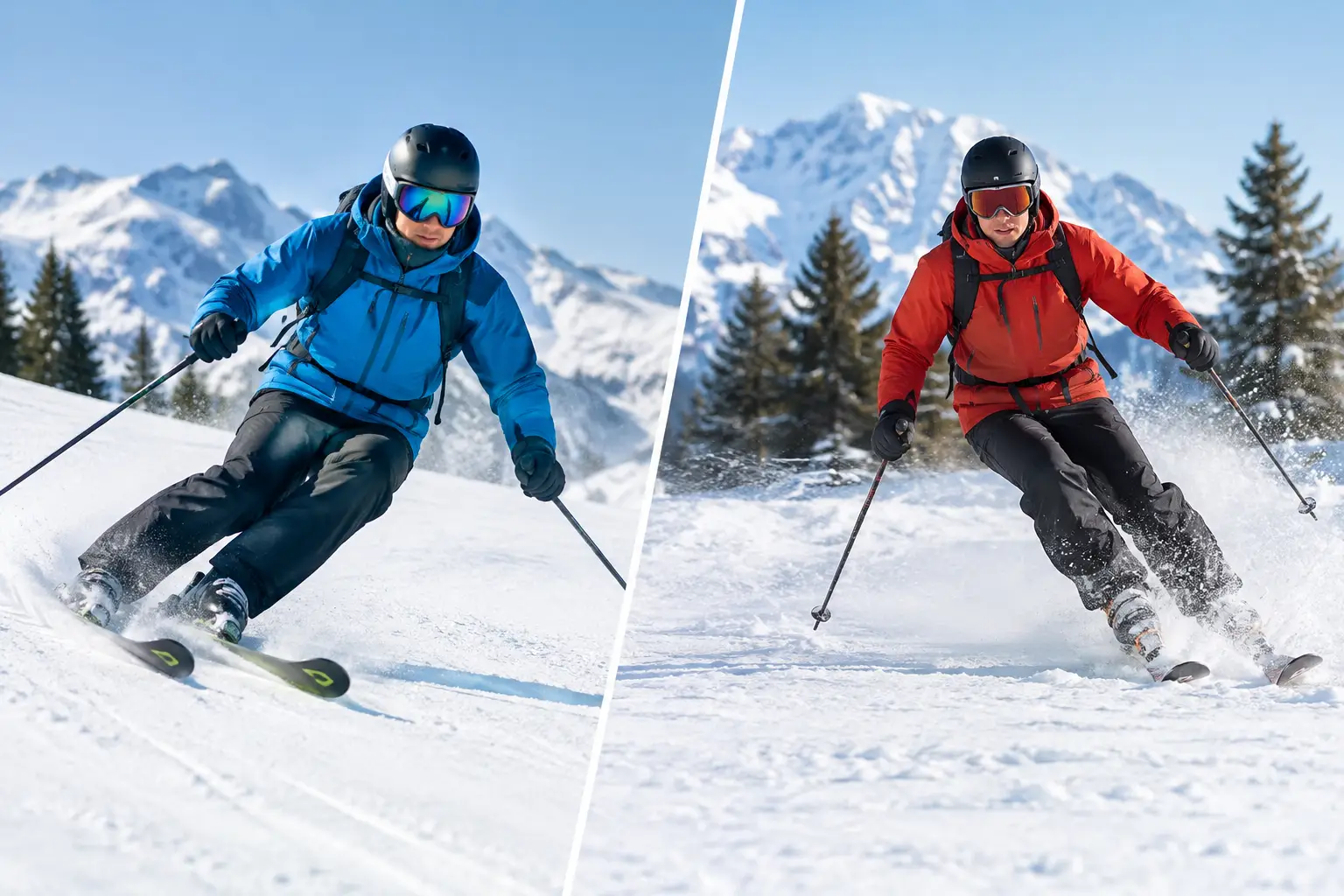
A carved turn occurs when the ski’s edges cut into the snow and follow their sidecut, rather than sliding sideways. Modern piste skis are shaped to do much of the work: when they are tipped onto edge and pressured progressively, they bend into an arc and travel cleanly around it.
Look behind a proper carve and you should see two narrow, pencil-like tracks. There is little spray from the tails, and the skis make a satisfying slicing sound rather than a scrape. The skier’s direction changes because the ski is travelling along its edged arc, not because it is being pivoted across the fall line.
Carving feels fast because it is efficient. There is less friction than in a skidded turn, so speed builds readily, particularly on a smooth blue or red piste. That is why clean carving is so rewarding, but also why it needs room, awareness and an honest assessment of whether you can control the exit of the turn.
The ingredients of a clean carve
Carving starts with balance. Stand centred over the skis, with ankles and knees able to flex, rather than sitting back against the boots. Roll the new outside ski onto its edge early, allow the hips to move inside the turn, and keep pressure building as the skis come around.
The outside ski does most of the work, especially on firmer snow. The inside ski should mirror it rather than drift away or rotate independently. A quiet upper body helps too: your torso generally faces down the hill while the legs create the turn beneath it.
Trying to force the skis round is one of the quickest ways to lose the carve. If you twist the feet aggressively, push the tails out or lean uphill, the edges release and the skis skid. On a gentle, uncrowded slope, it is usually more productive to slow down, make a larger arc and feel the edges engage than to chase dramatic angles.
Ski carving versus skidding: why skidding matters
A skidded turn involves some sideways movement of the skis across the snow. The edges may still be engaged to a degree, but they are not tracking cleanly through one fixed arc. Instead, the skier uses rotation, edge release and pressure management to steer and regulate speed.
The tracks are wider and more brushed than those of a carve, often with a light fan of snow thrown from the tails. At the more forceful end of the spectrum is the hockey stop, where the skis are deliberately turned hard across the slope to shed speed quickly.
Skidding is not a beginner’s failure mode. It is a vital tool. On a steep, narrow or busy section, a fully carved turn may accelerate you too much or send you too far across the piste. A controlled skidded turn lets you shorten the radius, control speed and choose a more precise line.
It is also often the sensible choice in chopped-up snow, on a hard icy patch, through a crowded lift-station run-out, or when visibility makes terrain changes difficult to read. Good skiing is adaptable skiing, not a demonstration of one technique regardless of the conditions.
Brushing is the useful middle ground
Many capable skiers spend most of the day using a blend between a pure carve and a pronounced skid. This is often called a brushed carve or brushed turn. The skis are tipped and pressured, but they are also gently steered, allowing a small, controlled drift.
It gives more speed control than a full carve without the abruptness of throwing the skis sideways. On a busy Alpine red, it is arguably the most practical turn in skiing: composed, versatile and easy to adjust when another skier changes direction below you.
The key distinction is whether the skid is deliberate. If your tails wash out because you are in the back seat, your shoulders are turning, or you have too much edge angle for the grip available, that is not useful speed control. If you release and steer the skis to manage line and pace, it is purposeful technique.
When should you carve and when should you skid?
Carving suits wide, consistent pistes where you can see well ahead, where the surface offers dependable edge grip, and where there is enough space to complete each turn without cutting unexpectedly across another skier’s route. Early-morning corduroy, quiet motorway-width blues and long cruisy reds are ideal.
Skidding, or brushing, makes more sense as the slope steepens, narrows or becomes more variable. It is particularly valuable in the afternoon, when soft piles build up on busy pistes and the smooth surface that invited carving at 9am has disappeared. The same is true in low light, flat light and fog, when it is harder to judge pitch and snow texture.
There is also an etiquette point. A carver uses more of the piste because each turn follows a longer, cleaner arc. On a busy run, do not assume other skiers can predict that line, particularly if you are travelling quickly. Stay in control, scan uphill before moving across the slope, and leave sufficient room around slower skiers and children.
How to develop both skills
If carving is new to you, begin on a quiet, easy blue piste. Traverse gently and tip both skis onto their uphill edges until they naturally turn uphill. This lets you feel how the sidecut works without the pressure of linking turns. Then make wide, patient arcs, focusing on a smooth edge change rather than turning the shoulders.
For skidding, practise side-slipping on a gentle slope. Stand across the hill, flatten the skis slightly and allow them to slide sideways in a controlled way. Regain grip by increasing edge angle. This deceptively simple drill develops edge awareness and confidence, especially for steeper terrain.
Next, try short brushed turns. Start each turn with the skis relatively flat, steer them progressively into the fall line, then engage the edges enough to control the finish. Avoid stamping the tails round. The sensation should be one of guiding the skis, not fighting them.
A lesson can be a worthwhile investment here, even for experienced holiday skiers. An instructor can spot whether a supposed lack of carving is really caused by stance, boot balance, timing, equipment setup or a reluctance to move the body inside the turn. Small changes can transform how secure the ski feels on edge.
Equipment and snow make a difference
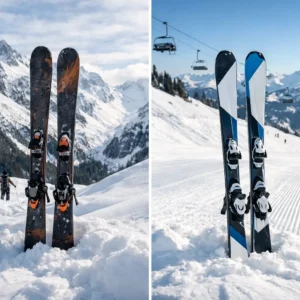
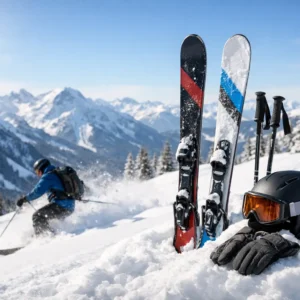
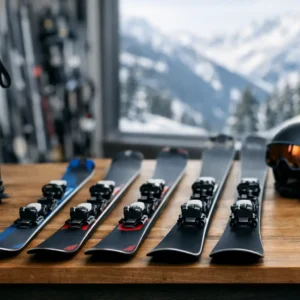
Most modern piste-oriented skis carve more easily than older, straighter designs, but their width, radius and tune still matter. A narrower ski with a shorter sidecut radius is generally quick edge to edge and keen to make tighter carved turns. A wider all-mountain ski is more versatile in soft snow but may require more deliberate input on hardpack.
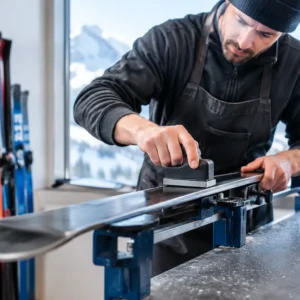
Sharp, properly maintained edges matter greatly on firm snow. If your skis feel vague, chatter under pressure or refuse to hold on an icy pitch, technique may not be the only culprit. A tired base or blunt edges can make a clean turn needlessly difficult. Equally, no tune will make a ski carve securely if the surface is polished ice and the skier is forcing excessive angle too early.
Boot fit is just as relevant. A responsive boot that holds the heel securely helps transmit subtle ankle movements to the ski. There is no need for race-level stiffness for most holiday skiers, but boots that are too soft, too large or poorly buckled make both carving and controlled skidding harder to feel.
The better question to ask on the piste
Rather than asking whether carving is superior to skidding, ask what the slope is asking of you. A clean carved arc on an empty groomer is one of skiing’s great pleasures. A calm, controlled brushed turn down a steep, crowded red is equally good skiing – and often the more impressive choice.
Build both options into your skiing, then choose the turn that leaves you with time, space and confidence for the next one.