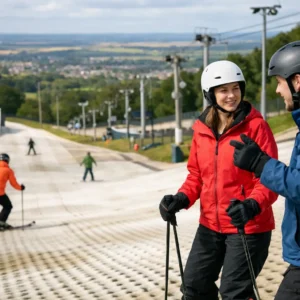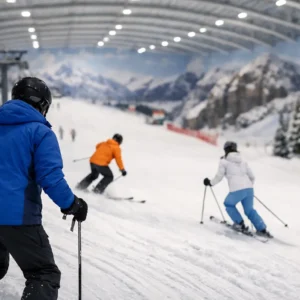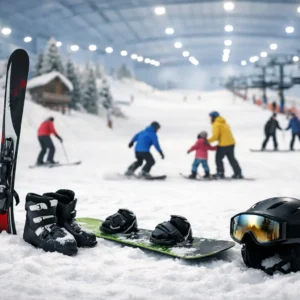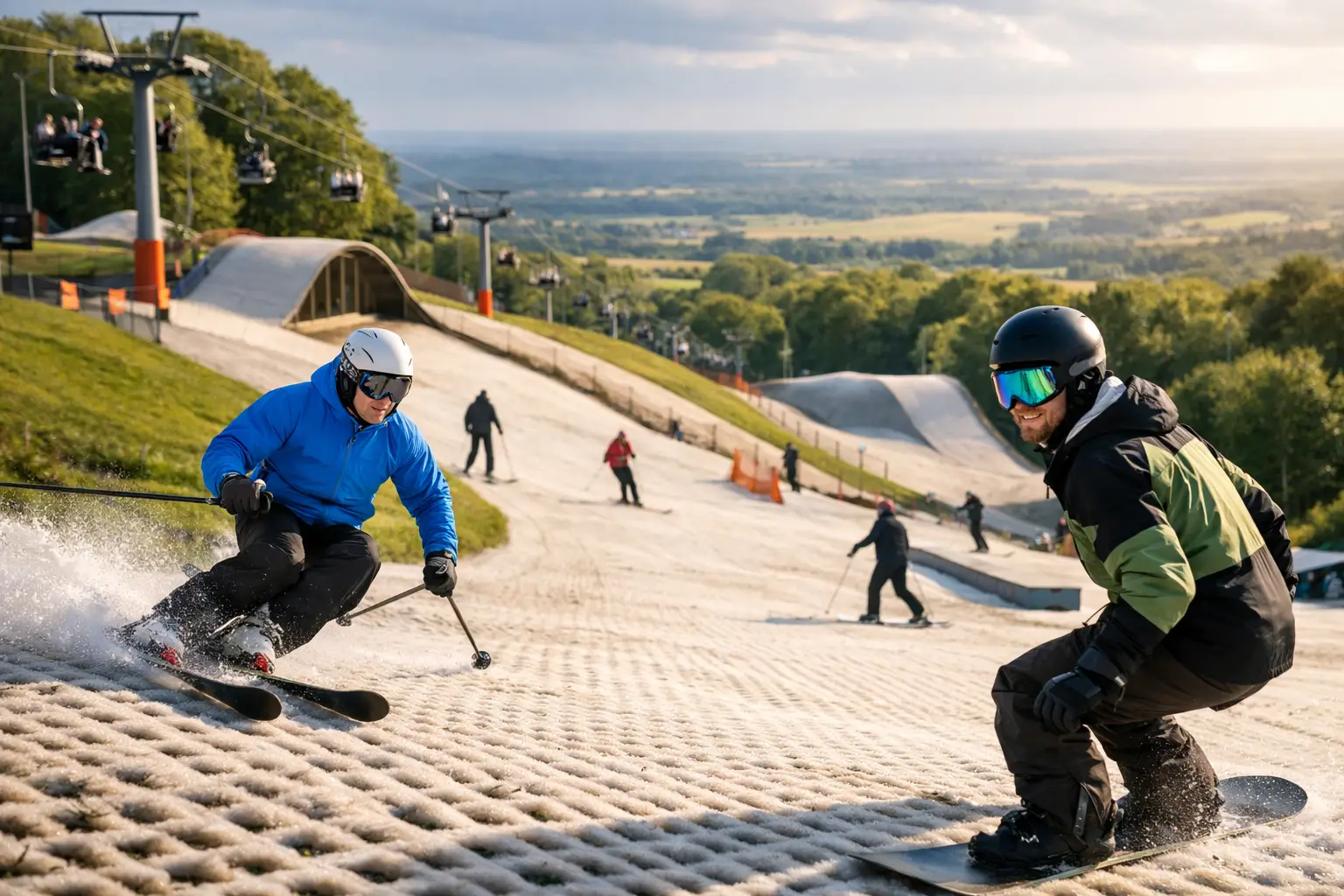
A good dry slope is not a substitute for a powder day in the Alps, and it is not trying to be. Its value is in repetition: getting hundreds of turns in before a holiday, rebuilding confidence after a season away, or finally committing to that rail trick without spending a fortune on lift passes. The best dry slopes in Britain make those sessions feel purposeful, with enough pitch, width, coaching and community to keep skiers and snowboarders coming back.
This is not a simple longest-slope-wins list. Surface quality, uplift, snow-sport school standards, freestyle provision and the atmosphere around a club night all matter. A 100-metre slope with an excellent instructor may be the right choice for a first-timer; an established centre with a long, steeper main run is more useful for a skier preparing for demanding red pistes or a rider who wants park laps.
What makes a dry slope worth the journey?
Modern artificial surfaces have moved a long way from the harsh, brush-like mats many experienced skiers remember. They still reward a centred stance and clean edge engagement, and they can feel grippy when wet, but the better-maintained slopes allow surprisingly effective technical practice. The transition back to snow is generally straightforward, particularly for balance, turn shape and pressure control.
Before travelling, check the session timetable rather than judging a centre by its headline length. Public sessions can be busy, race training may take over part of a run, and a park set-up changes through the season. Snowboarders should also check whether the lift arrangement and slope profile suit them, while families will value beginner areas, equipment availability and sensible session lengths.
1. Midlothian Snowsports Centre, Hillend
Hillend, on the southern edge of Edinburgh, remains one of the great British dry-slope experiences. Its main run has proper scale and a notably mountain-like outlook across the city, making it feel less like a local training facility and more like a legitimate place to spend an afternoon sliding.
The length and gradient create room to work on turn rhythm rather than merely linking a handful of turns before the bottom. It is especially rewarding for improving intermediates, race-minded skiers and confident snowboarders who want sustained laps. There are nursery facilities and lessons for newcomers too, but Hillend is at its best when you have enough mileage to appreciate the main slope’s pitch and variety.
2. Gloucester Ski & Snowboard Centre
Gloucester has long been a serious training ground for the South West and beyond. Its flagship run is among the country’s longest dry-slope descents, with a broad, sustained layout that gives skiers and riders the repetition needed to make a session count.
That extra length matters. You can practise a full sequence of turns, alter your line, manage speed and still have space to reset before the lift. The centre’s separate areas also make it a practical option for mixed-ability groups, from first lessons to more focused coaching. For riders planning a major alpine trip, it is one of Britain’s strongest choices for building fitness and piste confidence beforehand.
3. Snowtrax, Dorset
Snowtrax has earned its reputation by making dry-slope snowsports feel sociable as well as useful. Near Bournemouth, it combines a well-used main slope with beginner provision, coaching and a lively approach to freestyle and recreational sessions.
It may not offer the uninterrupted descent of Hillend or Gloucester, but that is not the point. Snowtrax is exceptionally good at getting people involved, whether that means a child’s first ski lesson, a family tubing visit, a private snowboard session or an evening spent refining a trick. Its regular local community is a genuine asset: dry-slope progression is easier when there are people around who know the terrain and keep the energy high.
4. Sandown Sports, Surrey
For London and the South East, Sandown is a highly practical place to keep skiing and snowboarding skills ticking over. Located at Sandown Park, it provides a substantial main slope alongside dedicated learner terrain, so beginners are not thrown straight into the busiest section of the hill.
The centre’s real strength is accessibility. It suits the skier who wants a few confidence-building sessions before a family holiday and the snowboarder determined not to arrive in resort feeling rusty. It is also a strong venue for lessons, with an environment that feels less intimidating than the biggest slopes. Book a quieter session if possible, particularly when working on a new skill that needs concentration.
5. Brentwood Ski & Snowboard Centre
Brentwood is another important South East institution, with a long history and the kind of broad offering that makes it relevant beyond one-off lessons. Its main slope is long enough to feel satisfying, while the nursery area helps new participants learn the basics away from faster traffic.
The centre works particularly well for regular local practice. Skiers can concentrate on edging, upper-body discipline and short turns; snowboarders can spend time on linked turns, switch riding and basic flatland skills without the pressure of an alpine timetable. Its events, coaching and club feel have helped it retain a committed following, which is often the difference between trying snowsports once and making them part of your year.
6. Telford Snowboard & Ski Centre
Telford is a dependable Midlands option with a long main slope, beginner facilities and a track record of serving everyone from school groups to committed local riders. It is not the most dramatic setting in Britain, but its location and breadth of sessions make it valuable.
For snowboarders, the centre’s heritage and focus are a particular draw. For skiers, it is a sensible place to log turns before travelling and to book coaching that targets a specific issue, such as parallel turns, pole timing or steeper-piste confidence. As with most dry centres, the best experience comes from arriving with a clear aim rather than simply charging laps.
7. Norfolk Snowsports Club, Norwich
Norfolk Snowsports Club shows why club slopes remain central to British snowsports culture. The hill is a well-established local facility with terrain for learners and more confident users, plus the friendly, volunteer-supported character that can be hard to replicate at larger commercial sites.
This is the sort of venue where young racers, returning adults and keen families may all be on the slope in the same week. It is a particularly good reminder that progression does not require a giant hill. Consistent coaching, regular practice and the confidence to make lots of low-stakes mistakes are what create better skiers and snowboarders, and community centres often provide all three.
8. Ski Rossendale, Lancashire
Ski Rossendale has been serving the North West snowsports scene for decades and remains a strong option for all-round use. Its main slope offers enough run length for meaningful practice, while the broader facility supports beginners, improvers and freestyle-minded visitors.
The appeal is its balance. It is approachable enough for a first session but established enough that experienced users will find structured coaching and a local scene worth engaging with. If you live in Lancashire or Greater Manchester, regular evenings at Rossendale can do more for your holiday skiing than one expensive pre-season indoor session.
Choosing the right slope for your goal
If you are learning from scratch, prioritise a dedicated beginner area and a lesson rather than the longest run. The best instructor will save you hours of frustration and prevent the bad habits that become obvious on day two of an alpine holiday. For improving intermediates, look for a long, wide slope where you can vary turn size and practise controlling speed without constantly reaching the fence.
Freestyle riders should seek centres with a maintained park programme and supervised sessions, rather than assuming every dry-slope feature will suit every ability. Dry mats are less forgiving than snow, so a helmet, appropriate protection and a realistic view of your level are sensible. For racers and technically ambitious skiers, structured gates training and video feedback can be far more productive than open practice.
Dry slopes also reward preparation. Wear gloves that can handle a wet surface, use old or properly protected kit if you are worried about cosmetic wear, and make sure your bases and edges are appropriately maintained. A clean base will run better, while edges should be tidy rather than aggressively sharp for casual sessions. Most importantly, allow your body time to adapt. The movements are familiar, but the feedback through the skis or board is different from snow.
Britain’s dry slopes are where much of the country’s real snowsports culture lives between winter holidays. Find the one that makes you want to return next week, not just the one with the biggest number on its sign, and those mountain days will feel better when they finally arrive.