The wrong lift pass can make an otherwise brilliant mountain week feel needlessly expensive. Buy too small and you spend the holiday watching tempting terrain disappear beyond the lift boundary; buy too big and you have paid for a grand tour when all you really wanted was reliable laps, a good lunch stop and time with the family. If you are wondering which ski pass to buy, start with how you genuinely ski or ride, not the biggest number of kilometres printed on a piste map.
For UK travellers in particular, the decision often happens before boots are on snow. Passes are bundled with accommodation, sold through tour operators, discounted online in advance or priced differently depending on dates and days of the week. A little planning can protect both the holiday budget and the days that matter most.
Which ski pass to buy: begin with your mountain habits
A lift pass is not simply access to a resort. It is access to particular terrain, lift connections, altitude, restaurants and weather options. The best choice depends on your ability, group and appetite for exploring.
A first-timer does not need a vast linked area. A nursery-slope pass, beginner zone ticket or short-duration lift ticket can be better value and less intimidating. Instructors will often keep lessons within one sector, and beginners benefit more from repeating suitable runs than from travelling across a whole valley.
Intermediates are the group most likely to profit from a wider pass, especially in a large Alpine domain. They can cover ground confidently, enjoy long blue and red descents, and usually have enough control to make lift-linked journeys worthwhile. But check the map closely. Some headline areas involve long, flat traverses, busy bottlenecks or challenging return routes that are less enjoyable for snowboarders, nervous skiers or families with younger children.
Advanced skiers and snowboarders should look beyond the kilometre count. Does the local sector contain the steep pistes, tree runs, snowpark, moguls or off-piste itinerary routes you actually want? A compact resort with quick lifts and varied fall-line terrain can provide far more satisfying skiing than a sprawling network where much of the day is spent on chairs, gondolas and cat tracks.
Local pass or full-area pass?
This is the central choice at many European resorts. A local pass covers one village or mountain sector. A full-area pass opens the entire linked domain, often including several resorts.
The local option makes sense when your accommodation is well placed, your group is mixed ability, or you are staying for a short break. It can also be the sensible call during a snowy week, when visibility is poor and you are unlikely to roam far. In a resort with a strong local ski area, there is no prize for buying access to distant pistes simply because they exist.
A full-area pass earns its keep when you will use the connections. For a six- or seven-day holiday, confident skiers and riders often appreciate the freedom to follow the sun, seek higher slopes after a warm spell, find trees in flat light or meet friends in another valley. It also gives you a better chance of escaping a busy sector during school-holiday weeks.
Before upgrading, ask one practical question: can everyone in the group get home comfortably from the farthest point? A linked area may technically be accessible, but the final route back could involve a black run, a long drag lift or a last lift that closes earlier than expected. That matters particularly when travelling with children or less confident partners.
Do not buy terrain you cannot realistically reach
Some of Europe’s biggest domains are connected by a mixture of lifts, pistes and valley crossings. Study the connections rather than admiring the total piste figure. If a neighbouring area needs a lengthy gondola ride, a bus or a carefully timed sequence of lifts, it may be a once-a-week excursion rather than part of your everyday skiing.
For snowboarders, look for the detail that piste maps do not always shout about: long flat sections, slow tow lifts and routes that require speed to carry through. A larger pass is only better if the additional terrain is enjoyable on a board as well as on skis.
Match the pass to the length of your holiday
The standard six-day pass remains popular for a week in the mountains, but it is not automatically the right answer. Arrival days can be tiring, especially after an early flight, transfer and rental-shop queue. Departure-day skiing may be impractical if the journey home starts before lunch. A five-day pass, perhaps with a rest day, can be better value and leave more room for a winter walk, spa afternoon or a non-skiing excursion.
Conversely, a flexible pass covering a set number of days within a longer period can suit groups who expect to take breaks. It is particularly useful for families, beginners and anyone easing back after injury. Check whether the days must be consecutive. That small condition can transform the value of the ticket.
Short breaks demand even more discipline. On a three-night trip, a full three-day pass may be perfect if you arrive early and leave late. If you only have two full days on snow, do not be seduced by a package that includes more. Use the saved money for a lesson, better hire equipment or lunch on the mountain.
Price is more complicated than the window rate
Lift passes are increasingly priced like flights: dates, demand, online purchase timing and collection method can all affect the total. Booking ahead may bring a worthwhile saving, but only if your plans are firm and the fare conditions are clear.
Look at the cancellation, refund and insurance terms before committing. A non-refundable pass can be a false economy if you are travelling early or late season, have a tight connection, or are taking children who may not manage a full week. Some resorts offer weather guarantees, activity alternatives or partial refunds in limited circumstances, but these policies vary widely.
Also compare the real package price. A pass included with accommodation can be excellent value, yet it may cover only the local area or exclude a key uplift. The same applies to hotel promotions and group deals. Confirm which lifts are included, whether hands-free card charges apply, and whether you need a photo or deposit.
For regular travellers, multi-resort passes deserve a separate calculation. They can be compelling if you already know you will take several holidays at participating resorts, or if your winter revolves around a particular region. They are less convincing when bought on aspiration alone. Count the days you will use, factor in blackout dates and reservation rules, then compare with individual resort passes. Flexibility has value, but only when it suits your actual season.
Consider snow, altitude and weather options
A full-area pass can be insurance against changing conditions. In a warm week, higher slopes may retain better snow. During a storm, lower tree-lined runs can offer contrast and shelter. In spring, an east-facing piste may be firm early while a sunny terrace and softer afternoon snow await elsewhere.
That said, a bigger domain does not guarantee better skiing. High, exposed lifts may close in wind, while long connections can be shut by poor visibility. If your local slopes have a good altitude range, modern lift system and enough varied terrain for your group, staying local can be the calmer, more productive choice.
Ask your accommodation provider or a knowledgeable rental shop where people actually ski in the conditions expected for your dates. Their answer is often more useful than a marketing map. A resort’s character changes significantly between December, February half-term and late March.
Families, groups and the value of keeping it simple
Group dynamics can make a pass decision clearer. Families often benefit from passes that keep everyone in the same compact area, especially when ski school meeting points, beginner lifts and easy lunch venues are close together. A full-domain ticket may be worthwhile for confident teenagers, but it should not force the rest of the party into longer, more stressful days.
Mixed groups can split their plans. One person does not need to buy the widest pass because their strongest skier wants to chase mileage. It is perfectly reasonable for confident riders to take a larger-area pass while beginners remain local, provided meeting points and return plans are agreed.
If you are travelling with non-skiers, ask whether pedestrian lift access is available separately. Paying for a full ski pass just to meet the group for lunch is rarely necessary, and a sightseeing ticket can make the mountain feel shared without wasting money.
A practical check before you click ‘buy’
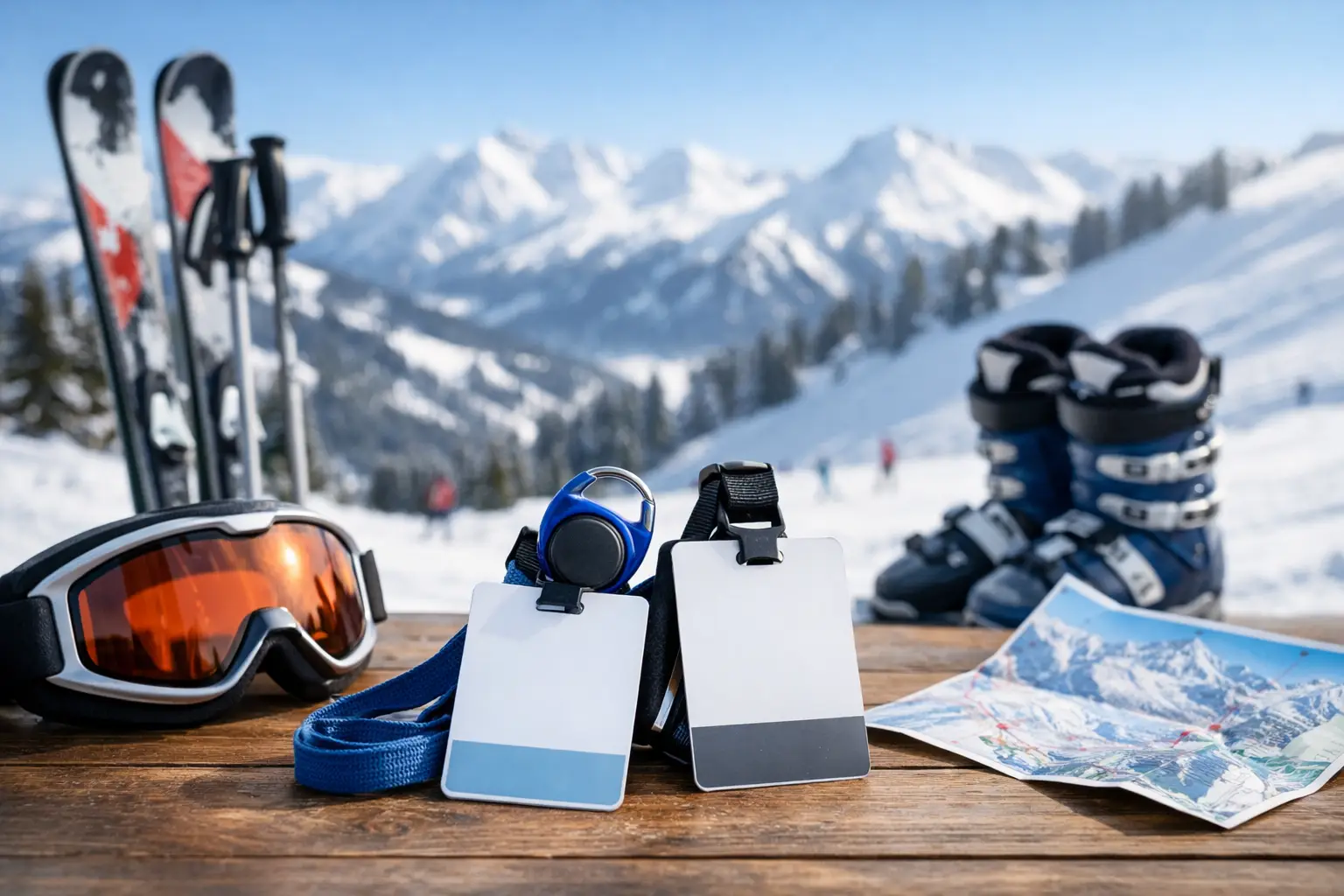
Before paying, put the piste map beside your holiday plan. Identify your accommodation, ski-school meeting point, nearest lift and the terrain you expect to use on day one. Then look at the areas you might visit later in the week and trace the route back.
Check the pass dates, whether days are consecutive, what happens if lifts close, and whether the pass works with the resort app or hands-free card. If the cost difference between local and full-area access is modest, freedom may be worth it. If it is substantial, make the upgrade prove its value in real days on snow, not just in imagined mileage.
The best pass is the one that lets you spend less time calculating and more time choosing the next lift. Buy for the turns your group will enjoy, leave room for the weather to influence the plan, and let the mountain set the pace once you arrive.