 Rachel Ifans heads to the Aravis mountains to find out more about just why biathlon is so popular in France – and to have a go herself.
If you’ve only just heard of biathlon, don’t worry, you’re not alone. The winter sport made the headlines perhaps more than any other Olympic discipline during the 2026 Games in Milano Cortina – and not always for the reasons you might expect.
Firstly, there was Norwegian Sturla Holm Laegreid who won a bronze medal in the men’s 20km biathlon and then confessed in his to-camera post-win interview that he’d broken his girlfriend’s heart by cheating on her. Secondly came French biathlete Julia Simon, crowned double-gold-medal-winner in Italy just months after being convicted of committing credit card fraud.
Gossipy column inches and viral sensations aside, biathlon is a sport that thrills a huge number of European sport fans every winter, even though it only comes to mind for Brits during a Winter Olympics. In fact, mention it to many UK seasoned skiers and they might scratch their heads and be unable to describe what it actually is.
So, what is biathlon?
Biathlon is a competition which combines cross-country skiing and shooting with a .22-calibre rifle at targets 50m away. Ski distances vary between disciplines and there are two types of shooting. One is called Prone, which involves lying on the floor on your front and shooting at a 4.5cm diameter target, and the other is called Standing which sees athletes standing up to shoot at a larger, 11.5cm diameter target. Each time you miss the target, you are penalised either by time added on, or by a 150-metre penalty lap.
A brief history of biathlon
Biathlon has been an Olympic sport since 1960 and annual World Championships started just two years before, in 1958. Unsurprisingly, its history originates in necessity rather than sport; it was one of the oldest activities practised by the peoples of the Far North, who travelled on skis with bows on their backs to hunt, and historians can point to evidence of similar skier-archers in Scandinavian mythology.
More recently, biathlon became part of military history when soldiers in the Nordic countries were trained to patrol borders and lead offensives over snow-covered terrain, a practice that was copied by many other nations in the form of speicalised ski units. After the war, it developed into a sport called Military Patrol involving four-man teams (often including an officer and three soldiers) who wore uniform and carried rifles and backpacks over a 30km course – and from there came modern biathlon.
In France, biathlon is huge as a spectator sport, consistently ranking highly on L’Equipe sports channel in terms of viewer numbers, and massively popular with non-mountain-dwelling French folk who regularly travel hundreds of kilometres from all corners of L’Hexagone to watch it live.
I recently visited Le Grand-Bornand in the Aravis mountains, the epicentre of French biathlon, to find out more and have a go myself.
Biathlon World Cup
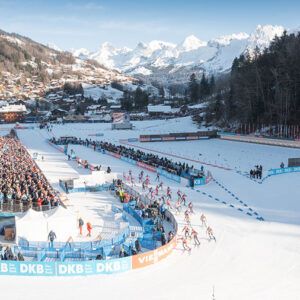
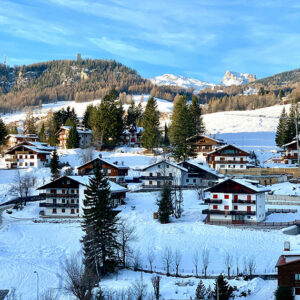
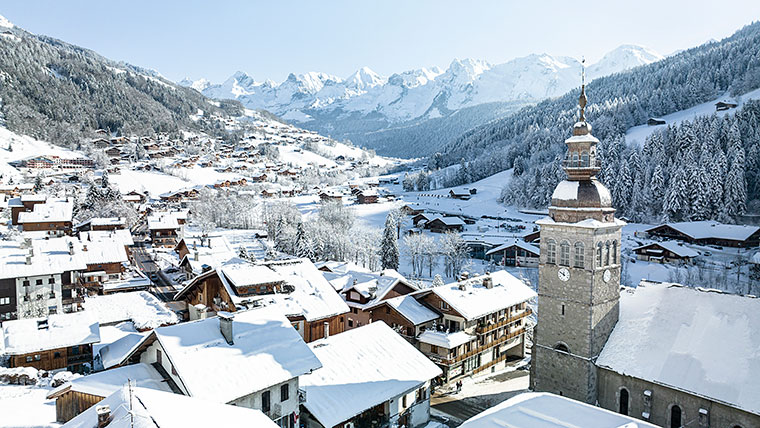
Le Grand-Bornand hosts the Biathlon World Cup every year in its pop-up stadium that can seat nearly 20,000 spectators. The beautiful village has a rich heritage in the sport, churning out big names like Christophe Vassallo, Sylvie Becaert, Sophie Chauveau and Benjamin Daviet over the years.
French biathlon fans are considered some of the loudest and most energetic in winter sports and it’s hard to imagine the ancient village of Le Grand-Bornand rocking to the sound of thousands of cheering voices. Indeed, on the afternoon of my biathlon lesson in January 2026, it was absolutely silent.
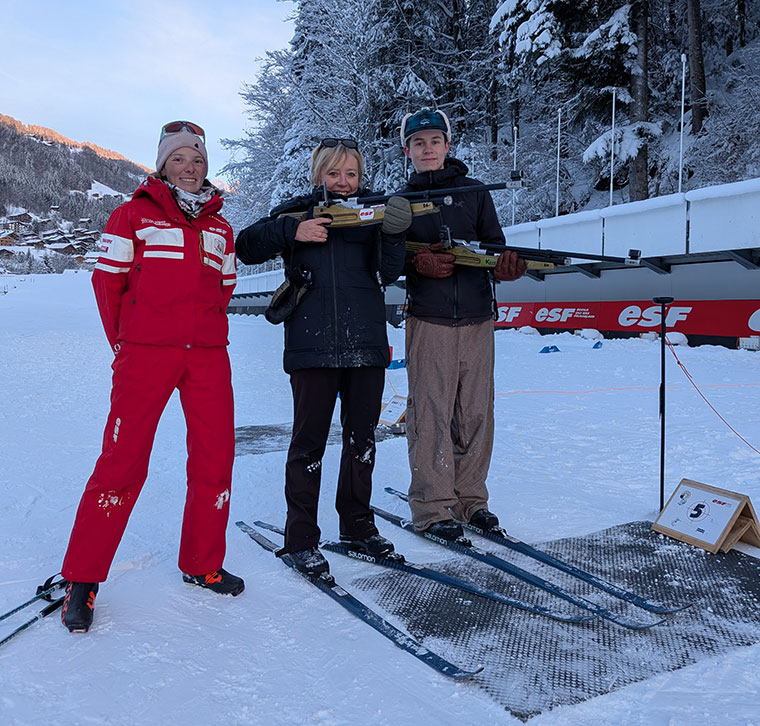
As we stood, banging our mittened hands together for warmth and making the most of the last bit of sunshine before it dipped behind the mountain opposite, my ESF instructor Rose explained how groups of schoolkids take part in biathlon and cross-country skiing in the stadium on weekdays, and families take competitive and often rowdy lessons at weekends.
We started with the basics of cross-country skiing. I had done it for a couple of hours a few years previously, but my 18-year-old son was a complete beginner. Our skis were lighter and ten times narrower than we were used to as alpine skiers, and the poles much longer. Nonetheless, my son took to the technique like a duck to water and it wasn’t long before we were both getting round the track without too many problems.
Going forwards felt like slow-motion running, ankles rising with each step and toes bound to the skis. As our technique improved, Rose encouraged us to glide between steps, and the motion started to feel like one lunge after another. I found that any lapse in concentration compromised my balance on the pin-thin skis, and when Rose introduced techniques like turning and braking to stop, it became harder to stay upright.
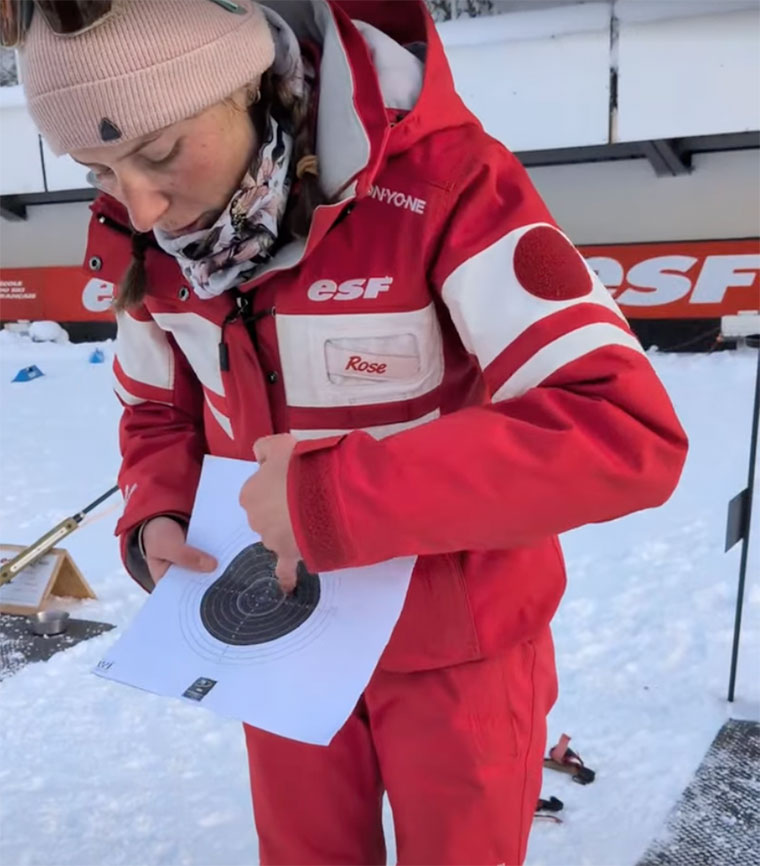 Next, she taught us how to shoot. We started with Prone shooting which involved skiing up to a mat, getting down on to a mat with our skis still on, and lying down on our bellies with our legs at awkward angles. The position felt clumsy, but Rose reassured us it was designed so that, once we’d shot your targets, we could get back up on our knees and be skiing again as quickly as possible.
The shooting was scaled down for us beginners; this meant that, although we were much closer to the targets than the elites would be, the targets themselves were proportionately smaller to compensate.
After having learnt how to use the air rifles, we tested our aims on the first five targets, while resting our guns on wooden stands to steady them. It felt pretty easy to hit the targets and see the metal swing satisfyingly into place, but it got much harder when Rose sent us off skiing around the track and then got us to lie down and shoot at the target as the pros would do – with no support and with racing hearts – and even harder when we got to the Standing shoot.
Rose taught us all sorts of shooting techniques, from how to brace our bodies in order to hold the gun as steady as possible, to how to breathe while shooting to stop the gun wavering, and also how to pre-empt getting the gun on target and shoot just in time.
Once we’d learnt the basics, Rose set up a race scenario, sending us twice around the track before we shot at the five targets; she even instigated a penalty system like in the real thing, and sent us (well, just me!) off to do penalty laps for the targets I’d missed.
Having a biathlon lesson was really good fun and I could totally see how it would breed a competitive spirit in families and groups of winter sports enthusiasts. It really brought biathlon to life as a spectator sport too, enhancing our experience of watching the Olympics on the telly and making us both want to return in December next year to see the experts in action.
Book yourself a biathlon lesson in Le Grand-Bornand
We stayed in the Chalet Valora, which is about 10 minutes’ walk from the cable car station to access Le Grand-Bornand’s ski domain and a similar distance to the biathlon stadium.
We hired our boots, skis and poles from Paret Sports, just next to the biathlon stadium, and booked Rose as an instructor through ESF for a two-hour lesson.