https://www.campingatlantide.com/fete-nationale/ https://nswellness.ca/wellness-services/physiotherapy/ Whistler turned 60 this winter and it’s 45 years since Blackcomb opened.
https://www.inequalityindex.org/frequently-asked-questions/ To understand what that actually means, and what six decades feels like from inside the mountain, Katy Dartford met up with Peter Smart, Owner at Extremely Canadian.
Buy Prednisone Over The Counter Peter Smart will tell you that Extremely Canadian came out of necessity, which is a modest way of describing what actually happened. He arrived in Whistler in 1991 with a plan; race professionally in Japan, pick up work at the Whistler Mountain Ski School, build something in the industry he’d been chasing since his years in Banff. The plan lasted about as long as it took the ski school director to reject him. Twice.
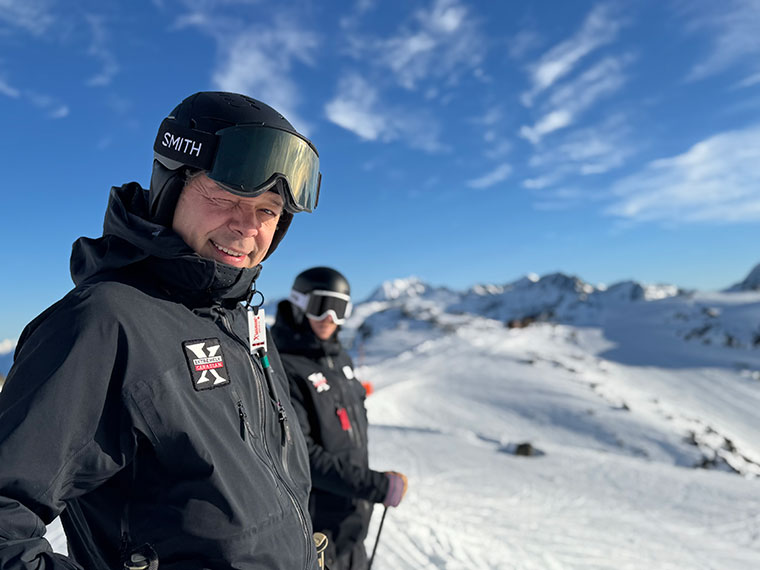 “I couldn’t get a job,” he says, matter-of-factly, as we ride the Whistler Village Gondola. He’d committed fully to the move, gone through two interviews, and come away with nothing. What he did have was a volunteer position that got him a pass, an unemployment cheque, a house crammed with too many people, and five pairs of used high-performance skis he’d picked up on consignment. “Back then you could still find good used race skis in ski shops,” he says. “So that’s what I did.”
The break, when it came, arrived sideways. A contact from back east was shooting for Warren Miller and one of their athletes hadn’t shown up. Peter dumped his volunteer shift and went skiing for the film crew. It didn’t solve the employment problem; Whistler’s ski school rejected him again the following year, but it pointed at something.
He crossed to Blackcomb, where the director there took one look at him and said he didn’t want him in the ski school either. He wanted him in the race department. Peter set courses and coached adult racers twice a week. He got another gig with Warren Miller. And in the meantime, he and his housemates, many of them from a university ski team, with friends and teammates regularly visiting, kept doing what came naturally. Showing people around the mountain.
Buy Soma Overnight “At some point somebody said, you guys should do this for a living,” he says. “You guys have got this figured out.” The idea of formalising it hadn’t really occurred to them. “We just wanted to be pro skiers. There wasn’t really a thing.” But in 1993-94 he pitched it to the Blackcomb ski school director, who said yes. His girlfriend Jill, he’ll readily admit, was the one who actually made it happen. “She told me to create a job for myself.”
https://digitalfilms.cat/nosotros/ His childhood friend Greg was sitting in as a town councillor in Quebec, covering someone’s medical leave. They’d grown up racing together near Montreal and their fathers had played football together. Peter called him and told him to come back. “Was it hard to convince him?” I ask. “No,” he says. “Not that hard.” Greg gave up his political aspirations and returned to Whistler.
 They called it Extremely Canadian and it started with seven camps in the first year, 14 the next, then 28. And then in 1997 Intrawest merged the two mountains, which should have been a problem and turned out to be the opposite. The resort decided it wanted one provider in each niche; one mogul camp, one race club, one of everything and cut the rest. Extremely Canadian was one of the few operations already running on both mountains. “They cut all the other companies,” Peter says. “And kept us.”
That first year under the merged arrangement, after paying commission to both mountains, the three of them made three thousand dollars between them. They went out for sushi and split what was left. “Good thing we all had other jobs,” he says.
Valium 10mg Buy Online What the merger also did, Peter reflects, was take the personality out of the rivalry. Whistler and Blackcomb had been genuinely competitive, different terrain philosophies, different cultures, patrol teams pulling pranks on each other that would travel as far as Banff and Sunshine Village before the week was out. “It was more wild back then,” he says. Now the pranks still happen, just quieter. What replaced the rivalry was something more corporate and less interesting, a homogenisation he sees spreading across the industry globally.
https://www.soundcontrolroom.com/custom-creations/ Some 30 years on, Extremely Canadian has around 110 coaches, 60 per cent working inbounds, 40 per cent guiding in the backcountry across a tenure that stretches from the upper mountain all the way around to Blackcomb. There is a hut up there, the Kees and Claire Hut, named after a former employee whose trust fund paid to build it, someone Peter coached as a kid on the summer glacier racing programmes, who later walked away from a family business empire to stay in the ski industry. Two more huts are planned.
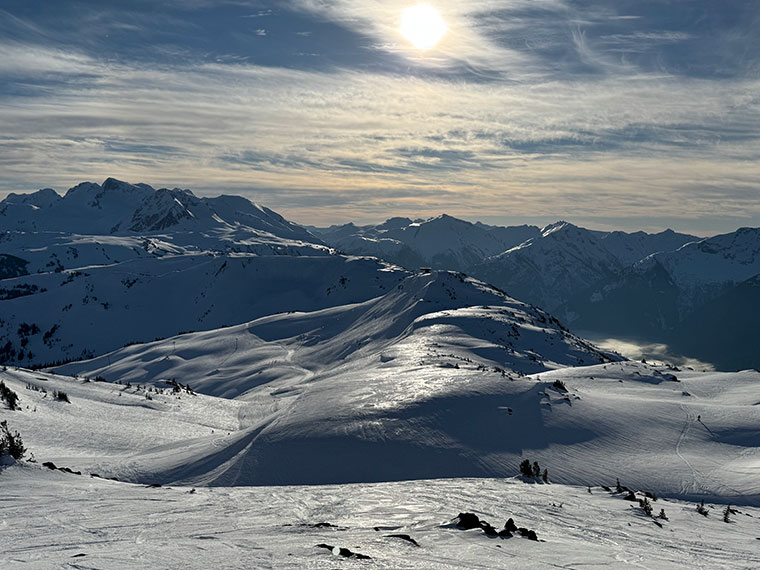
The glacier those summer camps once relied on is a different story. From the top of Peak Chair, looking down into Whistler Bowl, Peter points out what used to be there and what isn’t anymore. “In the 70s, a groomer could drive across that,” he says. “Now look at it. Probably 60 feet lower than it used to be.”
Joan-Marc Moreno, one of his senior coaches, a Pyrenean who arrived in 2017 and never left, picks up the thread. There used to be two companies running summer ski camps on the glacier, he says. For the past two summers neither has been able to open. An entrance into Whistler Bowl that was considered the easy option when Joan-Marc arrived nine years ago is now not even an entrance. A spot called Lifty’s Leap, where you could once ski directly in next to the lift shack, has melted into something unrecognisable.
The mountain has grown in every commercial sense, more lifts, a bigger village, the Peak 2 Peak gondola that felt almost science-fictional when it opened in 2008, and shrunk in the one sense that matters most. Joan-Marc, who shows no signs of leaving, says the glacier has changed almost beyond recognition even in his nine years here. Whistler still has that effect on people, even as the snow that drew them here keeps retreating.
Buy Ativan Online Without Prescription 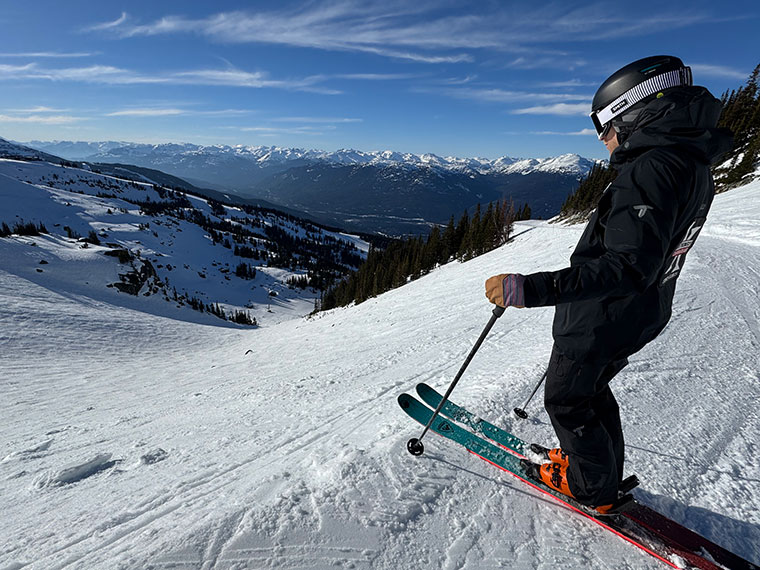 That gap between understanding steep terrain and merely surviving it is the business Peter has spent 30 years in. When Extremely Canadian started, the bowls and couloirs were there but the culture of coaching people properly through them barely existed. Most visitors either avoided the serious lines or threw themselves into them with confidence that outran their technique.
Peter and his partners built something to fill that space: not just guiding, but teaching, with video analysis and a technical language around movement that Joan-Marc was deploying on me that morning with the patient precision of someone who has explained the same things to a great many skiers who thought they were further along than they were.
https://nswellness.ca/pregnancy-health/ Whistler has turned 60 this winter and the anniversary is being marked in the way anniversaries usually are, archive photography, commemorative merchandise, a certain institutional pride. Peter is aware of it in the way you’re aware of roadworks. He is more interested in tomorrow’s snow report.
The mountain he arrived at in 1991 rejected him, then gave him something better than what he’d come for. He built a company and a coaching culture. The glacier has retreated 60 feet. The patrol teams still swap pranks. And somewhere up in the backcountry there is a hut named after a kid he once coached on the ice, which seems like the right kind of monument.
https://icnany.org/street-dawah/ Tania Sear, who handles tourism for the resort, offers some perspective as we walk through the village towards the Squamish Lil’wat Cultural Centre. The village was built on a garbage dump, she explains. Whistler Mountain opened at Creekside in 1966, and when planners decided a decade later to build a central village at the base of both mountains, that’s what the site was. They cleared it and designed the streets to flow like a river from the mountains, with smaller paths branching off like eddies. Unlike most Canadian cities there’s no grid. “When you live here, it makes sense,” she says. “When you first come, you’re like, I’m just trying to find the mountain.”
Purchase Ambien Online The Squamish and Lil’wat Nations, whose shared territory this has always been, were trading across these passes long before any of that. Their languages are on the lift signs now. Every new Whistler Blackcomb employee does a tour of the Cultural Centre before their first season. “It’s not really that old, is it?” Tania says of the 60 years. ‘60 years’ – in the context of the land it sits on, she has a point.
Categories: News, Resort News & Reports
Leave a Reply
You must be logged in to post a comment.