Mark Nicholls discovers some cool activities to take part in on a trip to Samoëns.
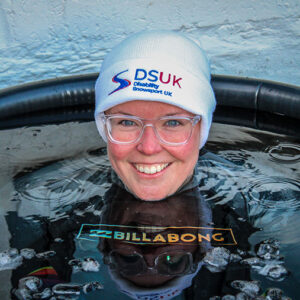
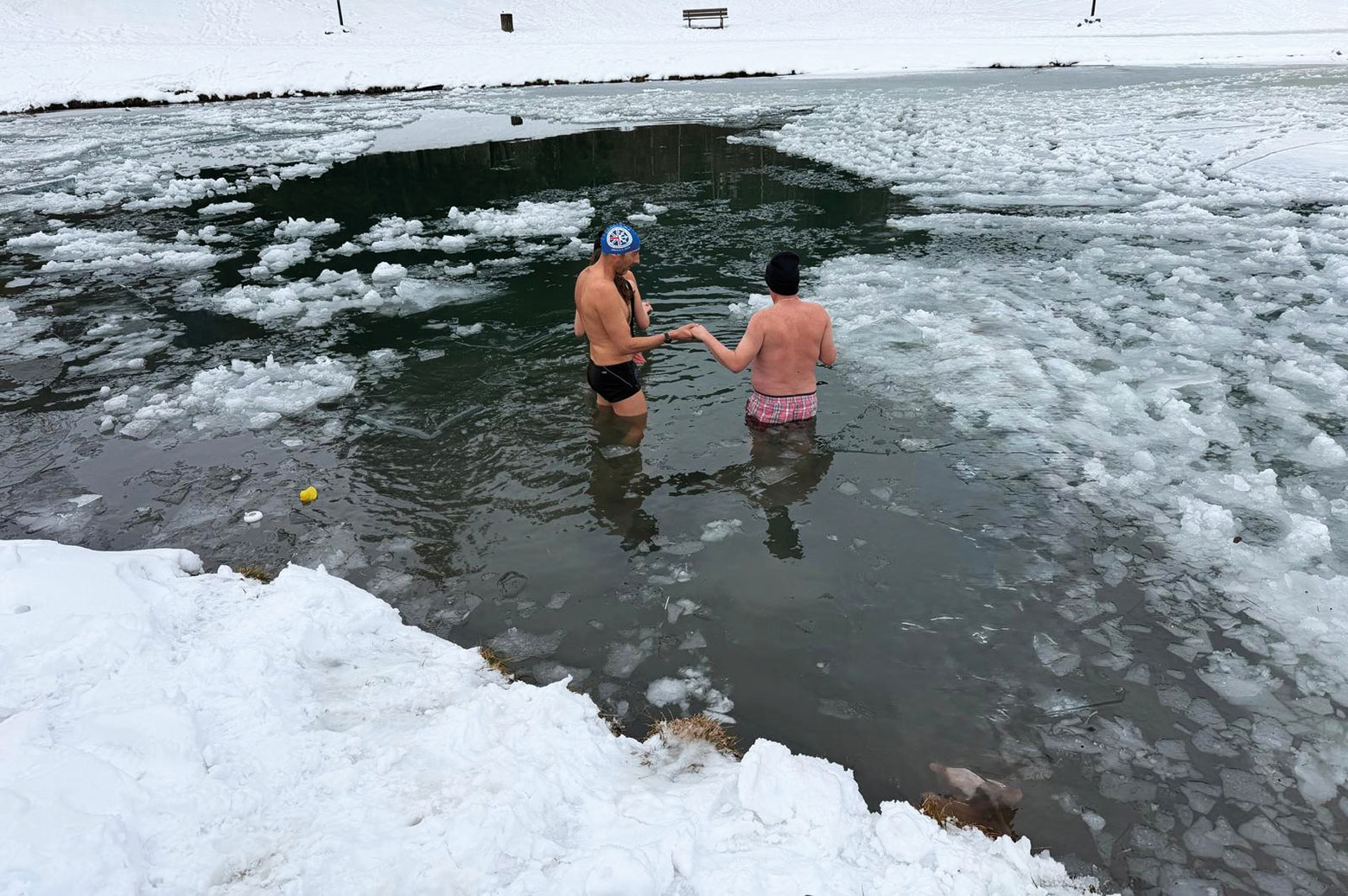
The ice was a couple of inches thick and floating around in chunky fragments like mini icebergs. The surface had been broken by the sapeurs-pompiers, the local French firefighters who had earlier been practising techniques to recover people from frozen stretches of water.
I stood on the slippery, snowy embankment down to the water’s edge, viewing the scene with some trepidation, having adjusted my mindset for the cold shock of entering the water and hoping I wouldn’t require their services.
Stripped down to my swimming costume with flip flops on my feet and a towel wrapped around me, I felt more dressed for a tropical beach rather than my first experience of cold water swimming in the man-made lake that lay before me on the outskirts of Samoëns in the French Alps.
But it was now, or never, perhaps my only opportunity to experience ice swimming and discover whether it was to be an exhilarating and life-changing experience, or a truly heart-stopping moment that I’d never want to repeat.
So, in I went, thankfully under the guidance of a couple of highly-experienced ice swimmers in the form of Rob and Carrie Wilmot, and local expert Florian Milesi, who organises dips for intrepid tourists on a day off from the slopes.
The air temperature was a balmy 40C, but the water was colder, below 20C. In preparation, Florian took us through a series of methodical breathing exercises designed to ‘pre-warn’ the brain of the looming shock. “It is about controlling the breathing, learning to be calm when you get in and listening to your body,” he says.
Slipping into the cold water, the chill hits you immediately but the breathing, and a grim determination, helps you move in further, eventually above the thighs and to waist level. Guided by Rob and Carrie, I eventually take the plunge, squatting down to allow the water to cover my shoulders. “After the first 20 seconds, the shock goes,” Rob says reassuringly, “and the controlled breathing allows you to stay in longer.”
Actually, he was right.
Carrie and Rob have lived in Samoëns for 15 years and been cold water swimming for the past seven having become interested when the French cold water swimming championships were held in the resort in 2020.
Since then they participated seriously, including Carrie at one stage holding a world record in her age-group of 1 minute 30.08 for the 100m breast stroke. Rob is the current GB record holder in the individual 200m medley with a time of 2 minutes and 57 seconds.
Ice water races cover distances from 50m to 1,000m and experienced swimmers can be in the water for around 20 minutes, although first-timers must take a more considered approach, limiting their initial immersion to two to five minutes, depending on air and water temperature, and always under supervision.
So why do it? “There are lots of health benefits,” enthuses Carrie. “It has an anti-inflammatory aspect, is good for mental health and can help women going through the menopause. It is very much a re-set button and a case of letting the water embrace you.”
Florian advises: “The first time you go in, it is not about swimming, it is about setting goals and an objective such as focussing on an ache and pain you want to ease, a pain you are going to ‘leave’ behind in the water.”
While I may not be in a hurry to repeat the challenge of cold water swimming, there was a great sense of achievement in actually taking a chilly dip. And whether it was mentally, or physically, I did feel better afterwards.
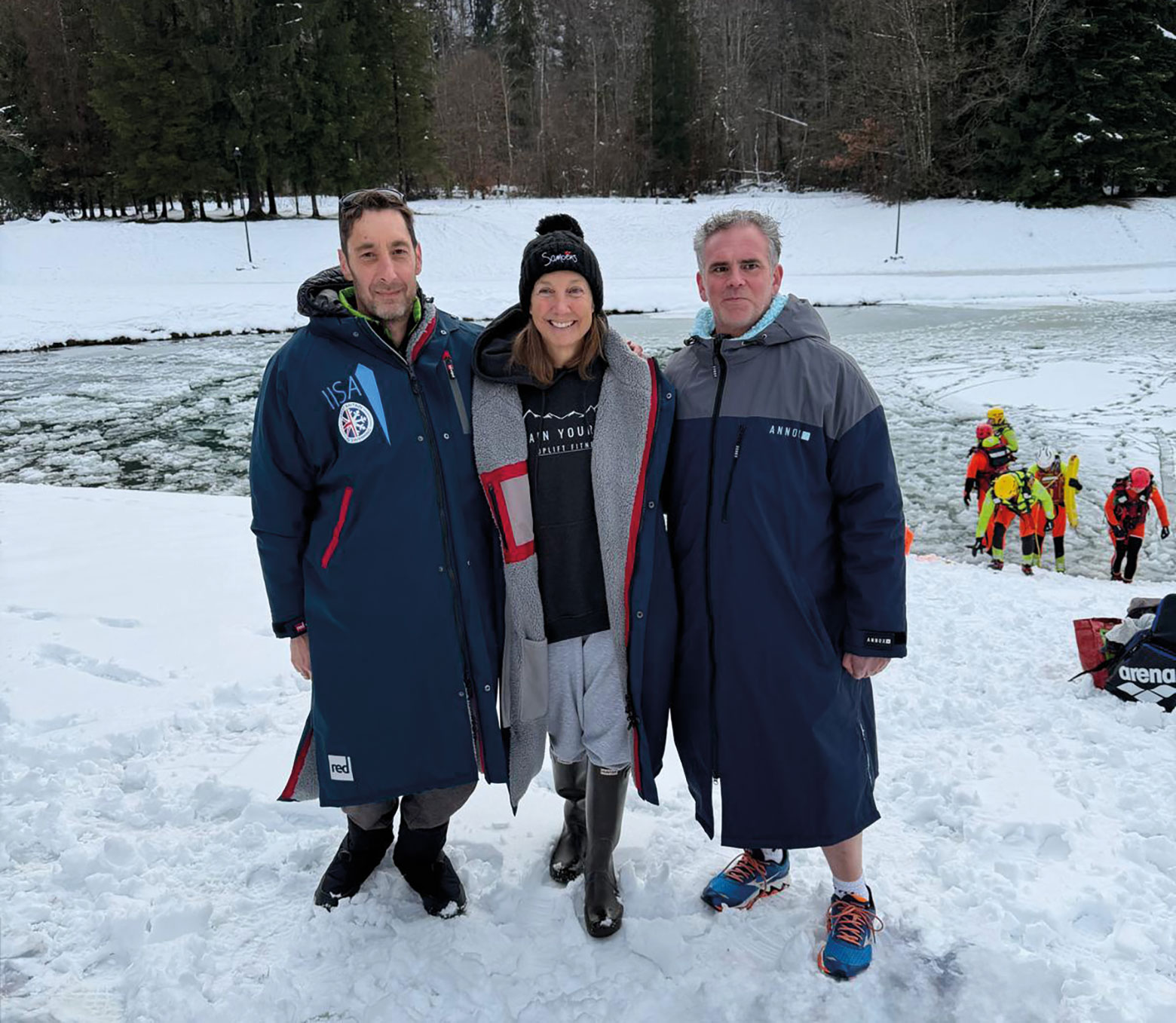
Image: Rob and Carrie Wilmot with Florian Milesi as French firefighters carry out cold water rescue drills in the background
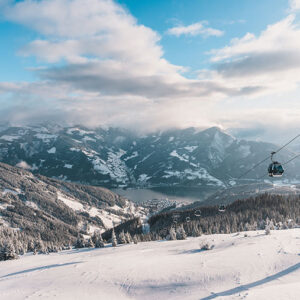
From iced water, to snow, there is a joy to skiing in Samoëns, a resort where you have the pleasure of staying in a traditional French village sitting below 1,000m but have access to the Grand Massif ski area with 139 slopes and 62 lifts.
The Grand Massif connects Samoëns, Les Carroz-d’Arâches, Morillon, Sixt-Fer-à-Cheval and Flaine and with 265km of slopes it is the fifth largest linked ski area in France. There are also 16 cross-country ski and 15 snowshoe trails.
The highest point of the Samoëns slopes is 2,150m, but that rises to 2,500m at the summit of the Grandes Platières in Flaine where there is an inviting selection of wide blue and red runs, plus the Cascades piste, a 14km red from Flaine to Sixt with a shuttle bus back to the Grand Massif Express gondola in Samoëns.
During a long season running from mid-December to mid-April, the relatively low altitude of Samoëns seamlessly connects by lifts to its higher altitude sister Flaine. Isabelle Cadoux from Samoëns Tourism explains: “People often start skiing in Samoëns and go to Flaine almost without realising it because everything is so well connected.”
Samoëns has a wider appeal with its historic buildings centred around a church and market hall. Guided village heritage walks, led by Nora Beriou, highlight this history, including Samoëns heritage as a stone masonry centre. It is a tradition, she explains, that is undergoing a revival and throughout the village there are examples of sculptures carved from the soft grey Giffre limestone.
She also points out the unfinished carving on a pillar of the market hall of what was originally meant to be the coat of arms of Samoëns but was left incomplete after the stone mason commissioned to do the work had a disagreement over the fee with the city fathers.
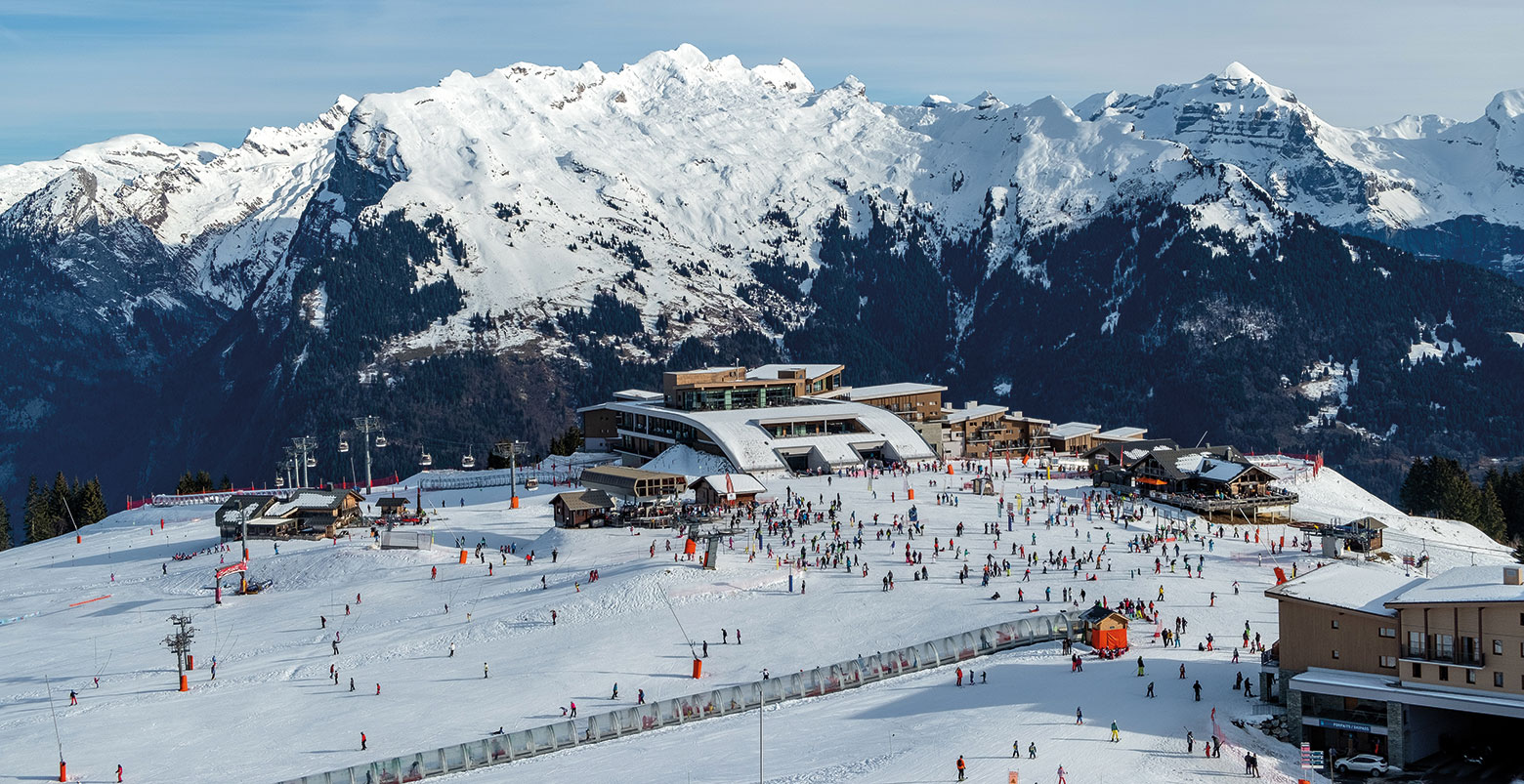
Image: © Christian Martelet
Surrounding the village are seven mountains, the symbol of Samoëns with inhabitants known as the Septimontains. These fertile mountain pastures lead to high quality dairy farming with milk from the cows used to make Reblochon cheese. All around the village centre are shops, apres-ski bars and good restaurants and plenty of good value accommodation, from hotels and apartments to chalets.
Among the restaurants worth checking out is L’Estanco where the menu is simple but great value, with a selection of freshly-prepared appetisers and main dishes. I started with the pike mousse in a shellfish bisque (€12) and the duck breast in strawberry sauce (€26) but other choices on the menu included slow-braised beef cheek or chicken paupiette (both €23). An Aperol Spritz, always a sound benchmark for an establishment’s value, is a highly-acceptable €8.50.
If you fancy a cheesy evening, in a very apt setting, find your way up to Dunoyer farm for authentic Savoyard cuisine. The restaurant is on a dairy farm where guests eat together on long communal tables with the cattle visible in the barn through the kitchen window. The cuisine, as you may expect, is heavily based on cheese – raclette, tartiflette, fondue, diots (sausage) served with polenta and cold meats, and potee (ham cabbage and potatoes) all for €35, including wine.
The restaurant was originally established by the family to showcase the farm and the dairy products of the region but has become a popular dining experience. Cowbells hang from the walls and serviettes look up from place settings with a large cow face on them and traditional French music plays from the gramophone, though often drowned out by the enthusiastic singing of diners.
Meanwhile, on the slopes, at the top of the Grand Massif Express at 1,600m is Lou Caboëns restaurant with steaks, burgers, large slabs of quiche and soups. Look out for the local speciality, soupe châtrée made with onions cheese and bread, either on the slopes or in the village for around €10. Perfect for lunch.
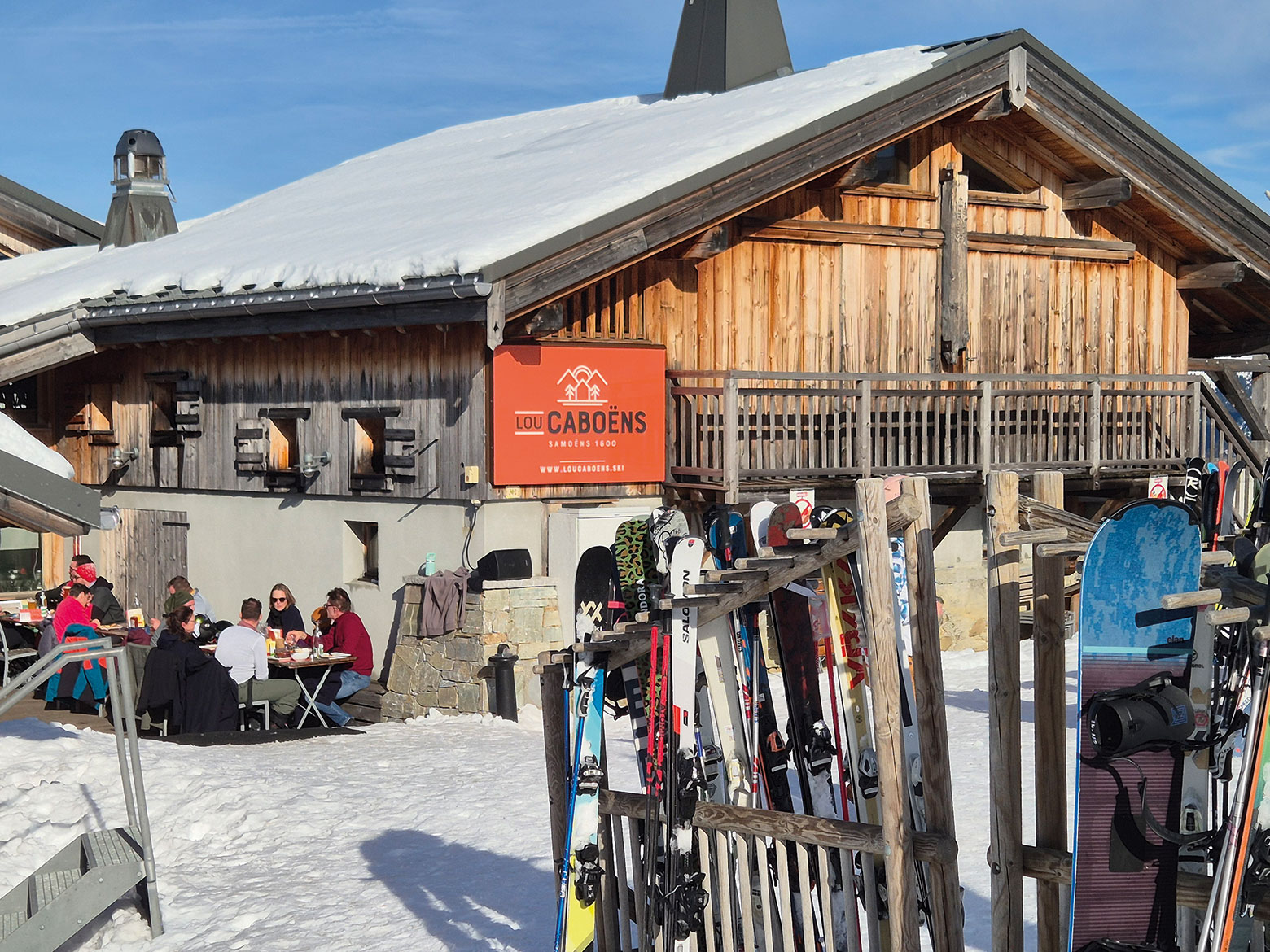
There’s plenty of other chilly activities to do in the Grand Massif, from the usual snow-shoeing and winter hiking through to cross country and alpine skiing.
And just when I had thought the dip in the lake would be the last time I took my clothes off in the snow this winter, up came the prospect of cold yoga.
As we trudged up a snow slope in snowshoes to a clearing, we practised Afghan breathing, a technique of breathing in and out of the nose in rhythm with steps to help the body efficiently tackle the ascent.
Calling a halt in open snow, mountain leader and yoga teacher Claire Philipczyk offers instruction on various positions and we are gradually encouraged to remove layers where appropriate, eventually laying half-naked on the snow. Again, surprisingly exhilarating, though admittedly it was sunny and 50C-60C.
Claire, who also conducts sessions when it is snowing and minus 40C-60C, said the aim is to help regulate the immune and nervous system. “I worked for a long time in the snow and didn’t like the cold,” she reveals, “but then I began to think I should embrace the cold, so started to teach yoga in the snow.”
But rest assured, while it may be exhilarating stripping off in the snow, not all activities in the lovely resort of Samoëns involve removing items of clothing.
SAMOËNS, FRENCH ALPS: TRAVEL FACTS
Flights
Samoëns is just over an hour from Geneva Airport with numerous flights from the UK.
Accommodation
Mark stayed at the Lodge Grand Cerf, part of the three-star Gai Soleil Hotel.
For more information
- Samoëns: www.samoens.com/en/
- Activities: www.samoens.com/en/activites-loisirs/
- Lift pass: €378 (6-day/adult) or from €59 (one day)