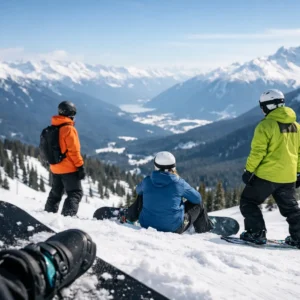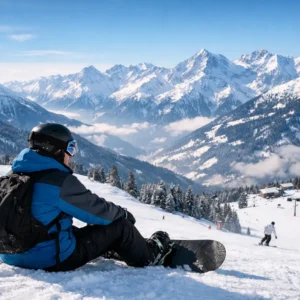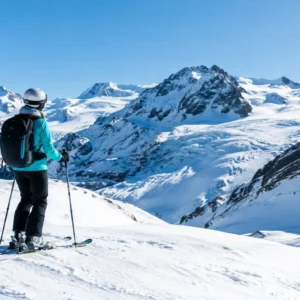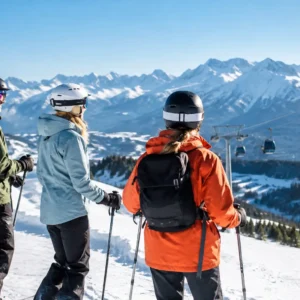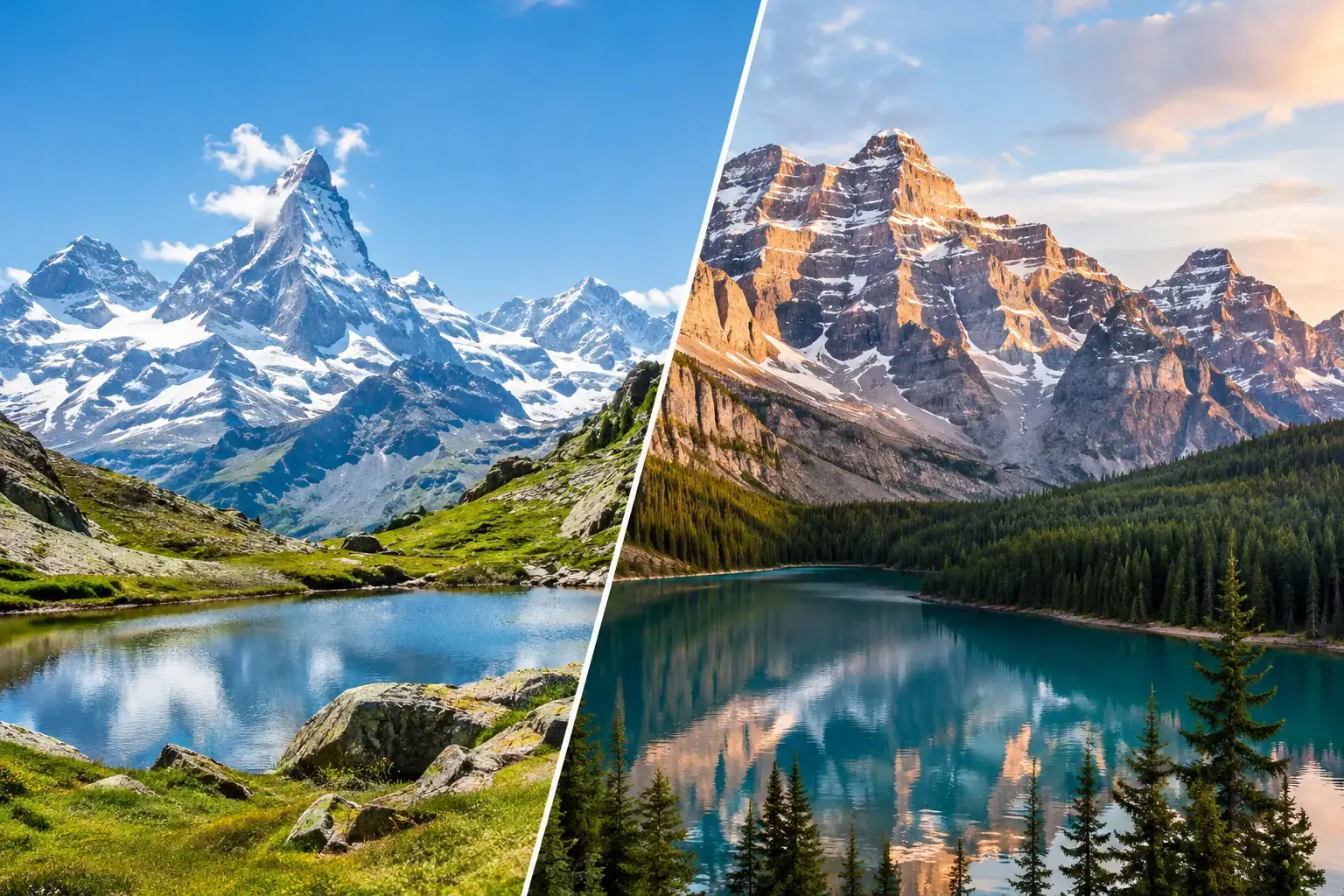
A bluebird powder morning in British Columbia and a long, lift-linked descent above a Swiss village can both feel like the reason we ski or ride. Yet Alps versus Rockies is not simply a contest of bigger views or deeper snow. For UK skiers and snowboarders, it is a decision shaped by travel time, budget, appetite for adventure and the kind of mountain day you actually enjoy.
The Alps remain the natural first choice for many British holidaymakers. They are close, familiar and wonderfully varied, from purpose-built French high-altitude stations to traditional Austrian villages and the huge interconnected domains of Italy and Switzerland. The Rockies, particularly in Canada and the western United States, offer a different promise: dry snow, tree skiing that keeps working when visibility closes in, and a more spacious, relaxed rhythm on the slopes.
Neither is universally better. The right choice depends on whether you want a sociable week of mileage and mountain lunches, or a bigger journey built around snow quality and freeride terrain.
Alps versus Rockies: the on-snow difference
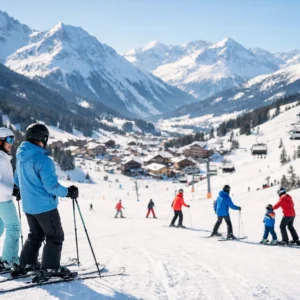
The most immediate distinction is the feel of the skiing and snowboarding. Alpine resorts are often built around lift-linked scale. In places such as the Three Valleys, Paradiski, Espace Killy, Dolomiti Superski or Ski Arlberg, it is possible to cover serious ground in a day, moving between valleys, countries or dramatically different aspects without taking off your skis. For confident intermediates, that sense of progression is hard to beat.
The terrain can be exceptionally varied. France delivers high-altitude bowls, glaciers and broad motorway pistes; Austria combines well-groomed runs with a famously convivial hut culture; Italy brings sunshine, food and the distinctive drama of the Dolomites. Switzerland often asks more of the wallet, but its high mountain scenery, rail connections and serious off-piste heritage remain compelling.
The Rockies are less about ticking off linked valleys and more about finding your line. Canadian resorts such as Whistler Blackcomb, Revelstoke, Banff Sunshine, Lake Louise and Big White have strong identities, while US areas such as Aspen Snowmass, Vail, Jackson Hole and Park City bring their own combinations of groomers, steep terrain, parks and mountain-town atmosphere.
For snowboarders, North American chairlift networks can feel refreshingly straightforward, with fewer of the long surface lifts and awkward cat tracks that occasionally interrupt a European circuit. Tree runs are also a major advantage. When snow is falling or a cloud base is low, well-spaced glades offer definition, shelter and playful natural features. In the Alps, a white-out above the treeline can turn a promising powder day into a cautious session close to the pistes.
That said, the Alps have a depth of lift-accessed off-piste terrain that should not be underestimated. Resorts including Chamonix, Verbier, St Anton and La Grave have rightly earned their reputations, but these are mountains where conditions, route-finding and avalanche awareness matter. A guide is not an indulgence on unfamiliar serious terrain. It is often the sensible way to get a proper day rather than simply taking unnecessary risks.
Snow quality and reliability
The Rockies have a deserved reputation for lighter, drier snow, particularly in the Canadian interior. Cold continental temperatures can preserve powder beautifully, and a fresh 20cm can ski deeper than the same headline figure in milder, denser Alpine conditions. For riders whose ideal week means storm laps, trees and soft landings, that quality matters.
But North America is not automatically a powder guarantee. Conditions vary hugely by resort, elevation and season. Early-season cover can be thin, and cold snaps can be genuinely biting. Meanwhile, the Alps have a broad range of snow climates. High French resorts and glacier areas can offer excellent reliability, while north-facing terrain in Austria and Switzerland often holds snow well. Spring in the Alps can be magnificent: firm pistes in the morning, long lunches in the sun and soft corn snow later on.
If your dates are fixed around Christmas, New Year or Easter, altitude and aspect should lead the resort choice on either continent. If you can travel more flexibly and are chasing a storm, the Rockies become especially tempting.
Travel from the UK: convenience versus commitment
For a one-week break, the Alps win on simplicity. Flights from the UK to Geneva, Grenoble, Lyon, Chambéry, Innsbruck, Salzburg, Turin or Milan can put you within transfer range of an enormous choice of resorts. Self-drive remains viable for those carrying plenty of kit or travelling as a family, while rail is increasingly attractive for skiers who want to reduce the hassle of airport travel.
A typical Alpine journey may still involve an early alarm, a coach transfer and the familiar Saturday traffic, but you can usually be in resort on the same day without turning the trip into an expedition. That is a significant benefit when annual leave is limited.
The Rockies require more commitment. A direct flight to Calgary or Vancouver is only the first stage, followed by a transfer or hire car and a substantial time-zone change. For a seven-night trip, jet lag can steal the edge from the first day and make departure day feel abrupt. Ten days or two weeks makes the long-haul journey far easier to justify.
There is also a practical point for British riders: luggage. Airlines may charge separately for ski and snowboard bags, and restrictions vary. Hiring in resort can make long-haul travel easier, especially for families, but committed skiers may reasonably prefer the familiarity of their own boots. As ever, take boots if fit is non-negotiable; boards and skis are the easier item to rent.
Cost is more complicated than the headline price
The Alps are not always the budget option. A Swiss holiday can be costly, and premium French resorts at peak weeks can rival North American prices once accommodation, lift passes, food and transfers are included. Yet there are still excellent-value Alpine choices, particularly in Italy, smaller French resorts and Austrian valleys away from the biggest-name bases.
North America often carries a higher upfront cost for UK visitors because of flights, car hire or transfers, accommodation and the exchange rate. Lift tickets can look eye-wateringly expensive when bought casually. However, advance booking, multi-resort passes and staying slightly away from the main base can change the calculation. Some Canadian resorts also offer excellent value in self-catered accommodation when a group shares a flat.
On-mountain spending is where the contrast becomes obvious. Alpine lunches can range from a modest piste-side plat du jour to champagne and truffle territory, but it is still possible to eat well without turning every day into an event. In the Rockies, food, drinks, tax and tips can add up quickly. A few beers after skiing are rarely as harmless to the budget as an Austrian après stop.
For families and mixed-ability groups, the Alps often offer more accommodation choice and a better chance of managing costs. For a group of experienced friends prepared to plan well in advance, Canada can be less prohibitive than its reputation suggests.
Culture, après and the shape of the day
This is where personal preference should carry real weight. The Alps are embedded in mountain communities and a long-established European ski culture. You might spend the morning on a glacier, eat pasta in Italy, ski into Austria and finish with live music in a bar, all in one week. The villages, food and hut life are part of the experience, not just the interval between lifts.
Après is far from identical across the Alps. Austria has its high-energy reputation; France can be more resort-led and late-running; Italy often leans towards a civilised aperitivo; Switzerland can be polished and expensive. The key point is that there is usually a strong sense of place.
The Rockies offer something more casual. Mountain towns and base areas can be lively, but the culture tends to revolve around the skiing and riding day itself: an early lift, plenty of laps, a relaxed drink and an early night before doing it again. Service is generally friendly and efficient, and the atmosphere can feel particularly welcoming for first-time visitors. It is less about dancing on tables in ski boots, more about comparing lines and checking the next snowfall.
Who should choose which?
Choose the Alps if you want maximum variety in a week, easier travel, strong food and village life, and piste mileage that can keep a mixed group happy. They are also the obvious answer for short breaks, first ski holidays and anyone who enjoys making the mountain experience about more than the snow report.
Choose the Rockies if powder quality is high on your priorities, you love tree riding, you are comfortable committing more time and money to travel, and you want a holiday centred on skiing or snowboarding rather than traditional European resort rituals. Advanced riders will find plenty to challenge them, but intermediates should not assume North America is only for experts. The grooming, lift layout and learner progression can be excellent.
The best answer may be to resist making it a permanent allegiance. Book the Alps when you want a brilliant, efficient mountain week close to home. Save the Rockies for the season when you can give the trip enough time, watch the snow charts and go properly. A favourite run is not defined by its continent, after all, but by the conditions, company and the decision to take one more lap.