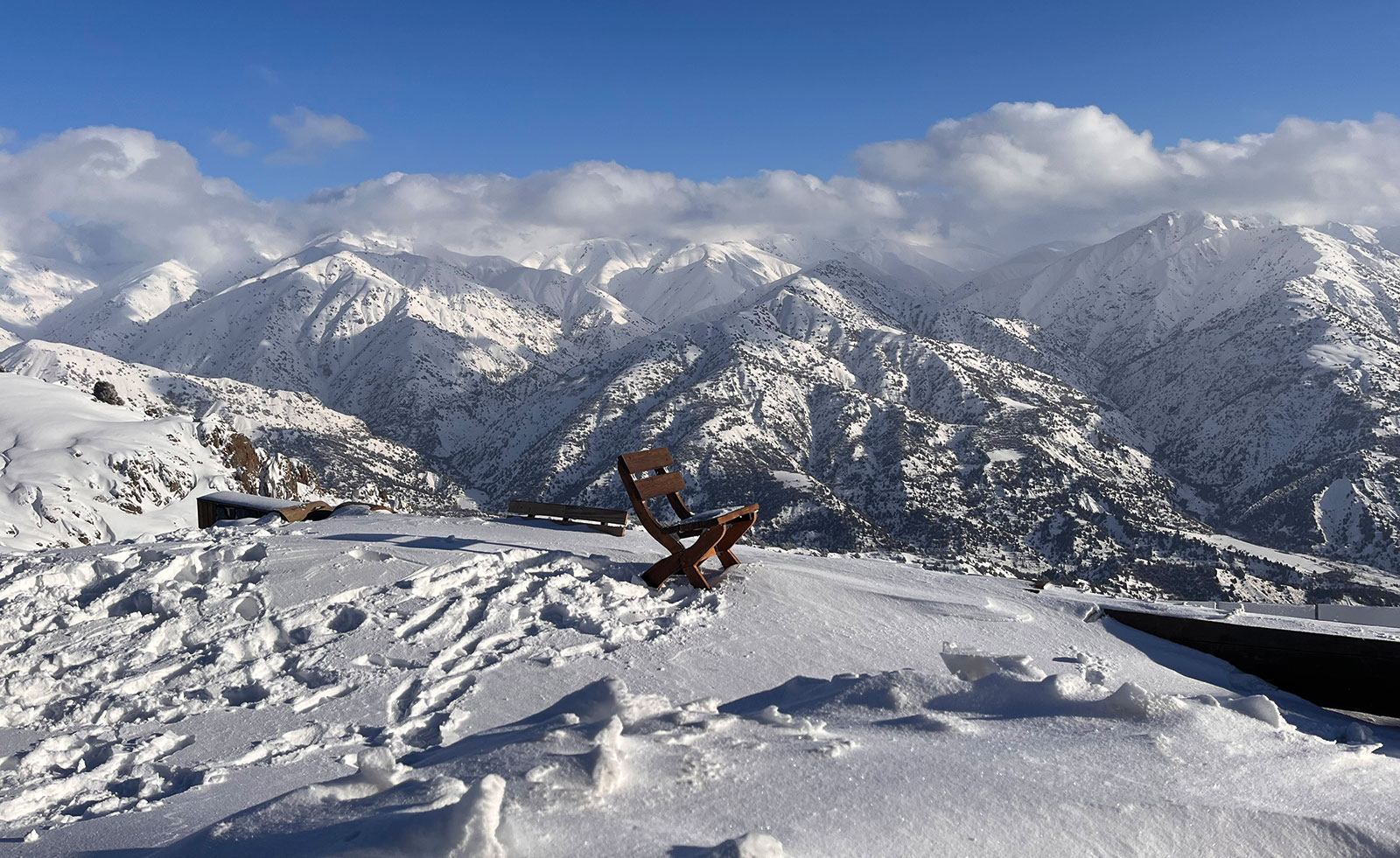
Petra Shepherd discovers the mountain resort of Amirsoy, in a more unusual ski area.
Uzbekistan, at the heart of the historic Silk Road, has a rich history and a wealth of intricately decorated mosques, madrasas and mausoleums in the ancient cities of Samarkand and Bukhara. However, it’s also home to Amirsoy, a premium ski resort in the Western Tien Shan Mountains. I’m here to discover this more unusual ski area along with discovering what Uzbekistan has to offer in the winter months.
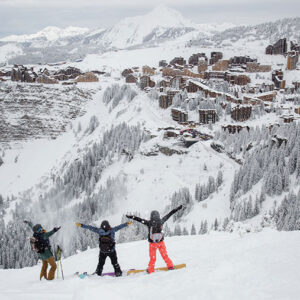
Amirsoy opened in late 2019 as a premium, year-round mountain resort, developed in line with international standards of infrastructure, safety and service quality. It’s the closest large-scale mountain resort to the capital Taskent, 70km away, with a transfer time of around one to one-and-a-half hours by car. The resort has seven ski lifts, including five travelators, one chairlift and an 8-seater gondola taking you to an altitude of 2,290 metres above sea level. The lifts are divided into three sections: nursery slopes and tubing, the chairlift, and the gondola to the top of the resort.
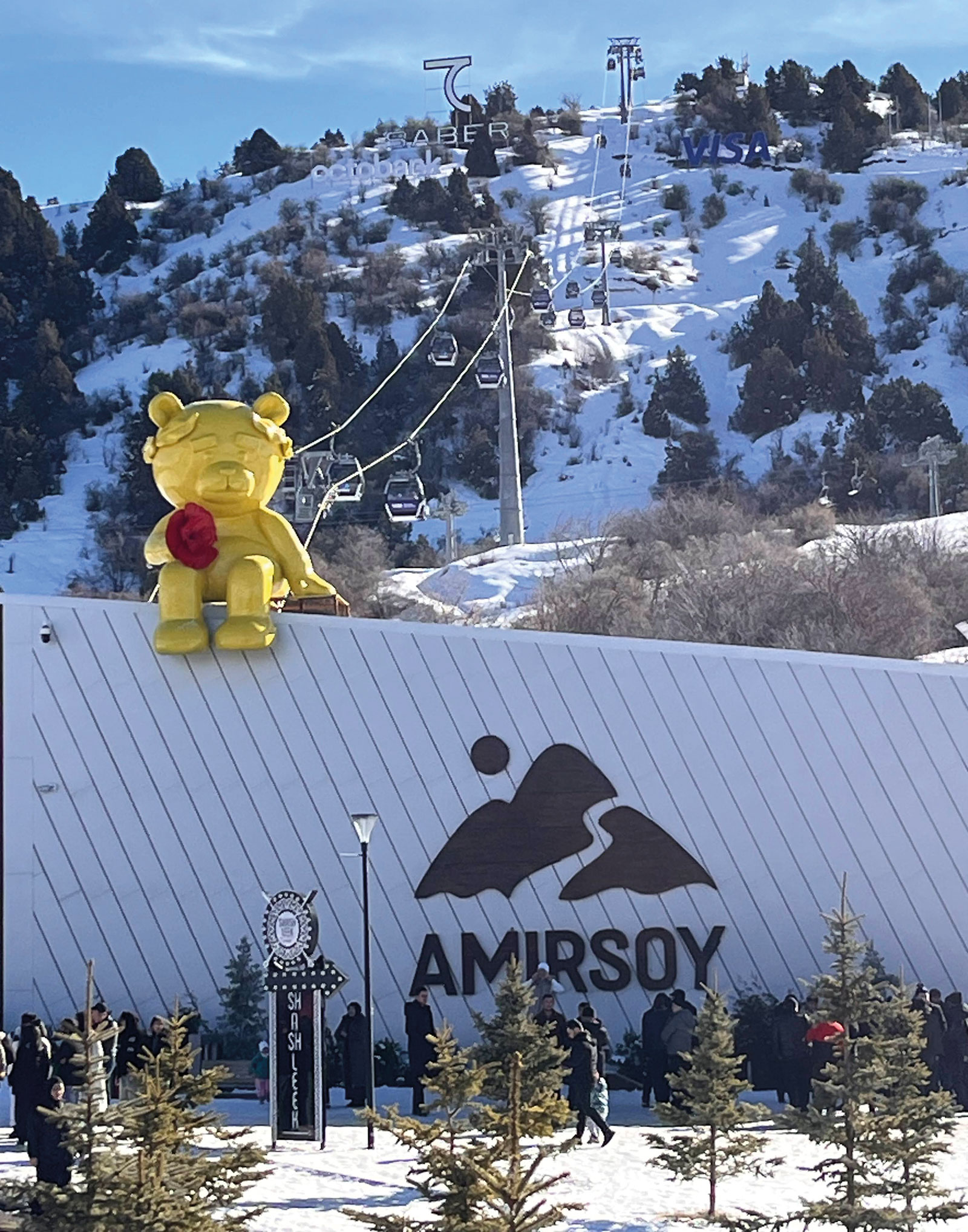
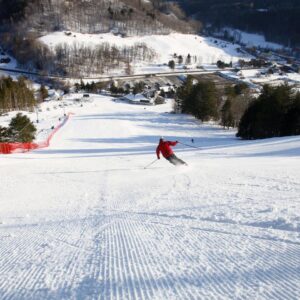
Skiers and snowboarders have access to 11 slopes with varying levels of difficulty and a total length of more than 15km. A modern artificial snowmaking system ensures a ski season lasting 100-120 days per year. There are three red runs, three blue runs and five green, all named after the NATO phonetic alphabet. Bravo (a red) runs through beautiful, rocky terrain and picturesque juniper thickets, whilst Charlie is one of the more remote and longest runs, running along the ridge from the resort’s summit to the chairlift’s lower station. Tango, a short but rugged route, is so named because to ski it requires an energetic movement, to the rhythm of the tango! Papa is the resort’s longest run at 3,550 metres whilst Oscar is the place to take “Oscar”-winning photos and selfies, as the track runs close to the resort’s most iconic landmarks, with magnificent sunsets in the background.
Compared with European resorts, the skiing is limited but more than enough for a couple of days. The chairlift and gondola were fast and modern and best of all the slopes on my visit were wide, well pisted and virtually empty. Thanks to the region’s dry climate and cold nights, the natural snow here was light and powdery, a dream to ski on. The off-piste potential is excellent and very affordable heli-skiing packages are on offer nearby. Another bonus, along with the obvious bragging rights to say you’ve skied in Uzbekistan are the incredibly cheap ski passes (approximately £20 a day).
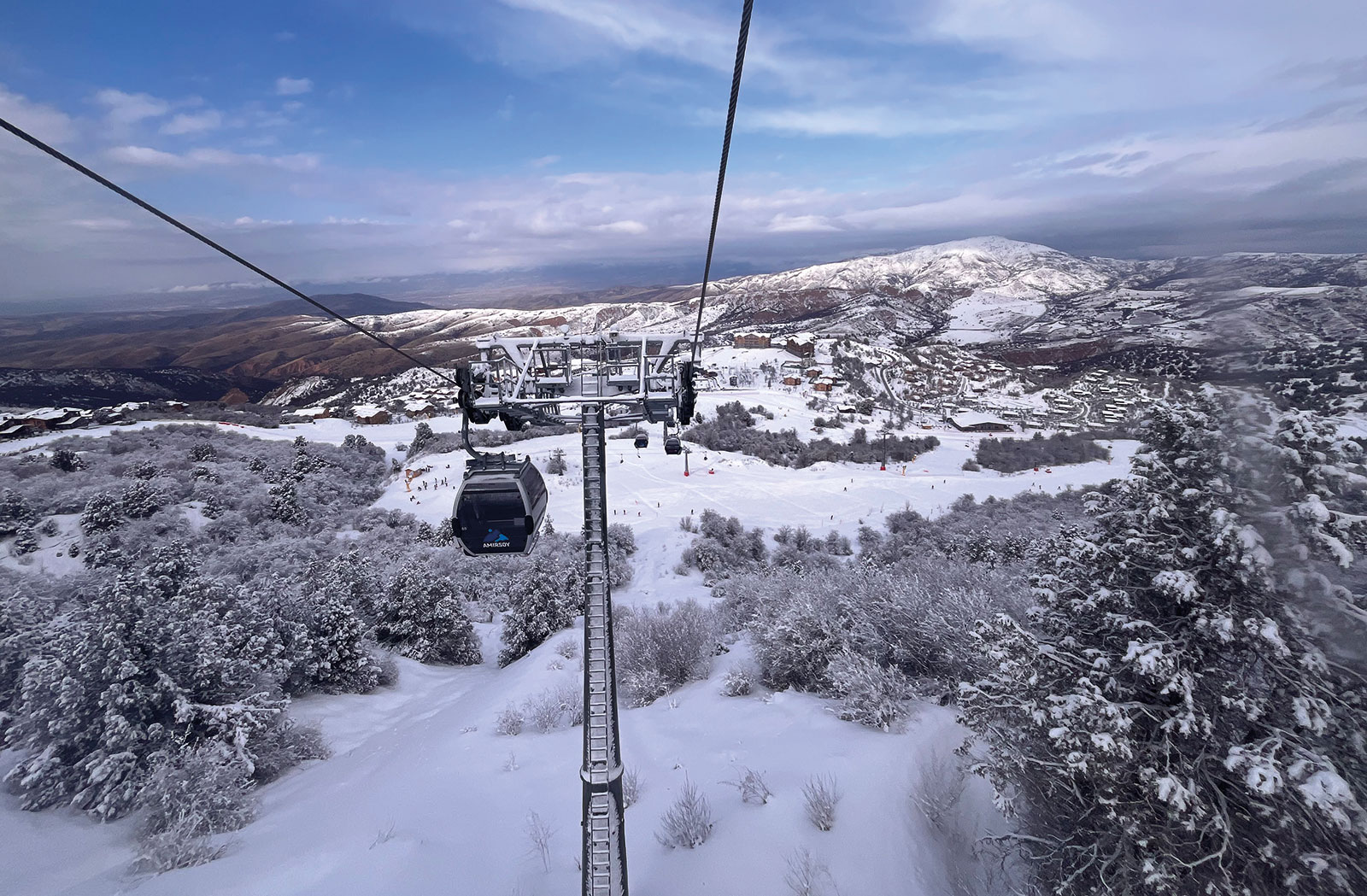
Amirsoy Resort is currently in an active phase of construction and infrastructure expansion, but today it already operates Le Chalet by Amirsoy: 48 chalets with a total capacity of 214 guests; Amirsoy Hills Hotel: 28 rooms with a total capacity of 56 guests; Apple Tree Hotel 1681 (to be commissioned in 2026): 97 rooms with a total capacity of 210 guests. My room at Amirsoy Hills Hotel was modern, stylish and the breakfast offering substantial. There’s ongoing English-language training for staff who couldn’t have been more helpful and friendly.
The Red Rock Hammam & Spa has a hot tub on the terrace, surrounded by snow, and indoors, there’s a Finnish sauna (complete with pointy felt hats) and a Turkish hammam. If you’re brave enough to venture down the garden path, you’ll find a traditional Russian banya (steam bath) heated by a fragrantly smoky wood fire, paired with a very icy plunge pool.
Other amenities include six restaurants and nine cafe/fast food outlets serving national and European cuisine, ATV and snowmobile rentals, a rope park, a swimming pool and skating rink. Apres ski wise, the resort hosts international DJs (six to seven per season).
The resort takes its name from a nearby mountain spring; “Amirsoy” translated as “Prince’s Spring”, reflecting the area’s natural and cultural heritage. It’s also been dubbed the “St. Moritz of Central Asia” and for people-watching it was in a class of its own. Think glamour and furs ala Dr Zhivago, and lots of Ushanka (Russian fur hats). The two days I spent here, offered a completely unique experience – I loved it.
High speed train is the safest, most comfortable and fastest way of travelling between the major Silk Road cities. I travelled from Tashkent to Bukhara (just over four hours) and then back to Tashkent via Samarkand. Tashkent is a modern, cosmopolitan city and home to Chorsu Bazaar: a massive, domed market in the old city, perfect to stock up on spices and nuts to take home.
The historical centre of trade and Islamic culture, the city of Bukhara is everything an ancient oriental fairytale city should be. A trading town on the famous Silk Route, Bukhara is rich in impressive historical landmarks: minarets and madrassahs (a religious Islamic school), fortresses and mosques and a remarkably preserved compact old town.
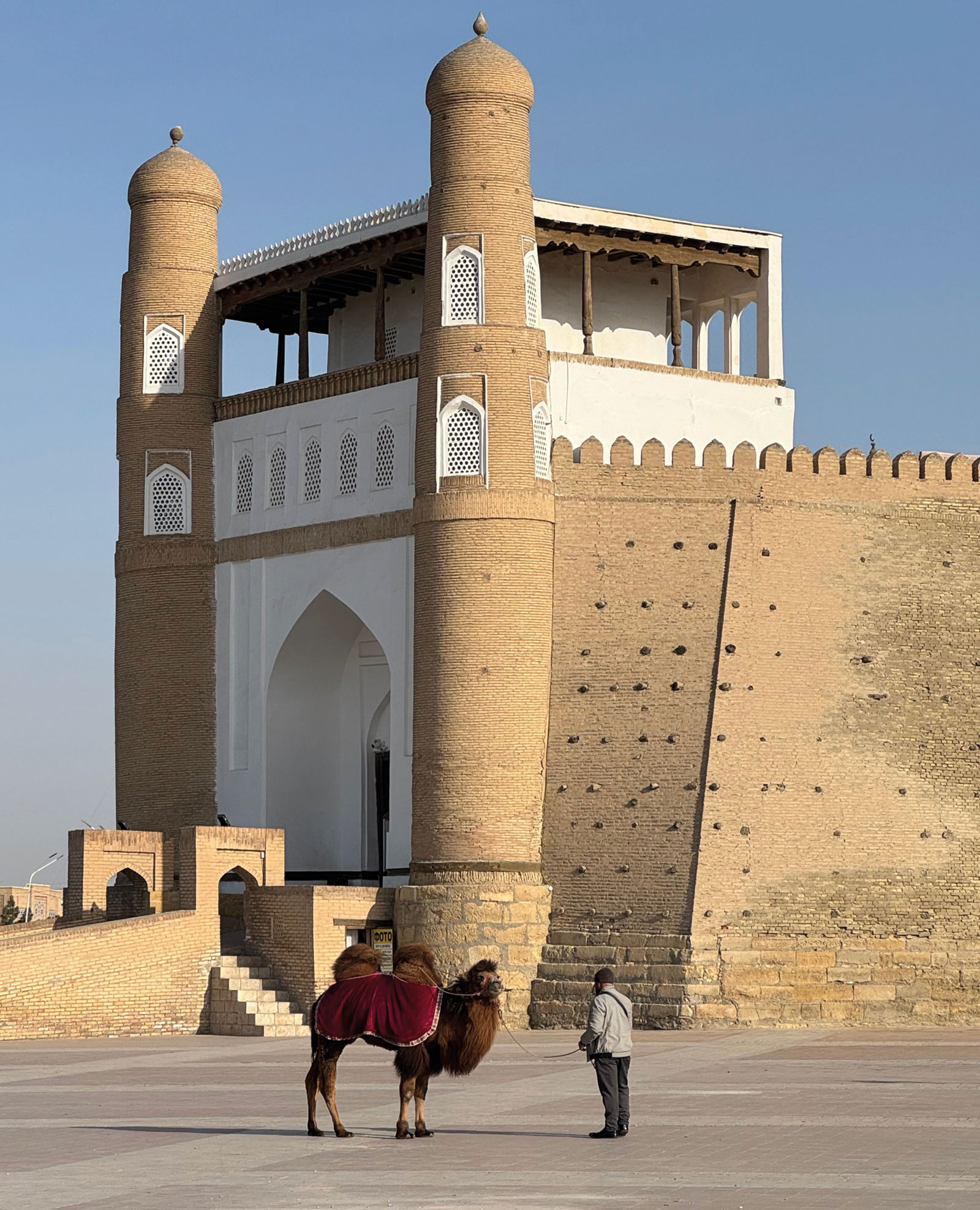
Key sights include the iconic Poi-Kalyan complex comprising the 46-metre-high Kalyan Minaret (nicknamed “Tower of Death”), the 16th Century Kalyan Mosque and the active Mir-i-Arab Madrasah. Also The Ark Fortress: a massive 5th Century earthen citadel that served as the residence of the Emirs of Bukhara for over 1,500 years and Samanid Mausoleum: A 10th Century masterpiece of Islamic architecture, representing one of the oldest and most exquisite brick structures in Central Asia.
However, for me it was azure-tiled, turquoise domes representing the “Blue City” aesthetic of the Silk Road that I was most looking forward to seeing. They didn’t disappoint.
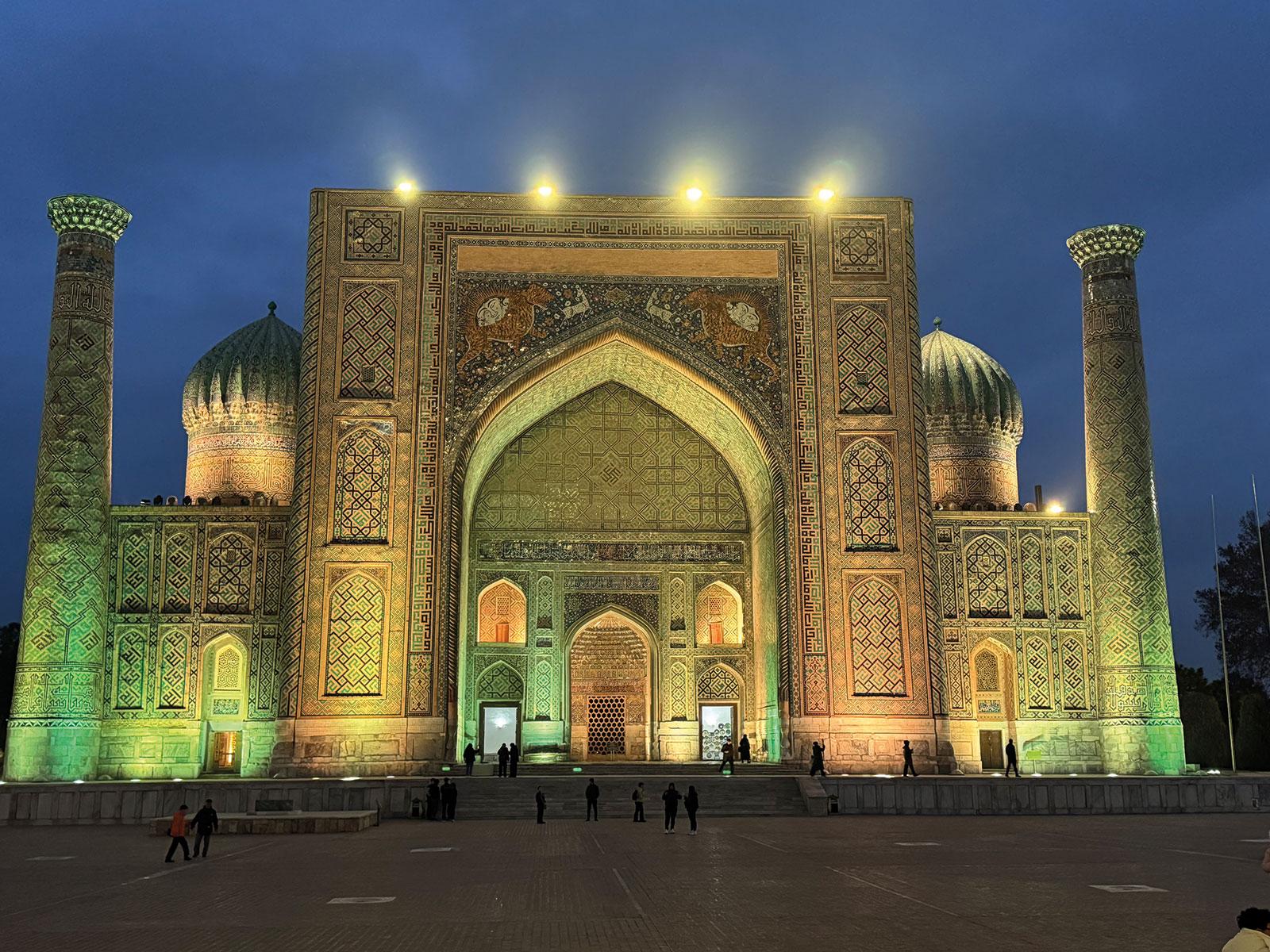
The ancient city of Samarkand is the ultimate “must see” for anyone visiting Uzbekistan, the jewel of the ancient Silk Road. The city’s most iconic landmark Registan Square, features three massive madrasahs and is the heart of the city. In winter you can’t guarantee the weather and although we were blessed with blue skies in Bukhara, it was cloudier in Samarkand but rather than putting a damper on our visit, we visited Registan Square at night. Floodlit after dark, it looked totally spectacular and without the summer crowds and tour groups, a particularly memorable experience.
The mountains between Samarkand and Shakhrisabz are famous for their meat, specifically lamb cooked with juniper in a huge tandoor oven sealed with clay. The cooking process takes five to six hours and it results in wonderfully soft, succulent and tasty lamb which you eat with bread and tomato salad.
If suffering cultural fatigue, drive an hour south of Samarkand to experience this delicious treat at popular Katta Tosh Tandiri restaurant. On a cold winter’s day, with the snow gently falling it was warming and very atmospheric.
Plov, the national dish of Uzbekistan is another hearty, winter warming dish. Traditionally cooked in a large, cast-iron cauldron called a kazan, it is a one-pot meal featuring long-grain rice steamed over tender meat (usually lamb or beef), carrots, onions and spices. In Samarkand I was invited to a family’s home to make and eat Plov. This form of community-based tourism in Uzbekistan is growing and is the most delicious way to immerse yourself in local culture
An added bonus of visiting Uzbekistan in the winter months is that they really go to town with festive decorations, transforming the cities with lights and sparkling installations. As a predominantly Muslim country with a strong Soviet history, the secular New Year (1 January) serves as the primary winter holiday but features traditions often associated with Christmas, with New Year trees and a Father Christmas like figure known as Ded Moroz or Grandfather Frost. I found it utterly magical.
Uzbekistan’s open-door tourism policy, includes a 30-day visa-free scheme for more than 80 countries, with direct flights from the UK taking approximately seven hours it really couldn’t be easier to visit. Take the 6pm Uzbekistan Airways flight from Heathrow or Gatwick Airport to Tashkent, and by 8am you can be on the slopes of Amirsoy – it’s also considered one of the safest countries in the world.
A winter visit to Uzbekistan is an ideal way of combining the Silk Road big hitters with the thrill of skiing in the Tien Shan mountains, an irresistible combination for skiers in search of something a little different.
Uzbekistan: TRAVEL FACTS
Flights
Petra Shepherd flew to Tashkent, Uzbekistan from London Gatwick with Uzbekistan Airways. www.uzairways.com/en
Transport
Petra travelled around Uzbekistan with Veres Vert who specialise in tailor-made tours in Uzbekistan and Central Asia. www.veres-vert.com
For more information
on Amirsoy Mountain Resort, visit www.amirsoy.com