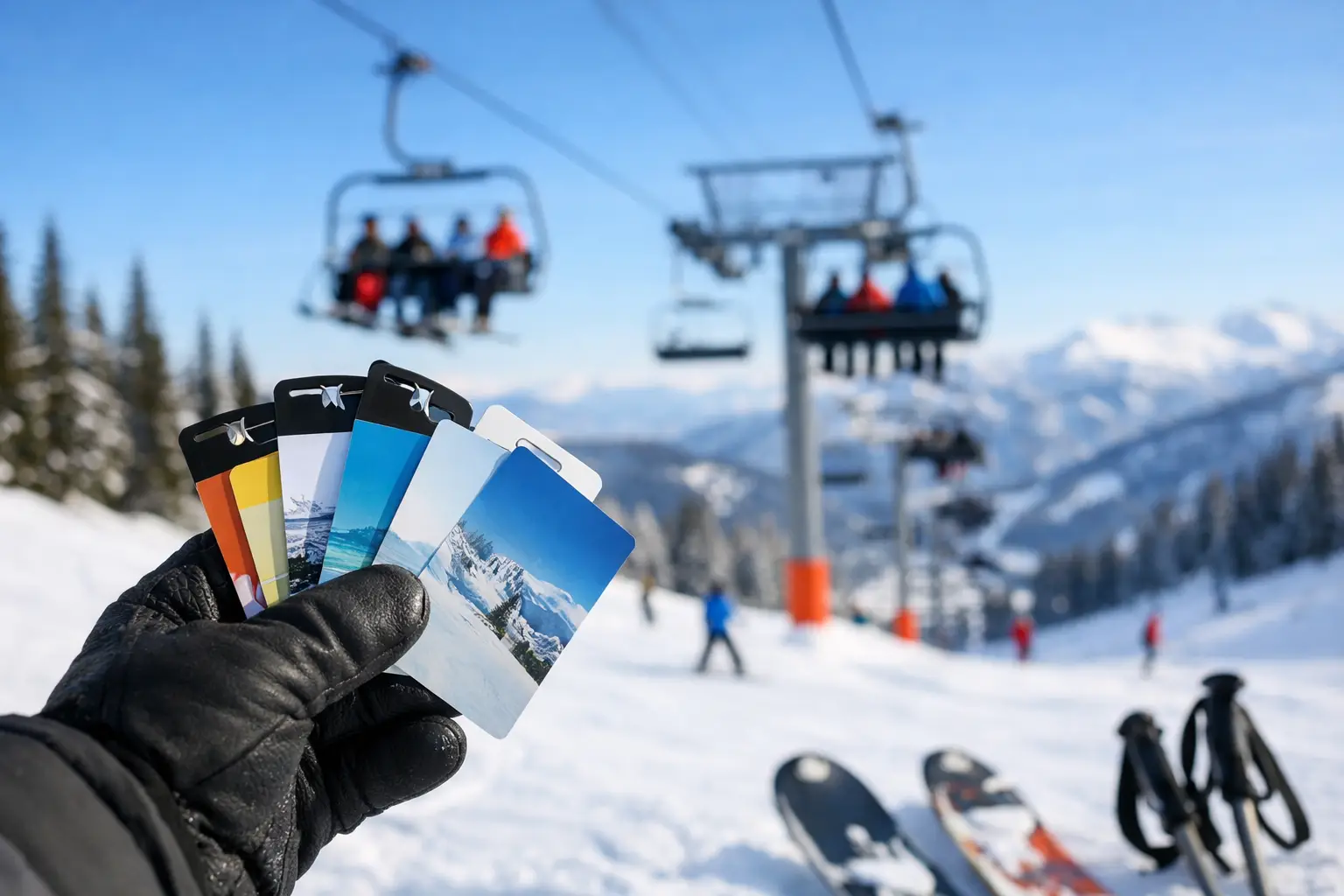
By the time you are standing at a resort ticket window in ski boots, paying too much for the wrong pass is usually a done deal. A good guide to ski lift passes starts earlier – when you are still planning the trip, comparing resorts and working out how much time you will really spend on snow.
Lift passes look simple on the surface. You pay, you ride, you ski or snowboard. In reality, they can shape the whole rhythm and cost of a holiday. The right choice can save a useful amount, open up better terrain and make mixed-ability group trips far easier. The wrong one can leave beginners overpaying for miles of pistes they will never touch, or stronger riders stuck with a limited area just when conditions improve on the other side of the valley.
Why ski lift passes matter more than many people think
Accommodation and flights tend to grab the early attention, but lift passes are one of the biggest on-the-ground costs in any mountain trip. In many major Alpine resorts, a six-day pass is now a serious line in the budget, especially for families. That means the pass is not just an admin task. It is part of choosing the holiday itself.
It also affects how you ski. A compact local pass can be ideal if you are travelling with children, building confidence after time away, or squeezing in a short break where convenience matters more than mileage. A full-area pass makes more sense if you like to cover ground, chase better snow, or keep options open when weather closes one sector and leaves another skiing brilliantly.
Guide to ski lift passes: understanding the main types
Most resorts sell a few versions of the same basic product, and the names vary, but the structure is familiar. There is usually a beginner or nursery-area pass, a local resort pass, and a wider-area pass covering linked valleys or neighbouring resorts.
A beginner pass is often overlooked by first-timers booking in advance. That is a mistake. If your trip is built around lessons on lower slopes, there is little sense paying for extensive terrain you will not use. Some resorts let you upgrade later, which is worth checking before arrival.
A local pass covers the lifts directly above one resort. For many skiers and snowboarders, especially on a three- or four-day trip, that is enough. You may get more than enough variety without adding the cost of a vast domain.
The wider-area pass is the classic choice in big-name destinations. If a resort is part of a linked system, this pass gives flexibility and mileage. It is often best value for confident intermediates and above, but only if you genuinely intend to use the wider network. Buying the biggest pass simply because it sounds impressive is one of the most common planning errors in winter sports.
Duration matters as much as area
Not every pass has to be six days. Short-break travellers should look carefully at half-day, one-day, two-day and flexible non-consecutive options. Some resorts also sell pedestrian passes for non-skiing companions and ascent-only tickets for touring or lunch plans.
Then there is timing. If you arrive late, an afternoon pass for the first day may work better than wasting a full day ticket. Equally, on departure day, a few final runs might justify a morning pass rather than writing the day off entirely.
Buying in advance versus buying in resort
In most established ski areas, advance purchase now makes sense more often than not. Resorts increasingly reward early booking with lower prices, especially online. That is particularly relevant for UK travellers trying to pin down the total holiday cost before departure.
There are caveats. If your trip sits in a shoulder period with uncertain snow, or you are travelling with a beginner who may not ski every day, flexibility can matter more than the pre-booking discount. The same applies if an injury niggle, poor forecast or family logistics could reduce your time on the mountain.
Some resorts have moved towards dynamic pricing, where lift pass prices rise and fall with demand, much like flights. That can reward organised bookers, but it also means late planners may face a steeper bill in peak weeks. Half-term travellers should be especially alert to this.
The hidden details worth checking
Before you buy, look beyond the headline price. Does the pass include key lifts needed to reach your accommodation area? Is there an extra charge for the glacier, a fast connection lift, or a cross-border sector? Are photo cards, key cards or deposits charged separately?
Refund policies matter too. Some resorts offer limited protection for injury or illness, while others make refunds difficult unless you have taken specific insurance or pass cover. It is worth reading the small print while still at home rather than arguing at a ticket office in a snowstorm.
How to choose the right pass for your ability and trip style
The best lift pass is the one that matches how you actually ride, not how you imagine you might ride after a good breakfast and a week of bluebird weather.
Beginners should lean towards restraint. In the first few days on snow, progress is often dramatic, but it is still sensible to start with a learner pass or shorter duration if the resort allows upgrades. There is no glory in paying for inaccessible red and black terrain while lapping the same teaching area.
Lower intermediates should think carefully about resort layout. A large domain is not always useful if the green and blue pistes are scattered awkwardly or linked by demanding roads and red runs. Sometimes a smaller, well-designed resort offers a better week than a giant map that looks exciting in the brochure.
Advanced skiers and snowboarders usually get the strongest value from expansive area passes, especially in changeable conditions. The ability to move for better snow, quieter sectors or more challenging terrain can transform a trip. Off-piste riders should also check whether key access lifts sit inside the standard area or require an add-on.
Families and mixed groups need a more strategic approach. If one parent is teaching a child while the other wants mileage, buying identical passes for everyone is not always logical. Splitting the pass types across the group can be the smarter move.
Saving money without compromising the trip
This is where a guide to ski lift passes becomes genuinely useful. Saving money is not just about finding a discount code. It is about buying the pass that suits the holiday.
Shoulder-season dates often bring better pass value than school holiday weeks. Family packages can work well, though not universally, and some resorts still offer reductions for children, teenagers, seniors, students or large groups. If you are travelling through a ski club or organised operator, ask what is included rather than assuming the headline package is the best available deal.
Multi-resort regions can be more complicated. A premium pass may appear expensive, but if it includes public transport between valleys or access to a much broader network, it can still represent good value. On the other hand, if you are staying in one village all week and skiing four relaxed days out of six, a cheaper local pass may be the sharper choice.
For self-drive trips, there is another angle. Choosing a resort with a less glamorous name but excellent local terrain can produce a better balance of lift pass cost, lodging price and on-snow quality. Big linked areas are fantastic, but not every holiday needs headline mileage.
Common mistakes skiers and snowboarders make
One is assuming the most expensive pass is automatically the best one. Another is underestimating how weather affects terrain access. In a linked area, wind can close exposed sectors and make a smaller sheltered zone the only sensible option.
A third is failing to consider group dynamics. If half your party wants long lunches, café stops and ski school handovers, there is little point buying a full-area pass built for first-lift-to-last-lift days. Conversely, strong riders can end up frustrated when a cheap local pass locks them out of the best terrain.
There is also the simple admin error of not checking start dates, collection rules or whether a pass lives on a reloadable card. These details are dull right up until they delay your first morning on snow.
What UK travellers should keep in mind
For British skiers and snowboarders, the practicalities start before you even leave home. Currency shifts matter. A pass that looked manageable when you first budgeted can feel different by the time final payments are due. Booking in advance can help remove some of that uncertainty.
It is also worth matching your pass to the shape of the trip. A Saturday-to-Saturday holiday with transfers, ski hire collection and ski school on day one often means you do not need six full days of all-area access. Equally, if you are travelling for a short, focused long weekend, paying for maximum convenience may be worthwhile.
Across the market, resorts are getting more sophisticated in how they price and package access. That makes independent, experience-based judgement more valuable, not less. It is one reason specialist coverage from titles such as Skier & Snowboarder still matters when planning a trip.
A lift pass is never just a barcode in your jacket pocket. It is your access to terrain, time and options in the mountains. Buy it with a clear view of how you actually want to spend the week, and the whole holiday tends to work better from the first chair onwards.